
Gladys Yang (1919–1999)
Author of Seven Contemporary Chinese Women Writers
About the Author
Image credit: Gladys and Xianyi Yang, 1941
Works by Gladys Yang
The Courtesan's Jewel Box: Chinese Stories of the Xth-XVIIth Centuries (1981) — Translator — 17 copies
Selected Stories of Lu Hsun 4 copies
Chinese Ancient Fables 1 copy
Associated Works
The white-haired girl : an opera in five acts — Translator, some editions — 5 copies
The butterfly dream — Translator, some editions — 2 copies
Rescued by a coquette — Translator, some editions — 2 copies
Tagged
Common Knowledge
- Legal name
- Yang, Gladys Margaret
戴乃迭 - Other names
- Tayler, Gladys Margaret (birth name)
- Birthdate
- 1919-01-19
- Date of death
- 1999-11-18
- Gender
- female
- Education
- University of Oxford (St Anne's College)
- Occupations
- translator
- Relationships
- Xianyi, Yang (husband)
- Short biography
- Gladys Yang was born Gladys Margaret Tayler in Beijing, China, a daughter of British missionaries. As a small child, she was sent along with her siblings to England for their safety and to attend boarding school. She went to become the first undergraduate student at Oxford University to read Chinese. She graduated in 1940. At Oxford, she met Yang Xianyi, and they moved back to China and married there. They taught at various universities and then became prominent translators of Chinese classic literature into English. The couple were named "class enemies" during the Cultural Revolution, and kept in separate prisons from 1968 to 1972, while their three children were sent to communes or forced labor at factories in the provinces. After their release, they were able to publish with greater freedom and befriend many younger writers. Gladys became active in the women's movement and translated works by women writers.
- Nationality
- UK
- Birthplace
- Beijing, China
- Places of residence
- Beijing, China
- Place of death
- Beijing, China
- Associated Place (for map)
- Beijing, China
Members
Reviews
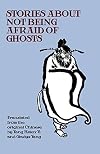
“There are no ghosts. Belief in ghosts is a backward idea, a superstition and a sign of cowardice.”
So opens this curious little Chinese anthology. I picked it up in Oxfam partly because of the woodcut illustrations, and partly because of the delightfully prosaic title. It turns out the ancient stories were chosen, between 1959 and 1961, as fables and satires that illustrated Communist ideals of anti-imperialist rationalism. This is explained at length in the (inadvertently) funny and show more slightly sinister 17 page preface: a pompous and opaque flurry of political doctrine and jargon.
The Stories
The 35 stories themselves are very short, and many are more like anecdotes, than stories. The titles and endings are often as endearingly banal as that of the collection. For example, After 30 days being inundated with frogs of increasing number and decreasing size, the plague just stops, and “After this his family had no further trouble, and all who knew him admired him.” Such bathos.
"I do not fear you with your head on, so what's there to fear with your head off?"
Several have a man staying overnight in an allegedly haunted place to prove there is nothing to fear, and several of the ghosts are female suicides, with lolling tongues.
There’s not a great deal of excitement or mystery, but the best have a mythical charm, a visceral familiarity.
Tips for Overcoming Chinese Ghosts
• Don’t believe in ghosts, and you may not see them.
• Be brave, thus retain your wits, and find a practical solution.
• Demons respect lack of fear, and may go away if you insist.
• Black your face and the ghost may think it is seeing a ghost!
• Catch a ghost in a net or belt. It will turn into a block of wood, which you then fry or burn.
• Investigate and talk to the ghost. It may be a person trying to trick you.
• Bows and arrows can kill ghosts - but it may take three shots.
• Sometimes, just blowing or spitting on a ghost will destroy them.
• Chase ghosts away.
• Smear filthy paper on a ghost's mouth.
• Beat ghosts with peach twigs (no other trees will do).
• Ghosts have three tricks: enchantment, obstruction, and intimidation. If you can endure those, they’ve nothing left.
• A cup of water can cure the temporary madness of a woman who thought she was a ghost.
The Political Preface
“There are actually many things in this world which are like ghosts. Some are big, such as international imperialism and its henchmen… modern revisionism… serious natural calamities… Some are small, such as difficulties and setbacks in ordinary work.”
The dogma is strong, but it doesn’t quite make sense. It states that literal ghosts don’t exist, but also that “ghosts are afraid of men”. In the stories, some of the ghosts are presented as real (one man eats the meat of one he kills!), though others are people pretending. I guess it doesn’t matter.
The message is about not succumbing to superstition or fear. About needing the strength of character to think and act rationally. About bravery and protecting others. About being prudent and resourceful, to overcome the (non-existent?) ghosts. I’m no Communist, but those are good ideals.
“Thoroughgoing dialectical materialists and genuine proletarian revolutionaries are, of course, much wiser than those people who did not fear ghosts in old tales.”
(I’m not a proletarian revolutionary, genuine or otherwise, but how would I know if I was a partial or thoroughgoing dialectical materialist, and would I want to be one anyway?)
Comedy in Pragmatism
Picture: “I ain’t afraid of no ghost” - Ghostbusters, 1984
The comedy value of some of these stories is diluted by the earnest political rhetoric that precedes it. That’s not a problem with Oscar Wilde’s The Canterville Ghost, which I read just before these stories (see my review HERE). The Chinese compilers might approve: it’s about a family who initially don’t believe in ghosts, but when confronted by one, they refuse to be alarmed, and take a resolutely pragmatic approach to overcome the inconvenience. However, in Wilde’s hands, it’s comedy, with a poignant message, rather than preaching about good (Communist) character.
Research on Culture and Belief
In 2015, the respected Pew Research found that 18% of Americans claim to have seen a ghost (source here). I’m not sure if this confirms or refutes the Chinese position. ;)
Those who describe themselves as believers – but who don’t attend church regularly – are twice as likely to believe in ghosts than those at the two extremes of religious belief: nonbelievers and the deeply devout (source here).
There is also relationship between the type of ghosts people see and their belief system (source here). For example, ghosts seen by Roman Catholics were often identified as souls in Purgatory, whereas protestants were more likely to see angels and demons. And judging by this book, Chinese ghosts have bizarrely long tongues if they died by hanging (one was “sticking out several feet”). Freud might have fun with that.
It might also be worth reading The Ghost: A Cultural History (I haven't).
See also
Alberto Manguel included An Injustice Revealed in his anthology, Black Water. I reviewed that specific story, HERE. show less
So opens this curious little Chinese anthology. I picked it up in Oxfam partly because of the woodcut illustrations, and partly because of the delightfully prosaic title. It turns out the ancient stories were chosen, between 1959 and 1961, as fables and satires that illustrated Communist ideals of anti-imperialist rationalism. This is explained at length in the (inadvertently) funny and show more slightly sinister 17 page preface: a pompous and opaque flurry of political doctrine and jargon.
The Stories
The 35 stories themselves are very short, and many are more like anecdotes, than stories. The titles and endings are often as endearingly banal as that of the collection. For example, After 30 days being inundated with frogs of increasing number and decreasing size, the plague just stops, and “After this his family had no further trouble, and all who knew him admired him.” Such bathos.
"I do not fear you with your head on, so what's there to fear with your head off?"
Several have a man staying overnight in an allegedly haunted place to prove there is nothing to fear, and several of the ghosts are female suicides, with lolling tongues.
There’s not a great deal of excitement or mystery, but the best have a mythical charm, a visceral familiarity.
Tips for Overcoming Chinese Ghosts
• Don’t believe in ghosts, and you may not see them.
• Be brave, thus retain your wits, and find a practical solution.
• Demons respect lack of fear, and may go away if you insist.
• Black your face and the ghost may think it is seeing a ghost!
• Catch a ghost in a net or belt. It will turn into a block of wood, which you then fry or burn.
• Investigate and talk to the ghost. It may be a person trying to trick you.
• Bows and arrows can kill ghosts - but it may take three shots.
• Sometimes, just blowing or spitting on a ghost will destroy them.
• Chase ghosts away.
• Smear filthy paper on a ghost's mouth.
• Beat ghosts with peach twigs (no other trees will do).
• Ghosts have three tricks: enchantment, obstruction, and intimidation. If you can endure those, they’ve nothing left.
• A cup of water can cure the temporary madness of a woman who thought she was a ghost.
The Political Preface
“There are actually many things in this world which are like ghosts. Some are big, such as international imperialism and its henchmen… modern revisionism… serious natural calamities… Some are small, such as difficulties and setbacks in ordinary work.”
The dogma is strong, but it doesn’t quite make sense. It states that literal ghosts don’t exist, but also that “ghosts are afraid of men”. In the stories, some of the ghosts are presented as real (one man eats the meat of one he kills!), though others are people pretending. I guess it doesn’t matter.
The message is about not succumbing to superstition or fear. About needing the strength of character to think and act rationally. About bravery and protecting others. About being prudent and resourceful, to overcome the (non-existent?) ghosts. I’m no Communist, but those are good ideals.
“Thoroughgoing dialectical materialists and genuine proletarian revolutionaries are, of course, much wiser than those people who did not fear ghosts in old tales.”
(I’m not a proletarian revolutionary, genuine or otherwise, but how would I know if I was a partial or thoroughgoing dialectical materialist, and would I want to be one anyway?)
Comedy in Pragmatism
Picture: “I ain’t afraid of no ghost” - Ghostbusters, 1984
The comedy value of some of these stories is diluted by the earnest political rhetoric that precedes it. That’s not a problem with Oscar Wilde’s The Canterville Ghost, which I read just before these stories (see my review HERE). The Chinese compilers might approve: it’s about a family who initially don’t believe in ghosts, but when confronted by one, they refuse to be alarmed, and take a resolutely pragmatic approach to overcome the inconvenience. However, in Wilde’s hands, it’s comedy, with a poignant message, rather than preaching about good (Communist) character.
Research on Culture and Belief
In 2015, the respected Pew Research found that 18% of Americans claim to have seen a ghost (source here). I’m not sure if this confirms or refutes the Chinese position. ;)
Those who describe themselves as believers – but who don’t attend church regularly – are twice as likely to believe in ghosts than those at the two extremes of religious belief: nonbelievers and the deeply devout (source here).
There is also relationship between the type of ghosts people see and their belief system (source here). For example, ghosts seen by Roman Catholics were often identified as souls in Purgatory, whereas protestants were more likely to see angels and demons. And judging by this book, Chinese ghosts have bizarrely long tongues if they died by hanging (one was “sticking out several feet”). Freud might have fun with that.
It might also be worth reading The Ghost: A Cultural History (I haven't).
See also
Alberto Manguel included An Injustice Revealed in his anthology, Black Water. I reviewed that specific story, HERE. show less

Just what the subtitle says. A variety of folk tales from China. There is no editor’s name of note, but the translators for the different stories are named, and some have illustrations, and what region they are from. Stories from Tibet and Uygur, the Han people, Yi people, Zhuang people and Tong people. Like any fairy or folk tale, they have a morality feel, some are slightly absurd, or have mysterious, magical beings and events. People are rewarded for being kind, polite, helpful, show more faithful and obedient. Or they are punished for being lazy, selfish, rude and greedy. None of these tales felt familiar to me- I don’t think I’ve read any other versions before. I liked most of them, but was a bit baffled by the last.
“The Frog Rider” – A poor couple getting on in years longs for offspring. They pray and the wife gives birth- to a frog. They were going to throw him out in the pond, but the frog spoke and said if they cared for him, he would travel to the local Zhongben (a high official)’s castle, where he would procure one of the daughters for his bride, bring her back and help the family prosper. The frog traveled to the Zongben’s place, but there he was laughed at and scorned. When refused his request, he laughed, or wept, or hopped around, and this caused earthquakes and torrents of rain so the Zhongben and his people gave in and sent a daughter with him. The first daughter, halfway home, refused to continue so the frog took her back and picked another daughter. The second daughter did the same, even attacked him. He returned her. The third daughter agreed to go home with him. They were happy and she worked industriously to help the family. After a while, he would go out on travels at night and tell no one where he went. In another region, a strange young man on a green horse would come and win all the races. (This, of course, was the frog). All the spectators wondered who he was. His wife at home, having her own questions, found his frog skin and did something with it that ruined his chance to discard it forever and remain human. She was contrite and upset when she found out. Sent on her own quest to remedy the situation, part of which was to bring news to all the people about fairness to come- no inequality between rich and poor, etc. But she was thwarted in her task by her own father, who stopped her from spreading this message. He didn’t like what it would mean for her future. And the young man remained a frog and died, and she wept over his grave until she turned into a stone.
“The Wooden Horse” – A carpenter and a blacksmith argued about who was more skilled, and took their conflict in front of the king. The king commanded them to each make something and bring it before him to be judged. The blacksmith made an iron fish that could swim, and the carpenter made a wooden horse that could fly. The king’s son saw the wooden horse and demanded to try riding it. He ignored instructions and flew too high, but found a palace in the sky built by god for another king, who kept his daughter there to prevent others from seeing her great beauty. He began to visit this princess and they fell in love. The king noticed a small detail that revealed to him his daughter had a visitor. He was enraged and tried to find a way to discover the man’s identity. Lots of adventures and events followed as the prince and his beloved tried to escape the grasp of the king, using the flying wooden horse. The king tried to make her marry someone else, but the prince she really wanted tricked people and changed places with him. In the end they made it back to his kingdom, where they found the original carpenter was going to be punished for all the trouble his wooden horse had caused (taking their prince away). The prince protested that the wooden horse had in fact saved them many times, and the carpenter should be rewarded instead. So everyone was happy in the end. (There’s nothing more about the blacksmith and his iron fish).
“Ma Liang and His Magic Brush” – A young man from a poor family wants to learn how to paint, but he can’t afford any materials. He teaches himself to draw using things like sticks in the dirt, and one day a mysterious old man gives him a special brush. Whatever he paints with this brush comes to life. Soon a rich man hears about this and orders him to come to his household and paint things for him. Ma Liang refuses and is locked in a barren room, but he paints things that become real for his own use: a hot fire, food, a ladder to escape. He runs away and travels to another land, but the only way he knows to earn a living is to paint pictures. He tries to thwart what people want by painting animals missing features so they can’t see or move, or by painting the opposite of what someone asks for (a powerful wealthy man demands a dragon and he paints a toad, for example). Eventually he is in the clutches of a greedy emperor who demands that he paint piles of gold. This doesn’t turn out well. Then to distract him, Ma Liang paints still water with beautiful fish in it. The emperor is entranced by the fish and asks for a boat to go out and see them closer. When he’s farther off, Ma Liang paints the wind, causes great storms (the water is now an ocean) and the boat sinks with everyone in it. Then Ma Liang leaves and nobody knows where he went.
This story reminded me very much of a children’s book that’s a favorite of mine: The Magical Drawings of Moony B. Finch by David McPhail. Where a boy’s drawings come to life and greedy people demand him to draw things until it causes trouble and then he pulls out a magic eraser . . .
“The Story of Hero Shigar” – A heroic man travels the world on his flying horse to make sure that people everywhere are safe and happy and living well. He encounters some sad birds that have to sacrifice one of their number every day to a giant python. Hero Shigar claims he will defeat the python but there is only one way to do so. In this story, the world had multiple suns and moons. Shigar had to shoot down or put out all the suns and moons to weaken the python. But he left one of each in the sky (at their begging) so the world would not go dark and cold. Then he traveled on and found a place where the people were besieged by a monster that ate all their livestock, and when it ran out it would eat the people. Shigar tricked the monster with heavy iron bars suspended over a roasting sheep that fell on him when he came to eat it. The people were saved. Then Shigar went home to his wives. They were glad to see him but didn’t want him to leave again. When he was readying go out on another journey, the wives damaged the wings of his flying horse. So it fell into the sea with him and he was drowned. The end of this story tells how birds in a certain area would always leave the region in June and fly over the ocean- they were begging the waves to return the hero to them. And every year they leave to ask again. I guess it’s a story to explain why birds leave annually on migration.
“The Third Son and the Magistrate” – An old man left his money to his three sons. The first son wasted it and died of want. The second son bought land and seeds and grew produce to sell, but never made enough to thrive, always lived hand to mouth. The third son learned to fish and sold them in the market and prospered. One day he caught a single huge fish, and found a golden carp still alive in its stomach. He kept the carp in a basin of water and fed it. Later he came home one day to find the fish missing and was very upset, but a stranger came along and consoled him. This stranger said- don’t you recognize me? I’m the golden carp you cared for! He was the son of the king of an underwater magical kingdom. So the fisherman went with him to visit the magic kingdom. He enjoyed his time there and saw many marvels, but eventually wanted to return home. He was given a choice of any jewel or treasure in the kingdom to take when he left, but followed some advice and chose a white chicken. Once back home he returned to work, and was surprised to find someone was cooking his meals while he was out. He discovered by spying that this was the white chicken, who turned into a beautiful girl when he was away. He caught her at it, and she admitted she was the undersea king’s daughter. They married and were happy.
But then a local magistrate found out the fisherman had a beautiful young wife and he demanded to have her for himself. The fisherman refused and said he would give the magistrate anything else. So the magistrate began making ridiculous, unrealistic demands: a hundred and twenty red carp all of equal size, a handwoven cloth as long as the street, etc- always to be delivered in a few days’ time. Each time the fisherman went home dismayed, but his wife had magical means of making or procuring the required objects. The magistrate was only angered at having his demands met, and made even bigger ones each time. At the end he demands a bunch of unique monsters, and when they are sent to him in cages, the magistrate can’t follow instructions on keeping them locked up, lets them out, and is destroyed. His whole household too.
“Seeking Her Husband At the Great Wall” – This one felt like a bit of history and made me sad. A young woman’s husband is one of many subjects ordered to work at building the Great Wall. The work is hard and the conditions poor. Poor clothing, little food or shelter. When bad weather comes, the woman travels to the Wall to take better clothes to her husband. She has to travel much farther than she expected, and is dismayed by hearing constant rumors that men have died while working on the Wall. When she finally reaches it, she walks wearily along the length, asking everyone she meets about her husband. Nobody has heard of him. Then she finds dead bodies, and finally discovers her fears were true: her husband is deceased. She is brokenhearted. She weeps so much that her tears undermine part of the Wall and it collapses. When the emperor who ordered the Wall built hears about this, he goes to find her (having also heard that she is very beautiful). He asks her to be one of his concubines and she agrees, if he will give her husband a burial and attend the funeral himself. When they are at the riverside for the funeral procession she jumps in the water and drowns.
“Olive Lake” – A young man who lives by a lake struggles with his family to make ends meet. They work hard all year but never have enough. The young man decides to go see a god and ask what they can do. On his way, he meets three different individuals who help him, and they each have a need or a question to be answered. They ask him to take their questions to the god as well. When he gets to his destination, he is only allowed three questions. He puts aside his own desire and asks questions for the others. Then on the way back he gives them their answers. Each solution involves a task, and the young man helps them with their tasks and is rewarded. His final reward is a lovely young woman to marry, and he also takes a pearl back to his village that blesses the waters of the lake. Everyone is content and happy. The message in this one was pretty obvious: put the needs of others before your own, and you will be rewarded.
“How the Brothers Divided Their Property” – Two brothers inherit their family’s property when the parents die. The older brother is lazy, the younger one industrious. The older brother decides they must divide the land and live separately. The younger brother doesn’t see much sense in this but agrees. He receives the lesser share and only has a dog, while his brother gets the ox. Still the older brother’s land soon is in shambles, while the younger one prospers. The older brother looks at his sibling’s success and demands to borrow what he thinks is the key to it: his dog (that volunteered to plough the field), his bamboo that showers riches (literally), his woven coop that all the local pheasants and chickens flock to, laying their eggs there. Each time he wastes or destroys what he has borrowed, and the younger brother laments, makes do and fashions something anew out of what is left. I thought the ending was pretty funny. It involves a field of pumpkins, a bunch of thieving monkeys and of course, the greed and ineptness of the older brother. Which lead to his demise.
“Stories About Nasrdin Avanti” – This is a bunch of very short little anecdotes about a foolish-seeming man named Avanti. Who does absurd things or makes odd replies that seem backwards, opposite to the true meaning of things in the situation. I don’t quite know how to describe them because I didn’t quite get it. I think it’s because the translated work fails to convey the humor or irony. I suppose things that are amusing to someone in a different culture, just don’t quite seem so to me. They kind of fell flat. However some of his quips did appear true wisdom.
I’ve left a lot of details out. Hoping that makes something to discover if you get your hands on this book and read it, since I did give quite a few spoilers. show less
“The Frog Rider” – A poor couple getting on in years longs for offspring. They pray and the wife gives birth- to a frog. They were going to throw him out in the pond, but the frog spoke and said if they cared for him, he would travel to the local Zhongben (a high official)’s castle, where he would procure one of the daughters for his bride, bring her back and help the family prosper. The frog traveled to the Zongben’s place, but there he was laughed at and scorned. When refused his request, he laughed, or wept, or hopped around, and this caused earthquakes and torrents of rain so the Zhongben and his people gave in and sent a daughter with him. The first daughter, halfway home, refused to continue so the frog took her back and picked another daughter. The second daughter did the same, even attacked him. He returned her. The third daughter agreed to go home with him. They were happy and she worked industriously to help the family. After a while, he would go out on travels at night and tell no one where he went. In another region, a strange young man on a green horse would come and win all the races. (This, of course, was the frog). All the spectators wondered who he was. His wife at home, having her own questions, found his frog skin and did something with it that ruined his chance to discard it forever and remain human. She was contrite and upset when she found out. Sent on her own quest to remedy the situation, part of which was to bring news to all the people about fairness to come- no inequality between rich and poor, etc. But she was thwarted in her task by her own father, who stopped her from spreading this message. He didn’t like what it would mean for her future. And the young man remained a frog and died, and she wept over his grave until she turned into a stone.
“The Wooden Horse” – A carpenter and a blacksmith argued about who was more skilled, and took their conflict in front of the king. The king commanded them to each make something and bring it before him to be judged. The blacksmith made an iron fish that could swim, and the carpenter made a wooden horse that could fly. The king’s son saw the wooden horse and demanded to try riding it. He ignored instructions and flew too high, but found a palace in the sky built by god for another king, who kept his daughter there to prevent others from seeing her great beauty. He began to visit this princess and they fell in love. The king noticed a small detail that revealed to him his daughter had a visitor. He was enraged and tried to find a way to discover the man’s identity. Lots of adventures and events followed as the prince and his beloved tried to escape the grasp of the king, using the flying wooden horse. The king tried to make her marry someone else, but the prince she really wanted tricked people and changed places with him. In the end they made it back to his kingdom, where they found the original carpenter was going to be punished for all the trouble his wooden horse had caused (taking their prince away). The prince protested that the wooden horse had in fact saved them many times, and the carpenter should be rewarded instead. So everyone was happy in the end. (There’s nothing more about the blacksmith and his iron fish).
“Ma Liang and His Magic Brush” – A young man from a poor family wants to learn how to paint, but he can’t afford any materials. He teaches himself to draw using things like sticks in the dirt, and one day a mysterious old man gives him a special brush. Whatever he paints with this brush comes to life. Soon a rich man hears about this and orders him to come to his household and paint things for him. Ma Liang refuses and is locked in a barren room, but he paints things that become real for his own use: a hot fire, food, a ladder to escape. He runs away and travels to another land, but the only way he knows to earn a living is to paint pictures. He tries to thwart what people want by painting animals missing features so they can’t see or move, or by painting the opposite of what someone asks for (a powerful wealthy man demands a dragon and he paints a toad, for example). Eventually he is in the clutches of a greedy emperor who demands that he paint piles of gold. This doesn’t turn out well. Then to distract him, Ma Liang paints still water with beautiful fish in it. The emperor is entranced by the fish and asks for a boat to go out and see them closer. When he’s farther off, Ma Liang paints the wind, causes great storms (the water is now an ocean) and the boat sinks with everyone in it. Then Ma Liang leaves and nobody knows where he went.
This story reminded me very much of a children’s book that’s a favorite of mine: The Magical Drawings of Moony B. Finch by David McPhail. Where a boy’s drawings come to life and greedy people demand him to draw things until it causes trouble and then he pulls out a magic eraser . . .
“The Story of Hero Shigar” – A heroic man travels the world on his flying horse to make sure that people everywhere are safe and happy and living well. He encounters some sad birds that have to sacrifice one of their number every day to a giant python. Hero Shigar claims he will defeat the python but there is only one way to do so. In this story, the world had multiple suns and moons. Shigar had to shoot down or put out all the suns and moons to weaken the python. But he left one of each in the sky (at their begging) so the world would not go dark and cold. Then he traveled on and found a place where the people were besieged by a monster that ate all their livestock, and when it ran out it would eat the people. Shigar tricked the monster with heavy iron bars suspended over a roasting sheep that fell on him when he came to eat it. The people were saved. Then Shigar went home to his wives. They were glad to see him but didn’t want him to leave again. When he was readying go out on another journey, the wives damaged the wings of his flying horse. So it fell into the sea with him and he was drowned. The end of this story tells how birds in a certain area would always leave the region in June and fly over the ocean- they were begging the waves to return the hero to them. And every year they leave to ask again. I guess it’s a story to explain why birds leave annually on migration.
“The Third Son and the Magistrate” – An old man left his money to his three sons. The first son wasted it and died of want. The second son bought land and seeds and grew produce to sell, but never made enough to thrive, always lived hand to mouth. The third son learned to fish and sold them in the market and prospered. One day he caught a single huge fish, and found a golden carp still alive in its stomach. He kept the carp in a basin of water and fed it. Later he came home one day to find the fish missing and was very upset, but a stranger came along and consoled him. This stranger said- don’t you recognize me? I’m the golden carp you cared for! He was the son of the king of an underwater magical kingdom. So the fisherman went with him to visit the magic kingdom. He enjoyed his time there and saw many marvels, but eventually wanted to return home. He was given a choice of any jewel or treasure in the kingdom to take when he left, but followed some advice and chose a white chicken. Once back home he returned to work, and was surprised to find someone was cooking his meals while he was out. He discovered by spying that this was the white chicken, who turned into a beautiful girl when he was away. He caught her at it, and she admitted she was the undersea king’s daughter. They married and were happy.
But then a local magistrate found out the fisherman had a beautiful young wife and he demanded to have her for himself. The fisherman refused and said he would give the magistrate anything else. So the magistrate began making ridiculous, unrealistic demands: a hundred and twenty red carp all of equal size, a handwoven cloth as long as the street, etc- always to be delivered in a few days’ time. Each time the fisherman went home dismayed, but his wife had magical means of making or procuring the required objects. The magistrate was only angered at having his demands met, and made even bigger ones each time. At the end he demands a bunch of unique monsters, and when they are sent to him in cages, the magistrate can’t follow instructions on keeping them locked up, lets them out, and is destroyed. His whole household too.
“Seeking Her Husband At the Great Wall” – This one felt like a bit of history and made me sad. A young woman’s husband is one of many subjects ordered to work at building the Great Wall. The work is hard and the conditions poor. Poor clothing, little food or shelter. When bad weather comes, the woman travels to the Wall to take better clothes to her husband. She has to travel much farther than she expected, and is dismayed by hearing constant rumors that men have died while working on the Wall. When she finally reaches it, she walks wearily along the length, asking everyone she meets about her husband. Nobody has heard of him. Then she finds dead bodies, and finally discovers her fears were true: her husband is deceased. She is brokenhearted. She weeps so much that her tears undermine part of the Wall and it collapses. When the emperor who ordered the Wall built hears about this, he goes to find her (having also heard that she is very beautiful). He asks her to be one of his concubines and she agrees, if he will give her husband a burial and attend the funeral himself. When they are at the riverside for the funeral procession she jumps in the water and drowns.
“Olive Lake” – A young man who lives by a lake struggles with his family to make ends meet. They work hard all year but never have enough. The young man decides to go see a god and ask what they can do. On his way, he meets three different individuals who help him, and they each have a need or a question to be answered. They ask him to take their questions to the god as well. When he gets to his destination, he is only allowed three questions. He puts aside his own desire and asks questions for the others. Then on the way back he gives them their answers. Each solution involves a task, and the young man helps them with their tasks and is rewarded. His final reward is a lovely young woman to marry, and he also takes a pearl back to his village that blesses the waters of the lake. Everyone is content and happy. The message in this one was pretty obvious: put the needs of others before your own, and you will be rewarded.
“How the Brothers Divided Their Property” – Two brothers inherit their family’s property when the parents die. The older brother is lazy, the younger one industrious. The older brother decides they must divide the land and live separately. The younger brother doesn’t see much sense in this but agrees. He receives the lesser share and only has a dog, while his brother gets the ox. Still the older brother’s land soon is in shambles, while the younger one prospers. The older brother looks at his sibling’s success and demands to borrow what he thinks is the key to it: his dog (that volunteered to plough the field), his bamboo that showers riches (literally), his woven coop that all the local pheasants and chickens flock to, laying their eggs there. Each time he wastes or destroys what he has borrowed, and the younger brother laments, makes do and fashions something anew out of what is left. I thought the ending was pretty funny. It involves a field of pumpkins, a bunch of thieving monkeys and of course, the greed and ineptness of the older brother. Which lead to his demise.
“Stories About Nasrdin Avanti” – This is a bunch of very short little anecdotes about a foolish-seeming man named Avanti. Who does absurd things or makes odd replies that seem backwards, opposite to the true meaning of things in the situation. I don’t quite know how to describe them because I didn’t quite get it. I think it’s because the translated work fails to convey the humor or irony. I suppose things that are amusing to someone in a different culture, just don’t quite seem so to me. They kind of fell flat. However some of his quips did appear true wisdom.
I’ve left a lot of details out. Hoping that makes something to discover if you get your hands on this book and read it, since I did give quite a few spoilers. show less

Very interesting, and in some cases amusing
Tang dynasty short stories. Some, such as the Song of a Singsong Girl, are sources for later important Chinese literature
Tang dynasty short stories. Some, such as the Song of a Singsong Girl, are sources for later important Chinese literature

Book Description: Foreign Languages Press Peking 1961. This is the second edition 1979 in excellent condition.
Lists
You May Also Like


Associated Authors
Statistics
- Works
- 20
- Also by
- 11
- Members
- 173
- Popularity
- #123,687
- Rating
- 3.9
- Reviews
- 5
- ISBNs
- 17
- Languages
- 2