
Stefan Timmermans
Author of The Unclaimed: Abandonment and Hope in the City of Angels
About the Author
Stefan Timmermans is professor of sociology at the University of California, Los Angeles
Works by Stefan Timmermans
Postmortem: How Medical Examiners Explain Suspicious Deaths (Fieldwork Encounters and Discoveries) (2006) 86 copies, 3 reviews
Saving Babies?: The Consequences of Newborn Genetic Screening (Fieldwork Encounters and Discoveries) (2013) 10 copies
Tagged
Common Knowledge
- Gender
- male
Members
Reviews
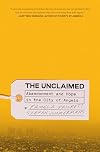
"Psychologists have a term for the fear of dying alone: thanatophobia....The real fear is more existential--it's what a lonely death says about the lived life."
This narrative nonfiction work illustrates what happens when no one claims the body after a person dies, by telling the stories of four individuals who lived and died in Los Angeles, and whose bodies were ultimately "unclaimed." Every year about 1,600 bodies of the unclaimed are cremated in Los Angeles, and after about a three year show more waiting period (to allow for someone to claim the remains), the ashes are buried in a mass grave. The four individuals whose stories are told in this book died between 2012 and 2019, "some destitute and some with means, some with close relatives, some without," and we follow their stories as they wind their way through LA's "death bureaucracy."
The four are:
Bobby Ray Hanna--a former vet who was divorced but was still close to his ex-wife. He also had children from prior relationships with whom he had had little or no contact. He had experienced periods of homelessness and alcohol abuse, but had gone through rehab. He was disabled and in chronic pain.
Lena Brown--an elderly widow who wanted nothing more than to live out her life in her own home, which she owned. She had many friends in her neighborhood, as well as two nieces and a nephew. As she aged, she became unable to care for herself and was placed under the conservatorship of her nephew. She was ultimately placed in a nursing home where she died.
David Grafton Spencer--a scientologist who lived alone. He was divorced but was friendly with his ex-wife. He had no known family.
Midge Gonzalez--a homeless woman who lived in her RV in the parking lot of the church she belonged to. Initially she had no known family, but she had many close friends among the church staff and congregation, and was well-loved by many. She suffered from diabetes, kidney failure and depression.
In addition to following the stories of these individuals we also follow several of the investigators employed by different county agencies as they try to locate family members and/or assets of the deceased.
The book concludes that the uncomfortable truth is that the unclaimed are not marginal outliers, and that given current social trends such as marrying less and having fewer children, it is reasonable to conclude that the numbers of the unclaimed will continue to rise.
3 stars show less
This narrative nonfiction work illustrates what happens when no one claims the body after a person dies, by telling the stories of four individuals who lived and died in Los Angeles, and whose bodies were ultimately "unclaimed." Every year about 1,600 bodies of the unclaimed are cremated in Los Angeles, and after about a three year show more waiting period (to allow for someone to claim the remains), the ashes are buried in a mass grave. The four individuals whose stories are told in this book died between 2012 and 2019, "some destitute and some with means, some with close relatives, some without," and we follow their stories as they wind their way through LA's "death bureaucracy."
The four are:
Bobby Ray Hanna--a former vet who was divorced but was still close to his ex-wife. He also had children from prior relationships with whom he had had little or no contact. He had experienced periods of homelessness and alcohol abuse, but had gone through rehab. He was disabled and in chronic pain.
Lena Brown--an elderly widow who wanted nothing more than to live out her life in her own home, which she owned. She had many friends in her neighborhood, as well as two nieces and a nephew. As she aged, she became unable to care for herself and was placed under the conservatorship of her nephew. She was ultimately placed in a nursing home where she died.
David Grafton Spencer--a scientologist who lived alone. He was divorced but was friendly with his ex-wife. He had no known family.
Midge Gonzalez--a homeless woman who lived in her RV in the parking lot of the church she belonged to. Initially she had no known family, but she had many close friends among the church staff and congregation, and was well-loved by many. She suffered from diabetes, kidney failure and depression.
In addition to following the stories of these individuals we also follow several of the investigators employed by different county agencies as they try to locate family members and/or assets of the deceased.
The book concludes that the uncomfortable truth is that the unclaimed are not marginal outliers, and that given current social trends such as marrying less and having fewer children, it is reasonable to conclude that the numbers of the unclaimed will continue to rise.
3 stars show less
According to The Unclaimed - Abandonment and Hope in the City of Angels by Pamela Prickett and Stefan Timmermans, up to 150,000 Americans die and are unclaimed each year. Being unclaimed means the remains of the deceased were not claimed by family or friends, and were buried, cremated or laid to rest by local government despite attempts made to contact loved ones.
Prickett is an Associate Professor of Sociology and former broadcast journalist and Timmermans is a Professor of Sociology at show more UCLA, and in this book they attempt to make us care about these numbers by providing detailed accounts of four people who died and were unclaimed. The upbringing, family situation and lifestyle in the lead up to these four deaths were discussed in such detail that I soon began to lose interest. Perhaps that's the point.
Loneliness, isolation and estrangement were leading factors but also unsurprisingly was the amount of red tape surrounding death notifications, government assistance and the rules around responsibility for the dead. Some of the unclaimed had family members who refused to be involved or claim their loved one's remains due to the enforced requirement to engage a funeral home. In other cases, friends or acquaintances who tried to claim remains were turned away in favour of family members who couldn't be traced.
Far more interesting - and less frustrating - were the sections featuring the investigators, notification officers and crematorium workers involved in taking care of the unclaimed dead. It was inspiring to read about the charities and individuals who began looking after unclaimed veterans or the remains of unclaimed babies. Their empathy seemed to have no bounds and they're an inspiration to us all, but frankly it shouldn't have to come down to the generosity and goodwill of strangers.
Listening to The Unclaimed audiobook narrated by Nan McNamara, I was prepared to experience feelings of despair, however the 'hope' mentioned in the subtitle allowed me to be optimistic for the future. Surely the book would report or predict a turnaround in the numbers of people being unclaimed after death or a change in legislation or a comprehensive overhaul of government departments to streamline the process. Sadly I didn't finish the book with anything like hope for the future, and was left instead with a renewed disappointment in humanity. show less
Prickett is an Associate Professor of Sociology and former broadcast journalist and Timmermans is a Professor of Sociology at show more UCLA, and in this book they attempt to make us care about these numbers by providing detailed accounts of four people who died and were unclaimed. The upbringing, family situation and lifestyle in the lead up to these four deaths were discussed in such detail that I soon began to lose interest. Perhaps that's the point.
Loneliness, isolation and estrangement were leading factors but also unsurprisingly was the amount of red tape surrounding death notifications, government assistance and the rules around responsibility for the dead. Some of the unclaimed had family members who refused to be involved or claim their loved one's remains due to the enforced requirement to engage a funeral home. In other cases, friends or acquaintances who tried to claim remains were turned away in favour of family members who couldn't be traced.
Far more interesting - and less frustrating - were the sections featuring the investigators, notification officers and crematorium workers involved in taking care of the unclaimed dead. It was inspiring to read about the charities and individuals who began looking after unclaimed veterans or the remains of unclaimed babies. Their empathy seemed to have no bounds and they're an inspiration to us all, but frankly it shouldn't have to come down to the generosity and goodwill of strangers.
Listening to The Unclaimed audiobook narrated by Nan McNamara, I was prepared to experience feelings of despair, however the 'hope' mentioned in the subtitle allowed me to be optimistic for the future. Surely the book would report or predict a turnaround in the numbers of people being unclaimed after death or a change in legislation or a comprehensive overhaul of government departments to streamline the process. Sadly I didn't finish the book with anything like hope for the future, and was left instead with a renewed disappointment in humanity. show less
A very readable book about a difficult topic. I was drawn to it because we had a recent death in the extended family and no one, myself included, wanted to pick up the tab for the arrangements. Yes, there is some guilt. But the authors explained how being unclaimed was a systemic problem. It does make one think.
Some legal changes could be made, but we all could make sure that we are better connected to our friends and family.
Some legal changes could be made, but we all could make sure that we are better connected to our friends and family.
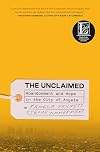
The subtitle, “Abandonment and Hope in the City of Angels” says it all. The Unclaimed is extensive research into an area that most of us do not know much about. In a specific area of Los Angeles, every year, there are thousands of unclaimed dead that have, for one reason or another, been abandoned by their families and left for the government to provide burials. Those workers who process the unclaimed provide hope by trying to locate next of kin through heroic efforts. This situation is show more not unique to LA, but occurs all over the US and hundreds of thousands of dead are unclaimed every year.
The authors are professionally trained sociologists and have demonstrated excellent research practices in regard to the subject matter and handled the sensitive nature of specific people’s lives. Through their years of research, they have shed some light on how some people have ended up unclaimed. The book focuses on the lives of a few that were unclaimed in this area of LA. They interviewed those that knew them best in their last years and, in some cases, extended family who had lost track of them many years ago. The authors have included extensive notes and references.
The Unclaimed is a real eye opener for me regarding something that I had not considered and did not know was a serious problem in the US. This research helps to humanize those that become unclaimed, shows respect to these individuals, and is a reminder that their lives are much more than just a statistic. It is clear that reforms are badly needed in the process of how we classify the unclaimed and who we allow to ‘claim’ them, but first, research, like this, needed to be done to document how the system is working today.
I received an ARC copy, courtesy of the author and publisher through Goodreads Giveaway. Expected Publication Date: March 2024 show less
The authors are professionally trained sociologists and have demonstrated excellent research practices in regard to the subject matter and handled the sensitive nature of specific people’s lives. Through their years of research, they have shed some light on how some people have ended up unclaimed. The book focuses on the lives of a few that were unclaimed in this area of LA. They interviewed those that knew them best in their last years and, in some cases, extended family who had lost track of them many years ago. The authors have included extensive notes and references.
The Unclaimed is a real eye opener for me regarding something that I had not considered and did not know was a serious problem in the US. This research helps to humanize those that become unclaimed, shows respect to these individuals, and is a reminder that their lives are much more than just a statistic. It is clear that reforms are badly needed in the process of how we classify the unclaimed and who we allow to ‘claim’ them, but first, research, like this, needed to be done to document how the system is working today.
I received an ARC copy, courtesy of the author and publisher through Goodreads Giveaway. Expected Publication Date: March 2024 show less
Lists
Awards


You May Also Like
Associated Authors
Statistics
- Works
- 8
- Members
- 268
- Popularity
- #86,165
- Rating
- 3.9
- Reviews
- 9
- ISBNs
- 21