
Phoebe North
Author of Starglass
Series
Works by Phoebe North
If You Should Ever Leave Me 1 copy
Associated Works
Tagged
Common Knowledge
- Gender
- female
Members
Reviews

I liked The Hunger Games Post-apocalyptic and dystopian, it was a coming-of-age action novel with fun character issues. I never quite cared about Katniss's personal and family life, as Katniss never quite seemed to care enough, either. The writing was good, the adventure was fine, and for our reality-show culture it was a perfect hit. The most intriguing moments in Hunger Games, which rang in my head long after the novel was done, were those depicting the main character's relationship with show more her mother. I have friends who were forced by circumstances to become the responsible one in their family, and that stuff was more interesting than the action scenes. I dislike reality shows; I am far more interested in reality. Hunger Games sets up a devastating family dynamic but then takes me out into the woods for the duration of the novel. Phoebe North's Starglass does all the good parts of this better. No, there's no death game show. Instead, we stay with the family, with a spare and interesting culture, and we have to grow up in the middle of all of it, side-by-side with a complex, enjoyable character. I don't like young adult coming-of-age stories. They all read the same to me, and they focus on feelings that I explored when I was 14 and don't want to experience again. So why did I like this book? Starglass was so well-written that it overcame me. Phoebe North managed to grab my gut and fling it in several scenes. She didn't take us away from the family, something a lot of YA does. There's no easy escape for the main character, and no easy stereotypes. We get abrupt, beautiful moments of poignancy. "Death is only an ending for the person who died." Recommended. Will read this author again. Disclaimer: We are friends. show less

Phoebe North's Starglass has been on my radar ever since I learned that the author was once a prominent blogger. I've never read that blog and don't know too much about her, but I like supporting bloggers, so I wanted to read this book. I always expect big things from bloggers who publish, because they know better than anyone what tropes to avoid, or so I assume. For the most part, that was very true in Starglass and I did very much enjoy North's debut.
The plot on a basic level is highly show more reminiscent of Beth Revis' Across the Universe trilogy. However, in the course of one book, North takes the plot through what took two books in that series: the dissent on the ship and the approach to the planet towards which they've been heading. This is not to say that the two are identical by any means, because they're not. In fact, I think I rather like Starglass better, both for the abbreviated time on ship and for the more interesting characters.
As I mentioned already, North does a lot of those things bloggers regularly request. There's diversity in that everyone on board the Asherah is Jewish, this being one of many ships that departed Earth as its destruction neared the Asherah only accepted those of Jewish descent. One of Terra's ancestors, a non-practicing Jew and a lesbian (squee!) found a place on the ship. There are other gay characters as well, which is awesome, even if society does not approve, which is less awesome.
Another fantastic thing is how many of the authority figures on the Asherah are female. Women and men are in equal standing here. The current leader of the guard is an imposing female by the name of Captain Wolff. When the time comes for marrying (16 - if you have not chosen by 18, a mate will be chosen for you), girls can ask for a boy's hand in marriage just as the boys may ask. Plus, women don't have to bear the two mandated children (one male, one female), as they are hatched from eggs in a disturbing and haunting process.
As with Revis' series, the plot consists largely of a combined mystery and rebellion. North does a good job with it, and did surprise me with one of the twists there at the end. On the Asherah, it's really hard to know who to trust, and that's conveyed beautifully. The pace does move somewhat slow, without much action, but I really enjoyed the writing so I didn't mind.
So far as the characters go, they don't quite have the depth I would have wished for, but they are interesting. Terra's narration is intelligent, but lacks the scientific know-how to get too much into the nitty gritty science fiction details, but that worked out pretty well. For most of the book, Terra has a tendency to go along with what others want of her, even if she's not particularly happy with it. By the end, she's finally obtaining some agency of her own, perhaps due to the example of Mara Stone, to whom she's apprenticed, or to the craziness going down on board the Asherah.
My only other concern is the romance. Most of what went down with that in Starglass was walking the border of discomfiting. For example, I find her treatment of her first suitor rather hateful, but, then again, he did lie to her, so I suppose it's forgivable as long as she learns from the experience, which I think she has. Terra's second suitor also upsets me, because of what that did to her friend, whom she envies for being so pretty. Hopefully, the impending love interest will lay my concerns to rest, but things could really go either way at this point.
The ending leaves me very ready for book two, though Starglass does come to a nice ending of the main plot arc. Phoebe North's debut is a fun science fiction novel on the lighter side, and I look forward to her career; I expect good things! show less
The plot on a basic level is highly show more reminiscent of Beth Revis' Across the Universe trilogy. However, in the course of one book, North takes the plot through what took two books in that series: the dissent on the ship and the approach to the planet towards which they've been heading. This is not to say that the two are identical by any means, because they're not. In fact, I think I rather like Starglass better, both for the abbreviated time on ship and for the more interesting characters.
As I mentioned already, North does a lot of those things bloggers regularly request. There's diversity in that everyone on board the Asherah is Jewish, this being one of many ships that departed Earth as its destruction neared the Asherah only accepted those of Jewish descent. One of Terra's ancestors, a non-practicing Jew and a lesbian (squee!) found a place on the ship. There are other gay characters as well, which is awesome, even if society does not approve, which is less awesome.
Another fantastic thing is how many of the authority figures on the Asherah are female. Women and men are in equal standing here. The current leader of the guard is an imposing female by the name of Captain Wolff. When the time comes for marrying (16 - if you have not chosen by 18, a mate will be chosen for you), girls can ask for a boy's hand in marriage just as the boys may ask. Plus, women don't have to bear the two mandated children (one male, one female), as they are hatched from eggs in a disturbing and haunting process.
As with Revis' series, the plot consists largely of a combined mystery and rebellion. North does a good job with it, and did surprise me with one of the twists there at the end. On the Asherah, it's really hard to know who to trust, and that's conveyed beautifully. The pace does move somewhat slow, without much action, but I really enjoyed the writing so I didn't mind.
So far as the characters go, they don't quite have the depth I would have wished for, but they are interesting. Terra's narration is intelligent, but lacks the scientific know-how to get too much into the nitty gritty science fiction details, but that worked out pretty well. For most of the book, Terra has a tendency to go along with what others want of her, even if she's not particularly happy with it. By the end, she's finally obtaining some agency of her own, perhaps due to the example of Mara Stone, to whom she's apprenticed, or to the craziness going down on board the Asherah.
My only other concern is the romance. Most of what went down with that in Starglass was walking the border of discomfiting. For example, I find her treatment of her first suitor rather hateful, but, then again, he did lie to her, so I suppose it's forgivable as long as she learns from the experience, which I think she has. Terra's second suitor also upsets me, because of what that did to her friend, whom she envies for being so pretty. Hopefully, the impending love interest will lay my concerns to rest, but things could really go either way at this point.
The ending leaves me very ready for book two, though Starglass does come to a nice ending of the main plot arc. Phoebe North's debut is a fun science fiction novel on the lighter side, and I look forward to her career; I expect good things! show less
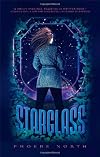
Very rarely, every so often – -but not very often — comes along a book that just takes hold of me. These are books that I remember years after I have read them. Starglass is one of those books. I am not sure why I was surprised by Starglass. Perhaps because I was thinking — what more could be done with young adult and science fiction. I should not doubt the capacity for invention among the creative — and author Phoebe North is definitely creative. This is a book I am sharing with my show more 13.5 year old and my husband. Starglass is fun, it is beautiful and it is important. There are so many big themes in this book but they are not done in an “in your face way”. The themes are background. Some readers have noted that religion plays a role int his book. But I disagree — I don’t think religion is a theme. The culture of a religion is definitely a theme, but religion as a way to worship or express faith in a higher being was not present. Does that make sense?
The setting of this book is a spaceship, however it felt like a village yet it was still claustrophobic. The idea of people boarding a ship they would never leave and never ever set foot on the destination is amazing to me. Amazing in the sense that I cannot fathom it. Maybe because everything is so immediate for me in my current life style. The simple sacrifice given in hopes that generations later will benefit? Amazing.
Some themes in this book center on duty to society -- they play on religious culture and romanticism. But I see the governing power as using these themes to control the populace. For example, the young girls often talk about finding their soulmate/Bashert. I found the concept of soulmate/Bashert to be used by those running the ship to get people to buy into the idea of picking a mate of the opposite sex and staying with that person for the remainder of their lives. But full disclosure — I am not a sucker for soulmates. I just don’t believe in it, but then I a like romance novels without a happily ever after. ;) Another example is that reproduction does not happen in a woman's body any longer but in a hatchery. The concept of the hatchery seems to be done in many futuristic novels. But how it was done in Starglass — with the incorporation of joy and anticipation was new. I wonder though, is it really more energy to have babies the old fashioned way? It seems like a lot of energy is put into the hatchery. But the use of the hatchery does remove the self sustaining ability of each individual and transfers the power for everything to the government. I wonder if that was the purpose. Something as simple as creating one’s own family was removed from each individual.
Language and Terminology
The main character, Terra, is a great main character! She is appealing, but not perfect. I really appreciate having a main character with flaws, she is just more personable and more identifiable. Her shame and embarrassments in certain situations were so real. North does a great job at drawing out Terra’s insecurities and her differences from the other youth her age. Terra has that something that allows her to question things and be loyal — some people have it and others don’t. The friendships Terra has are so real and believable. One of the talents Ms. North has is to slowly draw relationships. By doing this, the build up in the story is well done and situations that happen are believable.
The novel works toward a certain climax. It makes sense where the people of the ship are going. In getting there, there is a great twist and an awesome reveal. No spoilers in this review — but the twist as to who was behind everything was great. Not surprising but great. The people in the story and on the ship have surrendered everything to the higher ups, they have bought into a caste system, they have no ability to full express themselves verbally, creatively or sexually. I can see the motivation for wanting something different, something more in tune with what was left behind 500 years ago.
“I thought about how our society had survived these five hundred years. By swallowing our lumps and doing what we were told. Even if it bored us — even if we hated it.”
I want the sequel now – -Phoebe did you read that? Do you need a beta reader? :D I am going to look into the other stories Ms. North has out. And we can always enjoy her very thoughtful reviews on Goodreads and where she blogs.
So who would enjoy this story? This is easy — fans of reading. I am serious. Fans of young adult books, fans of science fiction, speculative fiction, and dystopia will have love this book. But readers do not have to be into young adult or science fiction to like this novel. It is so well written and is a beautiful story. Starglass has broad base appeal.
For more reviews like this check out Badass Book Reviews show less
Understatement of the century: this is an intense book, almost to the point of being uncomfortable to read. Of course, I'm an empathetic reader, so I find that's the case with a lot of books I pick up. North certainly has a talent for prose and creating characters. Granted, you may not like some of those characters . . .
You May Also Like


Associated Authors
Statistics
- Works
- 6
- Also by
- 3
- Members
- 431
- Popularity
- #56,716
- Rating
- 3.6
- Reviews
- 12
- ISBNs
- 11