

Anna Faktorovich
Author of The Romances of George Sand
About the Author
Anna Faktorovich is the founder and director of the Anaphora Literary Press and the editor-in-chief of the Pennsylvania Literary Journal. She has been a professor of English for Middle Georgia College and for Edinboro University of Pennsylvania.
Image credit: Anna Faktorovich: 2022
Works by Anna Faktorovich
The Formulas of Popular Fiction: Elements of Fantasy, Science Fiction, Romance, Religious and Mystery Novels (2014) 6 copies
Film Theory and Modern Art: Volume VI, Issue 1 (Pennsylvania Literary Journal Book 6) (2014) 3 copies
Introduction to the Attribution of Literature: The Re-Attribution of the British 18th and 19th Century Corpuses (2025) 3 copies, 1 review
Gender Bias in Mystery and Romance Novel Publishing: Mimicking Masculinity and Femininity (2015) 3 copies, 1 review
Associated Works
Restitution of decayed intelligence in antiquities, concerning the most noble and renowned English nation. (2023) — Translator, some editions — 12 copies, 1 review
Tagged
Common Knowledge
- Birthdate
- 1981-07-24
- Gender
- female
- Education
- University of Massachusetts, Amherst (BA|Economics)
University of South Carolina (MA|Comparative Literature)
Indiana University of Pennsylvania (PhD|English Literature) - Occupations
- publisher
writer - Short biography
- Anna Faktorovich is the Director and Founder of the Anaphora Literary Press. She taught college English for over four years at the University of Texas RGV, Middle Georgia College, and Edinboro University of Pennsylvania. She has a PhD in English Literature. She published two scholarly books: "Rebellion as Genre in the Novels of Scott, Dickens and Stevenson" (McFarland, 2013) and "The Formulas of Popular Fiction: Elements of Fantasy, Science Fiction, Romance, Religious and Mystery Novels" (McFarland, 2014). She is the author of the 20-volume British Renaissance Re-Attribution and Modernization series. She received a Kentucky Historical Society and Brown University fellowships. Her research has been cited in 42 scholarly articles and books, according to Google Scholar, as of 2023.
- Nationality
- USA
- Places of residence
- Quanah, Texas, USA
- Associated Place (for map)
- Texas, USA
Members
Discussions
Who Really Wrote the Works of the British Renaissance? thread 2 in Talk about LibraryThing (March 27)
Who Really Wrote the Works of the British Renaissance? in Talk about LibraryThing (September 2024)
Reviews
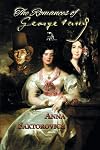
The Romances of George Sand is published by Anaphora Literary Press, whose "Director and Owner," Anna Faktorovich, "designs all of the books." In other words, The Romances of George Sand is self-published....
....and furnishes excellent proof of the dangers of self-publication.
The author has a doctoral degree in English and has taught at the college level, which is positively frightening considering the poor writing and the numerous misspellings and grammatical errors in this book. Worse yet, show more in many instances the author's misspellings are not mere typographical errors but apparently actual misunderstandings of English vocabulary, considering that some such errors appear consistently on more than one occasion — for example, the author's confusion between the verb alter and the noun altar, which occurs (as I recall) thrice. The author should also learn the proper use of semicolons, which are used to connect independent clauses, because her erroneous use of commas in such cases produces numerous run-on sentences.
And the writing itself grates on my ear. The author needs to learn the concept of register {Wikipedia} in a literary or linguistic sense. One simply does not use the word "kids" as a substitute for "children" when writing in an otherwise formal style in narration, even if the use of the word might be appropriate to informal dialogue in the novel.
And the dialogue! It's often so stilted that I started wondering whether the author is actually a native English speaker or whether she has learned English as a second language. And some of the descriptions of sexual scenes are so badly written as to be comic — such as the reference to male and female monkeys, along with something about being taken from behind!
The book is also poorly designed, with illustrations which should appear at the beginning of a chapter, right after the chapter heading, sometimes instead appearing at the end of the preceding chapter.
Some other reviewers have praised the author's "research" and "knowledge" of her subject, but here I tend toward skepticism, especially considering her apparent obsession with attempted arsenic poisonings of various characters. Her view that Napoleon died of arsenic poisoning is by no means so universally accepted as Faktorovich asserts, and this leads me to question a good deal of her other research as well.
There is a reason for publishers. Publishers employ editors, and editors can get a book into some kind of readable shape — assuming that the book is even accepted in the first place and gets to the editorial stage (which I doubt this one would). And publishers employ proof-readers as well as graphic designers, all of whom can give a book a professional look. The Romances of George Sand is a good example of why self-publishing should be avoided. show less
....and furnishes excellent proof of the dangers of self-publication.
The author has a doctoral degree in English and has taught at the college level, which is positively frightening considering the poor writing and the numerous misspellings and grammatical errors in this book. Worse yet, show more in many instances the author's misspellings are not mere typographical errors but apparently actual misunderstandings of English vocabulary, considering that some such errors appear consistently on more than one occasion — for example, the author's confusion between the verb alter and the noun altar, which occurs (as I recall) thrice. The author should also learn the proper use of semicolons, which are used to connect independent clauses, because her erroneous use of commas in such cases produces numerous run-on sentences.
And the writing itself grates on my ear. The author needs to learn the concept of register {Wikipedia} in a literary or linguistic sense. One simply does not use the word "kids" as a substitute for "children" when writing in an otherwise formal style in narration, even if the use of the word might be appropriate to informal dialogue in the novel.
And the dialogue! It's often so stilted that I started wondering whether the author is actually a native English speaker or whether she has learned English as a second language. And some of the descriptions of sexual scenes are so badly written as to be comic — such as the reference to male and female monkeys, along with something about being taken from behind!
The book is also poorly designed, with illustrations which should appear at the beginning of a chapter, right after the chapter heading, sometimes instead appearing at the end of the preceding chapter.
Some other reviewers have praised the author's "research" and "knowledge" of her subject, but here I tend toward skepticism, especially considering her apparent obsession with attempted arsenic poisonings of various characters. Her view that Napoleon died of arsenic poisoning is by no means so universally accepted as Faktorovich asserts, and this leads me to question a good deal of her other research as well.
There is a reason for publishers. Publishers employ editors, and editors can get a book into some kind of readable shape — assuming that the book is even accepted in the first place and gets to the editorial stage (which I doubt this one would). And publishers employ proof-readers as well as graphic designers, all of whom can give a book a professional look. The Romances of George Sand is a good example of why self-publishing should be avoided. show less
 This review was written for LibraryThing Early Reviewers.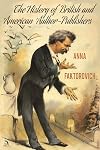
"The History of British and American Author-Publishers" by Dr. Anna Faktorovich is an invigorating plunge into the muddy sediment of history that supports the modern publishing industry. Faktorovich deftly explores the roots of artistic and marketplace tensions that continue to plague authors and publishers today.
In the introduction, she shares research questions that have guided her exploration. Perhaps foremost among them is "Why did most successful author-publishers have to create their show more own companies...?" (page 8). The many answers to that question are presented to the reader with great clarity throughout the book. There were then (and are now) many more reasons for authors to assume the publisher's role than just the pain of a rejected manuscript. Authors' personal angst was just the beginning of their stories.
Power and intrigue remain at the crux of the intersection between art and politics in the works of the authors Faktorovich has chronicled. She presents the tabloid-esque publishing climate surrounding the careers of Sir Walter Scott, Lord Byron, Charles Dickens, and Edgar Allan Poe, with scintillating details from the gossip of their times. For example, her explanation of Poe's death counters the conspiracy theory that Poe was assassinated due to a rift with Queen Victoria.
Especially helpful to students and historians are the charts Faktorovich created to highlight thematic elements. There's a chart on "The History of Author Publishers" featuring authors' "Life-Plot Movement[s]" {page 347) and another chart that aligns each author with their "Political Cause" and the "Outcome of the Struggle" (page 342). There's also a diagram of past business activity that accompanies the discussion on the few monolithic publishers who constitute the corners in today's publishing marketplace. All these charts are so helpful that I wish that this book included yet another chart on the "Big Five" that lists the names of their imprints along with other associated ventures and properties (like cable television channels, etc.) .
Also very helpful to students is Faktorovich's primer (in the introduction) on proper definition and nomenclature in professional publishing. For example, the phrase "self-publishing" is a vernacular faux pas that is best avoided in conversations on author-publishers.
This book was absolutely delightful to read and one of the best "Early Reviewer" volumes that I have had the privilege to enjoy! show less
In the introduction, she shares research questions that have guided her exploration. Perhaps foremost among them is "Why did most successful author-publishers have to create their show more own companies...?" (page 8). The many answers to that question are presented to the reader with great clarity throughout the book. There were then (and are now) many more reasons for authors to assume the publisher's role than just the pain of a rejected manuscript. Authors' personal angst was just the beginning of their stories.
Power and intrigue remain at the crux of the intersection between art and politics in the works of the authors Faktorovich has chronicled. She presents the tabloid-esque publishing climate surrounding the careers of Sir Walter Scott, Lord Byron, Charles Dickens, and Edgar Allan Poe, with scintillating details from the gossip of their times. For example, her explanation of Poe's death counters the conspiracy theory that Poe was assassinated due to a rift with Queen Victoria.
Especially helpful to students and historians are the charts Faktorovich created to highlight thematic elements. There's a chart on "The History of Author Publishers" featuring authors' "Life-Plot Movement[s]" {page 347) and another chart that aligns each author with their "Political Cause" and the "Outcome of the Struggle" (page 342). There's also a diagram of past business activity that accompanies the discussion on the few monolithic publishers who constitute the corners in today's publishing marketplace. All these charts are so helpful that I wish that this book included yet another chart on the "Big Five" that lists the names of their imprints along with other associated ventures and properties (like cable television channels, etc.) .
Also very helpful to students is Faktorovich's primer (in the introduction) on proper definition and nomenclature in professional publishing. For example, the phrase "self-publishing" is a vernacular faux pas that is best avoided in conversations on author-publishers.
This book was absolutely delightful to read and one of the best "Early Reviewer" volumes that I have had the privilege to enjoy! show less
This review was written for LibraryThing Early Reviewers.I received this as an early reviewer’s copy, with thanks to the author.
Anna Faktorovich’s book ‘The Romances of George Sand’ is clearly presented as a novel, not a biography of the French writer Aurore Dupin probably most famed for her love affairs, including with Chopin.
The advantage for Faktorovich is that the premise of fiction allows her to imagine and articulate a history for Sand that does not have to be anchored in proven fact. The premise of writing a novel allows her to show more create conversations, and explore and imagine in concrete terms events that remain contested, including the rumoured affair with actress Marie Dorval. However, Faktorovich’s book remains tied to the historical narrative conventions of the biographer. She starts with Aurore’s grandmother’s ill-fated meeting with Rousseau, and ploughs through the ins and outs of French history and her father’s role in the Napoleanic wars before the focus really starts to develop around Aurore/George. Sometimes the focus feels unbalanced: five chapters on the Napoleanic wars and five pages on the affair with Chopin.
The adherence to a rigid time based narrative structure weighs the book down. It also misses the opportunity to explore the intersection of conjecture and fact in a more thematic way (I find myself thinking of the contrasting approaches of Colm Toibin and David Lodge to writing in novel form about Henry James). And while it is the privilege of the novelist to insert the author’s voice, here these interventions further the impression of an academic biography, and someone with a political and personal agenda in interpreting Sand.
Faktorovich’s book is readable (though a better edit would have shortened the Napoleanic section, caught more of the liberal typos and completed the occasional unfinished sentence). She clearly knows her subject intimately and the book will give a broader perspective of Sand to those familiar only with her most famous affairs. George Sand is a fascinating character, challenging many of the conventions of her period, but I felt the picture I gained was as much of the author’s mindset as Sands’ viewpoint. show less
Anna Faktorovich’s book ‘The Romances of George Sand’ is clearly presented as a novel, not a biography of the French writer Aurore Dupin probably most famed for her love affairs, including with Chopin.
The advantage for Faktorovich is that the premise of fiction allows her to imagine and articulate a history for Sand that does not have to be anchored in proven fact. The premise of writing a novel allows her to show more create conversations, and explore and imagine in concrete terms events that remain contested, including the rumoured affair with actress Marie Dorval. However, Faktorovich’s book remains tied to the historical narrative conventions of the biographer. She starts with Aurore’s grandmother’s ill-fated meeting with Rousseau, and ploughs through the ins and outs of French history and her father’s role in the Napoleanic wars before the focus really starts to develop around Aurore/George. Sometimes the focus feels unbalanced: five chapters on the Napoleanic wars and five pages on the affair with Chopin.
The adherence to a rigid time based narrative structure weighs the book down. It also misses the opportunity to explore the intersection of conjecture and fact in a more thematic way (I find myself thinking of the contrasting approaches of Colm Toibin and David Lodge to writing in novel form about Henry James). And while it is the privilege of the novelist to insert the author’s voice, here these interventions further the impression of an academic biography, and someone with a political and personal agenda in interpreting Sand.
Faktorovich’s book is readable (though a better edit would have shortened the Napoleanic section, caught more of the liberal typos and completed the occasional unfinished sentence). She clearly knows her subject intimately and the book will give a broader perspective of Sand to those familiar only with her most famous affairs. George Sand is a fascinating character, challenging many of the conventions of her period, but I felt the picture I gained was as much of the author’s mindset as Sands’ viewpoint. show less
This review was written for LibraryThing Early Reviewers.
This was way too dense for me, but if dense hard sci-fi is your thing you will love this. The ideas are fantastic and there are so many of them. Honestly I suspect that if this was given an editing make-over it might be a 5* review from me. I was really excited when reading the chapter blurbs, but actually reading the chapters proved challenging.
This review was written for LibraryThing Early Reviewers.You May Also Like
Associated Authors
Statistics
- Works
- 24
- Also by
- 18
- Members
- 149
- Popularity
- #139,412
- Rating
- 3.2
- Reviews
- 61
- ISBNs
- 39


