
J. Christoph Amberger
Author of The Secret History of the Sword: Adventures in Ancient Martial Arts
About the Author
Works by J. Christoph Amberger
Tagged
Common Knowledge
Members
Reviews
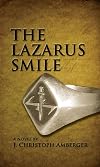
Amberger couldn’t have chosen a more controversial figure to base his conspiracy on than Saul of Tarsus, otherwise known as Saint Paul. Paul, the Apostle, was by all accounts a very complicated man. He was a world traveler and was opposed to many of the Christian Laws. He suffered from epilepsy, was a life-long bachelor who harbored a fiery temper, was impulsive and impassioned in the extreme and never truly learned to harness his ever-changing mood swings. Now add the concept that Paul show more may have been a double-agent for the Roman Emperor and a believable conspiracy takes shape. (Note to fans of Biblical history: Paul himself does not appear as a true character in this novel but only as a catalyst to base the controversy on.)
In “The Lazarus Smile” Amberger gives credence to the saying, “The pen is mightier than the sword.” For three simple words may change the course of world events forever. I’ll leave it to the reader to discover what those words might be (and the how’s and why’s.) Suffice it to say that the idea is sound and makes for a great mystery and a solid conspiracy.
The historical fiction is convincingly written and very believable. You’ll visit Nazi Germany in World War II, the Roman Empire of 69 A.D. (the year that four emperors took the throne), and the volatile world of present-day politics and religious belief. The origins of Christianity, multiple conspiracies, and secret societies are described with an eye for the details that make history so compelling to so many readers. While a number of the characters may have been killed off a bit before their time the main, lasting characters were intriguing and well-written. I especially enjoyed the retired CIA operative that dabbled in Black Ops. (I hope to see him again!) The main character, who uncovers a fifty-year-old family secret, was also quite believable and solidly written.
All in all, “The Lazarus Smile” is a fast paced, page turning historical ride that I enjoyed until the very last page.
4 out of 5 stars
The Alternative
Southeast Wisconsin show less
In “The Lazarus Smile” Amberger gives credence to the saying, “The pen is mightier than the sword.” For three simple words may change the course of world events forever. I’ll leave it to the reader to discover what those words might be (and the how’s and why’s.) Suffice it to say that the idea is sound and makes for a great mystery and a solid conspiracy.
The historical fiction is convincingly written and very believable. You’ll visit Nazi Germany in World War II, the Roman Empire of 69 A.D. (the year that four emperors took the throne), and the volatile world of present-day politics and religious belief. The origins of Christianity, multiple conspiracies, and secret societies are described with an eye for the details that make history so compelling to so many readers. While a number of the characters may have been killed off a bit before their time the main, lasting characters were intriguing and well-written. I especially enjoyed the retired CIA operative that dabbled in Black Ops. (I hope to see him again!) The main character, who uncovers a fifty-year-old family secret, was also quite believable and solidly written.
All in all, “The Lazarus Smile” is a fast paced, page turning historical ride that I enjoyed until the very last page.
4 out of 5 stars
The Alternative
Southeast Wisconsin show less
This review was written for LibraryThing Member Giveaways.
J. Christoph Amberger's Hot Trading Secrets: How to Get In and Out of the Market with Huge Gains in Any Climate by J. Christoph Amberger
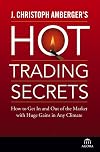
This book reads like one of those loud mouth relatives who lectures abrasively but if you can manage to get a few golden nuggets of wisdom, it will net you many golden nuggets. One of my favorite authors, Michael Masterson, recommended Amberger's book and though many ideas rankled me I think I have gleaned some nuggets out of the book.
The idea I most agree with is buying an IPO shortly before the no press release period and selling the stock shortly before the lockout when insiders will dump show more their shares on the open market. I will have to look more carefully into this technique.
The underlying theme of the books are to make money and the market is always right and ruthless.
Supposing there is a way to make a living trading ... is this really honorable profession? It's not illegal but it's not exactly productive. Is it any different than taking advantage of the "system" and for example finding ways to take advantage of the government programs? Many of us have recoiled at watching us subsidize an unemployed person's drinking habit.
I am somewhat shaken by the the idea that the market is for making money not for validating your philosophies. Think in the grand scheme of things, EVERYTHING is about our philosophies, ideas, and dreams of our visions of life. What is yours?
I have a conflict in me between the roar of excitement of outsmarting someone and the warming glow of helping someone. Sometimes I think of the swaggering greed in me that keeps the innocent child from being corrupted. Perhaps, it's the child in me that keeps the swaggering from dominating my thinking ... and become a wealthy but empty person. show less
The idea I most agree with is buying an IPO shortly before the no press release period and selling the stock shortly before the lockout when insiders will dump show more their shares on the open market. I will have to look more carefully into this technique.
The underlying theme of the books are to make money and the market is always right and ruthless.
Supposing there is a way to make a living trading ... is this really honorable profession? It's not illegal but it's not exactly productive. Is it any different than taking advantage of the "system" and for example finding ways to take advantage of the government programs? Many of us have recoiled at watching us subsidize an unemployed person's drinking habit.
I am somewhat shaken by the the idea that the market is for making money not for validating your philosophies. Think in the grand scheme of things, EVERYTHING is about our philosophies, ideas, and dreams of our visions of life. What is yours?
I have a conflict in me between the roar of excitement of outsmarting someone and the warming glow of helping someone. Sometimes I think of the swaggering greed in me that keeps the innocent child from being corrupted. Perhaps, it's the child in me that keeps the swaggering from dominating my thinking ... and become a wealthy but empty person. show less
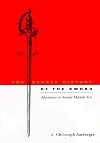
My sword arm veers to the right during the first moulinet, leaving the left side of my had open and setting the stage for an even less-covered low quarte. My mistake is punished immediately: Within a second, two horizontal quartes hammer into my left temple, a bit more than an inch apart. Oddly detached, I feel the double tap of the blade...Someing cold runs down my face. I can tast blood. My own blood...'
Few martial artists and modern fencers today are aware of the mysterious realm of show more lethally effective fighting arts taught and practised in Europe from classical antiquity until the 20th century. The Secret History of the Sword introduces you to long-forgotten techniques and obscure references from ancient manuscripts and sources that allow a clear picture to emerge of the sophisticated empty-hand and edged-weapons fighting skills of the West. Balancing a hands-on approach to sword fighting with detailed analysis of anicent and modern manuals, you encounter:
A heartstopping view at the bloodsports systems of the Greeks and Romans.
A devastating critique of Paton's 1913 saber system.
Proof that 'Renaissance' sword techniqeus were empolyed as early as A.D. 150.
A fighter's perspective on the use of cut and thrust weapons on foot and horseback from the 1600s to World War I.
An exclusive look at an unknown Burgundian baton fighting system.
Drills and targets of the Highland broadsword.
An account of a German student duel with sharp rapiers...from the fighter's point of view!
...as well as dozens of first-hand accounts and references of encounters in the various ways Westren warriors of all eras used the sword in lethal and non-lethal combat.
'I love the book! What a great piece of work. It's definitely an important contribution to fencing history. Really. You can quote me...There's nothing else like it on the market. I will recommend it to anyone.'-Nick Evangelista, author, The Encycloedia of the Sword (1995), The Art and Science of Fencing (1996), and Fighting with Sticks (1998).
'Amberger's approach...is a ruthless earch-and-destroy mission that takes the reader on a quest for the turth that starts in obcure Caucasian mythology, crosses the Greco-Roman past, and then blows through the mIddle Ages, Renaissance, and modern period with the force of a two-handed Dopelsoeldner broadsword.'-Blue Steel (USA)
'This is a refreshing and often controversial account of the skill levels and efficacy of swordplay systems throughout the ages. (...) An excellent education for the fencer who has perhaps unquestioningly accepted the traditional view of the history of the sword.'-Malcolm Rare, editor, The Sword (UK)
'I recommend this book (...) to anyone in the Japanese arts even remotely interested in the sword in a wider context.'-Kim Taylor, editor, Journal of Japanese Swords Arts (Canada)
J. Christoph Amberger is one of the foremost experts on the continuity of Wesern sword-fighting sysems. As the edior and publisher of Hammererz Forum, the only journal devoted entirely to the forgotten sword arts of the West, his credentials include the Disovery Channel's documentary series Deadly Duels, consulting for the Metropolitan Museum of Art, as well as countless articles in historical, fencing, and martial arts journals. Between1985 and 1987, he fought seven sharp Mensuren with the German cutting rapier.
Contents
Prelude-Combat for survival (early duel without peer supervision): 'Duel between Sri Edward Sackville and Lord Bruce, A.D. 1610'
Salut
Part One Studies in mythology
Case in point 1-'Moving target: On the varied backgrounds of the saber target'
Interlude-Antagonistic combat (Mounted melee); 'Balttle scenes from Balaklava'
Case in point 2-'A horse is a horse, of course, of course' (And no-one would hit at a hourse, of course)'
Interlude Antagonsitic combat (fight for survival) 'Troublesome teutons'
Case in point 3 'The seduction of art: Cut vs. thrust in military swordplay'
Interlude Comment combat (Mensur): 'Ultimate male bonding: A Schlager Mensur at Gottingen, A.D. 1987'
Part Two Grid of steel: The spheres of combat
Interlude-Antagonistic combat (Unregulated duel): 'An unregulated duel to the death with Navajas'
Men of iron
Interlude-Antagonistic comment combat (duel) 'The epee duel Romano vs. Liscotti Rome, 1898'
The tools
Interlude-Olympian competitive combat: 'The lady in the park: An epee bout, c.1920'
The threat
Interlude-Competitive combat (Playing the prize): 'A Fechtschule in late 16th-Century Germany
The encounter
Intrlude-Antagonistic combat (duel) 'A dish-hilt rapier Mensur at Jena, c.1840'
Part Three-Adventures in lost combat arts
Adventures in lost combat arts 1 'Reconstructing ancient martial arts'
Interlude-Comment combat (ordeal/wager of battle): 'Much ado about nothing: the legal pageantry of the ordeal'
Adventures in lost combat arts 2 'The dialectics of death'
Interlude-Comment combat (duel): 'The saber duel Terrone vs. Flauto, Rome, A.D. 1896'
Adventures in lost combat arts 3 'The way of the gladius'
Interlude-Agonistic combat (unclassified): 'Sword and buckler fighting among the lost crusaders'
Adventures in lost combat arts 4 'Renaissance swod techniques in A.D. 150!'
Interlude-Antagonistic comment combat (duel): 'Life imitating operetta: An old-world melodrama in Jackson Park, Chicago, 1891'
Adventures in lost combat arts 5 'Barbarians at the gates'
Interlude-Comment combat (prize fight with sharp weapons): 'Trial of skill, July 16, 1712'
Adventures in lost combat arts 6 'Carnage at Wisby'
Interlude-Combat for survival (recontre): 'Dead Poets Society; Rencontre in Hog Lane, A.D. 1589'
Adventures in lost combat arts 7 'Medieval wacky whackers'
Interlude-Antagonistic comment combat (saber Mensur):
'Tramps abroad: On the use of the basket-hilt saber'
Adventures in lost combat arts 8 'Pride and prejudice'
Interlude-antagonisitc combat (combat for survival): 'Kraut control: How American Gs were to fight sword-wielding axis officers in World War II'
Adventures in lost combat arts 9 'Glory days of the foil'
Interlude-Agonistic combat: 'A singlestick match in Victorian England'
Adventures in lost combat arts 10 'How to defend a monopoly: Strategic planning in running a Salle'
Epilog
About the author
Select bibliography
Appendix show less
Few martial artists and modern fencers today are aware of the mysterious realm of show more lethally effective fighting arts taught and practised in Europe from classical antiquity until the 20th century. The Secret History of the Sword introduces you to long-forgotten techniques and obscure references from ancient manuscripts and sources that allow a clear picture to emerge of the sophisticated empty-hand and edged-weapons fighting skills of the West. Balancing a hands-on approach to sword fighting with detailed analysis of anicent and modern manuals, you encounter:
A heartstopping view at the bloodsports systems of the Greeks and Romans.
A devastating critique of Paton's 1913 saber system.
Proof that 'Renaissance' sword techniqeus were empolyed as early as A.D. 150.
A fighter's perspective on the use of cut and thrust weapons on foot and horseback from the 1600s to World War I.
An exclusive look at an unknown Burgundian baton fighting system.
Drills and targets of the Highland broadsword.
An account of a German student duel with sharp rapiers...from the fighter's point of view!
...as well as dozens of first-hand accounts and references of encounters in the various ways Westren warriors of all eras used the sword in lethal and non-lethal combat.
'I love the book! What a great piece of work. It's definitely an important contribution to fencing history. Really. You can quote me...There's nothing else like it on the market. I will recommend it to anyone.'-Nick Evangelista, author, The Encycloedia of the Sword (1995), The Art and Science of Fencing (1996), and Fighting with Sticks (1998).
'Amberger's approach...is a ruthless earch-and-destroy mission that takes the reader on a quest for the turth that starts in obcure Caucasian mythology, crosses the Greco-Roman past, and then blows through the mIddle Ages, Renaissance, and modern period with the force of a two-handed Dopelsoeldner broadsword.'-Blue Steel (USA)
'This is a refreshing and often controversial account of the skill levels and efficacy of swordplay systems throughout the ages. (...) An excellent education for the fencer who has perhaps unquestioningly accepted the traditional view of the history of the sword.'-Malcolm Rare, editor, The Sword (UK)
'I recommend this book (...) to anyone in the Japanese arts even remotely interested in the sword in a wider context.'-Kim Taylor, editor, Journal of Japanese Swords Arts (Canada)
J. Christoph Amberger is one of the foremost experts on the continuity of Wesern sword-fighting sysems. As the edior and publisher of Hammererz Forum, the only journal devoted entirely to the forgotten sword arts of the West, his credentials include the Disovery Channel's documentary series Deadly Duels, consulting for the Metropolitan Museum of Art, as well as countless articles in historical, fencing, and martial arts journals. Between1985 and 1987, he fought seven sharp Mensuren with the German cutting rapier.
Contents
Prelude-Combat for survival (early duel without peer supervision): 'Duel between Sri Edward Sackville and Lord Bruce, A.D. 1610'
Salut
Part One Studies in mythology
Case in point 1-'Moving target: On the varied backgrounds of the saber target'
Interlude-Antagonistic combat (Mounted melee); 'Balttle scenes from Balaklava'
Case in point 2-'A horse is a horse, of course, of course' (And no-one would hit at a hourse, of course)'
Interlude Antagonsitic combat (fight for survival) 'Troublesome teutons'
Case in point 3 'The seduction of art: Cut vs. thrust in military swordplay'
Interlude Comment combat (Mensur): 'Ultimate male bonding: A Schlager Mensur at Gottingen, A.D. 1987'
Part Two Grid of steel: The spheres of combat
Interlude-Antagonistic combat (Unregulated duel): 'An unregulated duel to the death with Navajas'
Men of iron
Interlude-Antagonistic comment combat (duel) 'The epee duel Romano vs. Liscotti Rome, 1898'
The tools
Interlude-Olympian competitive combat: 'The lady in the park: An epee bout, c.1920'
The threat
Interlude-Competitive combat (Playing the prize): 'A Fechtschule in late 16th-Century Germany
The encounter
Intrlude-Antagonistic combat (duel) 'A dish-hilt rapier Mensur at Jena, c.1840'
Part Three-Adventures in lost combat arts
Adventures in lost combat arts 1 'Reconstructing ancient martial arts'
Interlude-Comment combat (ordeal/wager of battle): 'Much ado about nothing: the legal pageantry of the ordeal'
Adventures in lost combat arts 2 'The dialectics of death'
Interlude-Comment combat (duel): 'The saber duel Terrone vs. Flauto, Rome, A.D. 1896'
Adventures in lost combat arts 3 'The way of the gladius'
Interlude-Agonistic combat (unclassified): 'Sword and buckler fighting among the lost crusaders'
Adventures in lost combat arts 4 'Renaissance swod techniques in A.D. 150!'
Interlude-Antagonistic comment combat (duel): 'Life imitating operetta: An old-world melodrama in Jackson Park, Chicago, 1891'
Adventures in lost combat arts 5 'Barbarians at the gates'
Interlude-Comment combat (prize fight with sharp weapons): 'Trial of skill, July 16, 1712'
Adventures in lost combat arts 6 'Carnage at Wisby'
Interlude-Combat for survival (recontre): 'Dead Poets Society; Rencontre in Hog Lane, A.D. 1589'
Adventures in lost combat arts 7 'Medieval wacky whackers'
Interlude-Antagonistic comment combat (saber Mensur):
'Tramps abroad: On the use of the basket-hilt saber'
Adventures in lost combat arts 8 'Pride and prejudice'
Interlude-antagonisitc combat (combat for survival): 'Kraut control: How American Gs were to fight sword-wielding axis officers in World War II'
Adventures in lost combat arts 9 'Glory days of the foil'
Interlude-Agonistic combat: 'A singlestick match in Victorian England'
Adventures in lost combat arts 10 'How to defend a monopoly: Strategic planning in running a Salle'
Epilog
About the author
Select bibliography
Appendix show less
The Lazarus Smile is solidly written and the plot components fit together nicely. Amberger has obviously studied the craft and planned well for this book. Still, I felt the ending was a little rushed.
The reason I only gave it 3.5 stars is because the thrill/secret does not live up to its back cover billing. I wasn't "thrilled" by this book because I was unable to enter into Stahl's world. Even if true the secret would not "destabilize the world and destroy Christianity." Unfortunately, the show more secret information is so implausible, requiring the overturning of too much established history with regard to Rome, the origins of Christianity, and WW2, etc. My suspension of disbelief was strained beyond the tipping point. Perhaps it is only the idea that there is such secret information out there that is designed to destabilize the world. Perhaps Amberger is part of the conspiracy :). show less
The reason I only gave it 3.5 stars is because the thrill/secret does not live up to its back cover billing. I wasn't "thrilled" by this book because I was unable to enter into Stahl's world. Even if true the secret would not "destabilize the world and destroy Christianity." Unfortunately, the show more secret information is so implausible, requiring the overturning of too much established history with regard to Rome, the origins of Christianity, and WW2, etc. My suspension of disbelief was strained beyond the tipping point. Perhaps it is only the idea that there is such secret information out there that is designed to destabilize the world. Perhaps Amberger is part of the conspiracy :). show less
This review was written for LibraryThing Member Giveaways.
Statistics
- Works
- 4
- Members
- 138
- Popularity
- #148,170
- Rating
- 3.6
- Reviews
- 8
- ISBNs
- 4