
Jill Filipovic
Author of The H-Spot: The Feminist Pursuit of Happiness
About the Author
Image credit: Gary He
Works by Jill Filipovic
Associated Works
Yes Means Yes!: Visions of Female Sexual Power and A World Without Rape (2008) — Contributor — 638 copies, 12 reviews
Nasty Women: Feminism, Resistance, and Revolution in Trump's America (2017) — Contributor — 253 copies, 10 reviews
Tagged
Common Knowledge
- Birthdate
- 1983-08-03
- Gender
- female
- Education
- New York University (BA)
New York University School of Law (JD) - Occupations
- contributing writer (New York Times)
attorney
columnist (The Guardian)
blogger (Feministe) - Organizations
- New York Times (contributor)
The Guardian (columnist)
Feministe (blogger) - Awards and honors
- Society of Professional Journalists Sigma Delta Chi Award, best online column writing (2014, 2015)
Newswomen's Club of New York Front Page Award for opinion/ criticism (2014)
Planned Parenthood Federation of America Maggie Award for Media Excellence for best TV and online reporting (2015) - Nationality
- USA
- Places of residence
- Seattle area, Washington, USA
- Map Location
- USA
Members
Reviews
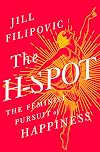
How the intersection between misogyny and America’s anti-pleasure culture makes everything worse. Nothing shocking if you’ve been reading in the feminist blogosphere, but a good overview of everything from work to motherhood to sex to food. Prioritizing one’s own happiness is, for women, a huge and radical act, and one that is likely to draw condemnation from all sides. (See, e.g., internalized misogyny in fandom that combines with ageism.) This isn’t limited to sex, but Filipovic show more argues that sex is a big part of it. “Lesbians orgasm 75 percent of the time, which is almost as often as men who have sex with women orgasm, suggesting the problem is less the female body than either male sexual aptitude or male sexual effort.” If sex was just good, not shameful and threatening, “the entire experience of womanhood—the definition of womanhood—would be unrecognizable.” But for women, being “good” has too long meant saying no—to sex, to food, to pleasure. Sacrifice and fear—avoiding parties, worrying about attacks in parking lots, wearing high heels, spending hours on makeup—are too central to “womanhood” in America.
And then there’s motherhood: borrowing from Adrienne Rich, Filipovic reminds us that “mothering” is an ongoing action, and “fathering” is an emission, and that’s a big problem. Work as a source of positive identity is a goal: daughters of mothers who work for money are higher-achieving than daughters of mothers who don’t work outside the home, and their sons do more work at home, including childcare. Contrariwise, men whose wives stay at home are more likely to discriminate against female coworkers—Mike Pence to the contrary. Yet high-achieving men are much more likely to assume that their wives won’t work, whereas high-achieving women think that they’ll both work (and are attracted to men with similar ambitions to their own, setting them up for a big clash). Most such men ended up satisfied, while many of their female peers found themselves driven out of the workforce if they married and had children. The problems of poor working women are different and shameful for us as a nation, but also gendered and raced. Poor women lack respect, time, and child care along with money and good work, and these things reinforce each other and are used to blame women for their own situations. show less
And then there’s motherhood: borrowing from Adrienne Rich, Filipovic reminds us that “mothering” is an ongoing action, and “fathering” is an emission, and that’s a big problem. Work as a source of positive identity is a goal: daughters of mothers who work for money are higher-achieving than daughters of mothers who don’t work outside the home, and their sons do more work at home, including childcare. Contrariwise, men whose wives stay at home are more likely to discriminate against female coworkers—Mike Pence to the contrary. Yet high-achieving men are much more likely to assume that their wives won’t work, whereas high-achieving women think that they’ll both work (and are attracted to men with similar ambitions to their own, setting them up for a big clash). Most such men ended up satisfied, while many of their female peers found themselves driven out of the workforce if they married and had children. The problems of poor working women are different and shameful for us as a nation, but also gendered and raced. Poor women lack respect, time, and child care along with money and good work, and these things reinforce each other and are used to blame women for their own situations. show less
I'd class this as a solid introductory overview to some feminist ideas about everything from sex to food to motherhood to names. Jill Filipovic doesn't cover particularly new ground here, but I liked—and wished she'd hammered home more—her framework as to how misogyny and the U.S.'s toxic approach to pleasure and happiness reinforce one another.

A very thorough and detailed investigation into what science can tell us about happiness in women. Happiness is chronically under-studied and it should surprise no one that this is even more true in women. Furthermore, even when we can recognize clear barriers to happiness in women, no part of society is invested in removing these barriers. Our entire society has been built upon the expected sacrifices and labor of women. Typically these sacrifices are so commonplace they are barely show more recognized as such.
The author systematically dissects this double standard and interviews those who are most impacted by it as well as those who are seeking to improve matters. A fascinating book, although quite discouraging at times. show less
The author systematically dissects this double standard and interviews those who are most impacted by it as well as those who are seeking to improve matters. A fascinating book, although quite discouraging at times. show less
The book has a good thesis--that women should seek to maximize their happiness. There's a lot of good material scattered through the book. Despite that, it doesn't really succeed, largely because Filipovic doesn't know what kind of book she wants to write. The scope is too wide: each chapter focuses on a part of women's lives that could take a book to cover thoroughly on its own. The content flips between research, interview material, and her own thoughts, and it's an uneven mix. She's show more upfront that she's exactly the kind of middle class white woman that's been too visible in feminist texts, and she does try to bring in data and interviews from people who aren't like her, but in sections, her voice dominates. It's most noticeable in the Parenting chapter, where her lack of personal experience with the topic makes her musings sit somewhat uneasily and her recommendations feel too packaged. In addition, while she is aware of her race and class, and religion gets a nod in the sex chapter, other issues go unmentioned--disability is barely spoken about.
It's not bad, but if you've read any of the recent books about feminism as applied to people's lives, it probably won't tell you anything new. show less
It's not bad, but if you've read any of the recent books about feminism as applied to people's lives, it probably won't tell you anything new. show less
You May Also Like
Associated Authors
Statistics
- Works
- 2
- Also by
- 2
- Members
- 128
- Popularity
- #157,244
- Rating
- 4.0
- Reviews
- 8
- ISBNs
- 11