

Tad Bartimus
Author of War torn: stories of war from the women reporters who covered Vietnam
Works by Tad Bartimus
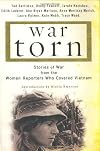
War torn: stories of war from the women reporters who covered Vietnam (2002) — Contributor — 106 copies, 2 reviews
Associated Works
Mid-life Confidential: The Rock Bottom Remainders Tour America with Three Chords and an Attitude (1994) — Contributor — 76 copies, 4 reviews
Tagged
Common Knowledge
- Birthdate
- 1947-09-05
- Gender
- female
- Education
- University of Missouri (BA, Journalism)
- Occupations
- journalist
radio commentator - Organizations
- Rock Bottom Remainders (band)
Journalism and Women Symposium (founder)
Kansas City Star
Associated Press
University of Alaska, Anchorage - Awards and honors
- Missouri Honor Medal
- Short biography
- [excerpted from University of Missouri website]
Bartimus' journalism career began at the Belton (Mo.) Star Herald when she was 14 years old. While in college she interned at The Kansas City Star during summer breaks, and was a University of Missouri campus correspondent for the Columbia Daily Tribune. After graduation in January 1969, she began a 25-year career at The Associated Press, working on four continents. Highlights from her wire service postings include being named AP's first female bureau chief and first female special correspondent, special roving correspondent, and a foreign correspondent in Vietnam, London and Latin America.
Bartimus founded the Journalism and Women Symposium (JAWS) organization in 1985, which now has more than 800 members nationwide.
In 1990, Bartimus was awarded a Missouri Honor Medal for Distinguished Service in Journalism from the University of Missouri School of Journalism.
Following her AP career, Bartimus worked as the Atwood Chair of Journalism at the University of Alaska Anchorage from 1993 to 1996. Bartimus and her husband, Dean Wariner, then moved moved to Hana, Hawaii, in 1996. Bartimus created the weekly column "Among Friends", syndicated nationally by United Features Syndicate from 2000 to 2010. Bartimus founded Talk Story, Write Story in 1998 as a volunteer mentor.
In addition to her journalism career, Bartimus has co-authored four books including Trinity's Children: Living Along America's Nuclear Highway and War Torn: Stories of War from the Women Reporters who Covered Vietnam.
She was also one of the founding members of The Rock Bottom Remainders writers rock ‘n' roll band, but she has given up public performances since she can no longer fit into her sequined mini dress. - Nationality
- USA
- Birthplace
- Trenton, Missouri, USA
- Places of residence
- Hana, Maui, Hawaii, USA
Missouri, USA
Vietnam
London, Middlesex, England, UK
Anchorage, Alaska, USA - Associated Place (for map)
- USA
Members
Reviews
In 1966, when I graduated from an all-female college, women were just beginning to embrace the concept that opportunities were open to them, that we went to college to get an education-not a husband, although many of us still embraced the "womanly" occupations of school teacher, nurse, and librarian. I joined the Navy, and found myself (after a rigorous Officer Candidate training in Newport RI) serving in a schools command personnel office in Newport where for the next two plus years, I show more spent 50% of my time, signing orders and travel papers and getting clearances to send graduates of the Navy's various training schools in Newport to duty in Vietnam. None of my Newport classmates (all females) served in country. The only women the Navy sent were nurses. I signed their orders, but I didn't go through training with them and I didn't go to war with them. My war was at home, convincing myself that our country couldn't possibly make the horrible mistake the war protesters screamed we were making.
My husband graduated from the Naval Academy that same year, and many of his classmates did go to Vietnam. Several didn't return. He went in 1972, commanding a large ocean going tug ferrying barges in and out of that dangerous area. We don't talk a lot about the war. To this day, I cannot go to the Vietnam War Memorial (THE WALL) without breaking down in tears. It's not just for the people we know. The tears are for all the people we didn't know, that we'll never have the chance to know, and for the loved ones who never had the chance for a long life together like we have had, for the incredible carnage and anguish our country endured because of what is known as Vietnam.
So........it was with a great deal of trepidation that I took on the reading challenge War Throughout the Generations: Vietnam. I wasn't certain I was ready to tackle what I was sure could only be an extremely politicized and polarizing experience. I don't watch war movies, I can't stand to see anything with blood and guts and guns and grenades. I even have trouble reading some 'thrillers' if they're too graphic. Is it that if I can't picture it, then it didn't happen? I'm especially sure that I'll probably never be able to publicly blog about my still conflicted thoughts.
War Torn, was the perfect book for me to begin my reading, and maybe even to begin to examine my feelings. Written by nine women who served as war correspondents in Vietnam during various periods of the conflict between 1966 and 1975, the diverse perspectives, adventures, and experiences of this group helped me to come to grips with the fact that it's ok not to be able to resolve our feelings. They came from a variety of backgrounds and educations (one had never worked in any journalistic capacity - she got to Vietnam as a pediatrician's girlfriend!), they had an assortment of marching orders (from covering traditional women's items like families and food to going anywhere the military would permit them), and they had a wide range of reactions.
I was struck so strongly by their love of the country and the people. Anyone I've ever spoken to who went there speaks of the beauty of the land, and the gentleness and integrity of the people. The government may have been corrupt, and the land may have been decimated by all participants, but these women were all able to find something positive to bring out of their experiences. I was especially struck by their insistence of getting the word out about what the average GI was really going through, by trying to get to know them, convincing field commanders to let them accompany troops in the field, and then report about soldier's heroism, fears, and battlefield wisdom.
I was also struck by the difference between "the war" as experienced by those who stayed mainly in Saigon, and "the war" out in the valleys, in the mountains, in the villages.
Kate Webb: "...back in Saigon it was different. You got back more often than not stinking, sweat caked, mosquito bitten, and badly in need of a shower, the images of the last week or ten days --the loss, the nerves, the bitterness, the adrenaline, the fear-- to lights, booze, laughter, and martinis on the terrace of the Caravelle (hotel) pg. 68
The courage (some might say recklessness?) exhibited by this group as they schlepped up mountain sides wearing 100 lb packs, burned leeches off their arms and legs, waded across rivers holding their precious cameras and tape recorders over their heads, ducked into trenches to avoid flying mortars was not what was expected of 'little ladies' of our generation. Several were wounded, a couple have debilitating physical issues that will follow them for the rest of their lives. They adopted Vietnamese children, wrote books, and basically did what they were supposed to do--they reported what they saw.
Several admitted however, that they had been unable to think about or reminisce about their time until this project was proposed. It was only in this book, 25 -30 years after they left, that they allowed themselves to confront some of the very emotional issues they had to bury in order to report in an objective manner. Kate Webb was taken prisoner (in Cambodia) at one point. In writing about the experience, her ability to detach and report is impressive.
With the lack of any news or reference point, any reality check, in the grey limbo of 'the prisoner'--where you are not among the living or the dead of the war, but trapped in a gray twilight with no links to the living world--you reach a point inside yourself that you wouldn't reach otherwise. Pg. 78
There are other memorable quotes from several of them:
Anne Bryan Mariano: "Being in the field proved to me that while there are many cases of individual courage and heroism among soldiers, there is nothing about war itself that is heroic." pg. 39)
Tad Bartimus : "In my youth I thought I was invincible, that if I didn't get shot or visibly maimed, I'd get away clean. But surviving a war doesn't mean you escape being its victim. .....my ongoing health problems (from exposure to Agent Orange?) remind me that thousands of veterans still fight the Vietnam War every day in their own bodies." pg. 188, 217.
Laura Walker, who 'hitchhiked' to Vietnam with no press credentials or experience, writes eloquently of the other group of women who served in Vietnam, and about whom as a group not much has been written, the nurses
"The myth is that women weren't in combat. In an official sense, that's true...Nurses saw the war from the inside out, from the rotting wounds infested with maggots to the stink of burned flesh, the mangled limbs, and the sucking chest wounds....The nurses wanted, willed, hoped, believed, prayed, and yearned for their patients to live so much that each death felt like a defeat. Nearly every nurse came home with a debilitating and corrosive sense of failure embedded in her soul. If only she ad been a better nurse, more would have survived. "
These are powerful and empowering stories-- for women and men. If you want to start reading about actual 'in country' experiences, this is a great place to start. show less
My husband graduated from the Naval Academy that same year, and many of his classmates did go to Vietnam. Several didn't return. He went in 1972, commanding a large ocean going tug ferrying barges in and out of that dangerous area. We don't talk a lot about the war. To this day, I cannot go to the Vietnam War Memorial (THE WALL) without breaking down in tears. It's not just for the people we know. The tears are for all the people we didn't know, that we'll never have the chance to know, and for the loved ones who never had the chance for a long life together like we have had, for the incredible carnage and anguish our country endured because of what is known as Vietnam.
So........it was with a great deal of trepidation that I took on the reading challenge War Throughout the Generations: Vietnam. I wasn't certain I was ready to tackle what I was sure could only be an extremely politicized and polarizing experience. I don't watch war movies, I can't stand to see anything with blood and guts and guns and grenades. I even have trouble reading some 'thrillers' if they're too graphic. Is it that if I can't picture it, then it didn't happen? I'm especially sure that I'll probably never be able to publicly blog about my still conflicted thoughts.
War Torn, was the perfect book for me to begin my reading, and maybe even to begin to examine my feelings. Written by nine women who served as war correspondents in Vietnam during various periods of the conflict between 1966 and 1975, the diverse perspectives, adventures, and experiences of this group helped me to come to grips with the fact that it's ok not to be able to resolve our feelings. They came from a variety of backgrounds and educations (one had never worked in any journalistic capacity - she got to Vietnam as a pediatrician's girlfriend!), they had an assortment of marching orders (from covering traditional women's items like families and food to going anywhere the military would permit them), and they had a wide range of reactions.
I was struck so strongly by their love of the country and the people. Anyone I've ever spoken to who went there speaks of the beauty of the land, and the gentleness and integrity of the people. The government may have been corrupt, and the land may have been decimated by all participants, but these women were all able to find something positive to bring out of their experiences. I was especially struck by their insistence of getting the word out about what the average GI was really going through, by trying to get to know them, convincing field commanders to let them accompany troops in the field, and then report about soldier's heroism, fears, and battlefield wisdom.
I was also struck by the difference between "the war" as experienced by those who stayed mainly in Saigon, and "the war" out in the valleys, in the mountains, in the villages.
Kate Webb: "...back in Saigon it was different. You got back more often than not stinking, sweat caked, mosquito bitten, and badly in need of a shower, the images of the last week or ten days --the loss, the nerves, the bitterness, the adrenaline, the fear-- to lights, booze, laughter, and martinis on the terrace of the Caravelle (hotel) pg. 68
The courage (some might say recklessness?) exhibited by this group as they schlepped up mountain sides wearing 100 lb packs, burned leeches off their arms and legs, waded across rivers holding their precious cameras and tape recorders over their heads, ducked into trenches to avoid flying mortars was not what was expected of 'little ladies' of our generation. Several were wounded, a couple have debilitating physical issues that will follow them for the rest of their lives. They adopted Vietnamese children, wrote books, and basically did what they were supposed to do--they reported what they saw.
Several admitted however, that they had been unable to think about or reminisce about their time until this project was proposed. It was only in this book, 25 -30 years after they left, that they allowed themselves to confront some of the very emotional issues they had to bury in order to report in an objective manner. Kate Webb was taken prisoner (in Cambodia) at one point. In writing about the experience, her ability to detach and report is impressive.
With the lack of any news or reference point, any reality check, in the grey limbo of 'the prisoner'--where you are not among the living or the dead of the war, but trapped in a gray twilight with no links to the living world--you reach a point inside yourself that you wouldn't reach otherwise. Pg. 78
There are other memorable quotes from several of them:
Anne Bryan Mariano: "Being in the field proved to me that while there are many cases of individual courage and heroism among soldiers, there is nothing about war itself that is heroic." pg. 39)
Tad Bartimus : "In my youth I thought I was invincible, that if I didn't get shot or visibly maimed, I'd get away clean. But surviving a war doesn't mean you escape being its victim. .....my ongoing health problems (from exposure to Agent Orange?) remind me that thousands of veterans still fight the Vietnam War every day in their own bodies." pg. 188, 217.
Laura Walker, who 'hitchhiked' to Vietnam with no press credentials or experience, writes eloquently of the other group of women who served in Vietnam, and about whom as a group not much has been written, the nurses
"The myth is that women weren't in combat. In an official sense, that's true...Nurses saw the war from the inside out, from the rotting wounds infested with maggots to the stink of burned flesh, the mangled limbs, and the sucking chest wounds....The nurses wanted, willed, hoped, believed, prayed, and yearned for their patients to live so much that each death felt like a defeat. Nearly every nurse came home with a debilitating and corrosive sense of failure embedded in her soul. If only she ad been a better nurse, more would have survived. "
These are powerful and empowering stories-- for women and men. If you want to start reading about actual 'in country' experiences, this is a great place to start. show less
The stories of the women journalists whom were in Vietnam show us their true colors and how human they were during one of the darkest times in U.S. history. I loved reading this book.
Awards

You May Also Like
Associated Authors
Statistics
- Works
- 2
- Also by
- 1
- Members
- 150
- Popularity
- #138,699
- Rating
- 3.4
- Reviews
- 2
- ISBNs
- 5

