
Nishioka Brosis
Author of Kafka
About the Author
Works by Nishioka Brosis
Associated Works
MONKEY vol.16 カバーの一ダース — Contributor — 1 copy
Tagged
Common Knowledge
- Other names
- Nishioka, Brosis
Kyōdai, Nishioka
Nishioka, Satoshi (brother half of creative duo)
Nishioka, Chiaki (sister half of creative duo)
Nishioka, Kyōdai - Relationships
- Nishioka, Satoshi
Nishioka, Chiaki - Short biography
- "Nishioka Kyodai" or "Nishioka Brosis" is the pen name of a brother and sister creative duo. From Kafka: " . . . Satoshi, the elder brother, takes the lead with the story and composition, and Chiaki, the younger sister, takes the lead with the graphic renderings."
- Nationality
- Japan
- Map Location
- Japan
Members
Reviews
Rating: 5* of five
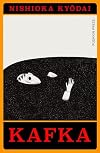
The Publisher Says: Two cult-favorite Japanese artists present eerie graphic adaptations of 9 classic Kafka short stories, with hypnotic illustrations that will appeal to fans of Junji Ito
Franz Kafka’s work is given vivid new life in this collection of manga adaptations of 9 of his greatest stories.
With spectacularly detailed, otherworldly illustrations, the brother-and-sister duo known as Nishioka Kyodai create a haunting, claustrophobic visual world for Kafka’s show more surreal masterpieces.
Features adapted versions of:
The Metamorphosis
A Hunger Artist
In the Penal Colony
A Country Doctor
The Concerns of a Patriarch
The Bucket Rider
Jackals and Arabs
A Fratricide
The Vulture
Among the standouts are "The Metamorphosis" and "A Hunger Artist," which present absorbing moments for their unique art style to offer vivid entry points into Kafka's world and which take the immersion experience to a whole other level.
Story Locale:Kafkaesque Eastern Europe
I RECEIVED A DRC FROM THE PUBLISHER VIA EDELWEISS+. THANK YOU.
My Review: This is a surreal reading experience. Kafka is, famously, a surrealist author; then one translates his surreality into Japanese, a language that seems to me (a non-speaker) as very surrealism-friendly and pairs it with manga-style illustrations, again a style famously surreal in every particular; and REtranslate the lot into English from Japanese.
...I need a lie-down...
Dizzying as all this sounds as I try to explain it, the reality is more dizzying still. The more I read, the more I felt the odd out-of-body sensation that Kafka induces in me at all times. It was more powerful than usual because the art is so exactly the visual representation of the story that I, a highly visual reader, create for myself when reading Kafka. The "author" named for this manga is actually a pair of siblings...the name is literally Japanese for literally "Nishioka siblings" and are described by Pushkin Press as:
...the brother-and-sister manga duo of Satoshi Nishioka and Chiaki Nishioka. They debuted in the weekly magazine Morning in 1989 and have since produced more than a dozen works and have become well-known for their surreal illustration style and dark psychological themes.
There's no part of that I could argue with. The translator, as one would expect, is:
...a Ph.D. student in Japanese Literature at UCLA, having previously received a B.A. in German Literature and Cultural History from Columbia University. He translates from Japanese, Chinese, and German.
...handily explaining how and why he came to be the one to make this fascinating project come to life. Talk about a rare bird! This is someone who understands the literature and the language of the original, the translation, and the translation of the translation!
...my head hurts...
Look at these images:
If that isn't your inward-eye image of Kafka, I can see it being so wonderfully surreal on its own that it wouldn't matter.
I think the reality-bending nature of a manga adaptation of a translation of a translation would've appealed to Kafka. As a Yule gift, a beautiful item to sit quietly and absorb on #Booksgiving as you sip your chili pepper-infused cocoa beside the meat-draped skeletons of your loved ones' ghosts, makes this an excellent gift. show less
The Publisher Says: Two cult-favorite Japanese artists present eerie graphic adaptations of 9 classic Kafka short stories, with hypnotic illustrations that will appeal to fans of Junji Ito
Franz Kafka’s work is given vivid new life in this collection of manga adaptations of 9 of his greatest stories.
With spectacularly detailed, otherworldly illustrations, the brother-and-sister duo known as Nishioka Kyodai create a haunting, claustrophobic visual world for Kafka’s show more surreal masterpieces.
Features adapted versions of:
The Metamorphosis
A Hunger Artist
In the Penal Colony
A Country Doctor
The Concerns of a Patriarch
The Bucket Rider
Jackals and Arabs
A Fratricide
The Vulture
Among the standouts are "The Metamorphosis" and "A Hunger Artist," which present absorbing moments for their unique art style to offer vivid entry points into Kafka's world and which take the immersion experience to a whole other level.
Story Locale:Kafkaesque Eastern Europe
I RECEIVED A DRC FROM THE PUBLISHER VIA EDELWEISS+. THANK YOU.
My Review: This is a surreal reading experience. Kafka is, famously, a surrealist author; then one translates his surreality into Japanese, a language that seems to me (a non-speaker) as very surrealism-friendly and pairs it with manga-style illustrations, again a style famously surreal in every particular; and REtranslate the lot into English from Japanese.
...I need a lie-down...
Dizzying as all this sounds as I try to explain it, the reality is more dizzying still. The more I read, the more I felt the odd out-of-body sensation that Kafka induces in me at all times. It was more powerful than usual because the art is so exactly the visual representation of the story that I, a highly visual reader, create for myself when reading Kafka. The "author" named for this manga is actually a pair of siblings...the name is literally Japanese for literally "Nishioka siblings" and are described by Pushkin Press as:
...the brother-and-sister manga duo of Satoshi Nishioka and Chiaki Nishioka. They debuted in the weekly magazine Morning in 1989 and have since produced more than a dozen works and have become well-known for their surreal illustration style and dark psychological themes.
There's no part of that I could argue with. The translator, as one would expect, is:
...a Ph.D. student in Japanese Literature at UCLA, having previously received a B.A. in German Literature and Cultural History from Columbia University. He translates from Japanese, Chinese, and German.
...handily explaining how and why he came to be the one to make this fascinating project come to life. Talk about a rare bird! This is someone who understands the literature and the language of the original, the translation, and the translation of the translation!
...my head hurts...
Look at these images:
If that isn't your inward-eye image of Kafka, I can see it being so wonderfully surreal on its own that it wouldn't matter.
I think the reality-bending nature of a manga adaptation of a translation of a translation would've appealed to Kafka. As a Yule gift, a beautiful item to sit quietly and absorb on #Booksgiving as you sip your chili pepper-infused cocoa beside the meat-draped skeletons of your loved ones' ghosts, makes this an excellent gift. show less
In a Nutshell: If you are a Kafka fan AND you also like darker graphics in the style of Junji Ito, this is for you.
This graphic novel, first published in Japanese in 2010, contains the manga adaptations of nine of Kafka’s stories. The specialty of the original is the macabre graphics by two siblings - brother Satoshi Nishioka and sister Chiaki Nishioka - who go by ‘Nishioka Kyoudai’, ‘kyoudai’ meaning ‘siblings’. This translation by David Yang, due to be published in October show more 2023, is the first ever translation of a Nishioka Kyoudai work in English.
Take a moment to consider how wild this is! Kafka’s novellas were originally written in German, and translated into English, which were then translated into Japanese manga, which are now translated back to English manga. I don’t envy David Yang his job. He had the tough task of retaining the essence of both the originals, and as far as I can tell, he has done a spectacular job of doing justice to both Kafka and Nishioka Kyoudai.
The Nishioka siblings also handle their charge well. Taking Kafka’s bizarre stories and putting them into graphics isn’t a cakewalk. Their doing so while retaining the essence of the original tales deserves applause. For instance, Kafka was very clear about not indicating what creature the protagonist turns into in ‘The Metamorphosis’; the manga version sticks to his specification. Imagine having a whole graphic novel story where you cannot see the protagonist and can still connect with what’s happening! The art is somewhat geometric throughout the novel, transcending colour and dimension to match the stories’ darker, psychological undertones. (One can’t really expect light and frothy when Kafka is at the helm of the tales.)
Most pages are in typical manga arrangement (right-to-left order) but some panels suddenly change the orientation of the text to landscape. When the whole page is horizontally oriented, it is still fine. But when only a couple of panels on a page change the direction of the text, the reading flow gets affected, especially when you are reading this digitally. This was the only negative of the manga adaptation.
So full marks to the translation and high marks to the manga. It should now be obvious that the cause of my lower rating is the main man, Kafka himself. Let me put it this way: Kafka didn’t fail me; I failed him.
Kafka’s ‘The Metamorphosis’, his only novella that I have read to date, is probably the only surreal story that I have *liked* in my entire life. I had wanted to try some more of his works, so when this manga version came my way, I decided to pick this up as a reading experiment. I should have known better!
I have never been fond of surrealism as a genre, and Kafka went beyond all my expectations to prove that his brain was in a different realm altogether. I tried my best but most of his stories bounced off my brain like a rubber ball. As someone who loves logic and treasures common sense, I was a misfit for his whimsical writing that crosses into not just the bizarre but also the gory. (Thank heavens for the B&W illustrations that reduced the impact of the grislier scenes!)
After the third story, I kept Google open in my browser so that I could read online analyses of the work after reaching my own measly conclusions for each tale. In many cases, my interpretation and the “expert” opinions online were not even close. (Shows you how smart I am at metaphysical deciphering! show less
This graphic novel, first published in Japanese in 2010, contains the manga adaptations of nine of Kafka’s stories. The specialty of the original is the macabre graphics by two siblings - brother Satoshi Nishioka and sister Chiaki Nishioka - who go by ‘Nishioka Kyoudai’, ‘kyoudai’ meaning ‘siblings’. This translation by David Yang, due to be published in October show more 2023, is the first ever translation of a Nishioka Kyoudai work in English.
Take a moment to consider how wild this is! Kafka’s novellas were originally written in German, and translated into English, which were then translated into Japanese manga, which are now translated back to English manga. I don’t envy David Yang his job. He had the tough task of retaining the essence of both the originals, and as far as I can tell, he has done a spectacular job of doing justice to both Kafka and Nishioka Kyoudai.
The Nishioka siblings also handle their charge well. Taking Kafka’s bizarre stories and putting them into graphics isn’t a cakewalk. Their doing so while retaining the essence of the original tales deserves applause. For instance, Kafka was very clear about not indicating what creature the protagonist turns into in ‘The Metamorphosis’; the manga version sticks to his specification. Imagine having a whole graphic novel story where you cannot see the protagonist and can still connect with what’s happening! The art is somewhat geometric throughout the novel, transcending colour and dimension to match the stories’ darker, psychological undertones. (One can’t really expect light and frothy when Kafka is at the helm of the tales.)
Most pages are in typical manga arrangement (right-to-left order) but some panels suddenly change the orientation of the text to landscape. When the whole page is horizontally oriented, it is still fine. But when only a couple of panels on a page change the direction of the text, the reading flow gets affected, especially when you are reading this digitally. This was the only negative of the manga adaptation.
So full marks to the translation and high marks to the manga. It should now be obvious that the cause of my lower rating is the main man, Kafka himself. Let me put it this way: Kafka didn’t fail me; I failed him.
Kafka’s ‘The Metamorphosis’, his only novella that I have read to date, is probably the only surreal story that I have *liked* in my entire life. I had wanted to try some more of his works, so when this manga version came my way, I decided to pick this up as a reading experiment. I should have known better!
I have never been fond of surrealism as a genre, and Kafka went beyond all my expectations to prove that his brain was in a different realm altogether. I tried my best but most of his stories bounced off my brain like a rubber ball. As someone who loves logic and treasures common sense, I was a misfit for his whimsical writing that crosses into not just the bizarre but also the gory. (Thank heavens for the B&W illustrations that reduced the impact of the grislier scenes!)
After the third story, I kept Google open in my browser so that I could read online analyses of the work after reaching my own measly conclusions for each tale. In many cases, my interpretation and the “expert” opinions online were not even close. (Shows you how smart I am at metaphysical deciphering! show less
Kafka is all about metaphor, symbolism, allusion, fable and allegory, which is annoying enough on its own, but to see it all drawn out makes it seem all the more silly and nonsensical, no matter how creepy and eerie the art.
For me, the most interesting aspect of this work is brought up in the translator's afterword. Here are short stories originally written in German by Franz Kafka that were translated into Japanese text by Osamu Ikeuchi, then adapted into graphic novel format by Nishioka show more Kyodai -- the pen name of a brother and sister creative team: writing lead Satoshi Nishioka and illustrating lead Chiaki Nishioka -- and now are being translated again into English by David Yang. The ultimate game of Telephone! Yang translates both German and Japanese, so he worked to come up with a melding of Kafka's original text and the sentiments expressed by the Nishioka duo. If I didn't care so little about the stories, I'd be inclined to dig into a comparison of another English translation of the works (alas, my college German was never that good and largely forgotten now) and what ends up on the page here.
FOR REFERENCE:
Contents: The Concerns of a Patriarch [a/k/a The Cares of a Family Man] -- The Metamorphosis -- The Bucket Knight [a/k/a The Coal-Scuttle Rider] -- Jackals and Arabs -- A Fratricide -- The Vulture -- A Country Doctor -- A Hunger Artist -- In the Penal Colony -- Afterword / Nishioka Satoshi -- Afterword / David Yang
(Best of 2023 Project: I'm reading all the graphic novels that made it onto one or more of these lists:
• Washington Post 10 Best Graphic Novels of 2023
• Publishers Weekly 2023 Graphic Novel Critics Poll
• NPR's Books We Love 2023: Favorite Comics and Graphic Novels
This book made the NPR list.) show less
For me, the most interesting aspect of this work is brought up in the translator's afterword. Here are short stories originally written in German by Franz Kafka that were translated into Japanese text by Osamu Ikeuchi, then adapted into graphic novel format by Nishioka show more Kyodai -- the pen name of a brother and sister creative team: writing lead Satoshi Nishioka and illustrating lead Chiaki Nishioka -- and now are being translated again into English by David Yang. The ultimate game of Telephone! Yang translates both German and Japanese, so he worked to come up with a melding of Kafka's original text and the sentiments expressed by the Nishioka duo. If I didn't care so little about the stories, I'd be inclined to dig into a comparison of another English translation of the works (alas, my college German was never that good and largely forgotten now) and what ends up on the page here.
FOR REFERENCE:
Contents: The Concerns of a Patriarch [a/k/a The Cares of a Family Man] -- The Metamorphosis -- The Bucket Knight [a/k/a The Coal-Scuttle Rider] -- Jackals and Arabs -- A Fratricide -- The Vulture -- A Country Doctor -- A Hunger Artist -- In the Penal Colony -- Afterword / Nishioka Satoshi -- Afterword / David Yang
(Best of 2023 Project: I'm reading all the graphic novels that made it onto one or more of these lists:
• Washington Post 10 Best Graphic Novels of 2023
• Publishers Weekly 2023 Graphic Novel Critics Poll
• NPR's Books We Love 2023: Favorite Comics and Graphic Novels
This book made the NPR list.) show less
Kafka: A Graphic Novel Adaptation by Nishioka Kyoudai (a brother and sister team) is a very atmospheric presentation of 9 of Kafka's short stories.
I can only really give the opinion of someone already familiar with the stories, and I thought the minimal use of words with a minimalist approach to the art allowed for an excellent retelling of these stories by increasing the role of atmosphere. Claustrophobic at times, a feeling of isolation at times, what this work gives up in verbal detail it show more compensates for with making the reader feel what the protagonists are experiencing.
I don't know how well I would have appreciated what was done if I didn't already know the stories. I think I would have still enjoyed it, though I might have been a little more confused. For that reason I would more highly recommend this to those who know Kafka already while recommending to others with the understanding that they might want to focus on feeling these stories rather than understanding them. For readers who can do that, I think this will work regardless of familiarity with the stories. Well, except The Metamorphosis, pretty much everyone knows that story.
Reviewed from a copy made available by the publisher via Edelweiss. show less
I can only really give the opinion of someone already familiar with the stories, and I thought the minimal use of words with a minimalist approach to the art allowed for an excellent retelling of these stories by increasing the role of atmosphere. Claustrophobic at times, a feeling of isolation at times, what this work gives up in verbal detail it show more compensates for with making the reader feel what the protagonists are experiencing.
I don't know how well I would have appreciated what was done if I didn't already know the stories. I think I would have still enjoyed it, though I might have been a little more confused. For that reason I would more highly recommend this to those who know Kafka already while recommending to others with the understanding that they might want to focus on feeling these stories rather than understanding them. For readers who can do that, I think this will work regardless of familiarity with the stories. Well, except The Metamorphosis, pretty much everyone knows that story.
Reviewed from a copy made available by the publisher via Edelweiss. show less
Awards

You May Also Like
Associated Authors
Statistics
- Works
- 8
- Also by
- 8
- Members
- 78
- Popularity
- #229,021
- Rating
- 3.4
- Reviews
- 7
- ISBNs
- 10
- Languages
- 2
- Favorited
- 1