
Lisa Marie Basile
Author of The Magical Writing Grimoire: Use the Word as Your Wand for Magic, Manifestation & Ritual
About the Author
Works by Lisa Marie Basile
The Magical Writing Grimoire: Use the Word as Your Wand for Magic, Manifestation & Ritual (2020) 103 copies
Light Magic for Dark Times: More than 100 Spells, Rituals, and Practices for Coping in a Crisis (2018) 101 copies, 2 reviews
City Witchery: Accessible Rituals, Practices & Prompts for Conjuring and Creating in a Magical Metropolis (2021) 43 copies, 1 review
Tragedy Queens: Stories Inspired by Lana Del Rey & Sylvia Plath (2018) — Contributor — 17 copies, 1 review
war/lock 2 copies
White Spiders 1 copy
Associated Works
Tagged
Common Knowledge
Members
Reviews
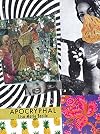
I put two bare feet up on the dash and spread myself
but he is a boulder,
smells of salt, has a chest that could possess
me, or other nightmares
Lisa Marie Basile’s Apocryphal exists in that Nabokovian twilight between childhood and adulthood. Between these realms one confronts monsters and the monolithic oppression of tradition. This is Alice in Wonderland re-imagined as a harrowing nightmare journey, a poodle-skirted damsel thrown into the jaws of a slavering beast, who may be the show more speaker’s father. What remains are fragments, memories, and fantasies strewn about or reconfigured.
When reading the book’s sticky sensual passages, the slow realization occurs that these prurient shards point to something more sinister than adolescent sex and appeasing those base cravings.
I notice: the other children do not live this way
but then again they do not enjoy
getting fucked either,
& this, I do.
I would learn to devour everything,
mollusk & man,
become obsessively pregnant with you,
I mean: become those women staring,
& I would abort you.
Apocryphal is divided into three parts: “genesis,” “apocryphal,” and “paradise.” It is equal parts visionary and horrific. Childhood nostalgia turns into body horror. Everything curdles into corruption and family secrets.
Then the speaker meets Javi:
when I meet Javi again he is the worm in my mezcal. once a constellation, once a man who bore a flag of kings, a crown of thorns & power suit, oh my god the forearms
While Apocryphal is a critique of traditional male masculinity, it is not beyond denying the urges – those primordial needs – and a celebration of those urges. It is a contradiction—a friction—that creates heat and light. Slowly, slowly, more details emerge: a Cold War childhood in a Mexican-American community (?), references to mantillas, and to Javi as “the worm in my mezcal.” But things aren’t exactly clear, like stitching together a narrative from found footage and random newspaper clippings. The book is simultaneously dream and pastiche: half-remembered events and the glaucous haze of nostalgia. Everything about the speaker is fabricated.
I could take off my wig and rub off my
sheen, become real, the bodytrophy underneath all this
victimized shimmer.
but I don’t own my own sexuality:
it is borrowed from somewhere bad, a beach side-show of
bouffant & glitter, two breasts propped up behind a taupe changing curtain
But things are more complicated than that. Basile thanks her parents in the Acknowledgments. “& thank you to my family, who I sincerely ask to not read this book. Please. I have borrowed and sculpted lives in order to write this, & I feel bad about it. You are beautiful, mom.” Despite its avant-garde exterior, Apocryphal enacts the ancient tradition of poets adopting masks, personae. At first blush, I felt betrayed by its confessions. But not every book requires a finely wrought personal exorcism of childhood trauma and sexual abuse. So long as the word “memoir” isn’t in the title, a poet or novelist is free to warp and deform their own personal experiences into something fictional. Basile might have had a traumatic childhood, since that is more common than one would expect or be conned into believing. (The patriarchal mythologizing of Leave It to Beaver down to The Partridge Family would make one think that growing up white and in the suburbs involved only trivial problems and a canned laugh track. But only the fanatically credulous believe these TV shows bear any resemblance to actual lives or historical evidence.)
“everyone I love is recast as father, as murderer, a reconstruction, a deconstruction, an abuse-of, a haunting, a polaroid.”
Apocryphal is all these things. Basile’s narrator attempts to exorcise memories, but she remains tainted, both in mind and body. In “paradise” she says “it hurts to speak but it must be done.” “I don’t respect these monsters but I weep anyway,” she thinks, “with bubblegum/popping through my black veil.”
Sea images return, only this return is more monstrous, a demonic reincarnation, the lasting legacy of abuse:
tiding in,
the lure of the long stem
tiding in,
the victim
is never the victim,
the victim
is a new monster,
tiding in.
Apocryphal is a haunting meditation on the violence perpetrated against women by those who should know better. Not simply fathers, but the father-worship of our many institutions: government, organized religion, corporations. Basile’s speaker gives us a privileged look inside a damaged and wounded soul: someone who wants revenge, the sweet satisfaction of parricide, but also cannot eradicate the cloying sticky shame that clings to her every surface. Those beach side trysts yielded illicit pleasures, but they also contributed to creating a monster, tiding in and preparing to strike.
http://www.thethepoetry.com/2014/10/the-dolorous-haze-of-apocrypha-apocryphal-by... show less
but he is a boulder,
smells of salt, has a chest that could possess
me, or other nightmares
Lisa Marie Basile’s Apocryphal exists in that Nabokovian twilight between childhood and adulthood. Between these realms one confronts monsters and the monolithic oppression of tradition. This is Alice in Wonderland re-imagined as a harrowing nightmare journey, a poodle-skirted damsel thrown into the jaws of a slavering beast, who may be the show more speaker’s father. What remains are fragments, memories, and fantasies strewn about or reconfigured.
When reading the book’s sticky sensual passages, the slow realization occurs that these prurient shards point to something more sinister than adolescent sex and appeasing those base cravings.
I notice: the other children do not live this way
but then again they do not enjoy
getting fucked either,
& this, I do.
I would learn to devour everything,
mollusk & man,
become obsessively pregnant with you,
I mean: become those women staring,
& I would abort you.
Apocryphal is divided into three parts: “genesis,” “apocryphal,” and “paradise.” It is equal parts visionary and horrific. Childhood nostalgia turns into body horror. Everything curdles into corruption and family secrets.
Then the speaker meets Javi:
when I meet Javi again he is the worm in my mezcal. once a constellation, once a man who bore a flag of kings, a crown of thorns & power suit, oh my god the forearms
While Apocryphal is a critique of traditional male masculinity, it is not beyond denying the urges – those primordial needs – and a celebration of those urges. It is a contradiction—a friction—that creates heat and light. Slowly, slowly, more details emerge: a Cold War childhood in a Mexican-American community (?), references to mantillas, and to Javi as “the worm in my mezcal.” But things aren’t exactly clear, like stitching together a narrative from found footage and random newspaper clippings. The book is simultaneously dream and pastiche: half-remembered events and the glaucous haze of nostalgia. Everything about the speaker is fabricated.
I could take off my wig and rub off my
sheen, become real, the bodytrophy underneath all this
victimized shimmer.
but I don’t own my own sexuality:
it is borrowed from somewhere bad, a beach side-show of
bouffant & glitter, two breasts propped up behind a taupe changing curtain
But things are more complicated than that. Basile thanks her parents in the Acknowledgments. “& thank you to my family, who I sincerely ask to not read this book. Please. I have borrowed and sculpted lives in order to write this, & I feel bad about it. You are beautiful, mom.” Despite its avant-garde exterior, Apocryphal enacts the ancient tradition of poets adopting masks, personae. At first blush, I felt betrayed by its confessions. But not every book requires a finely wrought personal exorcism of childhood trauma and sexual abuse. So long as the word “memoir” isn’t in the title, a poet or novelist is free to warp and deform their own personal experiences into something fictional. Basile might have had a traumatic childhood, since that is more common than one would expect or be conned into believing. (The patriarchal mythologizing of Leave It to Beaver down to The Partridge Family would make one think that growing up white and in the suburbs involved only trivial problems and a canned laugh track. But only the fanatically credulous believe these TV shows bear any resemblance to actual lives or historical evidence.)
“everyone I love is recast as father, as murderer, a reconstruction, a deconstruction, an abuse-of, a haunting, a polaroid.”
Apocryphal is all these things. Basile’s narrator attempts to exorcise memories, but she remains tainted, both in mind and body. In “paradise” she says “it hurts to speak but it must be done.” “I don’t respect these monsters but I weep anyway,” she thinks, “with bubblegum/popping through my black veil.”
Sea images return, only this return is more monstrous, a demonic reincarnation, the lasting legacy of abuse:
tiding in,
the lure of the long stem
tiding in,
the victim
is never the victim,
the victim
is a new monster,
tiding in.
Apocryphal is a haunting meditation on the violence perpetrated against women by those who should know better. Not simply fathers, but the father-worship of our many institutions: government, organized religion, corporations. Basile’s speaker gives us a privileged look inside a damaged and wounded soul: someone who wants revenge, the sweet satisfaction of parricide, but also cannot eradicate the cloying sticky shame that clings to her every surface. Those beach side trysts yielded illicit pleasures, but they also contributed to creating a monster, tiding in and preparing to strike.
http://www.thethepoetry.com/2014/10/the-dolorous-haze-of-apocrypha-apocryphal-by... show less
One of my favorite anthologies I‰Ãªve read in a while. Deeply cathartic, sometimes emotionally devastating stories written in a great mix of styles and genres. Some faithfully referenced the poetry and biographical details of Sylvia Plath, others delved into the lyrics and moods of Lana Del ReyÂês music, and some forged their own paths. The best of them combined all of these elements into a synthesis greater than the sum of its parts. All of the stories were good, many were show more great. Tragedy Queens gets a strong recommendation from me show less
City Witchery: Accessible Rituals, Practices & Prompts for Conjuring and Creating in a Magical Metropolis by Lisa Marie Basile
As a practitioner that has been exploring city and land energy/spirit work for close to a decade, I found this to be a great read for readjusting one's thinking from nature and natural witchcraft to urban and synthetic witchcraft - and that both approaches are acceptable and can be used in tandem or separately. There were a few ideas I had not come across yet and a few that looked at different approaches to concepts I've already considered. City Witchery isn't a primer, but it is a good show more place to start with city witchery by inspiring the mind to look at witchcraft in a new light and think in different direction. show less
Light Magic for Dark Times: More than 100 Spells, Rituals, and Practices for Coping in a Crisis by Lisa Marie Basile
This is a beautiful book in that it promotes mental and physical health. There's no eye of newt nor tongue of bat in here. It's all about being in tune with yourself and your surroundings. It is a book of love, of harnessing your own essence, of caring for nature and others. The world would be a much better place if more people practiced the witchcraft within these pages.
You May Also Like


Associated Authors
Statistics
- Works
- 10
- Also by
- 2
- Members
- 278
- Popularity
- #83,542
- Rating
- 4.0
- Reviews
- 5
- ISBNs
- 13
- Languages
- 1