
Sangu Mandanna
Author of The Very Secret Society of Irregular Witches
About the Author
Sangu Mandanna, the editor of Color outside the Lines, is the author of The Lost Girl and the trilogy A Spark of White Fire. Born and raised in Bangalore, India, she now lives in the UK with her husband and three kids, and she has an alarming Netflix addiction.
Series
Works by Sangu Mandanna
Steel and Flowers 1 copy
Associated Works
Tagged
Common Knowledge
- Birthdate
- 1988-05-14
- Gender
- female
- Occupations
- author
illustrator - Agent
- Penny Moore
- Nationality
- India
UK - Birthplace
- Bengaluru, Karnataka, India
- Places of residence
- Norwich, Norfolk, England, UK
- Map Location
- Norfolk, UK
Members
Reviews
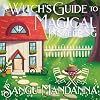
Well, that was disappointing. I pre-ordered this because I loved Sangu Mandanna's 'The Very Secret Society of Irregular Witches' (2022) and enjoyed her YA Sci Fi novel 'The Lost Girl' (2013). When I ordered it, there was no book cover, sample text or audio, but I was OK with that because I knew I liked Mandanna's work.
I began to suspect something was wrong when I saw the cover, which I think is a twee monstrosity. If I'd seen that cover on a book by an author I didn't know, I'd have passed show more it by without a thought.
My wife listened to the audiobook before I could get to it. She'd also loved 'The Very Secret Society Of Irregular Witches'. She didn't love this. She thought the romance element felt forced and that the sex scene was eye-rollingly bad.
Still, we sometimes feel differently about books, so today, I dived in, hoping that all would be well.
I only made it to the end of chapter two before I gave up. The first two chapters of the book set up the situation. The events were pretty traumatic. The beloved great aunt and de facto parent of a fifteen-year-old girl fell dead unexpectedly. The girl, a powerful but inexperienced and only partially trained witch, resurrects her great aunt but loses most of her ability to do magic in the process. Her magic, the foundation of her identity, had been ripped away in a moment. The future she'd believed was hers had been lost.
This should have had me in tears, but it was delivered with all the emotional impact of a Teletubbies episode. I felt I was reading a children's book of the kind that makes Disney seem hard-hitting. It dawned on me that the cover, which I'd treated with such disdain, might be a fair reflection of the tone of the book.
Maybe it gets better from Chapter Three onwards, but I'm not going to invest the time to find out. show less
I began to suspect something was wrong when I saw the cover, which I think is a twee monstrosity. If I'd seen that cover on a book by an author I didn't know, I'd have passed show more it by without a thought.
My wife listened to the audiobook before I could get to it. She'd also loved 'The Very Secret Society Of Irregular Witches'. She didn't love this. She thought the romance element felt forced and that the sex scene was eye-rollingly bad.
Still, we sometimes feel differently about books, so today, I dived in, hoping that all would be well.
I only made it to the end of chapter two before I gave up. The first two chapters of the book set up the situation. The events were pretty traumatic. The beloved great aunt and de facto parent of a fifteen-year-old girl fell dead unexpectedly. The girl, a powerful but inexperienced and only partially trained witch, resurrects her great aunt but loses most of her ability to do magic in the process. Her magic, the foundation of her identity, had been ripped away in a moment. The future she'd believed was hers had been lost.
This should have had me in tears, but it was delivered with all the emotional impact of a Teletubbies episode. I felt I was reading a children's book of the kind that makes Disney seem hard-hitting. It dawned on me that the cover, which I'd treated with such disdain, might be a fair reflection of the tone of the book.
Maybe it gets better from Chapter Three onwards, but I'm not going to invest the time to find out. show less
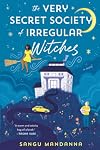
What a misfire of a book.
Going by the blurb, The Very Secret Society of Irregular Witches should have been a fun, soothing read: a found-family romance with a sprinkling of magic throughout. These are all things that I'm inclined to love, and there are, to be fair, some charming bits of whimsy here and there. But Sangu Mandanna failed to make me buy any of the book's main elements.
Neither of the romantic leads, Mika nor Jamie, particularly convinced me as people. They both have major show more traumas in their past, but I didn't buy how that trauma was confronted/resolved.Jamie, for instance, endures years of physical and emotional abuse at the hands of his brothers which his mother enables, and he moves past that through a meeting of what seems to be less than an hour in a public space which all happens off screen. Both of them also spoke like they'd swallowed a pop therapy book—they're both achingly aware of their Issues and their Interpersonal Conflicts and the Steps They Need to Take and repeatedly monologue at one another about it. Mandanna doesn't seem to have taken on-board the principle of "Show, Don't Tell" when it comes to her dialogue.
There was also no real reason for Mika and Jamie not to get together until near the end of the book other than "the book needs to be X pages long", but also no very obvious reason why they would get together other than "this is a romance and they're the only two single people in sight over the age of 12 and under 40." Particularly since there are a couple of things that Jamie says to Mika that are pretty awful, and which she forgives/are hand-waved away far too quickly for my comfort.
And then there are the side characters. They're mostly from the school of "Let's slap a name on a Bundle of Quirks and have the BoQ be overly invested in/invasive about the leads' romantic relationship!" romance novel side characters.
But the children. They're what pushed me over the edge from "not vibing with this book" to "I actively hate this." I boggled at learning that not only is VSSoIW not Mandanna's first book, but that she's written several successful YA novels before this, because not a single one of the child characters in this felt like an actual child. Rosetta, Altamira, and Terracotta are interchangeable and unbelievable as a trio of 7, 10, and 12 year olds. (No, there's no narrative grappling with the fact that here are three non-white adoptees being raised in England with no apparent connection to their birth cultures, and who have been renamed in an intensely twee manner by a character who in no other respect seems to have been twee.)
They've been raised in near-total isolation, almost never leaving the house and its grounds for fear that their untrained magic will cause an accident or bring attention to them. This means that their only in-person interactions are with one another (again 7, 10 and 12), their dad-in-all-but-name Jamie (30-something), and then 4 people who are 50+ at a minimum; they watch TV and movies, read books, and use the internet, but it's made clear that they do so under appropriate adult monitoring. I say all this to give context for a scene like this one. Again: Rosetta is a very sheltered 10 year old.
I have a 10-year-old niece, who is raised in a far less sheltered context. She might, given a conversational cue like that, say something about "Ewww, boy kissing." Mostly, however, I don't think she cares at all about any of this stuff yet. And if I were around a ten year old who could make the mental jump from “it’s been a while” to “he means since you had sex”? I'd be starting to ask some delicate questions, not fighting back laughter, because that sets off some alarm bells for me.
And before anyone takes me to task for being too serious and pearl-clutching about what's clearly intended to be a throw-away comedic beat—I get what it was intended to be! But it doesn't work. So much of this book is a kind of... uneasy slurry of insisting that it's psychologically real and paying attention to feeling and emotions while also presenting characters who act and react in bizarre ways.
All this and I haven't even touched on the worldbuilding! Tl;dr: shoddy. show less
Going by the blurb, The Very Secret Society of Irregular Witches should have been a fun, soothing read: a found-family romance with a sprinkling of magic throughout. These are all things that I'm inclined to love, and there are, to be fair, some charming bits of whimsy here and there. But Sangu Mandanna failed to make me buy any of the book's main elements.
Neither of the romantic leads, Mika nor Jamie, particularly convinced me as people. They both have major show more traumas in their past, but I didn't buy how that trauma was confronted/resolved.
There was also no real reason for Mika and Jamie not to get together until near the end of the book other than "the book needs to be X pages long", but also no very obvious reason why they would get together other than "this is a romance and they're the only two single people in sight over the age of 12 and under 40." Particularly since there are a couple of things that Jamie says to Mika that are pretty awful, and which she forgives/are hand-waved away far too quickly for my comfort.
And then there are the side characters. They're mostly from the school of "Let's slap a name on a Bundle of Quirks and have the BoQ be overly invested in/invasive about the leads' romantic relationship!" romance novel side characters.
But the children. They're what pushed me over the edge from "not vibing with this book" to "I actively hate this." I boggled at learning that not only is VSSoIW not Mandanna's first book, but that she's written several successful YA novels before this, because not a single one of the child characters in this felt like an actual child. Rosetta, Altamira, and Terracotta are interchangeable and unbelievable as a trio of 7, 10, and 12 year olds. (No, there's no narrative grappling with the fact that here are three non-white adoptees being raised in England with no apparent connection to their birth cultures, and who have been renamed in an intensely twee manner by a character who in no other respect seems to have been twee.)
They've been raised in near-total isolation, almost never leaving the house and its grounds for fear that their untrained magic will cause an accident or bring attention to them. This means that their only in-person interactions are with one another (again 7, 10 and 12), their dad-in-all-but-name Jamie (30-something), and then 4 people who are 50+ at a minimum; they watch TV and movies, read books, and use the internet, but it's made clear that they do so under appropriate adult monitoring. I say all this to give context for a scene like this one. Again: Rosetta is a very sheltered 10 year old.
But then, as they drove past a pretty country church, Ian piped up again. "So, my dear. Do you have anyone special in your life?" [...]
"I live with you," she said. "When exactly do you think I see this hypothetical special someone?"
"So it's been a while then," said Ian. [...]
"A while since what?"
"He means since you had sex," said Rosetta, without taking her eyes off the window.
Jamie choked. Ian shrugged as if to say, "Yes, that is what I meant."
"Inappropriate," Mika said to Ian. Her stern tone was somewhat undercut by the fact that she was trying very hard not to laugh.
I have a 10-year-old niece, who is raised in a far less sheltered context. She might, given a conversational cue like that, say something about "Ewww, boy kissing." Mostly, however, I don't think she cares at all about any of this stuff yet. And if I were around a ten year old who could make the mental jump from “it’s been a while” to “he means since you had sex”? I'd be starting to ask some delicate questions, not fighting back laughter, because that sets off some alarm bells for me.
And before anyone takes me to task for being too serious and pearl-clutching about what's clearly intended to be a throw-away comedic beat—I get what it was intended to be! But it doesn't work. So much of this book is a kind of... uneasy slurry of insisting that it's psychologically real and paying attention to feeling and emotions while also presenting characters who act and react in bizarre ways.
All this and I haven't even touched on the worldbuilding! Tl;dr: shoddy. show less
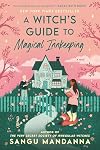
*E-ARC provided by the publisher through Edelweiss Plus for an honest review - thank you!*
Sera Swan has more power than any witch in a generation, but when she uses a resurrection spell to bring her great-aunt Jasmine back to life (and, less intentionally, reanimate the year-long dead rooster's bones), her magic is fractured and she's exiled from the Guild. Fifteen years later, she has made a home for herself and a found family of her great-aunt, Clemmie the talking fox/cursed witch, show more teenager Theo, and a few guests at their inn who never left. She learns that there is a restoration spell she may be able to use to heal her magic. Meanwhile, Luke and his sister Posy arrive with challenges of their own but possibly the ability to help Sera with the spell. And though Luke and Sera first start at odds, then tentatively friends, they can't let their growing feelings go anywhere since Luke's not planning on staying forever.
I was really excited to see a new book coming out by the author of The Very Secret Society of Irregular Witches. This is a standalone, where a Guild of witches has their own school and library, but it does keep that similar cozy feel even while touching on serious issues. Luke and Sera have both felt like outsiders for various reasons, as Sera is an immigrant and not from a magical family. I love the inn's found family and acceptance, and Sera's really coming in to her own of knowing and accepting herself. A nice, warm blanket of a read I'd return to again in a heartbeat. show less
Sera Swan has more power than any witch in a generation, but when she uses a resurrection spell to bring her great-aunt Jasmine back to life (and, less intentionally, reanimate the year-long dead rooster's bones), her magic is fractured and she's exiled from the Guild. Fifteen years later, she has made a home for herself and a found family of her great-aunt, Clemmie the talking fox/cursed witch, show more teenager Theo, and a few guests at their inn who never left. She learns that there is a restoration spell she may be able to use to heal her magic. Meanwhile, Luke and his sister Posy arrive with challenges of their own but possibly the ability to help Sera with the spell. And though Luke and Sera first start at odds, then tentatively friends, they can't let their growing feelings go anywhere since Luke's not planning on staying forever.
I was really excited to see a new book coming out by the author of The Very Secret Society of Irregular Witches. This is a standalone, where a Guild of witches has their own school and library, but it does keep that similar cozy feel even while touching on serious issues. Luke and Sera have both felt like outsiders for various reasons, as Sera is an immigrant and not from a magical family. I love the inn's found family and acceptance, and Sera's really coming in to her own of knowing and accepting herself. A nice, warm blanket of a read I'd return to again in a heartbeat. show less
British-Indian witch Mika Moon receives a peculiar inquiry to come to Nowhere House and teach three young orphaned witches (all witches are orphans, due to a curse or spell that backfired many years ago) how to use their magic. Mike visits and accepts, although she knows that elder witch Primrose would not approve: when witches gather, they are more noticeable. But Mika falls in love with the residents of Nowhere House: housekeeper Lucie, gardener Ken and his husband Ian, librarian and de show more facto parent Jamie, and the three girls themselves: Rosetta, Terracotta, and Altamira. But the clock is ticking on their fate: Lillian Nowhere's lawyer, unable to contact her for months, is planning to visit the house, and there cannot be uncontrolled bursts of magic while he's there, or the girls will be taken away and separated. This tight-knit found family will go to any lengths to avoid that fate.
A perfect cozy fantasy; Mika and Jamie's slow romance has reasonable roadblocks due to their histories.
See also: The House in the Cerulean Sea by TJ Klune
Quotes
"...the first thing any good spell needs is intent. You want something, so you figure out a way to make it happen." (Mika, 61)
She hadn't realised just how heavy her mask had been until she'd discovered what it was to live without it. (142)
"...you're kind, not nice."
...
"You're the only person I know who says the word nice like it's a bad thing."
"It's not a bad thing at all, except when it's all there is. A lot of nice people stop being nice when they don't get exactly what they want." (216)
"...it seems like magic, the force that binds you all together, doesn't want you to be alone." (Jamie to Mika, 232)
"It's not always enough to go looking for the place we belong...Sometimes we need to make that place." (Jamie, 239)
"Except the best possible life isn't always the one where you're safest..." (Jamie, 257)
How was it possible to live, truly live, without the companionship of other people, without a family formed in any of the thousands of ways families could be formed? (263)
"Alone is how--"
"--is how we survive, yes, you've said....I can't say whether that's true or not, but one thing I do know, Primrose, is that alone is not how we live." (Mika, 305) show less
A perfect cozy fantasy; Mika and Jamie's slow romance has reasonable roadblocks due to their histories.
See also: The House in the Cerulean Sea by TJ Klune
Quotes
"...the first thing any good spell needs is intent. You want something, so you figure out a way to make it happen." (Mika, 61)
She hadn't realised just how heavy her mask had been until she'd discovered what it was to live without it. (142)
"...you're kind, not nice."
...
"You're the only person I know who says the word nice like it's a bad thing."
"It's not a bad thing at all, except when it's all there is. A lot of nice people stop being nice when they don't get exactly what they want." (216)
"...it seems like magic, the force that binds you all together, doesn't want you to be alone." (Jamie to Mika, 232)
"It's not always enough to go looking for the place we belong...Sometimes we need to make that place." (Jamie, 239)
"Except the best possible life isn't always the one where you're safest..." (Jamie, 257)
How was it possible to live, truly live, without the companionship of other people, without a family formed in any of the thousands of ways families could be formed? (263)
"Alone is how--"
"--is how we survive, yes, you've said....I can't say whether that's true or not, but one thing I do know, Primrose, is that alone is not how we live." (Mika, 305) show less
Lists
Awards


You May Also Like


Associated Authors
Statistics
- Works
- 13
- Also by
- 3
- Members
- 5,534
- Popularity
- #4,502
- Rating
- 4.0
- Reviews
- 211
- ISBNs
- 89
- Languages
- 5
- Favorited
- 1