
Nelly Rosario
Author of Song of the Water Saints
About the Author
Nelly Rosario was born in the Dominican Republic & raised in Brooklyn, New York. She earned a Bachelor's in engineering from MIT & an MFA in Fiction from Columbia University. She has received numerous awards including a 1999 Barbara Deming Memorial Fund Fellowship, The Bronx Writers' Center Van show more Lier Literary Fellowship for 1999-2000, two National Arts Club Writing Fellowships, the 1997 Huston/Wright Award in Fiction & most recently she has been chosen as a "Writer on the Verge" by the Village Voice Literary Supplement for 2001. Rosario is published in the anthology Becoming American (Hyperion, 2000). (Bowker Author Biography) show less
Works by Nelly Rosario
Associated Works
Shaking the Tree: A Collection of Fiction and Memoir by Black Women (2003) — Contributor — 54 copies
Everyday People: The Color of Life--a Short Story Anthology (2018) — Contributor — 53 copies, 1 review
So We Can Know: Writers of Color on Pregnancy, Loss, Abortion, and Birth (2023) — Contributor — 42 copies
Daughters of Latin America: An International Anthology of Writing by Latine Women (2023) — Contributor — 38 copies, 1 review
Becoming American: Personal Essays By First Generation Immigrant Women (2000) — Contributor — 29 copies
Tagged
Common Knowledge
- Gender
- female
Members
Reviews
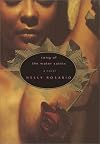
Intensely poetic novel about generations of women in the Dominican Republic struggling with family, fate, and desire. Rosario expertly conveys the early 20th century with well-chosen strokes of color, bringing the era and the location to life with all its grit, poverty, culture, and colonialist affronts. The characters don't always behave nicely, but Rosario keeps you interested. And she manages the difficult task of slipping through the decades with ease. By the time you've finished, you show more really feel as if you've made a long, poignant, satisfying journey. show less

Nelly Rosario's first novel, a very obvious love letter to her Dominican homeland and heritage, is a novel that wants to be too many things and, ultimately, is strangled by its ambition. A bildungsroman with three distinct stories to tell, those stories become sadly less enthralling as they go along, and don't quite fulfill the promise with which the novel opens.
The novel tells the story of three women of Dominican descent: the coming-of-age of Graciela, an restless young woman who grows up show more in the time of the American occupation; her unwanted daughter Mercedes, who eventually emigrates to the United States; and Mercedes's granddaughter Leila, who grows up in New York City but ends up sharply resembling Graciela. The narrative of Graciela is by far the most intriguing, taking her across the island and across cultures, tracing an arc between her impulsive origins and her eventual insanity and decline from the ravages of syphilis. Her tale drives the first half of the novel and, even at its weakest moments, shows great beauty and purpose.
Once Graciela dies, however, the story wanders aimlessly until its flat conclusion. Mercedes, the neglected daughter, is not given enough space in her youth to emerge as an interesting character, so we don't care much about her as she ages either. Also unhelpful is the fact that Rosario's pace becomes inexplicably rushed after Graciela's death, such that even if we had reason to care, Mercedes simply doesn't have enough time to develop.
Leila is perhaps the least convincing character of all, a young woman whose language loses the rough-edged beauty of Graciela's and is instead childish and vulgar. Rosario's view of New York has none of the adoration or nostalgia as that of the Dominican sections, and Leila has even less development than Mercedes, which costs her the reader's sympathies. There seems to be an attempt in her narrative to comment on American culture, immigration, and the nature of family ties, but it's lost in Rosario's rush to reach a hackneyed and somewhat foregone conclusion about Leila's relationship to her great-grandmother.
All told, Rosario's novel reaches but doesn't quite grasp the sophistication of the multi-layered narrative she wants to accomplish. Rather than accelerating toward its end, the novel's need for cyclicality instead throws it into a decrescendo, a disappointing conclusion to what could have been an interesting and more fully realized work in more capable hands. show less
The novel tells the story of three women of Dominican descent: the coming-of-age of Graciela, an restless young woman who grows up show more in the time of the American occupation; her unwanted daughter Mercedes, who eventually emigrates to the United States; and Mercedes's granddaughter Leila, who grows up in New York City but ends up sharply resembling Graciela. The narrative of Graciela is by far the most intriguing, taking her across the island and across cultures, tracing an arc between her impulsive origins and her eventual insanity and decline from the ravages of syphilis. Her tale drives the first half of the novel and, even at its weakest moments, shows great beauty and purpose.
Once Graciela dies, however, the story wanders aimlessly until its flat conclusion. Mercedes, the neglected daughter, is not given enough space in her youth to emerge as an interesting character, so we don't care much about her as she ages either. Also unhelpful is the fact that Rosario's pace becomes inexplicably rushed after Graciela's death, such that even if we had reason to care, Mercedes simply doesn't have enough time to develop.
Leila is perhaps the least convincing character of all, a young woman whose language loses the rough-edged beauty of Graciela's and is instead childish and vulgar. Rosario's view of New York has none of the adoration or nostalgia as that of the Dominican sections, and Leila has even less development than Mercedes, which costs her the reader's sympathies. There seems to be an attempt in her narrative to comment on American culture, immigration, and the nature of family ties, but it's lost in Rosario's rush to reach a hackneyed and somewhat foregone conclusion about Leila's relationship to her great-grandmother.
All told, Rosario's novel reaches but doesn't quite grasp the sophistication of the multi-layered narrative she wants to accomplish. Rather than accelerating toward its end, the novel's need for cyclicality instead throws it into a decrescendo, a disappointing conclusion to what could have been an interesting and more fully realized work in more capable hands. show less
Awards


You May Also Like
Associated Authors
Statistics
- Works
- 1
- Also by
- 8
- Members
- 88
- Popularity
- #209,355
- Rating
- 3.6
- Reviews
- 2
- ISBNs
- 8
- Languages
- 1