

Paul Knight
Author of Henry V and the Conquest of France 1416-53
About the Author
Paul Knight has brought together a treasure trove of stories from a wide array of sources and invested them with a drama and poetry that makes this essential reading for all fishermen, everywhere.
Works by Paul Knight
A Very Fine Regiment: The 47th Foot during the American War of Independence, 1773-1783 (From Reason to Revolution) (2022) 9 copies, 1 review
Amazing Fishing Stories – Incredible Tales from Stream to Open Sea (Amazing Stories) (2011) 5 copies
IN AMERICA 1 copy
Jump into bed with me. 1 copy
24 Hours In London 1 copy
Associated Works
Tagged
Common Knowledge
There is no Common Knowledge data for this author yet. You can help.
Members
Reviews

Ingredients: Victorian obsession with cataloging flora and fowl using proper names that nobody knows or cares about, overuse of the exclamation point on a level that rivals the text messages of a 12-year-old girl, the forced use of strong verbs that are barely strong enough to support bloated sentences festooned with superfluous adjectives and illogical metaphors stretched so beyond any real relationship they seem foolish, a complete lack of narratorial voice that makes the text a show more disengaging mess of shifting viewpoint, and finally a hodgepodge monster frankensteined together using every gothic trope along with a childish attempt at shocking gore and sensationalism that comes across uninspired and false.
I do not generally write reviews, but the money and time I lost reading this book inspired me to try and save others the same fate. This is the work of a fabricating novice mimicking the works of others and peppering it with just enough disingenuous vulgarity to try and make a name for himself. I am certain the longevity of this book is owed to the early death of the author and ample opportunity for hack scholars to make crude guesses at some tenuous meaning. There is nothing new here. It has a message as deep as middle school poetry or three inches of muddy water. show less
I do not generally write reviews, but the money and time I lost reading this book inspired me to try and save others the same fate. This is the work of a fabricating novice mimicking the works of others and peppering it with just enough disingenuous vulgarity to try and make a name for himself. I am certain the longevity of this book is owed to the early death of the author and ample opportunity for hack scholars to make crude guesses at some tenuous meaning. There is nothing new here. It has a message as deep as middle school poetry or three inches of muddy water. show less
A Very Fine Regiment: The 47th Foot during the American War of Independence, 1773-1783 (From Reason to Revolution) by Paul Knight
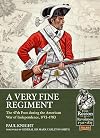
For American readers of the Revolutionary War/War of Independence, “A Very Fine Regiment” is an opportunity to read about the War from the perspective of a British Regiment that was involved in many of the War’s campaigns and battles. Author Paul Knight offers insights into the British Army that contested the conflict as well as fairly in -depth accounts of particular battles in which the 47th was engaged.
Through almost the first half of this tome, Knight introduces the “British” show more Army of the eighteenth century, which really consisted of two separate arms, the British and Irish Establishments. During this time the Irish Establishment was the larger of the two, perhaps more due to facilities for training and housing than any need to suppress domestic movements as students of later Irish history might assume. He then poses questions such as “Who were the 47th Foot?” and provides answers as to their nationality, heights, uniforms, weapons, training, organizational structure and garrisons, among others. He describes the evolution of tactical operations, including the challenges of morphing from a peacetime to a combat army.
The 47th was no stranger to America, having participated in the Siege of Louisbourg in 1758, wintered in New Jersey before rejoining Wolfe for his advance up the St. Lawrence culminating in the Battle of Quebec. By 1774 the Regiment was back in New Jersey, as the political situation was drifting toward rebellion. The 47th’s transition from a peace-time to a combatant regiment was complicated by the gradual slide from peace to sporadic unrest to outright warfare, in contrast to the definitive declarations of war with which European armies were familiar.
This very fine Regiment participated in many engagements, both some emblazoned in lore and others hardly remembered. Their involvements in the raid on Lexington and Concord and the Battle of Bunker Hill shed light on those iconic encounters. The Regiment’s transfer to Canada illustrates that the American march on Quebec was not limited to the December 31, 1775 exchange commemorated by a plaque in the lower city of Quebec, but consisted of a series of engagements along the St. Lawrence. Deployment to Canada resulted the 47th attachment onto Burgoyne’s disastrous 1777 march into New York down Lake Champlain until the British surrender at Saratoga.
Surrender at Saratoga was effected by Articles of Convention between General Burgoyne (British) and General Gates (Rebels) providing that the surrendering Army was to march to Massachusetts to await transportation home. The terms were not carried out as the “Convention Army” was shuttled around Massachusetts, Virginia, Maryland and Pennsylvania until repatriation at war’s end in 1783.
Units of the 47th not a part of Burgoyne’s march were involved in operations around the Great Lakes as for as Fort Michilimackinac and Detroit in 1779-1782.
Drawing on diaries, letters and Regiment reports, Knight has crafted a relatively short but informative work viewing the Revolutionary War from the other side. The portraits, landscapes and photos of contemporary reenactors add faces and sights to the narrative. The bibliography is good, but an index would be helpful.
Knight does have an agenda that flows through his narrative. He takes issue with the traditional American myth of a British Army composed of lower-class men deterred from desertion by draconian discipline who brutally treat their opponents and civilians. He persuasively cites desertion figures and accounts of interaction with colonials to counter the prevailing impression.
I recommend “A Very Fine Regiment” to anyone seeking to delve more deeply into the history of the American War of Independence.
I did receive a free copy of this book without an obligation to post a review. show less
Through almost the first half of this tome, Knight introduces the “British” show more Army of the eighteenth century, which really consisted of two separate arms, the British and Irish Establishments. During this time the Irish Establishment was the larger of the two, perhaps more due to facilities for training and housing than any need to suppress domestic movements as students of later Irish history might assume. He then poses questions such as “Who were the 47th Foot?” and provides answers as to their nationality, heights, uniforms, weapons, training, organizational structure and garrisons, among others. He describes the evolution of tactical operations, including the challenges of morphing from a peacetime to a combat army.
The 47th was no stranger to America, having participated in the Siege of Louisbourg in 1758, wintered in New Jersey before rejoining Wolfe for his advance up the St. Lawrence culminating in the Battle of Quebec. By 1774 the Regiment was back in New Jersey, as the political situation was drifting toward rebellion. The 47th’s transition from a peace-time to a combatant regiment was complicated by the gradual slide from peace to sporadic unrest to outright warfare, in contrast to the definitive declarations of war with which European armies were familiar.
This very fine Regiment participated in many engagements, both some emblazoned in lore and others hardly remembered. Their involvements in the raid on Lexington and Concord and the Battle of Bunker Hill shed light on those iconic encounters. The Regiment’s transfer to Canada illustrates that the American march on Quebec was not limited to the December 31, 1775 exchange commemorated by a plaque in the lower city of Quebec, but consisted of a series of engagements along the St. Lawrence. Deployment to Canada resulted the 47th attachment onto Burgoyne’s disastrous 1777 march into New York down Lake Champlain until the British surrender at Saratoga.
Surrender at Saratoga was effected by Articles of Convention between General Burgoyne (British) and General Gates (Rebels) providing that the surrendering Army was to march to Massachusetts to await transportation home. The terms were not carried out as the “Convention Army” was shuttled around Massachusetts, Virginia, Maryland and Pennsylvania until repatriation at war’s end in 1783.
Units of the 47th not a part of Burgoyne’s march were involved in operations around the Great Lakes as for as Fort Michilimackinac and Detroit in 1779-1782.
Drawing on diaries, letters and Regiment reports, Knight has crafted a relatively short but informative work viewing the Revolutionary War from the other side. The portraits, landscapes and photos of contemporary reenactors add faces and sights to the narrative. The bibliography is good, but an index would be helpful.
Knight does have an agenda that flows through his narrative. He takes issue with the traditional American myth of a British Army composed of lower-class men deterred from desertion by draconian discipline who brutally treat their opponents and civilians. He persuasively cites desertion figures and accounts of interaction with colonials to counter the prevailing impression.
I recommend “A Very Fine Regiment” to anyone seeking to delve more deeply into the history of the American War of Independence.
I did receive a free copy of this book without an obligation to post a review. show less

The book has plans of five small battles after Agincourt, and some useful information about the well organized army that Henry V created and its slow decline in France. Nobles went back to England to meddle in the minority of Henry VI, and didn't come back. Thus the Army was mostly professional, non-aristocratic soldiers, and the Norman aristocracy that held to the English interest. Eight plates, and sound text. A useful visual supplement to Jonathan Sumpton's grander history, or the show more Chronicles of Monstrelet. show less
You May Also Like
Associated Authors
Statistics
- Works
- 13
- Also by
- 3
- Members
- 119
- Popularity
- #166,387
- Rating
- 3.7
- Reviews
- 4
- ISBNs
- 14