
Victor P. Hamilton
Author of The Book of Genesis : Chapters 1-17
About the Author
Victor P. Hamilton (PhD, Brandeis University), now retired, was professor of Bible and theology at Asbury University for more than thirty-five years. He is the author of major commentaries on Genesis and Exodus as well as Handbook on the Historical Books.
Image credit: via Baker Publishing Group
Works by Victor P. Hamilton
Handbook on the Pentateuch: Genesis, Exodus, Leviticus, Numbers, Deuteronomy (1982) 864 copies, 4 reviews
Handbook on the Historical Books: Joshua, Judges, Ruth, Samuel, Kings, Chronicles, Ezra-Nehemiah, Esther (2001) 335 copies
Genesis Chapers 1-17 1 copy
Êxodo 1 copy
The Slave Law 1 copy
Associated Works
Tagged
Common Knowledge
- Legal name
- Hamilton, Victor P.
- Other names
- 維特.漢彌頓
- Birthdate
- 1941-09-26
- Gender
- male
- Education
- Houghton College (BA|1963)
Asbury Theological Seminary (ThM|1967)
Brandeis University (PhD|1971) - Organizations
- Society of Biblical Literature
- Birthplace
- Toronto, Ontario, Canada
- Places of residence
- Wilmore, Kentucky, USA
- Associated Place (for map)
- Toronto, Ontario, Canada
Members
Reviews
The Book of Genesis (New International Commentary on the Old Testament Series) 1-17 by Victor P. Hamilton
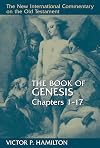
For both volumes: Hamilton's commentary is one of the best, and it was a pleasure to read side by side with the Masoretic text.
Hamilton's kink is that the text of Genesis (and extension other parts of the Torah and, to some degree, the other books of the Bible) is more of a unified whole than Source Criticism asserts. That should come as no surprise; NICOT is an Evangelical series, and evangelicism's treatment of the Bible as a complete (or nearly complete unit) is clear and well known. Too, show more while he doesn't assert himself to be a Bible literalist, there are some unnerving bits where his hand is apparently tipped, e.g., noting that the description of Noah's ark is nothing short of believably sea-worthy, or regarding the Biblical text at hand to be historical enough to certify that certain persons, like Abraham, Joseph, Isaac, and others were in fact real people. In light of that, you may be wondering why is regard the book as highly as I do.
The value of Hamilton's work is that in order to build an argument for a more unified book of Genesis he first provides an incredible and extremely respectable close reading of the Masoretic text, which is issue by issue argued with fair and just readings of Source Critical scholarship, followed by his response. Too, he doesn't pull this out of the air; he meticulously supports his argument (and also provides sources for Source Critical elements as well) with sources provided by footnotes (!). Too, he writes well; his book is a joy to read.
Even though many of his conclusions fall flat or are at best questionable, because of the treatment of the opposing camp, the sources provided, and the quality of the writing, I can't recommend this enough to people doing serious research in Hebrew language, the Book of Genesis, Source Criticism (because you should listen to what the other guy is saying before denouncing him as the Devil or as a fundy crack pot, right?), or for quick reference. show less
Hamilton's kink is that the text of Genesis (and extension other parts of the Torah and, to some degree, the other books of the Bible) is more of a unified whole than Source Criticism asserts. That should come as no surprise; NICOT is an Evangelical series, and evangelicism's treatment of the Bible as a complete (or nearly complete unit) is clear and well known. Too, show more while he doesn't assert himself to be a Bible literalist, there are some unnerving bits where his hand is apparently tipped, e.g., noting that the description of Noah's ark is nothing short of believably sea-worthy, or regarding the Biblical text at hand to be historical enough to certify that certain persons, like Abraham, Joseph, Isaac, and others were in fact real people. In light of that, you may be wondering why is regard the book as highly as I do.
The value of Hamilton's work is that in order to build an argument for a more unified book of Genesis he first provides an incredible and extremely respectable close reading of the Masoretic text, which is issue by issue argued with fair and just readings of Source Critical scholarship, followed by his response. Too, he doesn't pull this out of the air; he meticulously supports his argument (and also provides sources for Source Critical elements as well) with sources provided by footnotes (!). Too, he writes well; his book is a joy to read.
Even though many of his conclusions fall flat or are at best questionable, because of the treatment of the opposing camp, the sources provided, and the quality of the writing, I can't recommend this enough to people doing serious research in Hebrew language, the Book of Genesis, Source Criticism (because you should listen to what the other guy is saying before denouncing him as the Devil or as a fundy crack pot, right?), or for quick reference. show less
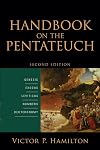
In this introduction to the first five books of the Old Testament, Victor Hamilton moves chapter by chapter through the Pentateuch, examining the content, structure, and theology. Hamilton surveys each major thematic unit of the Pentateuch and offers useful commentary on overarching themes and connections between Old Testament texts.
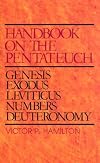
Great introduction the the Pentateuch. He covers a lot in the book. It is informative, without being overly scholarly, or without dumbing everything down. Hamilton is very clear in his presentation.
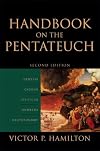
Hamilton provides an excellent overview into the books on Moses. I think this book is a must for the laymen studying the Pentateuch.
You May Also Like


Associated Authors
Statistics
- Works
- 15
- Also by
- 1
- Members
- 3,121
- Popularity
- #8,188
- Rating
- 3.8
- Reviews
- 7
- ISBNs
- 28
- Languages
- 3