
L. Annette Binder
Author of The Vanishing Sky
About the Author
Image credit: photo by Gary Gartley
Works by L. Annette Binder
Associated Works
Tagged
Common Knowledge
- Birthdate
- 20th Century
- Gender
- female
- Short biography
- L. Annette Binder was born in Germany and immigrated to the United States as a small child. The Vanishing Sky, her first novel, is inspired by events from her family history.
Her father was required to serve in the Hitler Youth. Family lore has it he ran away from his post near the end of the war.
Annette's father died when she was sixteen, and writing The Vanishing Sky gave her the chance to imagine the stories he didn't get to tell her.
Annette holds a degree in Classics from Harvard, literature from Berkeley and law from Harvard Law School. She has an MFA from the Programs in Writing at the University of California, Irvine. Her story collection Rise (Sarabande 2012) received the Mary McCarthy Prize and her stories have appeared in the Pushcart Prize Anthology, the O. Henry Prize Anthology and Public Radio's Selected Shorts. She lives in New England with her husband and daughter. - Nationality
- Germany
- Birthplace
- Germany
- Associated Place (for map)
- Germany
Members
Reviews

Real Rating: 3.25* of five, rounded up because it's a fascinating viewpoint
The Publisher Says: For readers of Warlight and The Invisible Bridge, an intimate, harrowing story about a family of German citizens during World War II.
In 1945, as the war in Germany nears its violent end, the Huber family is not yet free of its dangers or its insidious demands. Etta, a mother from a small, rural town, has two sons serving their home country: her elder, Max, on the Eastern front, and her younger, show more Georg, at a school for Hitler Youth. When Max returns from the front, Etta quickly realizes that something is not right-he is thin, almost ghostly, and behaving very strangely. Etta strives to protect him from the Nazi rule, even as her husband, Josef, becomes more nationalistic and impervious to Max's condition. Meanwhile, miles away, her younger son Georg has taken his fate into his own hands, deserting his young class of battle-bound soldiers to set off on a long and perilous journey home.
The Vanishing Sky is a World War II novel as seen through a German lens, a story of the irreparable damage of war on the home front, and one family's participation-involuntary, unseen, or direct-in a dangerous regime. Drawing inspiration from her own father's time in the Hitler Youth, L. Annette Binder has crafted a spellbinding novel about the daring choices we make for country and for family.
I RECEIVED A DRC FROM THE PUBLISHER VIA NETGALLEY. THANK YOU.
My Review: First, read this:
The Stockholm Syndrome of an entire nation, an entire class of people, is the shocking subject of this novel based on the facts as the author knows them surrounding her own family's WWII experience.
Etta Huber is frantic, as what wife of a dementia-suffering husband (Josef) trying to get into the war wouldn't be; as what mother of a returned soldier (Max) suffering from what we would call PTSD wouldn't be; as what loving, protective mother of a young teenager (Georg) caught up in a vision of glamour obfuscating the war's reality wouldn't be. The situation with Max is, of course, the one she's got the most emotional room for. No sane recruiter would take her retired-schoolteacher husband whose grasp of reality is deficient to wield a weapon, surely? Max, the bright and shining boy who left, is gone forever and here in his place is...a burden, frankly. In a time when the food-growing region the Hubers live in is getting less and less well-fed, another mouth isn't a joy...then Georg is sent to the Eastern front, which destroyed his brother Max, to dig defenses in what everyone knows is a vain effort to stop Allied tanks attacking German troops.
Etta isn't coping well with any of this. What she doesn't know is that she's got a stronger boy in Georg than she thought. He's been unable to believe the nonsense he's been fed in the Hitler Youth. He's fallen in love with one of the other boys, which (since this is simply unthinkable and impossible for Hitler Youths) has formed a strong resistant core in him. He ends up deserting before the boys get to the front, and walks home. Through war-torn Germany. On his own.
Max's horrors are always with him, and his behaviors worry his Mutti. Of course, he was always the odd kid:
Much like Max himself disappears, vanishes from his loving mother's ability to care for him...forever. It's one of many heartbreaks in Etta's world.
What a world it was. She, and her other bog-standard German neighbors, have noticed there are people disappearing. Most of them simply note this fact without a lot of interest, but note it they do. The rare German whose instinct is to help in whatever small way she can the disappearing ones, is fighting a losing battle as we-the-readers know. But the fact is no one, inside or outside Germany, knew what was going on in the camps where the disappeared went. It wasn't good...but it was factually unknown until after the war. This novel is set *during* the war, and the author presents the unease of the people with the ever-increasing evidence of their leadership's lies and obfuscations.
In the end, what earned this book a mere shade over three stars was its overly slow pace. Many things were dwelt on that could've been done away with or been less of a focus. The voices of the Germans are, on the other hand, exactly how the German folk I knew in my life sounded: Formal, deliberate, and slightly obscured behind any words they did say. This doesn't mean it was always fun to read their ponderous utterances. But it was the purpose of the author to tell a family story. I expected it to have more of that feel to it. Instead it became a deeply personal historical account of the agonies of your way of life's death. show less
The Publisher Says: For readers of Warlight and The Invisible Bridge, an intimate, harrowing story about a family of German citizens during World War II.
In 1945, as the war in Germany nears its violent end, the Huber family is not yet free of its dangers or its insidious demands. Etta, a mother from a small, rural town, has two sons serving their home country: her elder, Max, on the Eastern front, and her younger, show more Georg, at a school for Hitler Youth. When Max returns from the front, Etta quickly realizes that something is not right-he is thin, almost ghostly, and behaving very strangely. Etta strives to protect him from the Nazi rule, even as her husband, Josef, becomes more nationalistic and impervious to Max's condition. Meanwhile, miles away, her younger son Georg has taken his fate into his own hands, deserting his young class of battle-bound soldiers to set off on a long and perilous journey home.
The Vanishing Sky is a World War II novel as seen through a German lens, a story of the irreparable damage of war on the home front, and one family's participation-involuntary, unseen, or direct-in a dangerous regime. Drawing inspiration from her own father's time in the Hitler Youth, L. Annette Binder has crafted a spellbinding novel about the daring choices we make for country and for family.
I RECEIVED A DRC FROM THE PUBLISHER VIA NETGALLEY. THANK YOU.
My Review: First, read this:
“You’ve got to do the right thing. You’ve got to use your mind,” she said. “That’s what the real God wants. People should do the right thing but they never do.”
–and–
They should have hung their heads, but people didn’t feel shame anymore. They lied and after a while they believed the lies they told, and this is how it went.
–and–
“He’s not coming back,” Ushi pushed her cup aside. “People leave and they don’t come back. My Jens is gone and my Jürgen, too.” Her voice quavered. “They’ve wrecked the world, these men, and still they’re not done. They’d take the sky if they could. They’d take the air we breathe, and there’s nothing we can do to stop them.”
The Stockholm Syndrome of an entire nation, an entire class of people, is the shocking subject of this novel based on the facts as the author knows them surrounding her own family's WWII experience.
Etta Huber is frantic, as what wife of a dementia-suffering husband (Josef) trying to get into the war wouldn't be; as what mother of a returned soldier (Max) suffering from what we would call PTSD wouldn't be; as what loving, protective mother of a young teenager (Georg) caught up in a vision of glamour obfuscating the war's reality wouldn't be. The situation with Max is, of course, the one she's got the most emotional room for. No sane recruiter would take her retired-schoolteacher husband whose grasp of reality is deficient to wield a weapon, surely? Max, the bright and shining boy who left, is gone forever and here in his place is...a burden, frankly. In a time when the food-growing region the Hubers live in is getting less and less well-fed, another mouth isn't a joy...then Georg is sent to the Eastern front, which destroyed his brother Max, to dig defenses in what everyone knows is a vain effort to stop Allied tanks attacking German troops.
Etta isn't coping well with any of this. What she doesn't know is that she's got a stronger boy in Georg than she thought. He's been unable to believe the nonsense he's been fed in the Hitler Youth. He's fallen in love with one of the other boys, which (since this is simply unthinkable and impossible for Hitler Youths) has formed a strong resistant core in him. He ends up deserting before the boys get to the front, and walks home. Through war-torn Germany. On his own.
Max's horrors are always with him, and his behaviors worry his Mutti. Of course, he was always the odd kid:
Even when he was little Max had a way of fixing his eyes on her and asking questions that had no easy answers or no answers at all. "Mutti?" he'd asked her once when he was only six, "where do birds go to die? I see birds every day and never a dead one. Where do they go then?" and Etta could only shake her head at her boy, who thought of such things.
"They go someplace nice," she told him, "where it's quiet and the cats won't find them and the wolves and foxes neither. That's why we don't see them. They go to bird heaven." He looked at her a long while and then he nodded, satisfied with her response. It made sense that birds could find their way to heaven. They flew beneath it every day. It would only take a breeze to bear them up and through the gates, only a breeze and they were gone.
Much like Max himself disappears, vanishes from his loving mother's ability to care for him...forever. It's one of many heartbreaks in Etta's world.
What a world it was. She, and her other bog-standard German neighbors, have noticed there are people disappearing. Most of them simply note this fact without a lot of interest, but note it they do. The rare German whose instinct is to help in whatever small way she can the disappearing ones, is fighting a losing battle as we-the-readers know. But the fact is no one, inside or outside Germany, knew what was going on in the camps where the disappeared went. It wasn't good...but it was factually unknown until after the war. This novel is set *during* the war, and the author presents the unease of the people with the ever-increasing evidence of their leadership's lies and obfuscations.
In the end, what earned this book a mere shade over three stars was its overly slow pace. Many things were dwelt on that could've been done away with or been less of a focus. The voices of the Germans are, on the other hand, exactly how the German folk I knew in my life sounded: Formal, deliberate, and slightly obscured behind any words they did say. This doesn't mean it was always fun to read their ponderous utterances. But it was the purpose of the author to tell a family story. I expected it to have more of that feel to it. Instead it became a deeply personal historical account of the agonies of your way of life's death. show less

The Vanishing Sky asks important questions of contemporary readers. WW2 has been a constant in film, TV and literature ever since it ended, but almost all of it is from the PoV of the victors, alongside the literature of the Holocaust. Are we ready yet to consider the suffering of the German people in WW2? Where do we stand in our assessment of the culpability of the German people as distinct from its leaders? Can we accept that some at least may not have known about the evil actions of that show more regime, and how do we feel about those who knew or suspected it but felt they could not do anything either in protest or to help its victims? Can we forgive, or if not forgive, can we feel compassion? Can we do this without whitewashing history, and do we risk giving any support to the contemporary rise of an ugly nationalism in Europe? And specifically, how do we feel about the actions of the Hitler Youth, and those boys who were conscripted to fight in the dying days of the war?
I have mixed feelings when I look at the Hitler Youth gazing out of the cover of The Vanishing Sky. Realising that it was an allusion to the massacre of Jews in the dying days of the war, I froze when I read this passage where Max tells his mother about things that left her shaking in her chair:
The Vanishing Sky is in some ways a powerful anti-war novel. It shows the impact on people who had no capacity to influence events and the reality of warfare on ordinary people. But it also shows that even in a small rural town, people knew that the deportation of Jews was more than that. When Etta visits Ilse to share her troubles, Ilse shows her the cellar, a warehouse of beautiful and cherished things:
Ilse has been looking after this museum since old Frau Singer came five years ago, followed by Frau Weinstein and then Frau Stern, all asking the same favour and offering money which Ilse refused to take. Every week she dusts and polishes and winds the clocks:
The Jews are not the only ones who went away.
To read the rest of my review please visit https://anzlitlovers.com/2021/07/30/the-vanishing-sky-by-l-annette-binder/ show less
I have mixed feelings when I look at the Hitler Youth gazing out of the cover of The Vanishing Sky. Realising that it was an allusion to the massacre of Jews in the dying days of the war, I froze when I read this passage where Max tells his mother about things that left her shaking in her chair:
..."They dug their own graves and nobody tried to run. We shot them where they stood. Partisans, the lieutenant called them, but they looked like ordinary people." He rubbed his eyes and it seemed for a moment that he wanted to say more, and then he turned away. (p.80)
The Vanishing Sky is in some ways a powerful anti-war novel. It shows the impact on people who had no capacity to influence events and the reality of warfare on ordinary people. But it also shows that even in a small rural town, people knew that the deportation of Jews was more than that. When Etta visits Ilse to share her troubles, Ilse shows her the cellar, a warehouse of beautiful and cherished things:
...silver candleholders and serving platters and fine inlaid tables. Clocks ticked in the silence of that room, porcelain mantel clocks and larger wall clocks propped up one against another. A grandfather clock stood improbably in the corner, and she wondered who had brought it around the house and down those narrow stairs. There were tea sets and goblets and dressing combs, cigarette cases and leather-bound books. Porcelain dolls with fine painted faces sat in a row, their blue eyes open and unblinking. (p.89)
Ilse has been looking after this museum since old Frau Singer came five years ago, followed by Frau Weinstein and then Frau Stern, all asking the same favour and offering money which Ilse refused to take. Every week she dusts and polishes and winds the clocks:
'When they come back, they'll thank me.' Ilse nodded as she spoke. 'They'll thank me for taking good care of their things.' And even as she said it, they both knew it wasn't true. (p.90)
The Jews are not the only ones who went away.
To read the rest of my review please visit https://anzlitlovers.com/2021/07/30/the-vanishing-sky-by-l-annette-binder/ show less
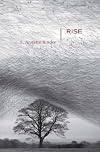
This collection of quietly haunting stories focuses on the lives of fourteen seemingly ordinary residents of non-descript American neighborhoods. All well and good, until each person is beset by one startling event, and the pleasure for the reader is watching the author sharing the internal and external methods employed by each now remarkable character to manage the unusual circumstance. Somehow, these people you might see every day summon up the elemental strength required to save show more themselves. A woman who suffers from an uncontrollable growth spurt withers, but finds grace in an unlikely friendship with a neighbor boy and in her garden. Kids blow things up; a man suffers from temporary blindness; kidneys fail; neighbors atone and wreak revenge for petty and monumental wrongs. In the most memorable story, a young boy sees black haloes around people whose death is imminent and decides to count everything he sees, and to write lists of the items, to distract himself from the looming destinies and to possibly stave them off. show less
The thing I felt as I read the last page of L. Annette Binder's debut novel, The Vanishing Sky, is how all the major characters seem like pinballs careening between bumpers at the mercy of vicious flippers. They have little ability to choose a course of action or to exert any agency in their lives.
The novel is set in a small town in Germany during the waning days of World War II when the Nazis are forcibly recruiting war amputees, old men, and children to defend the fatherland.
On an show more intimate level, we witness the collapse of one family as one member descends into dementia, another suffers from misunderstood PTSD, while the youngest is sent to a military-style training camp for those just out of short-pants.
Trying to hold them altogether is the ultimate caregiving mother, Etta. And, perhaps, she's the saddest character of them all as she attempts to save her family with a combination of cooking and cleaning.
The reader realizes that these are folks just like many of us as they have been swallowed up by a regime that they've done little to circumvent and will ultimately be judged as abetting.
This is a cautionary tale in which heroes die "heroically and for no purpose." show less
The novel is set in a small town in Germany during the waning days of World War II when the Nazis are forcibly recruiting war amputees, old men, and children to defend the fatherland.
On an show more intimate level, we witness the collapse of one family as one member descends into dementia, another suffers from misunderstood PTSD, while the youngest is sent to a military-style training camp for those just out of short-pants.
Trying to hold them altogether is the ultimate caregiving mother, Etta. And, perhaps, she's the saddest character of them all as she attempts to save her family with a combination of cooking and cleaning.
The reader realizes that these are folks just like many of us as they have been swallowed up by a regime that they've done little to circumvent and will ultimately be judged as abetting.
This is a cautionary tale in which heroes die "heroically and for no purpose." show less
Awards


You May Also Like
Associated Authors
Statistics
- Works
- 4
- Also by
- 2
- Members
- 167
- Popularity
- #127,263
- Rating
- 4.0
- Reviews
- 14
- ISBNs
- 14
