
R. B. Kitaj (1932–2007)
Author of Kitaj : paintings, drawings, pastels
About the Author
Image credit: photo by Gregg Chadwick
Works by R. B. Kitaj
R. B. Kitaj: How to Reach 72 in a Jewish Art, including the Second Diasporist Manifesto, March 1-April 2, 2005 (2005) 5 copies
R.B. Kitaj. Pictures From An Exhibition. Held At The Kestner-Gesellschaft, Hannover And The Boymans Museum, Rotterdam 1970. 1970. Paper. (1970) 2 copies
R.B. Kitaj, In Our Time. Covers for a Small Library After the Life for the Most PArt (2020) 1 copy, 1 review
Three Sets 1 copy
Associated Works
Theories and Documents of Contemporary Art: A Sourcebook of Artists' Writings (1995) — Contributor — 420 copies, 1 review
David Hockney : a retrospective [cat. exp., Los Angeles County Museum of Art, Feb 4-April 24, 1988; Metropolitan Museum of Art, June 11-Aug14, 1988; Tate Gallery, Oct 26, 1988-Jan… (1988) — “Portrait” — 188 copies, 4 reviews
Truck 21, A 50th Birthday Celebration For Jonathan Williams — Contributor — 1 copy
Tagged
Common Knowledge
- Canonical name
- Kitaj, R. B.
- Legal name
- Kitaj, Ronald Brooks
- Birthdate
- 1932-10-29
- Date of death
- 2007-10-21
- Gender
- male
- Education
- Royal College of Art
- Occupations
- artist
- Organizations
- American Academy of Arts and Letters (Art, 1982)
- Relationships
- Dobbs, Lem (son)
- Nationality
- USA
- Birthplace
- Cleveland, Ohio, USA
- Places of residence
- London, England, UK
- Place of death
- Los Angeles, California, USA
- Associated Place (for map)
- USA
Members
Reviews
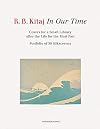
“Books are to me what trees are for landscape painters.” R. B. Kitaj’s portfolio of silkscreens of 51 book covers from his private library is a bibliomaniac’s legacy to book lovers and a key work to his painterly oeuvre. With a text by Eckhart Gillen. Text in English and German.
In Focus | Judging Books by their Covers: R. B. Kitaj's 'In Our Time':
"The written word and the beautiful volumes in which it was delivered were a constant source of revelation for R. B. Kitaj. As his first show more New York show opened in 1965, the artist was interviewed by the local New York Times on the presence of books in his work: I’m not afraid of the word ‘literary’. I feel in good company. You might say that books have meant to me what trees mean to a landscapist…
Painter and printmaker of equal import, the American born Kitaj emerged as one of the most influential artists of his generation. Emigrating to England in the late 1950s, as an ex-serviceman he studied at Oxford University’s Ruskin School with support from the G. I. Bill before applying to the Royal College of Art alongside contemporaries David Hockney and Allen Jones.
Kitaj’s attraction to printmaking was first sparked as a student, and in 1962 he was introduced to the commercial screenprinter Chris Prater, with whom he would produce his finest body of prints. A self-confessed bibliophile, books frequently provided the impetus for Kitaj’s work, their torn covers appearing in early collaged prints alongside photographic negatives and hand drawn designs. In 1969, Kitaj worked closely with Prater to produce his most important meditation on literature yet: the major screenprint suite In Our Time.
Universally regarded as his graphic chef d’oeuvre, the project involved selecting 50 book covers for facsimile reproduction, each text being carefully chosen from the artist’s ever-expanding library. Ever since student days spent rifling through the shelves of 4th Avenue bookstores, books had held a special, talismanic worth for Kitaj, both as sources of education and inspiration and as physical artifacts. The final collection, whittled down from countless volumes, showcased works Kitaj considered significant for their literary contribution, the intensity of their reading experience, and their enduring aesthetic appeal.
Certain texts were remembered as fundamental to his personal maturation, as in Partisan Review, whose reproduction came to represent my soupcan, my Liz, my electric chair…a relic, as those are for someone else, but my own relic…; others became the conduits of intimate ideas and experiences, transporting us to Kitaj’s encounter with the text and their visual draw: I chose this cover because of its dark warm grey color and frail wisp of faded yellow title – transition, but there was much more to it… It’s like opening the tender, brittle pages of my book of life… As I fondle this issue, the spirit of 1927 Paris drives me crazy…to me [it] is pure magic.
At the suggestion of the New Statesmen art critic Robert Melville, Kitaj appended the series title with After the Life for the Most Part. In the context of the idea of a book as ‘muse’ or ‘model’, the additional subtitle brought with it a number of associations: of literary works as the subjects of ‘life’ drawings or ‘still lifes’, paradoxically ‘living’ objects with a compositional and historical presence; but also, perhaps more importantly, of the life inspired and affected by their influence.
The volumes chosen in the final edition were not just seminal works, formative in Kitaj’s development: these were intersections in his life, literal ‘chapters’ from his past, vessels carrying memories both intellectual and visual in the tactile signposts of each book’s tattered edges, its waxed cloth bindings and water stains, weathered dust jackets and well-thumbed pages.
In later years, Kitaj returned to In Our Time, reflecting anew on the strength of the series and what each volume now meant to him: Ezra Pound’s How To Read, the bastard anti-Semite who was a cultural pathfinder of my unschooled youth; China of To-day, an odd bird bought just for the look of it (a profound oblong of green) and its aura – which changes its own psychological, political resonance with the passing years.
One particular account, of the cover of a book of plays by Euguene O’Neill, reveals just how viscerally such interactions were felt as he revisits his adolescence as a merchant sailor on a Norwegian freighter:
This print represents a babble of remembrance: cheap, lonely Manhattan rooms while waiting for ships at union halls, the singular freedom of escape down to the sea in somehow unreal ships – ghostlike American merchantmen which would soon disappear, the transient shipboard comradery of men who would never see each other again after maybe one or two voyages, first sex in a brothel archipelago which would determine one’s whole life in its romance of the damned… Oh, there’s so much left after 40 years…not least dreaming of art, in the bow, straining to see ahead under the moon of the misbegotten on the 8 to 12 watch.
In their simple power of replication, in the naked presentation of each time-worn jacket, Kitaj’s prints constitute a powerful document, a diary, almost, crystallising moments of social change and the changes within his own life. They penetrate to the core of our appreciation of books, as tangible objects as much as works of literature. This is a series that, through its unseen histories and implicit meanings, represents a remarkably personal vision of an age: of Kitaj’s time, as well as our own". show less
In Focus | Judging Books by their Covers: R. B. Kitaj's 'In Our Time':
"The written word and the beautiful volumes in which it was delivered were a constant source of revelation for R. B. Kitaj. As his first show more New York show opened in 1965, the artist was interviewed by the local New York Times on the presence of books in his work: I’m not afraid of the word ‘literary’. I feel in good company. You might say that books have meant to me what trees mean to a landscapist…
Painter and printmaker of equal import, the American born Kitaj emerged as one of the most influential artists of his generation. Emigrating to England in the late 1950s, as an ex-serviceman he studied at Oxford University’s Ruskin School with support from the G. I. Bill before applying to the Royal College of Art alongside contemporaries David Hockney and Allen Jones.
Kitaj’s attraction to printmaking was first sparked as a student, and in 1962 he was introduced to the commercial screenprinter Chris Prater, with whom he would produce his finest body of prints. A self-confessed bibliophile, books frequently provided the impetus for Kitaj’s work, their torn covers appearing in early collaged prints alongside photographic negatives and hand drawn designs. In 1969, Kitaj worked closely with Prater to produce his most important meditation on literature yet: the major screenprint suite In Our Time.
Universally regarded as his graphic chef d’oeuvre, the project involved selecting 50 book covers for facsimile reproduction, each text being carefully chosen from the artist’s ever-expanding library. Ever since student days spent rifling through the shelves of 4th Avenue bookstores, books had held a special, talismanic worth for Kitaj, both as sources of education and inspiration and as physical artifacts. The final collection, whittled down from countless volumes, showcased works Kitaj considered significant for their literary contribution, the intensity of their reading experience, and their enduring aesthetic appeal.
Certain texts were remembered as fundamental to his personal maturation, as in Partisan Review, whose reproduction came to represent my soupcan, my Liz, my electric chair…a relic, as those are for someone else, but my own relic…; others became the conduits of intimate ideas and experiences, transporting us to Kitaj’s encounter with the text and their visual draw: I chose this cover because of its dark warm grey color and frail wisp of faded yellow title – transition, but there was much more to it… It’s like opening the tender, brittle pages of my book of life… As I fondle this issue, the spirit of 1927 Paris drives me crazy…to me [it] is pure magic.
At the suggestion of the New Statesmen art critic Robert Melville, Kitaj appended the series title with After the Life for the Most Part. In the context of the idea of a book as ‘muse’ or ‘model’, the additional subtitle brought with it a number of associations: of literary works as the subjects of ‘life’ drawings or ‘still lifes’, paradoxically ‘living’ objects with a compositional and historical presence; but also, perhaps more importantly, of the life inspired and affected by their influence.
The volumes chosen in the final edition were not just seminal works, formative in Kitaj’s development: these were intersections in his life, literal ‘chapters’ from his past, vessels carrying memories both intellectual and visual in the tactile signposts of each book’s tattered edges, its waxed cloth bindings and water stains, weathered dust jackets and well-thumbed pages.
In later years, Kitaj returned to In Our Time, reflecting anew on the strength of the series and what each volume now meant to him: Ezra Pound’s How To Read, the bastard anti-Semite who was a cultural pathfinder of my unschooled youth; China of To-day, an odd bird bought just for the look of it (a profound oblong of green) and its aura – which changes its own psychological, political resonance with the passing years.
One particular account, of the cover of a book of plays by Euguene O’Neill, reveals just how viscerally such interactions were felt as he revisits his adolescence as a merchant sailor on a Norwegian freighter:
This print represents a babble of remembrance: cheap, lonely Manhattan rooms while waiting for ships at union halls, the singular freedom of escape down to the sea in somehow unreal ships – ghostlike American merchantmen which would soon disappear, the transient shipboard comradery of men who would never see each other again after maybe one or two voyages, first sex in a brothel archipelago which would determine one’s whole life in its romance of the damned… Oh, there’s so much left after 40 years…not least dreaming of art, in the bow, straining to see ahead under the moon of the misbegotten on the 8 to 12 watch.
In their simple power of replication, in the naked presentation of each time-worn jacket, Kitaj’s prints constitute a powerful document, a diary, almost, crystallising moments of social change and the changes within his own life. They penetrate to the core of our appreciation of books, as tangible objects as much as works of literature. This is a series that, through its unseen histories and implicit meanings, represents a remarkably personal vision of an age: of Kitaj’s time, as well as our own". show less

A curious hybrid book of the painter R.B. Kitaj, with his own art work on alternate pages facing the text. The epigraph from Philip Roth's The Counterlife, "The man had Jew on the brain," will give a sense of what Kitaj is trying to deal with in his life and with his art, in the US, in London, and in Israel. Gabriel Josipovici in his What Ever Happened to Modernism? briefly discusses this in terms of the modernist sense of isolation and exile, which is how I came to it. Although it's an show more awkward work, I liked it enough that eventually I'd like to take a look at his Second Diasporist Manifesto. show less

His drawings are certainly provocative. Includes portraits of Hockney, Robert Duncan, Creeley, and work on subjects such as violence, hunger, etc., as well as New York scenes. Includes an interview with Kitaj.

Published on the occasion of the exhibition at the Print Cabinet of the Stedelijk Museum Amsterdam. 11 May-8 June 1967
You May Also Like
Associated Authors
Statistics
- Works
- 33
- Also by
- 5
- Members
- 165
- Popularity
- #128,475
- Rating
- 3.5
- Reviews
- 8
- ISBNs
- 17
- Languages
- 5
- Favorited
- 1