
Preston Fleming
Author of Forty Days at Kamas
About the Author
Image credit: Preston Fleming.
Series
Works by Preston Fleming
Tagged
Common Knowledge
- Gender
- male
- Nationality
- USA
- Birthplace
- Cleveland, Ohio, USA
- Associated Place (for map)
- Ohio, USA
Members
Discussions
(M89''12) Star Chamber Brotherhood, Preston Fleming in World Reading Circle (December 2012)
Reviews
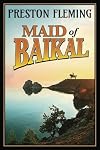
That original subtitle in my review copy, “A Speculative Historical Novel of the Russian Civil War”, hints that alternate history fans should not expect any distinct Jonbars, turning points, or “sharp agate points” (to borrow Winston Churchill’s phrase when he dabbled in alternate history) where our history diverges from Fleming’s story.
Instead, Fleming has done something else that may or may not be too much for an alternate history buff to swallow. He has given us a sincere tale show more of miracles and prophecies and clairvoyance. He’s given us a Russian Joan of Arc.
I’m not spoiling anything by saying that. Fleming is open about it in the description of his book, and he is true to his conceit by presenting a close analogy to the Maid of Orleans in his story. The visions of Zhanna Stepanovich Dorokhina are real, and she achieves real victories that match her prophecies.
This spiritual element didn’t bother me nor the absence of a traditional alternate history turning point. There is, of course, no known example of any such figure in the Russian Civil War.
If you insist on strict materialism in your alternate history, this isn’t going to work for you. I accepted Zhanna’s improbability the way I accept Joan of Arc’s improbability – a documented improbability.
But Fleming makes it work on those terms. He sells it on an emotional level, and he sells it on the level of craft and realism.
Zhanna, one of two main viewpoint characters, is compelling through the whole novel. Fleming makes you feel that you are in the presence of a charismatic, extremely unusual, but fully developed character.
His other viewpoint character is Captain Ned du Pont, a member of the American Expeditionary Force, the instrument of that mostly forgotten injection of American and British troops intot he chaos of the Russian Civil War in the waning days of the Great War. Its purpose was to keep Allied supplies to Russia out of the hands of the Bolsheviks.
When du Pont arrives in Russian in 1918, the Russians have been out of the war for about 10 months and a complex struggle between many factions is being fought on the battlefield, through assassinations and espionage and diplomatic and financial intrigues.
Du Pont, an extended member of the famous Du Pont munitions family in America, is ostensibly there to set up the Russian Railway Service Corps’ telegraph service, a joint American-Russian venture to operate the Russian railway system starting in March 1918, telegraph service. In reality, he’s an American intelligence agent setting up wireless networks to help the White Russians against the Bolsheviks – and intercept the White Russian messages for America.
What he finds in Russia, Fleming works out with great skills. I don’t know if the “government service” overseas Fleming’s bio mentions was diplomatic or intelligence work or both, but the meetings between the various players here have the air of realism. There are the White Russians full of various degrees of monarchists and reactionaries and autocrats. There are the Social Revolutionaries now allied against the Bolsheviks but not trusted by the Whites. There are radical priests fighting the Reds and priests on the Cheka payroll. There is corruption and nepotism which diverts Allied supplies to the Whites and keeps incompetent officers employed on the staff of head White Russian Admiral Kolchak.
Many of these characters are historical figures. In the manner of Harry Turtledove, Fleming has a dramatis personae at the book’s front which separates his creations from history’s. He even provides photos of several of the latter.
Fleming diverts from Turtledove’s worms’ eye view of war in a satisfying way. Fleming gives us the eagle eye view, second hand reports, and sometimes we see combat up close, particularly when the Maid is on the scene.
He makes the strategies depicted realistic and throws in three useful maps. My knowledge of the actual Russian Civil War is pretty sketchy, so I don’t know exactly at what point things diverge from our history besides the appearance of the Maid. However, Fleming throws in a dream for one character and, in one of his occasional footnotes, shows that bleak vision to be what happened in our world.
Besides the drama of battle, plenty of this story takes place outside of combat, and one of its touching aspects is du Pont taking up with a local Russian woman, Yulia, who has fallen on hard times, fearful that not only her land but her life will be taken by the Bolsheviks. Their relationship was poignant. So is the complexity of du Pont’s relationship with the Maid of Baikal.
Despite the broad arc of Zhanna’s life being known ahead of time – and Fleming uses some particular details of the Joan of Arc story for his analog, her story is still surprising and moving.
Fleming manages to achieve that state every alternate history writer should strive for. In the moment of the book, the reader accepts this as real history. When the book is closed, we have to remind ourselves this is what might have been, a vivid dream of a time that never was.
Fleming notes at the beginning, this is a hopeful story of a Russia taking a middle course during the twentieth century, one that avoided the tyranny of the Czar and the blood and poverty of Vladimir Lenin and his heir, Joe the Georgian.
There is one unusual feature in this book worth noting. Fleming provides a musical selection, taken from Russian symphonic works written from about the mid-19th century to the mid-20th century, for each chapter. Some didn’t really seem to evoke the linked chapter but many did, and I was glad to hear some pleasant pieces I hadn’t been exposed to before.
If you can get past the unusual premise, I recommend this one not only as an alternate history but a moving story of people doing their best – and worst – in a complicated and trying time. show less
Instead, Fleming has done something else that may or may not be too much for an alternate history buff to swallow. He has given us a sincere tale show more of miracles and prophecies and clairvoyance. He’s given us a Russian Joan of Arc.
I’m not spoiling anything by saying that. Fleming is open about it in the description of his book, and he is true to his conceit by presenting a close analogy to the Maid of Orleans in his story. The visions of Zhanna Stepanovich Dorokhina are real, and she achieves real victories that match her prophecies.
This spiritual element didn’t bother me nor the absence of a traditional alternate history turning point. There is, of course, no known example of any such figure in the Russian Civil War.
If you insist on strict materialism in your alternate history, this isn’t going to work for you. I accepted Zhanna’s improbability the way I accept Joan of Arc’s improbability – a documented improbability.
But Fleming makes it work on those terms. He sells it on an emotional level, and he sells it on the level of craft and realism.
Zhanna, one of two main viewpoint characters, is compelling through the whole novel. Fleming makes you feel that you are in the presence of a charismatic, extremely unusual, but fully developed character.
His other viewpoint character is Captain Ned du Pont, a member of the American Expeditionary Force, the instrument of that mostly forgotten injection of American and British troops intot he chaos of the Russian Civil War in the waning days of the Great War. Its purpose was to keep Allied supplies to Russia out of the hands of the Bolsheviks.
When du Pont arrives in Russian in 1918, the Russians have been out of the war for about 10 months and a complex struggle between many factions is being fought on the battlefield, through assassinations and espionage and diplomatic and financial intrigues.
Du Pont, an extended member of the famous Du Pont munitions family in America, is ostensibly there to set up the Russian Railway Service Corps’ telegraph service, a joint American-Russian venture to operate the Russian railway system starting in March 1918, telegraph service. In reality, he’s an American intelligence agent setting up wireless networks to help the White Russians against the Bolsheviks – and intercept the White Russian messages for America.
What he finds in Russia, Fleming works out with great skills. I don’t know if the “government service” overseas Fleming’s bio mentions was diplomatic or intelligence work or both, but the meetings between the various players here have the air of realism. There are the White Russians full of various degrees of monarchists and reactionaries and autocrats. There are the Social Revolutionaries now allied against the Bolsheviks but not trusted by the Whites. There are radical priests fighting the Reds and priests on the Cheka payroll. There is corruption and nepotism which diverts Allied supplies to the Whites and keeps incompetent officers employed on the staff of head White Russian Admiral Kolchak.
Many of these characters are historical figures. In the manner of Harry Turtledove, Fleming has a dramatis personae at the book’s front which separates his creations from history’s. He even provides photos of several of the latter.
Fleming diverts from Turtledove’s worms’ eye view of war in a satisfying way. Fleming gives us the eagle eye view, second hand reports, and sometimes we see combat up close, particularly when the Maid is on the scene.
He makes the strategies depicted realistic and throws in three useful maps. My knowledge of the actual Russian Civil War is pretty sketchy, so I don’t know exactly at what point things diverge from our history besides the appearance of the Maid. However, Fleming throws in a dream for one character and, in one of his occasional footnotes, shows that bleak vision to be what happened in our world.
Besides the drama of battle, plenty of this story takes place outside of combat, and one of its touching aspects is du Pont taking up with a local Russian woman, Yulia, who has fallen on hard times, fearful that not only her land but her life will be taken by the Bolsheviks. Their relationship was poignant. So is the complexity of du Pont’s relationship with the Maid of Baikal.
Despite the broad arc of Zhanna’s life being known ahead of time – and Fleming uses some particular details of the Joan of Arc story for his analog, her story is still surprising and moving.
Fleming manages to achieve that state every alternate history writer should strive for. In the moment of the book, the reader accepts this as real history. When the book is closed, we have to remind ourselves this is what might have been, a vivid dream of a time that never was.
Fleming notes at the beginning, this is a hopeful story of a Russia taking a middle course during the twentieth century, one that avoided the tyranny of the Czar and the blood and poverty of Vladimir Lenin and his heir, Joe the Georgian.
There is one unusual feature in this book worth noting. Fleming provides a musical selection, taken from Russian symphonic works written from about the mid-19th century to the mid-20th century, for each chapter. Some didn’t really seem to evoke the linked chapter but many did, and I was glad to hear some pleasant pieces I hadn’t been exposed to before.
If you can get past the unusual premise, I recommend this one not only as an alternate history but a moving story of people doing their best – and worst – in a complicated and trying time. show less

This a grand story with a bold alternative history of the Russian Civil War with a Russian “Joan of Arc” coming to the aid of the White Army. The games, political intrigue, brow-beating, skullduggery and outright warfare all play their part in a story with a scope approaching that of War and Peace. I liked the descriptions, both of people and place - I felt they painted an evocative picture that dragged me into the story. Following Zhanna’s fate was intriguing and at times suspenseful show more and emotional - on first meeting her at her father's house, in furthering her holy cause, and her eventual fate.
A few of my likes and dislikes:
In Chapter 2, I enjoyed the evening scene at the Dorokhin estate. As well as painting a picture of how Russians party, it provides a lot of the backstory, and it introduces some of the main characters including Lt Col Neilson and Zhanna the maid.
Chapter 4 provides a scenario similar to many other cases where America has interfered in other nations' affairs: Vietnam, Afghanistan, and Iraq are the most prominent examples. The earlier discussion of the American hegemony over the Philippines is a further example.
In Chapter 6, I liked the dinner scene at the banker Kostrov’s house. In particular, the revelations that Zhanna makes concerning what her voices have told her about the state of the war and its future course.
Chapters 21 and 22 were my least favourite. Although I knew that this story paralleled that of Joan of Arc and knowing how Joan died, it was still depressing to see how it played out. On the other hand, I felt that these chapters were well written and showed the depravity of Commissar Yurovsky well, although history records that he was remorseful over his role in the execution of the Tsar and his family.
I give this book a 4-star rating. The book has a few highs and lows, but generally, it is an enjoyable read.
Note: I read a pre-release version of this book. show less
A few of my likes and dislikes:
In Chapter 2, I enjoyed the evening scene at the Dorokhin estate. As well as painting a picture of how Russians party, it provides a lot of the backstory, and it introduces some of the main characters including Lt Col Neilson and Zhanna the maid.
Chapter 4 provides a scenario similar to many other cases where America has interfered in other nations' affairs: Vietnam, Afghanistan, and Iraq are the most prominent examples. The earlier discussion of the American hegemony over the Philippines is a further example.
In Chapter 6, I liked the dinner scene at the banker Kostrov’s house. In particular, the revelations that Zhanna makes concerning what her voices have told her about the state of the war and its future course.
Chapters 21 and 22 were my least favourite. Although I knew that this story paralleled that of Joan of Arc and knowing how Joan died, it was still depressing to see how it played out. On the other hand, I felt that these chapters were well written and showed the depravity of Commissar Yurovsky well, although history records that he was remorseful over his role in the execution of the Tsar and his family.
I give this book a 4-star rating. The book has a few highs and lows, but generally, it is an enjoyable read.
Note: I read a pre-release version of this book. show less

I was thrilled to receive a copy of this book from Library Thing. You ask, why? Well, it is written about the time period of the first few years of my marriage that included moving to and living in the same Beirut Preston Fleming wrote about in this novel. I wanted to see if he would write about the place I remembered and get it right? The answer is a resounding YES! I was able to “see” through the eyes of the main character, walk the paths he took and more. It brought so very many show more memories – good and bad. Preston Fleming managed to capture the people, food, place, dialogue, politics, nuances, and more of Beirut in the early 1980’s. Car bombs, mistrust, political parties vying for supremacy, gang mentality, and more.
So, what about the storyline of the book? Conrad Prosser works for the US government in a position with the CIA gathering information and recruiting spies. He is young, full of life, socially active, has women friends and does his job well. He thrives on adventure and the close calls he experiences at various times during the story. The title makes perfect sense and has a depth of meaning in context with Conrad’s eventual decisions and the political situation here in Lebanon both then…and now. show less
So, what about the storyline of the book? Conrad Prosser works for the US government in a position with the CIA gathering information and recruiting spies. He is young, full of life, socially active, has women friends and does his job well. He thrives on adventure and the close calls he experiences at various times during the story. The title makes perfect sense and has a depth of meaning in context with Conrad’s eventual decisions and the political situation here in Lebanon both then…and now. show less
This review was written for LibraryThing Member Giveaways.

The future for America proposed by Mr Fleming in Forty Days at Kamas is scarily possible. His descriptions of the political upheaval and subsequent wars resulting in mass internments of both soldiers and civilians alike are frightening in their possible truth. That he perceives a future for the 'world's greatest democracy' where daring to express a religious belief becomes a crime, that having access to quality education is frowned upon, where serving your country in the military becomes show more punishable with jail, that wealth acquired through work is a crime; all this is altogether too possible to ignore.
This story is graphic, detailed in its description of the horrors experienced by vulnerable people who believed they were living 'according to the rules'. Its not an easy book to read in that so much of the setting is familiar yet society has deteriorated to such a brutal level. For some it may be too unpleasant, for others it will serve to highlight what might become our shared futures without the exercise of due caution when casting a vote. show less
This story is graphic, detailed in its description of the horrors experienced by vulnerable people who believed they were living 'according to the rules'. Its not an easy book to read in that so much of the setting is familiar yet society has deteriorated to such a brutal level. For some it may be too unpleasant, for others it will serve to highlight what might become our shared futures without the exercise of due caution when casting a vote. show less
Awards


You May Also Like


Statistics
- Works
- 9
- Members
- 467
- Popularity
- #52,671
- Rating
- 4.3
- Reviews
- 118
- ISBNs
- 17
- Favorited
- 7

