
Daniel Black
Author of Don't Cry for Me
Series
Works by Daniel Black
Associated Works
Tagged
Common Knowledge
- Canonical name
- Black, Daniel
- Legal name
- Black, Daniel Omotosho
- Gender
- male
- Education
- Clark College
University of Oxford
Temple University (PhD - African-American Studies) - Occupations
- associate professor
- Nationality
- USA
- Birthplace
- Kansas City, Missouri, USA
- Places of residence
- Blackwell, Arkansas, USA (childhood)
- Associated Place (for map)
- USA
Members
Reviews

Isaac Swinton grew up in Missouri as the son of a hard-driving, caustic father named Jacob — a man who saw Isaac's sensitivity, artistic nature, and desires as failures of masculinity and made sure Isaac knew it. The conditioning ran deep. Now it's the late 1980s and Isaac has moved to Chicago, carved out a life of his own, and finally found the courage to seek community as a gay Black man. He's building something fragile and genuine and his own. Then two things happen almost show more simultaneously that shatter his hard-won peace — the AIDS crisis tears through his community, taking people he loves, and the Rodney King beating and its aftermath reawakens the full weight of being Black in America. Joy, extinguished.
His therapist suggests he write it all down. So Isaac begins — his earliest memories, growing up under Jacob's thumb, the specific cruelties and the buried moments of love, his move to Chicago and the community he found there. The writing takes him further than he expected — back to Arkansas, to his ancestral roots, to the inherited trauma of generations. In the process he writes a novel of his own, following two enslaved brothers named Matthew and Jesse Lee, who gradually reveal themselves as avatars of Isaac's own father and uncle.
[May contain spoilers]
Isaac gradually discovers that the two enslaved brothers in his novel — Matthew searching endlessly for Jesse Lee — mirror the fractured love between his father and his uncle Esau. Writing their story becomes a way of understanding his father's wounds, the generational trauma that shaped Jacob's cruelty, and the love underneath it that never found its proper expression. The surprise discovery that reshakes Isaac's world connects to his father's hidden history and the family secrets buried in Arkansas. The ending has Isaac performing a ritual at his father's grave — pouring libation, speaking the truth aloud, releasing the pain — and arriving at something that looks like forgiveness without requiring it. The writing is lyrical throughout, described as needing to be consciously slowed down to fully absorb.
What I think: This is devastating, beautiful, deeply literary coming-of-age fiction — the AIDS crisis and Rodney King as twin backdrops to one man's self-excavation is profoundly moving. The prose is genuinely gorgeous. show less
His therapist suggests he write it all down. So Isaac begins — his earliest memories, growing up under Jacob's thumb, the specific cruelties and the buried moments of love, his move to Chicago and the community he found there. The writing takes him further than he expected — back to Arkansas, to his ancestral roots, to the inherited trauma of generations. In the process he writes a novel of his own, following two enslaved brothers named Matthew and Jesse Lee, who gradually reveal themselves as avatars of Isaac's own father and uncle.
[May contain spoilers]
Isaac gradually discovers that the two enslaved brothers in his novel — Matthew searching endlessly for Jesse Lee — mirror the fractured love between his father and his uncle Esau. Writing their story becomes a way of understanding his father's wounds, the generational trauma that shaped Jacob's cruelty, and the love underneath it that never found its proper expression. The surprise discovery that reshakes Isaac's world connects to his father's hidden history and the family secrets buried in Arkansas. The ending has Isaac performing a ritual at his father's grave — pouring libation, speaking the truth aloud, releasing the pain — and arriving at something that looks like forgiveness without requiring it. The writing is lyrical throughout, described as needing to be consciously slowed down to fully absorb.
What I think: This is devastating, beautiful, deeply literary coming-of-age fiction — the AIDS crisis and Rodney King as twin backdrops to one man's self-excavation is profoundly moving. The prose is genuinely gorgeous. show less
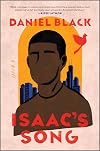
This is a historical fiction told through reflective diary entries and therapy sessions. It sat on my shelf for a year before my book club, Claw Club, finally chose it for April. The style shifts between personal memories and therapy, and it felt deeply focused and interior. I was never wondering what Isaac was feeling or thinking, it's all so clearly exposed. It rarely feels like it's preaching, despite tackling so much. The idea that closeness doesn't define love, that apologies don't heal show more wounds but only relieve the person giving them, that healing requires you to tend to yourself, are all things I needed to read. It feels a little stupid to say a book really made me think, but it did. It traces the lineage of racism that persists and the ways we in Western culture all participate despite our best intentions. I think this book could change things if it were more widely read. It’s a beautiful, impeccably crafted story, but I’m not at peace with the end. I didn't realize it was connected to Don't Cry for Me, and now I need to pick that one up immediately. show less

This is a tough book. Written from the POV of a Black man to his estranged gay son, he reflects on his life and his failure to be a supportive father as he lies dying.
There are some EXTREMELY dark things in this book. Stuff the narrator often couches in “life was different back then,” or “life was different in the country,” or some other such excuse for why people treated one another badly in their pasts. And sometimes that’s understandable—people were less educated, people were show more living harder, Black people in particular had less of everything in every regard.
But the failings continue throughout, and it can get very frustrating to read someone come right up to the edge of epiphany only to chicken out and want credit for “I tried.” “I almost called you.” “I almost visited.” What are these almosts and near-attempts to the person who needs them to be complete?
In the end it is a really well done and thoughtful exploration of a single, lonely, unmoored man trying to navigate his own mistakes and regrets. But it is so heavy. show less
There are some EXTREMELY dark things in this book. Stuff the narrator often couches in “life was different back then,” or “life was different in the country,” or some other such excuse for why people treated one another badly in their pasts. And sometimes that’s understandable—people were less educated, people were show more living harder, Black people in particular had less of everything in every regard.
But the failings continue throughout, and it can get very frustrating to read someone come right up to the edge of epiphany only to chicken out and want credit for “I tried.” “I almost called you.” “I almost visited.” What are these almosts and near-attempts to the person who needs them to be complete?
In the end it is a really well done and thoughtful exploration of a single, lonely, unmoored man trying to navigate his own mistakes and regrets. But it is so heavy. show less
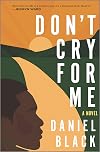
In his introduction, Daniel Black explains that His father died when the two of the had been separated for years. Black wrote Don't Cry for Me as a way of imagining his father's life in the years when they hadn't had conduct. Isaac, the son in the novel, is gay and Black, as is Black the author, and that was a key factor in the distance between him and his father. Jacob, Isaac's father knows he is dying of cancer and writing out his life's story for his son, not so much as an apology, but as show more a truth telling—a way of offering Isaac a piece of his past that he can choose to hold onto or release as he sees fit.
Initially, I was dubious about this premise, which suggested a great deal of wishful thinking; however, Black created a father and son pair who were both strong figures, complex, and almost constantly in conflict. In his letter, Isaac describes his life as a child, when he was raised by his maternal grandparents, his courtship, marriage, and that marriage's dissolution, and his life on his own.
It isn't a spoiler, I think, to say that a big piece of Jacob's story is coming to realize how violent and limited his concept of manhood was. As he reflects during his time alone and reads (cameo appearance here for Alice Walker's the Color Purple), he comes to see other versions of manhood, even if he's unable to adopt them as his own. The fact that Jacob acknowledges his inability to change is what keeps this novel from functioning as a wishful thinking. A father and son have a chance to come to know each other, but there is no forced happy ending.
Don't Cry for Me offers readers both an understanding of a specific father-son relationship, and it also opens up the ways in which readers can consider their own intergenerational family relationships. This book allowed me to rethink some issues I've been confronted as my parents (now in their 90s) age. I can thank Black—and his creations Jacob and Isaac—both for the powerful story his novel tells and for insights of my own that resulted from reading Don't Cry for Me.
If you are someone who appreciates family stories, particularly cross-generational ones, who has experienced, wants to learn more about the pressures that race in the U.S. can place on Black families, or about the ways gender identity and sexuality can affect family relationships, this is a book to read sooner, rather than later.
I received a free review copy of this title from the publisher via EdelweissPlus; the opinions are my own. show less
Initially, I was dubious about this premise, which suggested a great deal of wishful thinking; however, Black created a father and son pair who were both strong figures, complex, and almost constantly in conflict. In his letter, Isaac describes his life as a child, when he was raised by his maternal grandparents, his courtship, marriage, and that marriage's dissolution, and his life on his own.
It isn't a spoiler, I think, to say that a big piece of Jacob's story is coming to realize how violent and limited his concept of manhood was. As he reflects during his time alone and reads (cameo appearance here for Alice Walker's the Color Purple), he comes to see other versions of manhood, even if he's unable to adopt them as his own. The fact that Jacob acknowledges his inability to change is what keeps this novel from functioning as a wishful thinking. A father and son have a chance to come to know each other, but there is no forced happy ending.
Don't Cry for Me offers readers both an understanding of a specific father-son relationship, and it also opens up the ways in which readers can consider their own intergenerational family relationships. This book allowed me to rethink some issues I've been confronted as my parents (now in their 90s) age. I can thank Black—and his creations Jacob and Isaac—both for the powerful story his novel tells and for insights of my own that resulted from reading Don't Cry for Me.
If you are someone who appreciates family stories, particularly cross-generational ones, who has experienced, wants to learn more about the pressures that race in the U.S. can place on Black families, or about the ways gender identity and sexuality can affect family relationships, this is a book to read sooner, rather than later.
I received a free review copy of this title from the publisher via EdelweissPlus; the opinions are my own. show less
Lists
Awards


You May Also Like


Associated Authors
Statistics
- Works
- 17
- Also by
- 2
- Members
- 1,267
- Popularity
- #20,252
- Rating
- 4.1
- Reviews
- 44
- ISBNs
- 63
- Favorited
- 4