
Ada Bassett Litchfield
Author of A Button in Her Ear
About the Author
Series
Works by Ada Bassett Litchfield
Tagged
Common Knowledge
There is no Common Knowledge data for this author yet. You can help.
Members
Reviews
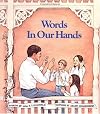
I liked this book because I am interested in ASL, as I am a deaf studies major. It describes a fictional family, and a CODA (child of a deaf adult). The author wrote: “some people think a person who can’t hear can’t learn to talk. That’s not true.” I think this was an important informative topic to cover in a children’s book because it addresses a culture of people who are seen as different and want to be accepted. I also liked how the book explains with drawings how deaf people show more feel throat vibrations to help produce their own similar sounds through speech. The two deaf parents in the book did this to learn speech at a special school when they were kids. The book also explains lip reading, and why some words are harder to understand for deaf people than others with lip reading: “Look in he mirror and say pin v pin, hand v and, hill v, ill. See what I mean?”
I loved how the book included the American Sign Language (ASL) alphabet when going over the topic of signed language. The illustrations showed the ASL alphabet with hand shape pics and letters in English for clarification. It also shows how to sign several things like “noon, face, stand, join, heart, night, and in.” It also explains how a TTY works, that some people have lights for when their doorbell rings, and other accommodations that are seen in the home of deaf people.
At the end of the book, the family moves and explains how is hard that no one understands their family and the different needs they have now that they live in a different town. One of the children said, “nobody stared when they saw us talking with our hands.” Less people are accepting of different languages and cultures in other places, and this book did a good job of explaining. The main idea of the book is to teach to be accepting of deaf people and that their language is fun and deaf people can do anything a hearing person can except hear. show less
I loved how the book included the American Sign Language (ASL) alphabet when going over the topic of signed language. The illustrations showed the ASL alphabet with hand shape pics and letters in English for clarification. It also shows how to sign several things like “noon, face, stand, join, heart, night, and in.” It also explains how a TTY works, that some people have lights for when their doorbell rings, and other accommodations that are seen in the home of deaf people.
At the end of the book, the family moves and explains how is hard that no one understands their family and the different needs they have now that they live in a different town. One of the children said, “nobody stared when they saw us talking with our hands.” Less people are accepting of different languages and cultures in other places, and this book did a good job of explaining. The main idea of the book is to teach to be accepting of deaf people and that their language is fun and deaf people can do anything a hearing person can except hear. show less

This was a very simple explanation about bones, but it was surprisingly comprehensive. It explained both about the skeleton and about the things that work with the skeleton (such as muscles and tendons). It gave facts about bones including how they let us move, how they grow with us, and how the marrow creates blood. It was simple enough for young children to understand, but still an excellent learning tool.
Awards


You May Also Like
Associated Authors
Statistics
- Works
- 11
- Members
- 202
- Popularity
- #109,081
- Rating
- 2.7
- Reviews
- 4
- ISBNs
- 11