
Suzan Colón
Author of Cherries in Winter: My Family's Recipe for Hope in Hard Times
About the Author
Image credit: Photo by Adrian Kinloch
Works by Suzan Colón
Associated Works
Tagged
Common Knowledge
- Canonical name
- Colón, Suzan
- Birthdate
- 1965
- Gender
- female
- Nationality
- USA
- Places of residence
- Hudson County, New Jersey, USA
- Associated Place (for map)
- New Jersey, USA
Members
Reviews
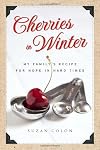
This reads a little like sitting in the attic with your best friend going through a box of your great grandma's old recipes, filling her in on the stories that went along with the memories of those dishes. Puzzling over faded hand-writing and laughing at some of the ingredients that haven't seen a store shelf in years. That's the kind of chatty intimacy this slim book has--as well as fabulous recipes. Colon's family has always used the comfort of good, but practical, food to get them through show more hard times, and that wisdom is no less useful now than it was 50, 75 or 100 years ago. This book leaves you feeling like you just got a big hug from your Grandma right after she's dried your tears and slid a piece of warm cherry pie in front of you. Don't miss out on that! show less
Growing up my mother used to occasionally make “Gravy Bread” which is comprised of day old bread scraps, bacon fat, flour, and water. While the ingredients sound terrible, the dish itself is quite tasty. This Depression era recipe was handed down from my great-grandmother to my grandmother to my mother to me. Many families have similar hardship recipes that have been passed down for generations.
When Suzan Colón, author of Cherries in Winter, is let go from her six figure publishing job show more she decides to “put up soup.” According to Colón “to put up soup” means to do “whatever will sustain you through rough going until things get better.” The phrase also literally means to make soup. When Colón decides to “put up soup” she reaches for her Nana’s Depression era recipe file of cheap and hearty fare such as: Chicken Pie a la Mississippi; German Potato Salad; Aunt Nettie’s Clam Chowder; Quick Apple Cake; Butter Cookies; and Beef Stew with Yeast Dumplings.
Colón discovers that her Nana’s recipes fill more than just literal hunger, but also nourish the spirit. As Colón reflects,
"The recipes Nana wrote and saved offer more than directions for making comfort food that sustained my family for four generations. They’re artifacts from times good and bad – not vague references, but proof that we’ve been through worse than this and have come out okay. And right now, that’s something I need to know."
Each chapter begins with a recipe that Colón deftly weaves into a poignant lesson for weathering life’s storms. Particularly touching is the chapter, “Fine Vases, Cherries in Winter, and Other Lifesaving Devices” in which Colón explains that poverty of the soul is far more crippling than a zero bank account balance. As Colón muses, the little extra spent when there isn’t any extra is important because it reminds “us not to become miserly in spirit. We may be broke, but we’re not poor.”
Cherries in Winter is a literary hot bowl of chowder for a weary reader’s soul.
Publisher: Doubleday (November 3, 2009), 224 pages
Advance Review Copy Provided Courtesy of the Publisher. show less
When Suzan Colón, author of Cherries in Winter, is let go from her six figure publishing job show more she decides to “put up soup.” According to Colón “to put up soup” means to do “whatever will sustain you through rough going until things get better.” The phrase also literally means to make soup. When Colón decides to “put up soup” she reaches for her Nana’s Depression era recipe file of cheap and hearty fare such as: Chicken Pie a la Mississippi; German Potato Salad; Aunt Nettie’s Clam Chowder; Quick Apple Cake; Butter Cookies; and Beef Stew with Yeast Dumplings.
Colón discovers that her Nana’s recipes fill more than just literal hunger, but also nourish the spirit. As Colón reflects,
"The recipes Nana wrote and saved offer more than directions for making comfort food that sustained my family for four generations. They’re artifacts from times good and bad – not vague references, but proof that we’ve been through worse than this and have come out okay. And right now, that’s something I need to know."
Each chapter begins with a recipe that Colón deftly weaves into a poignant lesson for weathering life’s storms. Particularly touching is the chapter, “Fine Vases, Cherries in Winter, and Other Lifesaving Devices” in which Colón explains that poverty of the soul is far more crippling than a zero bank account balance. As Colón muses, the little extra spent when there isn’t any extra is important because it reminds “us not to become miserly in spirit. We may be broke, but we’re not poor.”
Cherries in Winter is a literary hot bowl of chowder for a weary reader’s soul.
Publisher: Doubleday (November 3, 2009), 224 pages
Advance Review Copy Provided Courtesy of the Publisher. show less

When the recession of 2008 hit, we were moving from one state to another for a job change. It was hard but we were lucky. Although we lost a lot of money selling our house, financially we were okay and still had a paycheck coming in. Suzan Colòn, a writer and journalist, was laid off from her job, having to rely on sporadic freelancing and her partner's paycheck. This pushed her to be more frugal and thoughtful in her purchases, especially groceries, and Cherries in Winter is her memoir of show more that time, of looking back at the recipes her family has loved and used in previous lean times and of finding a way to push through and find hope for the future.
Colòn goes through her grandmother's recipes, using them to economize even as she bemoans the loss of the ability to shop in an expensive grocery store and to buy whatever struck her fancy without considering the cost and that cost's impact on her weekly bottom line. Buying whatever she wanted was a sign that she'd moved beyond her family's long history of living paycheck to paycheck and the need to stretch their meals as far as possible. So when she lost that ability, it was hard for her to accept. But as she cooked the economical recipes from her great-grandmother, grandmother, and mother, she learned not only how to make it through but also about the strong, resilient women from whom she came. The dishes she recreates, some not entirely faithfully, come with family stories attached and there is wisdom imparted along with the stories and food. She weaves tales from her own life and from the women who came before her into the almost diary like narrative. It is possible to see Colon's magazine background in the spare, straightforward writing. Each chapter is started with a recipe or a snippet from her grandmother's column that leads her down memory lane as well as into her current situation. She is undoubtedly privileged and far from destitute, which will make her unhappiness with her situation tough for some to stomach (a little pun to lighten the mood), but she's honest about the difficulty she faces and the reason why it takes such an emotional toll on her. This is a very quick read. The family stories are heartfelt and illustrative; it was nice to see Colòn realize what is most important in her life, and it's surely not where she can afford to buy her groceries. show less
Colòn goes through her grandmother's recipes, using them to economize even as she bemoans the loss of the ability to shop in an expensive grocery store and to buy whatever struck her fancy without considering the cost and that cost's impact on her weekly bottom line. Buying whatever she wanted was a sign that she'd moved beyond her family's long history of living paycheck to paycheck and the need to stretch their meals as far as possible. So when she lost that ability, it was hard for her to accept. But as she cooked the economical recipes from her great-grandmother, grandmother, and mother, she learned not only how to make it through but also about the strong, resilient women from whom she came. The dishes she recreates, some not entirely faithfully, come with family stories attached and there is wisdom imparted along with the stories and food. She weaves tales from her own life and from the women who came before her into the almost diary like narrative. It is possible to see Colon's magazine background in the spare, straightforward writing. Each chapter is started with a recipe or a snippet from her grandmother's column that leads her down memory lane as well as into her current situation. She is undoubtedly privileged and far from destitute, which will make her unhappiness with her situation tough for some to stomach (a little pun to lighten the mood), but she's honest about the difficulty she faces and the reason why it takes such an emotional toll on her. This is a very quick read. The family stories are heartfelt and illustrative; it was nice to see Colòn realize what is most important in her life, and it's surely not where she can afford to buy her groceries. show less
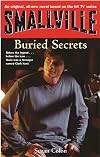
Smallville had a two-tier series of books during its print run: one aimed at middle school to early high school age, and one for older teenagers and adults who enjoyed the show. Both can be enjoyed as nostalgia now for this great show which lasted ten full seasons. Buried Secrets belongs to the middle-school to early high school series, and is set in the very early seasons; this is before Pete discovered Clark’s secret, and the whole high school dynamic was very much in play.
While I show more generally find the Cherie Bennett penned books in the series aimed at a slighter younger audience the best entries, Suzan Colon did a really nice job with this one by keeping it true to the early episodes of the show, and not trying to make it more than it was. Though meteor rocks do come into play here, it isn’t the freak of the week, but rather a slice of life — Clark Kent style — and that makes Buried Secrets really nice.
Clark’s wallowing in his eye-rolling Lana crush in this one of course, trying to deal with Lana’s typical obliviousness in regard to Clark’s feelings as she reads him a love letter from Whitney, who’s now in the Marines, but on his way home for leave. Of course she want’s Clark’s advice about something Whitney wrote in his later.
I was worried this might get too weighed down in the Clana muck, but lo and behold, thanks to a storyline expanding on a terrific little prolog, Clark soon meets his new Spanish teacher, Lilia Sanchez. Wildly pretty, equally as nice, and not that much older than the kids in her class, including Clark, he gets a new crush that for a time rivals Lana. Lilia is a really excellent teacher, but with a rapport that borders on the mysterious. Maybe too mysterious. When Chloe learns that as a child, Lilia was in the middle of a meteor shower, things begin to make sense.
This one is really a slice of life in Clark’s world during those early days. He and Lex are still friends, good friends, which makes it awkward when Lex meets Lilia and asks her to dinner. Clark almost loses his cool, which can be very dangerous, but even more dangerous, is the possibility that Lilia can read minds — his mind. There’s a rescue during a storm and a bracelet made from kryptonite that play a part in the finale, and a really sweet wrap-up.
Though nothing big or earth-shattering happens in this one, it’s a really nice entry in the series if you want to go back to the very early days of the show. Buried Secrets could well in fact have been an early episode of the show. Highly recommended for fans, as there’s some humor, nice interactions between Pete and Chloe and Clark, and of course Lex, not to mention the Kents. Fun stuff, and a good palate cleanser between other books and stories. show less
While I show more generally find the Cherie Bennett penned books in the series aimed at a slighter younger audience the best entries, Suzan Colon did a really nice job with this one by keeping it true to the early episodes of the show, and not trying to make it more than it was. Though meteor rocks do come into play here, it isn’t the freak of the week, but rather a slice of life — Clark Kent style — and that makes Buried Secrets really nice.
Clark’s wallowing in his eye-rolling Lana crush in this one of course, trying to deal with Lana’s typical obliviousness in regard to Clark’s feelings as she reads him a love letter from Whitney, who’s now in the Marines, but on his way home for leave. Of course she want’s Clark’s advice about something Whitney wrote in his later.
I was worried this might get too weighed down in the Clana muck, but lo and behold, thanks to a storyline expanding on a terrific little prolog, Clark soon meets his new Spanish teacher, Lilia Sanchez. Wildly pretty, equally as nice, and not that much older than the kids in her class, including Clark, he gets a new crush that for a time rivals Lana. Lilia is a really excellent teacher, but with a rapport that borders on the mysterious. Maybe too mysterious. When Chloe learns that as a child, Lilia was in the middle of a meteor shower, things begin to make sense.
This one is really a slice of life in Clark’s world during those early days. He and Lex are still friends, good friends, which makes it awkward when Lex meets Lilia and asks her to dinner. Clark almost loses his cool, which can be very dangerous, but even more dangerous, is the possibility that Lilia can read minds — his mind. There’s a rescue during a storm and a bracelet made from kryptonite that play a part in the finale, and a really sweet wrap-up.
Though nothing big or earth-shattering happens in this one, it’s a really nice entry in the series if you want to go back to the very early days of the show. Buried Secrets could well in fact have been an early episode of the show. Highly recommended for fans, as there’s some humor, nice interactions between Pete and Chloe and Clark, and of course Lex, not to mention the Kents. Fun stuff, and a good palate cleanser between other books and stories. show less
You May Also Like


Associated Authors
Statistics
- Works
- 14
- Also by
- 2
- Members
- 482
- Popularity
- #51,207
- Rating
- 3.6
- Reviews
- 43
- ISBNs
- 25
- Languages
- 2


