
Philip Dodd
Author of Genesis : Chapter & Verse
About the Author
Image credit: Philip Dodd [credit: Justine Stoddart]
Works by Philip Dodd
Associated Works
Tagged
Common Knowledge
- Birthdate
- 1957-11-24
- Gender
- male
- Education
- University of Oxford (Jesus College)
The Royal Grammar School, High Wycombe - Occupations
- author
publisher
editor
publishing consultant
pianist
Director, ICA - Organizations
- Longman Group
Virgin Publishing
Society of Young Publishers
Groucho Club
Octopus Group
Society of Authors (show all 7)
Royal Society of Literature - Nationality
- UK
- Birthplace
- Ipswich, Suffolk, England, UK
- Places of residence
- Rochester, Kent, England, UK
- Associated Place (for map)
- England, UK
Members
Reviews
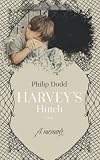
It’s often astounded me today how celebrities, for want of a better word, feel that after a short time in the public eye they are compelled to offer their life story in book form. I have held the belief that a true autobiography should be attempted towards the maturer years as it is only then that a true reflection of life‘s journey and it’s lessons can really be effectively written about. Don’t get me wrong, I’ve read and enjoyed some of these autobiographies and been thoroughly show more entertained but often been left with the feeling that the lives I’m reading about are only half lived and there’s more to come. The other thing that strikes me is that when you remove the celebrity aspect of these books what you have left is………. ordinary lives of ordinary people or extraordinary lives of extraordinary people because really we’re all rather unique. And I think that if we were all compelled as part of some dystopian direction to write our own memoirs we would all come up with our own anecdotes and observations that might be interesting and entertaining to read.
And that brings me neatly to the subject of this blog piece, this charming memoir of Philip Dodd – Harvey’s Hutch. It’s not an autobiography, as such, it is very much a memoir where Dodd likens memories to mirrors in a quite captivating way and demonstrates how a pivotal event in a younger life can impact irrevocably on their future life. Here the four-year-old Phil finds that Harvey, much beloved rabbit, has disappeared in the night through a hole in the wire mesh of his hutch.
Dodd’s memory mirrors allows us glimpses into his life and his philosophies of life. It’s a gentle lyrical consideration of people and events that may have contributed to the person he has become. It’s full of relatable anecdotes, well relatable if you’re a certain age I guess! I am! And so it was sheer delight to read of life in the 60s with Ready Steady Go, the progress of the Beatles (Liverpool feature strongly as Mr Dodd’s hometown), the crumbling of Oxo cubes and the sobering reminder of how the war shaped our parents. I thrilled at some of the parallels between my life and this writer’s. From a hutched pet in early years to the desire to pursue literature, the impact of family and friends from our younger years and that profound sense of loss when beloved grandparents pass away.
It’s a memoir of honesty and earnest belief. I found something so profoundly refreshing about the lack of desire to impress the reader that is so often present in other such works and it was also very moving. it is taking those things that happen in our lives and giving them a credibility that is uplifting when you read because you can identify and think, oh yes, I remember. We all have mirrors, they hold the reflection of our very souls. Not all of us have the capacity to commit them to a full length book as Philip Dodd has done. And done so very well. show less
And that brings me neatly to the subject of this blog piece, this charming memoir of Philip Dodd – Harvey’s Hutch. It’s not an autobiography, as such, it is very much a memoir where Dodd likens memories to mirrors in a quite captivating way and demonstrates how a pivotal event in a younger life can impact irrevocably on their future life. Here the four-year-old Phil finds that Harvey, much beloved rabbit, has disappeared in the night through a hole in the wire mesh of his hutch.
Dodd’s memory mirrors allows us glimpses into his life and his philosophies of life. It’s a gentle lyrical consideration of people and events that may have contributed to the person he has become. It’s full of relatable anecdotes, well relatable if you’re a certain age I guess! I am! And so it was sheer delight to read of life in the 60s with Ready Steady Go, the progress of the Beatles (Liverpool feature strongly as Mr Dodd’s hometown), the crumbling of Oxo cubes and the sobering reminder of how the war shaped our parents. I thrilled at some of the parallels between my life and this writer’s. From a hutched pet in early years to the desire to pursue literature, the impact of family and friends from our younger years and that profound sense of loss when beloved grandparents pass away.
It’s a memoir of honesty and earnest belief. I found something so profoundly refreshing about the lack of desire to impress the reader that is so often present in other such works and it was also very moving. it is taking those things that happen in our lives and giving them a credibility that is uplifting when you read because you can identify and think, oh yes, I remember. We all have mirrors, they hold the reflection of our very souls. Not all of us have the capacity to commit them to a full length book as Philip Dodd has done. And done so very well. show less
 This review was written for LibraryThing Early Reviewers.
Harvey's Hutch by Philip Dodd is a fabulous memoir, a book I enjoyed reading very much. He has set down his memories on the page in fine prose, so that his book reads like a first person novel, at times. His philosophical, poetic lines make his memoir stand out. Harvey's Hutch is a unique memoir that can be read with interest and pleasure. In the first chapters, the author concentrates on the year 1956, when he was four, and knew nothing, apart from what he could see and hear. With the show more following lines, he begins his memoir:
"My mind creates mirrors in the air. They reveal pictures from my past. The people, structures and objects contained within them look cleansed of any dust or drabness. They appear, therefore, more alive, more compelling, than those I see around me in the present. I have no control over the mirrors. I cannot urge them to be or to vanish. They become solid in the air by their own will, not by mine. It is they that direct this memoir, not my pen.
"There I am, in the first mirror, sitting at the kitchen table, having my breakfast. I am a small boy, four years old."
I was especially touched by Chapter Six, The Hole In The Wire Mesh, which speaks of Harvey's disappearance. Indeed, I read it with tears in my eyes.
"I glared at the hideous hole in horror, my stomach, cold and empty, my head heavy, hollow." Thus the author writes of how he felt when he stared at the hole in the wire mesh of Harvey's empty hutch, the evidence that he had been stolen in the night. The four-year-old boy feels the loss of his pet rabbit.
Brought up with love and care by his parents, the author had a happy childhood, nonetheless. His memoir is not only a moving drama, it has some light-hearted moments, too. He speaks not only about his past but his present, too. In Chapter Fifteen, The Land of Lavash and the Pomegranate, he writes about his visits to Armenia.
"I have never been to the Holy Land. I am certain I never will. Armenia is the closest I will ever be to stepping on holy ground. I am moved by its history as the first country in the world to abandon its pagan past and accept Christianity as its religion." Thus he writes in that chapter, revealing how impressed he is by the ancient history of Armenia.
I give this great book five stars. It must be read. show less
"My mind creates mirrors in the air. They reveal pictures from my past. The people, structures and objects contained within them look cleansed of any dust or drabness. They appear, therefore, more alive, more compelling, than those I see around me in the present. I have no control over the mirrors. I cannot urge them to be or to vanish. They become solid in the air by their own will, not by mine. It is they that direct this memoir, not my pen.
"There I am, in the first mirror, sitting at the kitchen table, having my breakfast. I am a small boy, four years old."
I was especially touched by Chapter Six, The Hole In The Wire Mesh, which speaks of Harvey's disappearance. Indeed, I read it with tears in my eyes.
"I glared at the hideous hole in horror, my stomach, cold and empty, my head heavy, hollow." Thus the author writes of how he felt when he stared at the hole in the wire mesh of Harvey's empty hutch, the evidence that he had been stolen in the night. The four-year-old boy feels the loss of his pet rabbit.
Brought up with love and care by his parents, the author had a happy childhood, nonetheless. His memoir is not only a moving drama, it has some light-hearted moments, too. He speaks not only about his past but his present, too. In Chapter Fifteen, The Land of Lavash and the Pomegranate, he writes about his visits to Armenia.
"I have never been to the Holy Land. I am certain I never will. Armenia is the closest I will ever be to stepping on holy ground. I am moved by its history as the first country in the world to abandon its pagan past and accept Christianity as its religion." Thus he writes in that chapter, revealing how impressed he is by the ancient history of Armenia.
I give this great book five stars. It must be read. show less
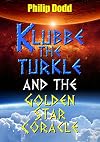
The planet Ankor is not unlike Earth. It has a breathable atmosphere, an ocean and seas teaming with fish and other creatures, and at least one continent, called Crustacea. The climate is mostly mild, but like on Earth, it varies from snowy fields to exotic jungles. The wildlife is rich and includes species unique to the planet and also those found on Earth. What makes Ankor very different from our planet is its “guardian race”, the Turkles. They are close cousins of turtles, but they show more “walk on their hind legs, and have the gift of language, and the ability to create their own culture.” And that culture is fascinating. It has familiar elements, such as a royal family, country folk working in fields, villagers, and the dwellers of the capital city with various institutions. There are Turkle innkeepers, artists, inventors, and even university professors, but one also meets hermits and priests. On its face, it's a familiar society, and one can sympathize with Turkles' fondness of food and understand their family life. Nevertheless, Turkles are very different from us. They are seemingly devoid of greed, envy, and malice.
It's hard to imagine such a society, let alone build an interesting and compelling world without villains, disasters and conflicts. Philip Dodd has succeeded. Klubbe the Turkle and the Golden Star Coracle, follows Klubbe's journey from the time he was a young hermit, to when he became an inventor, to his opening of the space era for Turkles. Klubbe's adventures are very different from our typical hero's journey, but they do have their share of twists and turns. Characters like King Zilk and Queen Zubria, and Kribb the aspiring journalist for the Turkle Times, add humor to the story. The reaction of Turkle society to changes brought by Klubbe's inventions make the story richer and more interesting.
While I mostly liked the poetic tone of the storytelling, some sentences felt convoluted and jarred my reading. For example: “ Then, like his sister, he attended to what the young man was saying, who was speaking out from the middle of the television screen, while sat in the bow of a grey motor boat, which bobbed up and down on fairly rough waves, with its engine turned off.” Nevertheless, Ankor and its inhabitants is a planet I've enjoyed to discover. Recommended for everyone who'd like to meet a genuinely nice race in our galaxy. show less
It's hard to imagine such a society, let alone build an interesting and compelling world without villains, disasters and conflicts. Philip Dodd has succeeded. Klubbe the Turkle and the Golden Star Coracle, follows Klubbe's journey from the time he was a young hermit, to when he became an inventor, to his opening of the space era for Turkles. Klubbe's adventures are very different from our typical hero's journey, but they do have their share of twists and turns. Characters like King Zilk and Queen Zubria, and Kribb the aspiring journalist for the Turkle Times, add humor to the story. The reaction of Turkle society to changes brought by Klubbe's inventions make the story richer and more interesting.
While I mostly liked the poetic tone of the storytelling, some sentences felt convoluted and jarred my reading. For example: “ Then, like his sister, he attended to what the young man was saying, who was speaking out from the middle of the television screen, while sat in the bow of a grey motor boat, which bobbed up and down on fairly rough waves, with its engine turned off.” Nevertheless, Ankor and its inhabitants is a planet I've enjoyed to discover. Recommended for everyone who'd like to meet a genuinely nice race in our galaxy. show less
The Reverend Guppy's Aquarium: From Joseph Frisbie to Roy Jacuzzi, How Everyday Items were Named for Extraordinary People by Philip Dodd
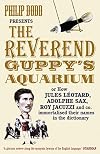
I'm glad that someone has finally gotten around to highlighting those people who have, whether they knew it or not, become part of the lexicon. To be honest, I never gave much thought to whether there was a Mr or Ms Leotard the leotard was named after or whether "leotard" was a name dreamt up by a marketing department. The same for "guppy" (although I can't imagine why a marketing department would ever come up with the name "guppy") or "Mercedes". Dodd has seen the gap in the market and show more admirably filled it, with "The Reverend Guppy's Aquarium".
Although by a few chapters in one has picked up the general gist of "Dodd's talking about jacuzzis and I'm guessing, by the general thrust of the book, that there was a person called Jacuzzi the spa is named after", Dodd's writing never goes stale and you get caught up in the lives of Ernst Grafenberg (of G-Spot fame), Samuel Maverick, Laszlo Biro and, of course, the Reverend Robert Lechmere Guppy. show less
Although by a few chapters in one has picked up the general gist of "Dodd's talking about jacuzzis and I'm guessing, by the general thrust of the book, that there was a person called Jacuzzi the spa is named after", Dodd's writing never goes stale and you get caught up in the lives of Ernst Grafenberg (of G-Spot fame), Samuel Maverick, Laszlo Biro and, of course, the Reverend Robert Lechmere Guppy. show less
Awards

You May Also Like


Associated Authors
Statistics
- Works
- 26
- Also by
- 2
- Members
- 363
- Popularity
- #66,172
- Rating
- 3.9
- Reviews
- 12
- ISBNs
- 53
- Languages
- 6

