
Sage Blackwood
Author of Jinx
About the Author
Series
Works by Sage Blackwood
Tagged
Common Knowledge
- Legal name
- Schwabach, Karen
- Birthdate
- 1960s (approx.)
- Gender
- female
- Education
- Antioch College
University of Albany - Occupations
- teacher
children's book author - Organizations
- Highlights Foundation
Salem College
Society of Children's Book Writers and Illustrators - Agent
- Caitlin Blasdell (Liza Dawson Associates)
- Short biography
- Karen Schwabach grew up in upstate New York and lived for many years in Alaska, where she taught English as a Second Language in the Yup'ik Inuit village of Chefornak. She now trains ESL teachers in North Carolina. [from A Pickpocket's Tale (2008)]
- Nationality
- USA
- Places of residence
- Gilbertsville, New York, USA
Alaska, USA
North Carolina, USA - Associated Place (for map)
- USA
Members
Reviews
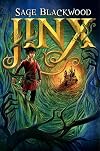
In the style of Diana Wynn-Jones and J.K. Rowling, there's a lot of moral ambiguity in this fantasy, buoyed by great characters and sly humor. The plot is satisfyingly wrapped up, but Jinx himself remains a bit of a mystery at the end, so we can expect sequels. Here's how I'd book talk it:
After being abandoned in the Urwald forest by his uncaring stepfather, Jinx is adopted by a cranky wizard named Simon. As he grows up in the wizard's strange home, he learns some magic and makes friends show more with two other kids, Elfwyn and Reven, who have mysterious curses on them. Jinx is no ordinary boy himself: He has the strange ability to see the color of people's thoughts. Together they search for a way to lift their curses and discover the secrets of the Urwald. show less
After being abandoned in the Urwald forest by his uncaring stepfather, Jinx is adopted by a cranky wizard named Simon. As he grows up in the wizard's strange home, he learns some magic and makes friends show more with two other kids, Elfwyn and Reven, who have mysterious curses on them. Jinx is no ordinary boy himself: He has the strange ability to see the color of people's thoughts. Together they search for a way to lift their curses and discover the secrets of the Urwald. show less
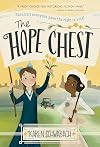
Eleven-year-old Violet has one goal in mind when she runs away from to find her sister, Chloe. Violet’s parents said Chloe had turned into the Wrong Sort of Person, but Violet knew better. The only problem is that Chloe’s not in New York anymore. She's moved on to Tennesee where she's fighting for the right of women to vote. As Violet's journey grows longer, her single-minded pursuit of reuniting with her sister changes. Before long she is standing side-by-side with her new show more friends—suffragists, socialists, and colored people—the type of people whom her parents would not approve. But if Violet’s becoming the Wrong Sort of Person, why does it feel just right? show less
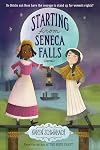
This book was a surprise to me -- I think because it felt very modern and accessible and relatable while being firmly and believably set in 1848 New York state. I loved how the friendship between Bridie and Rose plays out, the strength and eccentricities of the suffragettes, the kind presence of Frederick Douglass and his ever expanding household, and the tie-in to printing, too, of course. I very much liked that the author's note takes on the challenges of Elizabeth Cady Stanton (her later show more racist behavior) as well as celebrating her scientific mind. There's a ton of history in this book, and the author does a good job of balancing that with a respectful and modern critical eye. Topics include domestic violence, rights of women, slavery, Irish immigration and the potato famine, Black education, women scientists (both black and white) and early upstate New York history.
11 year old Bridie is placed out from the poorhouse when her mother dies. Her employers are abusive and she flees for her life, ending up with a new friend, Rose, who helps her find employment with Elizabeth Cady Stanton right before the first meeting to discuss women's rights. show less
11 year old Bridie is placed out from the poorhouse when her mother dies. Her employers are abusive and she flees for her life, ending up with a new friend, Rose, who helps her find employment with Elizabeth Cady Stanton right before the first meeting to discuss women's rights. show less
This review is also available on my blog, Read Till Dawn.
Now this is a book that I so totally regret not reading sooner.
I mean, seriously. I read all those rave reviews on Goodreads when it first came out, but it just sort of slid under my radar. Yay to my new library, though, because it was sitting on a shelf right at my eye-level! I snapped it up and brought it home, and read it in a grand total of two hours - I know, I'm a hopeless speed-reader. But to be fair, this was a really awesome show more book and I just couldn't put it down.
It reminds me of a lot of different book series I've read, in the best possible way. I can't go into all of the similarities (both because that would take forever, and because then I'd pretty much spoil the entire book), but here are some of the series it particularly reminded me of: the Magic Thief series by Sarah Prineas, the Trelian books by Michelle Knudson, the Half Upon a Time trilogy by James Riley, and the Enchanted Forest Chronicles by Patricia C. Wrede. You'd think, with all this similarity to other series, that the Jinx books would have been dry and cliche - they weren't, though. Blackwood does a marvelous job of keeping everything fresh, inserting twists to the formula until the basic premise only feels comfortably familiar, rather than boring.
The wizard Simon is my favorite kind of character: he's all grumpy and mean on the surface, but then he's also kind to Jinx in ways that make you think he's actually really nice inside. He basically adopted Jinx as a six-year-old and "raised him" (if you can call it that when he had him keep house all those years). Jinx very obviously loves Simon very much, and while he never once refers to Simon as his father-figure throughout the entire trilogy, it's very clear that this is essentially how he perceives him. That's what makes Jinx struggle so much with what Simon does in Jinx, and why I honestly struggle with it as well. I can't talk about that, though, because of spoilers.
I love Jinx, too, even though he's a little bit more of a stock character in the first book. By the end of the trilogy, though, I love how he develops away from the usual underdog hero trope and, rather than turning into the charismatic heroes of many of the series I listed above, becomes very grumpy and blunt and awesome as he constantly loses his patience with people. It's hard to describe Jinx's personality development, but it's fantastic to read.
Basically, this is a really great book. I enjoyed the second and third Jinx books as well, but it's this first one that holds the true magic. Go on, check it out. If you're anything like me, you'll gobble it up in one sitting - and then immediately request both sequels. show less
Now this is a book that I so totally regret not reading sooner.
I mean, seriously. I read all those rave reviews on Goodreads when it first came out, but it just sort of slid under my radar. Yay to my new library, though, because it was sitting on a shelf right at my eye-level! I snapped it up and brought it home, and read it in a grand total of two hours - I know, I'm a hopeless speed-reader. But to be fair, this was a really awesome show more book and I just couldn't put it down.
It reminds me of a lot of different book series I've read, in the best possible way. I can't go into all of the similarities (both because that would take forever, and because then I'd pretty much spoil the entire book), but here are some of the series it particularly reminded me of: the Magic Thief series by Sarah Prineas, the Trelian books by Michelle Knudson, the Half Upon a Time trilogy by James Riley, and the Enchanted Forest Chronicles by Patricia C. Wrede. You'd think, with all this similarity to other series, that the Jinx books would have been dry and cliche - they weren't, though. Blackwood does a marvelous job of keeping everything fresh, inserting twists to the formula until the basic premise only feels comfortably familiar, rather than boring.
The wizard Simon is my favorite kind of character: he's all grumpy and mean on the surface, but then he's also kind to Jinx in ways that make you think he's actually really nice inside. He basically adopted Jinx as a six-year-old and "raised him" (if you can call it that when he had him keep house all those years). Jinx very obviously loves Simon very much, and while he never once refers to Simon as his father-figure throughout the entire trilogy, it's very clear that this is essentially how he perceives him. That's what makes Jinx struggle so much with what Simon does in Jinx, and why I honestly struggle with it as well. I can't talk about that, though, because of spoilers.
I love Jinx, too, even though he's a little bit more of a stock character in the first book. By the end of the trilogy, though, I love how he develops away from the usual underdog hero trope and, rather than turning into the charismatic heroes of many of the series I listed above, becomes very grumpy and blunt and awesome as he constantly loses his patience with people. It's hard to describe Jinx's personality development, but it's fantastic to read.
Basically, this is a really great book. I enjoyed the second and third Jinx books as well, but it's this first one that holds the true magic. Go on, check it out. If you're anything like me, you'll gobble it up in one sitting - and then immediately request both sequels. show less
Lists
Awards


You May Also Like


Associated Authors
Statistics
- Works
- 12
- Members
- 1,361
- Popularity
- #18,891
- Rating
- 4.0
- Reviews
- 64
- ISBNs
- 67
- Languages
- 2
- Favorited
- 1