
Sara Gallardo (1931–1988)
Author of January
About the Author
Image credit: Sara Gallardo in 1977.
Works by Sara Gallardo
Historia de los galgos 1 copy
Associated Works
The Year's Best Fantasy and Horror: Sixth Annual Collection (1993) — Contributor — 220 copies, 1 review
Daughters of Latin America: An International Anthology of Writing by Latine Women (2023) — Contributor — 38 copies, 1 review
Secret Weavers: Stories of the Fantastic by Women Writers of Argentina and Chile (1991) — Contributor — 25 copies
Tagged
Common Knowledge
- Canonical name
- Gallardo, Sara
- Legal name
- Gallardo Drago Mitre, Sara
- Birthdate
- 1931-12-23
- Date of death
- 1988-06-14
- Gender
- female
- Occupations
- journalist
writer
writer of children's books - Relationships
- Cané, Miguel (great-grandfather)
Pico Estrada, Luis (husband)
Murena, Héctor (husband) - Nationality
- Argentina
- Birthplace
- Buenos Aires, Argentina
- Places of residence
- Buenos Aires, Argentina
La Cumbre, Córdoba - Place of death
- Buenos Aires, Argentina
- Map Location
- Argentina
Members
Reviews
Spoiler Alert
I see that others were far more impressed with this novel than I was. A bleak slice of Argentinian rural life it may be, but radically feminist? I don’t think so. Nefer, a 16-year-old girl is raped by a drunk at a wedding. The author does not provide much detail about the assault. It is not evident that the girl struggled or called out for help. Did she freeze? Fatalistically submit? Maybe. Likely. Who knows?
Nefer apparently has no words to explain what happened, even to show more herself. Lacking a relationship with her sister and her shrew of a mother, she cannot open up to them. The women in the story blame the victim and are complicit in her further victimization. The young girl’s godmother, Doña Mercedes, the patrona of a prosperous local ranch, fixes things: Nefer is to marry the rapist and bonus: the priest will marry them! The perpetrator feels no guilt. He’s quite jolly about the whole thing—in fact, he hopes she had a good time. The girl’s father acknowledges unlucky things happen; one must simply get on with life.
How do I end this? Well, let’s just say I hated it. show less
I see that others were far more impressed with this novel than I was. A bleak slice of Argentinian rural life it may be, but radically feminist? I don’t think so. Nefer, a 16-year-old girl is raped by a drunk at a wedding. The author does not provide much detail about the assault. It is not evident that the girl struggled or called out for help. Did she freeze? Fatalistically submit? Maybe. Likely. Who knows?
Nefer apparently has no words to explain what happened, even to show more herself. Lacking a relationship with her sister and her shrew of a mother, she cannot open up to them. The women in the story blame the victim and are complicit in her further victimization. The young girl’s godmother, Doña Mercedes, the patrona of a prosperous local ranch, fixes things: Nefer is to marry the rapist and bonus: the priest will marry them! The perpetrator feels no guilt. He’s quite jolly about the whole thing—in fact, he hopes she had a good time. The girl’s father acknowledges unlucky things happen; one must simply get on with life.
How do I end this? Well, let’s just say I hated it. show less

I loved how enchanted the world became through these short stories and flash fiction. Houses floating away. Captive animals making a bid for freedom. Basque deserters living in a cave with unknown creatures. Stories about animals, far from anthropomorphising them and becoming twee, conveyed their wildness with dignity. I'm sure there's a deeper meaning to be gleaned from the symbolism, especially in relation to what was going on in Argentina at the time. But even if you don't quite "get" show more what it might mean in that sense, the stories still find a way to burrow into your psyche and shake things up. Gallardo's prose is exquisite, like a cross between Clarice Lispector and Fleur Jaeggy. Poetic, haunting, imaginative, and memorable. show less
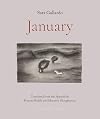
January by Sara Gallardo translated from Spanish by Frances Riddle and Maureen Shaughnessy.
Originally published in Argentina in 1958, the book was just recently translated into English for the first time. It is apparently, from what I've read, considered one of the best Argentinian novels and an influential one there. I read about it in The New Yorker and The New York Review before ordering a copy.
The story is about Nefer, who is the sixteen year old daughter of laborers in rural Argentina. show more She is about three months pregnant at the start of the story, after having been raped at her sister's wedding party. She has been hiding her pregnancy from everyone, but she knows that she won't be able to do that for much longer, and she is afraid of what will happen to her.
She decides to visit a local healer woman, but cannot bring herself to tell her why she is there, and she refuses the woman's advances when she intuits the reason. Her family soon finds out.
The book is very short, only 114 undersized pages. The story progresses in relatively short chapters, jumping ahead from scene to scene, covering only about two week's time. The writing is excellent. Here's an example:
“Maybe it would be better to sit up, kick off the covers, lean against the rough wall, run her hand across her forehead, her damp hair, and close her eyes. The sounds mingling with the darkness are too intrusive: the heavy tick-tock of the alarm clock, Alcira’s breathing, her parents snoring in the next room, the restless dogs in the night, the near and far off roosters, her own heart pumping, rising to her throat, suffocating her. And on top of all this, time pacing ceaselessly past her bedroom door, tromping through the night, the world, carrying with it all that will come to pass, things that will come to pass and cannot be stopped.” show less
Originally published in Argentina in 1958, the book was just recently translated into English for the first time. It is apparently, from what I've read, considered one of the best Argentinian novels and an influential one there. I read about it in The New Yorker and The New York Review before ordering a copy.
The story is about Nefer, who is the sixteen year old daughter of laborers in rural Argentina. show more She is about three months pregnant at the start of the story, after having been raped at her sister's wedding party. She has been hiding her pregnancy from everyone, but she knows that she won't be able to do that for much longer, and she is afraid of what will happen to her.
She decides to visit a local healer woman, but cannot bring herself to tell her why she is there, and she refuses the woman's advances when she intuits the reason. Her family soon finds out.
The book is very short, only 114 undersized pages. The story progresses in relatively short chapters, jumping ahead from scene to scene, covering only about two week's time. The writing is excellent. Here's an example:
“Maybe it would be better to sit up, kick off the covers, lean against the rough wall, run her hand across her forehead, her damp hair, and close her eyes. The sounds mingling with the darkness are too intrusive: the heavy tick-tock of the alarm clock, Alcira’s breathing, her parents snoring in the next room, the restless dogs in the night, the near and far off roosters, her own heart pumping, rising to her throat, suffocating her. And on top of all this, time pacing ceaselessly past her bedroom door, tromping through the night, the world, carrying with it all that will come to pass, things that will come to pass and cannot be stopped.” show less
https://www.goodreads.com/review/show/6166856052
Wow, beautiful and crushing.
“Because the days are yoked together, one starts and another is inevitably on the way, and then another , and another, and they must be endured. Because man is a pathetic creature, he cannot raise his knife and say, "I can no longer endure myself." He will solve nothing by sticking the knife into his belly. Because the days come and go like an endless herd tromping through an open gate.”
Wow, beautiful and crushing.
“Because the days are yoked together, one starts and another is inevitably on the way, and then another , and another, and they must be endured. Because man is a pathetic creature, he cannot raise his knife and say, "I can no longer endure myself." He will solve nothing by sticking the knife into his belly. Because the days come and go like an endless herd tromping through an open gate.”
Lists
Awards


You May Also Like
Associated Authors
Statistics
- Works
- 15
- Also by
- 6
- Members
- 263
- Popularity
- #87,566
- Rating
- 3.8
- Reviews
- 9
- ISBNs
- 39
- Languages
- 4
- Favorited
- 2