
Gabi Gleichmann
Author of The Elixir of Immortality
Works by Gabi Gleichmann
Associated Works
Tagged
Common Knowledge
- Birthdate
- 1954-02-02
- Gender
- male
- Nationality
- Sweden
- Birthplace
- Budapest, Hungary
- Map Location
- Sweden
Hungary
Members
Reviews
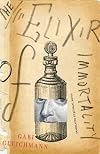
Gabi Gleichmann has written a stunning multi-generational story of a Jewish family that invokes all the important events in Europe’s long history.
Since the eleventh century and the vision of the Portuguese healer Baruch el Espinosa, the Spinoza family have passed down, from generation to generation, the secret manuscript containing the Recipe for Immortality. Today, Ari Spinoza, the last descendant, without a son to carry on the tradition and pass on the manuscript, lies on his deathbed show more and narrates the long tale of his family’s march through history — weaving a tapestry of fable and magic myth, religious persecution and triumph. It’s a brilliantly told story, long but richly rewarding. show less
Since the eleventh century and the vision of the Portuguese healer Baruch el Espinosa, the Spinoza family have passed down, from generation to generation, the secret manuscript containing the Recipe for Immortality. Today, Ari Spinoza, the last descendant, without a son to carry on the tradition and pass on the manuscript, lies on his deathbed show more and narrates the long tale of his family’s march through history — weaving a tapestry of fable and magic myth, religious persecution and triumph. It’s a brilliantly told story, long but richly rewarding. show less
Spanning 1,000 years, The Elixir of Immortality weaves the Spinoza family saga through European and Jewish history. Acting as the frame story, Ari, the narrator, begins by explaining that he is childless, dying and wants to keep his family history from disappearing with him. Focusing on one son per generation, we follow the path of the secret elixir of immortality as it’s passed from father to son.
The touches of magical realism reminded me of 100 Years of Solitude and read like a Forest show more Gump/Big Fish mash-up. The fictitious history used real conflicts, events, and historical figures as the backdrop for each character’s story and served to both ground and propel the narrative forward.
Ari and his great-uncle Fernando’s stories are interjected throughout the narrative, breaking up the monotony of his ancestors’ tales. Genes and the idea of certain desirable and undesirable traits being “in your blood” were repeated themes. This sanguine connection becomes even more apparent as we watch each generation suffer, fail, triumph and fall in love. As the story progresses, we can trace the interweaving threads that connect not just blood, but all people. This wasn’t a Jewish epic, but a story of the importance of family, memory and storytelling.
While a long book, don’t be intimidated. It was easy to put down and come back to without feeling lost. When events from earlier in the story are brought up again, a quick synopsis was usually included, and since this book ran to over 700 pages, these recaps never felt redundant.
From the Moors in Spain, to World Wars and Trotsky, this book covered a lot of ground and introduced a lot of characters, but without ever feeling overwhelming. It covered all the emotions you’d expect a family epic to cover, heartstrings were tugged and laugh lines were activated.
But, the Spanish inquisition? That, I wasn’t expecting. show less
The touches of magical realism reminded me of 100 Years of Solitude and read like a Forest show more Gump/Big Fish mash-up. The fictitious history used real conflicts, events, and historical figures as the backdrop for each character’s story and served to both ground and propel the narrative forward.
Ari and his great-uncle Fernando’s stories are interjected throughout the narrative, breaking up the monotony of his ancestors’ tales. Genes and the idea of certain desirable and undesirable traits being “in your blood” were repeated themes. This sanguine connection becomes even more apparent as we watch each generation suffer, fail, triumph and fall in love. As the story progresses, we can trace the interweaving threads that connect not just blood, but all people. This wasn’t a Jewish epic, but a story of the importance of family, memory and storytelling.
While a long book, don’t be intimidated. It was easy to put down and come back to without feeling lost. When events from earlier in the story are brought up again, a quick synopsis was usually included, and since this book ran to over 700 pages, these recaps never felt redundant.
From the Moors in Spain, to World Wars and Trotsky, this book covered a lot of ground and introduced a lot of characters, but without ever feeling overwhelming. It covered all the emotions you’d expect a family epic to cover, heartstrings were tugged and laugh lines were activated.
But, the Spanish inquisition? That, I wasn’t expecting. show less
This book, a passing down through generations of a set of fates, really (literally a book), is either a five-star melding of stories of a Jewish family in 800 years of European history, or a three-star collection of mostly well-told but somewhat repetitive and uneven stories. Which will depend a lot on the reader.
The Spinoza family saga is covered from the 1300's to the present day. The family passed down the secret of the immortality from father to eldest son and had plenty of encounters with historical figures, mostly those bent on persecuting because they were Jewish.
Lists
Awards

Statistics
- Works
- 6
- Also by
- 1
- Members
- 112
- Popularity
- #174,305
- Rating
- 4.3
- Reviews
- 6
- ISBNs
- 20
- Languages
- 10