
Cynthia Huntington
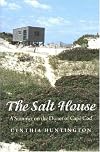
Author of The Salt House: A Summer on the Dunes of Cape Cod
About the Author
Cynthia Huntington is a professor of English at Dartmouth College. She is author of The Salt House and numerous works of poetry, including Heavenly Bodies, a finalist for the National Book Award.
Works by Cynthia Huntington
Associated Works
Tagged
Common Knowledge
- Birthdate
- 1951
- Gender
- female
- Education
- Middlebury College.
- Awards and honors
- Poet Laureate of New Hampshire.
Robert Frost Prize from The Frost Place in Franconia, New Hampshire - Nationality
- USA
- Birthplace
- Meadville, Pennsylvania, USA
- Associated Place (for map)
- Pennsylvania, USA
Members
Reviews
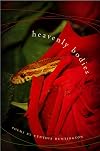
This offering from my old college professor Cynthia Huntington is a well-above-average collection of spiky contemporary free verse. Somewhat startlingly, Professor Huntington's poetry bristles with explicit sexuality and harrowing depictions of drug use; there's a kind of feral Sylvia Plath as rock'n'roll burnout stranded in the rural wastelands of the American outback feel to it. The centerpiece of Heavenly Bodies is a long poem called "Shot Up in the Sexual Revolution: The True Adventures show more of Suzy Creamcheese," a feminist countercultural coming-of-age fable that exploits the iconography of the hippie dream -- all that macramé and army fatigues and communal vegeteratian chili -- without, quite, tipping over into cliché. It's as smart and funny as any poetry about the Sixties that I've read. Other poems, such as the haunting "House Gone to Hell" show the darker side of the anticline, with its "stale breath" and "terrible thirst." show less
This book is so exquisitely written, the result of careful observation and precise description, that I was relieved to stumble upon a rare superfluous phrase. It comes halfway through the book, and the author records examining a tree “with close attention.“ Well, nothing up to that point reflected anything less, nor did the rest of the book. I felt that I was reading a long prose poem.
The Salt House of the title was one of the dune shacks on the Atlantic shore of Cape Cod, north of show more Provincetown. I don’t know if it’s still standing. It offered no more than rudimentary shelter: an 8x12-foot room on stilts, fresh water from a pump downhill, and an outhouse. The rain came through cracks, and fierce winds divided to pass under and over the house. For three years, Huntington and her newlywed husband moved in each spring and returned to town in the early fall.
This stripped-down life encouraged them to spend more time outside than in, attuned to tides, birds, and fish in a way that usually escapes me unless I stop and focus. One nearby shack dweller brought a generator and a television, but Huntington and her partner had the Milky Way to watch after dark.
The book’s underlying theme is the question of what we mean when we call someplace home. The author had no deed; the lease was a handshake. She makes it clear that there is no permanence in life, or even in the universe, for that matter. There are only different forms of transience.
But oh, how beautiful while it lasts. show less
The Salt House of the title was one of the dune shacks on the Atlantic shore of Cape Cod, north of show more Provincetown. I don’t know if it’s still standing. It offered no more than rudimentary shelter: an 8x12-foot room on stilts, fresh water from a pump downhill, and an outhouse. The rain came through cracks, and fierce winds divided to pass under and over the house. For three years, Huntington and her newlywed husband moved in each spring and returned to town in the early fall.
This stripped-down life encouraged them to spend more time outside than in, attuned to tides, birds, and fish in a way that usually escapes me unless I stop and focus. One nearby shack dweller brought a generator and a television, but Huntington and her partner had the Milky Way to watch after dark.
The book’s underlying theme is the question of what we mean when we call someplace home. The author had no deed; the lease was a handshake. She makes it clear that there is no permanence in life, or even in the universe, for that matter. There are only different forms of transience.
But oh, how beautiful while it lasts. show less
Cynthia Huntington's "Heavenly Bodies" is poetry at its rawest. She writes in the Whitmanian tradition, with very little metaphor and with images that are presented directly to the reader. Where Whitman's poems focus on America grappling with the pain of the Civil War and its aftermath, Huntington focuses on raw, personal, painful, emotions. Here are poems about abandonment, abduction, and abuse. Here are poems that make no apologies for their subject matter, which represent someone who has show more been beaten down so far, withdrawal has become their modus operandi. These are difficult poems to read because of their rawness. The imagery was awkward with the first reading, but the more I read, the more I understood how she could reach the point of using the imagery she did. At heart this is an unsettling book of poetry that I wish could hide some of its harshness behind metaphor. show less
Wonderfully written. The sentences flow like poetry. Full of images.
Awards


You May Also Like
Associated Authors
Statistics
- Works
- 9
- Also by
- 1
- Members
- 127
- Popularity
- #158,247
- Rating
- 3.9
- Reviews
- 5
- ISBNs
- 15