
Miriam Elia
Author of We go to the gallery
About the Author
Series
Works by Miriam Elia
Tagged
Common Knowledge
- Canonical name
- Elia, Miriam
- Birthdate
- 1982
- Gender
- female
- Occupations
- artist
broadcaster - Organizations
- Artists for Brexit (member)
- Relationships
- Elia, Ezra (brother)
- Birthplace
- London, England, UK
- Associated Place (for map)
- England, UK
Members
Reviews
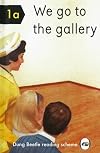
"Est doctrina de stercore"*
Those who were primary school age in 1970s Britain are likely to be familiar with the distinctive style of Ladybird books. They were only just above pocket-size and pocket-money price. The prose was plodding, with deliberately limited vocabulary, often about banal subjects, most memorably, “Shopping with Mother”. They had a distinctive non-serif font, and flat illustrations that looked a little old-fashioned, even at the time. But they have a nostalgic glow show more nowadays, and I still have a shelf of them in my home.
Hence the success of the recent slew of spoofs, of which this is my favourite.
The attention to detail is impressive: it looks and feels delightfully like the real thing in physical form and the content and layout. The first clue that all is not what it seems is when you notice the Ladybird on the cover has been replaced with a Dung Beetle.
What I love about this is the way it uses warm evocations of the reader’s childhood to exploit stereotypical middle-aged, middle-class anxieties. Combining a child’s format with adult content creates an engaging disconnect, like that of Go the Fuck to Sleep (narrated by Samuel L Jackson).
Angst About Art
What could be a better subject for such a book than trying to help one’s children understand modern art, when one doesn’t want to admit to not understanding it oneself? But it’s all a necessarily part of keeping up middle class appearances.
“I could paint that,” says Peter. “But you didn’t,” says mummy.
See Why Your Five Year Old Could Not Have Done That: Modern Art Explained.
This book makes the same points I concluded there (It’s all about reacting to materialism and political systems… And sex. Individuality… And death.) but far more humorously and thus more powerfully.
“Why is there a penis on the painting?”says Jane. “Because God is dead and everything is sex,” says mummy.
Ladybird, Penguin, and Dung Beetle
There are official spoofs published by Penguin, repurposing illustrations from original Ladybird books, and using a Ladybird logo: The Wife, The Husband, Mindfulness, The Shed etc. I've reviewed How it Works: The Husband and The Wife HERE, and, rather funnier, A Ladybird Book About Donald Trump, HERE. However, The Story of Brexit, which I reviewed HERE, was a dud.
The Dung Beetle ones ape the style very closely, but some of the illustrations are clearly NSFW, so not original Ladybird ones (and nor are the words). This is the first, and it started as an art project-cum-prank and led to a copyright case in court, which she eventually won: backstory.
As well as the spoof pages for children, another joy of the Dung Beetle books is the extra detail. For instance, The History of Dung Beetle Books on the back cover includes:
"Their key goal is simple: to embed core literacy and numeracy skills into children's first knowledge of evil and death."
*Hence the motto, "Est doctrina de stercore", which allegedly means "From shit comes learning". show less
Those who were primary school age in 1970s Britain are likely to be familiar with the distinctive style of Ladybird books. They were only just above pocket-size and pocket-money price. The prose was plodding, with deliberately limited vocabulary, often about banal subjects, most memorably, “Shopping with Mother”. They had a distinctive non-serif font, and flat illustrations that looked a little old-fashioned, even at the time. But they have a nostalgic glow show more nowadays, and I still have a shelf of them in my home.
Hence the success of the recent slew of spoofs, of which this is my favourite.
The attention to detail is impressive: it looks and feels delightfully like the real thing in physical form and the content and layout. The first clue that all is not what it seems is when you notice the Ladybird on the cover has been replaced with a Dung Beetle.
What I love about this is the way it uses warm evocations of the reader’s childhood to exploit stereotypical middle-aged, middle-class anxieties. Combining a child’s format with adult content creates an engaging disconnect, like that of Go the Fuck to Sleep (narrated by Samuel L Jackson).
Angst About Art
What could be a better subject for such a book than trying to help one’s children understand modern art, when one doesn’t want to admit to not understanding it oneself? But it’s all a necessarily part of keeping up middle class appearances.
“I could paint that,” says Peter. “But you didn’t,” says mummy.
See Why Your Five Year Old Could Not Have Done That: Modern Art Explained.
This book makes the same points I concluded there (It’s all about reacting to materialism and political systems… And sex. Individuality… And death.) but far more humorously and thus more powerfully.
“Why is there a penis on the painting?”says Jane. “Because God is dead and everything is sex,” says mummy.
Ladybird, Penguin, and Dung Beetle
There are official spoofs published by Penguin, repurposing illustrations from original Ladybird books, and using a Ladybird logo: The Wife, The Husband, Mindfulness, The Shed etc. I've reviewed How it Works: The Husband and The Wife HERE, and, rather funnier, A Ladybird Book About Donald Trump, HERE. However, The Story of Brexit, which I reviewed HERE, was a dud.
The Dung Beetle ones ape the style very closely, but some of the illustrations are clearly NSFW, so not original Ladybird ones (and nor are the words). This is the first, and it started as an art project-cum-prank and led to a copyright case in court, which she eventually won: backstory.
As well as the spoof pages for children, another joy of the Dung Beetle books is the extra detail. For instance, The History of Dung Beetle Books on the back cover includes:
"Their key goal is simple: to embed core literacy and numeracy skills into children's first knowledge of evil and death."
*Hence the motto, "Est doctrina de stercore", which allegedly means "From shit comes learning". show less
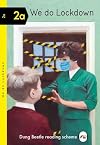
Ten minutes of mild amusement, or maybe fifteen if you study the details, with a very British slant. This early reader style book features a typical “nice” middle-class family that is superficially like those in Ladybird books of my childhood, with Mummy always smiling - but in this, it’s through gritted, whitened teeth.
Image: “Evening virtue signalling”
There’s a lockdown because of Coronavirus, but Mummy can’t get a delivery slot, so they have to brave the supermarket, where show more there are shortages of such essentials as lemon grass. If you can’t relate to that, maybe the mesmerising horror of the news, (relief at) not seeing relatives, spying on neighbours, and the hypocrisy of rule-breaking are more your thing. There’s no mention of home-schooling, presumably because Elia has covered that in We Learn at Home.
The main narrative, in large easy-read font, is paired with relevant illustrations. The snark is in the “new words” at the bottom of each page and listed at the end:
Image: New words
Unlike Elia’s far better We Go to the Gallery, which I reviewed HERE, the humour feels weak and obvious, and there’s nothing to make you think beyond the horrid excuse for not giving to a homeless beggar because he doesn't take contactless payment, hoarding loo rolls, a clichéd parallelism of religion and the government using “fear and guilt to control people”, and an apparent dig at the “sexy rule breaking” of Prof Neil Ferguson (the UK government Coronavirus advisor who broke lockdown rules for an extra-marital affair - but at least he resigned, unlike Dominic Bloody Cummings).
Image: “Bog roll apocalypse”
NOTE: This is not one of the Ladybird for adults books, which repurpose illustrations from children’s books of the 60s and 70s with new text. This is one of Miriam Elia’s “Dung Beetle” pastiches, with new and original artwork and words. Dung Beetle’s key goal is simple:
“To embed core literacy and numeracy skills into children’s first knowledge of evil and death.”
For details of the court case Elia won against Ladybird, see my review of Elia’s We Go to the Gallery, HERE, which is much better than this.
I think this book needs to be darker and funnier. As it is, it’s both too detached from the reality of sickness and death that many are still experiencing, whether themselves, or those they love, and also not far enough removed from current reality to be funny. More than eight months into the pandemic, during our second lockdown, current reality is boringly, frustratingly, sometimes tragically familiar. (On a trivial note, why does Johnny’s hair alternate between dark brown and blond?)
If you’re given a copy, flick through it, then pass it on - in a socially distanced way, of course.
Image: Read at a safe distance show less
Image: “Evening virtue signalling”
There’s a lockdown because of Coronavirus, but Mummy can’t get a delivery slot, so they have to brave the supermarket, where show more there are shortages of such essentials as lemon grass. If you can’t relate to that, maybe the mesmerising horror of the news, (relief at) not seeing relatives, spying on neighbours, and the hypocrisy of rule-breaking are more your thing. There’s no mention of home-schooling, presumably because Elia has covered that in We Learn at Home.
The main narrative, in large easy-read font, is paired with relevant illustrations. The snark is in the “new words” at the bottom of each page and listed at the end:
Image: New words
Unlike Elia’s far better We Go to the Gallery, which I reviewed HERE, the humour feels weak and obvious, and there’s nothing to make you think beyond the horrid excuse for not giving to a homeless beggar because he doesn't take contactless payment, hoarding loo rolls, a clichéd parallelism of religion and the government using “fear and guilt to control people”, and an apparent dig at the “sexy rule breaking” of Prof Neil Ferguson (the UK government Coronavirus advisor who broke lockdown rules for an extra-marital affair - but at least he resigned, unlike Dominic Bloody Cummings).
Image: “Bog roll apocalypse”
NOTE: This is not one of the Ladybird for adults books, which repurpose illustrations from children’s books of the 60s and 70s with new text. This is one of Miriam Elia’s “Dung Beetle” pastiches, with new and original artwork and words. Dung Beetle’s key goal is simple:
“To embed core literacy and numeracy skills into children’s first knowledge of evil and death.”
For details of the court case Elia won against Ladybird, see my review of Elia’s We Go to the Gallery, HERE, which is much better than this.
I think this book needs to be darker and funnier. As it is, it’s both too detached from the reality of sickness and death that many are still experiencing, whether themselves, or those they love, and also not far enough removed from current reality to be funny. More than eight months into the pandemic, during our second lockdown, current reality is boringly, frustratingly, sometimes tragically familiar. (On a trivial note, why does Johnny’s hair alternate between dark brown and blond?)
If you’re given a copy, flick through it, then pass it on - in a socially distanced way, of course.
Image: Read at a safe distance show less
Many readers will have come across the recent 'Ladybird Books for Adults', which gently lampoon the style of the original Ladybird books for children. These have titles like The Husband, The Wife, The Shed and The Hipster; they take illustrations from the original Ladybird books and marry them to ironic and slightly surreal texts aimed at amusing adult readers who remember the originals. What a jolly wheeze, many people thought, and you can find these in many of the places where baby boomers show more congregate, especially in the gift shops of National Trust properties, where they provide evidence that the Trust can actually do post-modernism and irony.
But many may have missed the fact that Penguin, who now own the Ladybird imprint, 'lifted' the concept from somewhere else. In 2015, an artist called Miriam Elia produced a spoof Ladybird book entitled We go to the gallery, created in the style of the Ladybird books, and poking fun at the often po-faced London contemporary art scene. In this book, two children are taken by their Mummy to an art gallery. "Is the art pretty?" asks one of the children, as the illustration shows them entering the exhibition space under a large, angry caption declaring the exhibition to be entitled "The Death of Meaning". Things go downhill from there.
Penguin Books were not amused. Elia had been way too accurate with her imitation, down to publishers' logos and the names of the child characters from the originals. Solicitors' letters soon started flying about, and the original print run was withdrawn and pulped.
Then three things happened. Firstly, the law on copyright changed to make parodies far more legally acceptable. And the story of We go to the gallery went viral. And Penguin decided to get in on the act by releasing their own parodies of the properties they now controlled.
(See http://www.theguardian.com/books/2015/sep/22/the-flyaway-success-of-the-ladybird...
Which has meant that We go to the gallery can now be published again, with sufficient changes to satisfy Penguin. In fact, these changes - changing the names of the children, and creating a bogus imprint for the book, 'Dung Beetle', complete with its own history (their 1938 guide to fascism for under-5s, Why we burn books, is widely sought after) - add to the depth of the original product.
For anyone who has a healthy disregard for contemporary art, this book is required reading, though do be aware that it is certainly not suitable for children. It is also unlikely that National Trust gift shops will be stocking it any time soon. show less
But many may have missed the fact that Penguin, who now own the Ladybird imprint, 'lifted' the concept from somewhere else. In 2015, an artist called Miriam Elia produced a spoof Ladybird book entitled We go to the gallery, created in the style of the Ladybird books, and poking fun at the often po-faced London contemporary art scene. In this book, two children are taken by their Mummy to an art gallery. "Is the art pretty?" asks one of the children, as the illustration shows them entering the exhibition space under a large, angry caption declaring the exhibition to be entitled "The Death of Meaning". Things go downhill from there.
Penguin Books were not amused. Elia had been way too accurate with her imitation, down to publishers' logos and the names of the child characters from the originals. Solicitors' letters soon started flying about, and the original print run was withdrawn and pulped.
Then three things happened. Firstly, the law on copyright changed to make parodies far more legally acceptable. And the story of We go to the gallery went viral. And Penguin decided to get in on the act by releasing their own parodies of the properties they now controlled.
(See http://www.theguardian.com/books/2015/sep/22/the-flyaway-success-of-the-ladybird...
Which has meant that We go to the gallery can now be published again, with sufficient changes to satisfy Penguin. In fact, these changes - changing the names of the children, and creating a bogus imprint for the book, 'Dung Beetle', complete with its own history (their 1938 guide to fascism for under-5s, Why we burn books, is widely sought after) - add to the depth of the original product.
For anyone who has a healthy disregard for contemporary art, this book is required reading, though do be aware that it is certainly not suitable for children. It is also unlikely that National Trust gift shops will be stocking it any time soon. show less

You are either going to absolutely love this book or absolutely hate it. I am one of the former.
Written in the style of the old Dick and Jane books (Are they around anymore? Is their equivalent out there warping little minds in the same way?), we visit an art gallery with Susan, John, and Mummy. The illustrations look as if they have been ripped from those 50s/60s mainstays and it is written in short declarative sentences which are used to introduce new words such as "pretty", "important", show more "dead", and "feminist".
Starting to get a feel for what this is like?
As it is a rather small book, it doesn't make sense to go on at length (in fact, my word count is probably already more than the book's), nor to quote extensively. However, let me provide the contents of one page to give you a taste. "There is nothing in the room. John is confused. Susan is confused. Mummy is happy. 'There is nothing in the room because God is dead,' says Mummy. 'Oh dear,' says John." The associated new words are "God", "dead", and "confused."
Okay, typing it out that way may not do it justice, but that was one of the pages that, when I saw a few as a preview, convinced me I had to have this book.
Again, you will either hate it or love it. I loved it. And if you are just a slight bit off kilter, you should love it also.
One final comment: The tone of the book is held throughout. The book is produced by "Dung Beetle Learning". The history of this fine learning group is included at the end of the book, including this quote, "Dung Beetle's first success came in 1938 with the publication of Why We Burn Books."
I'd pay money for that one, too. show less
Written in the style of the old Dick and Jane books (Are they around anymore? Is their equivalent out there warping little minds in the same way?), we visit an art gallery with Susan, John, and Mummy. The illustrations look as if they have been ripped from those 50s/60s mainstays and it is written in short declarative sentences which are used to introduce new words such as "pretty", "important", show more "dead", and "feminist".
Starting to get a feel for what this is like?
As it is a rather small book, it doesn't make sense to go on at length (in fact, my word count is probably already more than the book's), nor to quote extensively. However, let me provide the contents of one page to give you a taste. "There is nothing in the room. John is confused. Susan is confused. Mummy is happy. 'There is nothing in the room because God is dead,' says Mummy. 'Oh dear,' says John." The associated new words are "God", "dead", and "confused."
Okay, typing it out that way may not do it justice, but that was one of the pages that, when I saw a few as a preview, convinced me I had to have this book.
Again, you will either hate it or love it. I loved it. And if you are just a slight bit off kilter, you should love it also.
One final comment: The tone of the book is held throughout. The book is produced by "Dung Beetle Learning". The history of this fine learning group is included at the end of the book, including this quote, "Dung Beetle's first success came in 1938 with the publication of Why We Burn Books."
I'd pay money for that one, too. show less
Lists
Awards


You May Also Like


Associated Authors
Statistics
- Works
- 14
- Members
- 407
- Popularity
- #59,757
- Rating
- 3.9
- Reviews
- 16
- ISBNs
- 29
- Languages
- 5