
Sheryl Sandberg
Author of Lean In: Women, Work, and the Will to Lead
About the Author
Sheryl Sandberg was born in 1969 in Washington, D.C. Sandberg enrolled at Harvard College and in 1991, graduated summa cum laude with an A.B. in Economics and was awarded the John H. Williams Prize for the top graduating student in economics. She attended Harvard Business School and in 1995 she show more earned her M.B.A. with highest distinction. After business school, she worked as a management consultant for McKinsey & Company. From 1996 to 2001, Sandberg served as Chief of Staff to then United States Secretary of the Treasury, Larry Summers, under President Bill Clinton where she helped lead the Treasury¿s work on forgiving debt in the developing world during the Asian financial crisis. She joined Google Inc. in 2001 and served as its Vice President of Global Online Sales & Operations until March 2008. At that time, Facebook announced that Sheryl Sandberg would be hired as the company's COO. In 2011, Sandberg was ranked #5 on "the world's 100 most powerful women" by Forbes magazine. She was named as one of the top 100 influential people in the world by Time magazine in 2012. In March 2013, Sandberg released her first book, Lean In: Women, Work, and the Will to Lead, which deals with business leadership and development, issues with the lack of females in government and business leadership positions, and feminism in general. Sandberg is also on the boards of The Walt Disney Company, Women for Women International, and the Center for Global Development and V-Day. She was previously a board member of Starbucks, the Brookings Institution and Ad Council. Her title's Lean In: Women, Work, and the Will to Lead and Option B: Facing Adversity, Building Resilience and Finding Joy made The New York Times Best Seller List. (Bowker Author Biography) show less
Image credit: Telegraph Media Group
Works by Sheryl Sandberg
Lean In for Graduates: With New Chapters by Experts, Including Find Your First Job, Negotiate Your Salary, and Own Who You Are (2014) 174 copies, 2 reviews
Leadership Skills: Essentials of Leadership and the Skills Required to Lead Effectively (2014) 3 copies
Opcja B : jak radzić sobie z traumą po stracie, stawić czoła trudnościom i odzyskać radość życia 1 copy
Dấn thân - Lean in 1 copy
TË BËJMË PËRPARA 1 copy
Associated Works
When to Jump: If the Job You Have Isn't the Life You Want (2018) — Foreword, some editions — 83 copies, 6 reviews
A Higher Standard: Leadership Strategies from America's First Female Four-Star General (2015) — Foreword — 34 copies, 3 reviews
Tagged
Common Knowledge
- Legal name
- Sheryl Kara Sandberg
- Birthdate
- 1969-08-28
- Gender
- female
- Education
- BA Harvard
MBA Harvard Business School - Occupations
- Chief Operating Officer of Facebook
VP @ Google
Chief of staff US Treasury - Organizations
- Lean In
Facebook - Relationships
- David Goldberg (husband)
- Nationality
- USA
- Birthplace
- Washington, D.C., USA
- Places of residence
- California, USA
- Associated Place (for map)
- USA
Members
Reviews
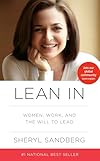
This book riled me up, which I think is a sign of a good book. It got me thinking, it made me uncomfortable, it pissed me off in parts.
Sheryl Sandberg does a great job of shedding light on lingering sexism in the workplace. Having been in corporate America for more than a decade now, I agree with everything she says on this subject. Women are way more concerned than men with being "nice" and liked, which can affect their status at work. The women who do rise up are often see as bossy and show more bitchy (even by other women, which is sad), while the men who rise up are powerful, admirable. I've seen it myself that women are way more tentative about speaking up in meetings, asking for promotions, and negotiating raises.
All of this upsets me, of course. But I don't know how we change things, and I'm not entirely sure I agree with Sandberg's solution. Sandberg seems to think the way to improvement is having more women in management. And the way to get that is for women to act more "male" in the workplace. The problem with this is that women are still expected to be "female" at home. We're still expected to do all the usual duties with taking care of the kids and household. Whether that's fair or not, it's true. The result? Women get the shit end of the stick. We're not trading responsibilities; we're just adding more. And we're somewhat adept at multitasking, biologically, so we don't see a problem, at first. But, over time, we run ourselves ragged.
This book kind of had a split personality for me. The first half of the book raised my blood pressure. Sandberg rightly says that women CAN achieve anything and everything, but I sensed a subtle implication that they SHOULD achieve anything and everything. I felt this expectation, like I'm letting down womankind if I want to focus more on things besides work. Not all women have passion for their jobs. For many, jobs are just jobs. Same for men, too, I'd assume. Reading this made me feel like kind of a loser for not wanting to be CEO of my company. I'm an accomplished person (I work a full-time job at a managerial level, I write novels in my rare free time, I have a family), but I kind of feel like I'm not "leaning in" enough after reading this. There's that familiar (and very female) feeling: Guilt.
The second half of the book does a 180 and talks about how women can't (and shouldn't) "do it all." This part of the book was way more compassionate and realistic, but didn't really jive with the first part, which confused the overall message for me. And I still come back to asking, "What's the solution here?" Sandberg herself says that, in the workplace, if you express family needs, you seem less dedicated to your job. There's guilt with that. And there's perceived judgment from others. That is hard, as a conscientious woman, to ignore. Many workplaces still consider women "high maintenance" because they need to tend to child/home responsibilities more than men do. I can rarely get the one-hour lunch break I'm entitled to at my job (I feel like people think I'm a princess for even asking for my break), so I can only imagine how hard it would be pump breastmilk between meetings or leave early to pick up my kid from daycare. The problem, to me, is with overall workplace culture. The boundaries of yesteryear have disappeared, thanks to email and implied 24/7 availability. It's virtually impossible to function at the top if you have ANYTHING in your life that takes priority over your job.
Many women (with or without children) have things that take priority over their jobs. So they're not moving up as much at work. I think many women see the writing on the wall. They see that they can't do it all (and they feel that damn guilt again), and they step back at work, proactively and self-protectively. Sandberg is right when she says that women don't really have a choice with this (just like many men don't have a choice about being the primary breadwinner in many families). They absolutely cannot keep up with their usual work demands AND take on everything else on the domestic front. If they try, they feel failure on all fronts (and there's that damn guilt again).
The thing is, I think many women "lean out" of the workplace not because they think they can't reach the top; they lean out because they see that as the best life choice considering current expectations at work and home. I've never doubted my ability as a woman to achieve at work, but I just don't aspire to running the show because other things matter more to me. I get the sense that Sandberg is kind of disappointed in women like me. Maybe I'm projecting my own feelings, maybe I have my own guilt and insecurity about what I "should" be doing in my life, but that's just how the book hit me, overall.
Yes, Sandberg is right that women may see other choices besides leaning out if things in the workplace changed. She says the only way for things in the workplace to change is if more women are in charge...and the only way for more women to be in charge is if they trudge through all the difficulties above. But, frankly, I haven't seen much change with more women in charge. The high-up women I know work EVEN HARDER, as if they are constantly trying to prove they are just as dedicated as men. It's the high-up women who work 16-hour days. Most of us below them don't aspire to that stress. I really think it's less about who's high-up and more about workplace culture. Like I said, my lunch breaks are considered a luxury (versus a basic human necessity). Until things like that change, I don't see how men or women are going to feel some relief from the strain of the work-life balance. show less
Sheryl Sandberg does a great job of shedding light on lingering sexism in the workplace. Having been in corporate America for more than a decade now, I agree with everything she says on this subject. Women are way more concerned than men with being "nice" and liked, which can affect their status at work. The women who do rise up are often see as bossy and show more bitchy (even by other women, which is sad), while the men who rise up are powerful, admirable. I've seen it myself that women are way more tentative about speaking up in meetings, asking for promotions, and negotiating raises.
All of this upsets me, of course. But I don't know how we change things, and I'm not entirely sure I agree with Sandberg's solution. Sandberg seems to think the way to improvement is having more women in management. And the way to get that is for women to act more "male" in the workplace. The problem with this is that women are still expected to be "female" at home. We're still expected to do all the usual duties with taking care of the kids and household. Whether that's fair or not, it's true. The result? Women get the shit end of the stick. We're not trading responsibilities; we're just adding more. And we're somewhat adept at multitasking, biologically, so we don't see a problem, at first. But, over time, we run ourselves ragged.
This book kind of had a split personality for me. The first half of the book raised my blood pressure. Sandberg rightly says that women CAN achieve anything and everything, but I sensed a subtle implication that they SHOULD achieve anything and everything. I felt this expectation, like I'm letting down womankind if I want to focus more on things besides work. Not all women have passion for their jobs. For many, jobs are just jobs. Same for men, too, I'd assume. Reading this made me feel like kind of a loser for not wanting to be CEO of my company. I'm an accomplished person (I work a full-time job at a managerial level, I write novels in my rare free time, I have a family), but I kind of feel like I'm not "leaning in" enough after reading this. There's that familiar (and very female) feeling: Guilt.
The second half of the book does a 180 and talks about how women can't (and shouldn't) "do it all." This part of the book was way more compassionate and realistic, but didn't really jive with the first part, which confused the overall message for me. And I still come back to asking, "What's the solution here?" Sandberg herself says that, in the workplace, if you express family needs, you seem less dedicated to your job. There's guilt with that. And there's perceived judgment from others. That is hard, as a conscientious woman, to ignore. Many workplaces still consider women "high maintenance" because they need to tend to child/home responsibilities more than men do. I can rarely get the one-hour lunch break I'm entitled to at my job (I feel like people think I'm a princess for even asking for my break), so I can only imagine how hard it would be pump breastmilk between meetings or leave early to pick up my kid from daycare. The problem, to me, is with overall workplace culture. The boundaries of yesteryear have disappeared, thanks to email and implied 24/7 availability. It's virtually impossible to function at the top if you have ANYTHING in your life that takes priority over your job.
Many women (with or without children) have things that take priority over their jobs. So they're not moving up as much at work. I think many women see the writing on the wall. They see that they can't do it all (and they feel that damn guilt again), and they step back at work, proactively and self-protectively. Sandberg is right when she says that women don't really have a choice with this (just like many men don't have a choice about being the primary breadwinner in many families). They absolutely cannot keep up with their usual work demands AND take on everything else on the domestic front. If they try, they feel failure on all fronts (and there's that damn guilt again).
The thing is, I think many women "lean out" of the workplace not because they think they can't reach the top; they lean out because they see that as the best life choice considering current expectations at work and home. I've never doubted my ability as a woman to achieve at work, but I just don't aspire to running the show because other things matter more to me. I get the sense that Sandberg is kind of disappointed in women like me. Maybe I'm projecting my own feelings, maybe I have my own guilt and insecurity about what I "should" be doing in my life, but that's just how the book hit me, overall.
Yes, Sandberg is right that women may see other choices besides leaning out if things in the workplace changed. She says the only way for things in the workplace to change is if more women are in charge...and the only way for more women to be in charge is if they trudge through all the difficulties above. But, frankly, I haven't seen much change with more women in charge. The high-up women I know work EVEN HARDER, as if they are constantly trying to prove they are just as dedicated as men. It's the high-up women who work 16-hour days. Most of us below them don't aspire to that stress. I really think it's less about who's high-up and more about workplace culture. Like I said, my lunch breaks are considered a luxury (versus a basic human necessity). Until things like that change, I don't see how men or women are going to feel some relief from the strain of the work-life balance. show less
Yes, I 'really liked it'. All the way through the book I was nodding my head, laughing or smiling ruefully at anecdotes, getting fired up to fight for the right of women to make the best choices for themselves and to be more assertive in asking for what they need and in supporting each other. Absolutely I think that 'mommy wars' between stay-at-home and working-out-of-the-home mothers are a terrible waste of energy and are ultimately harmful. Of course men and women need to be made aware of show more the unintentionally sexist views they might have about women in management positions.
I finished the book fired up, ready to recommend it to anybody.
Then I started to read the acknowledgements.
"My deepest thanks go to my writing partner Nell Scovell...She took a break from her work as a television writer/producer and journalist to make this a priority. She put in nights, early mornings, weekends, and holidays to accommodate my limited schedule...Nell's talent with words is matched only by her sense of humor...Her heart rings true and clear on this book's every page."
Oh. Brought up short. On every page? So why isn't her name on the front cover, Sheryl? Or even in the small print of the Library of Congress Cataloging-in-Publication Data?
Suddenly I felt let down. All that talk of supporting other women in the workplace, all those admissions that you had excellent help at home, somehow didn't add up to giving due credit on the cover of the book I'm holding right now to a woman who's effort went into "every page"?
I nearly threw it across the room.
But it's a library book, so of course I didn't do that.
So yes, it's a great book and one I still think everyone should read. But at the same time it also manages to be deeply disappointing. show less
I finished the book fired up, ready to recommend it to anybody.
Then I started to read the acknowledgements.
"My deepest thanks go to my writing partner Nell Scovell...She took a break from her work as a television writer/producer and journalist to make this a priority. She put in nights, early mornings, weekends, and holidays to accommodate my limited schedule...Nell's talent with words is matched only by her sense of humor...Her heart rings true and clear on this book's every page."
Oh. Brought up short. On every page? So why isn't her name on the front cover, Sheryl? Or even in the small print of the Library of Congress Cataloging-in-Publication Data?
Suddenly I felt let down. All that talk of supporting other women in the workplace, all those admissions that you had excellent help at home, somehow didn't add up to giving due credit on the cover of the book I'm holding right now to a woman who's effort went into "every page"?
I nearly threw it across the room.
But it's a library book, so of course I didn't do that.
So yes, it's a great book and one I still think everyone should read. But at the same time it also manages to be deeply disappointing. show less
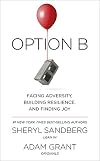
Yeesh. Some good content, and she tries really hard to understand the plight of the little people, but it is simply too difficult to be in a position of such privilege and then offer sound advice to the rest of us on how to grieve.
Additionally, I don't think she is trying to name drop throughout - being a successful executive at two of the largest of tech companies - but the folks she can lean on are not in the same position to offer support as normal people would have access to.
I'm truly show more saddened for her loss, and I wish her the best in her life, but the detachment from reality is too much for me. show less
Additionally, I don't think she is trying to name drop throughout - being a successful executive at two of the largest of tech companies - but the folks she can lean on are not in the same position to offer support as normal people would have access to.
I'm truly show more saddened for her loss, and I wish her the best in her life, but the detachment from reality is too much for me. show less

Well, gosh. I feel guilty for the 2.5 I gave this book because it's such a personal account of the author's wrestling to develop resilience in the face of grief and loss. It is well-written and it was - for me - way more relatable than Lean In (which I didn't like, but that's another review for another time).
There is some good to be gleaned from Sandberg's account of her personal experience. It is helpful to understand through her eyes how to connect with and what to say (or what not to show more avoid and not to say) to someone who is grieving and/or kids who are grieving, how to support a widow who's dating again as they come to love someone else. It's hard to come away from this book without a little more general empathy for people and that's good.
Where this book fell short for me, was its similar sensibility to what I disliked intensely about Lean In. The data tie-ins from Grant are supposed to counter this as are asides from Sandberg herself about how if she's having this much trouble X (where X is usually some version of holding it together at work or with her kids) how much more are those without her resources. Of course, I realize that who she is is exactly why she got a book contract.
She seems to have nothing but good intentions - there's no motive to patronize. And she's been through a terrible and tragic blow--no minimizing of her pain.
But, ugh.
One Amazon reviewer shared her own story--her husband died, it cost $12K to bury him which she'll be paying off for a decade, she has no celebrity friends and colleagues to turn to, and she can't afford to lose her job by crying at work. What advice does Sandberg have for her?
I can tell you: with the best of intentions, it's crickets.
Some reviews gush about how this book "changes the national conversation about grief." I'm sorry, but that's hogwash and giving this book and Sandberg/Grant way too much credit.
I hope it was cathartic for her to write this book, but although it provides some datapoints that could be used to tee up some very important national conversations. People dealing with grief and loss with less access to resources, still don't have them and don't have anyone with anything near Sandberg's platform to advocate for them.
Sandberg sees Facebook as part of the solution and therein lies the problem - lots of well-intentioned talk, precious little making-a-difference-in-the-trenches action. show less
There is some good to be gleaned from Sandberg's account of her personal experience. It is helpful to understand through her eyes how to connect with and what to say (or what not to show more avoid and not to say) to someone who is grieving and/or kids who are grieving, how to support a widow who's dating again as they come to love someone else. It's hard to come away from this book without a little more general empathy for people and that's good.
Where this book fell short for me, was its similar sensibility to what I disliked intensely about Lean In. The data tie-ins from Grant are supposed to counter this as are asides from Sandberg herself about how if she's having this much trouble X (where X is usually some version of holding it together at work or with her kids) how much more are those without her resources. Of course, I realize that who she is is exactly why she got a book contract.
She seems to have nothing but good intentions - there's no motive to patronize. And she's been through a terrible and tragic blow--no minimizing of her pain.
But, ugh.
One Amazon reviewer shared her own story--her husband died, it cost $12K to bury him which she'll be paying off for a decade, she has no celebrity friends and colleagues to turn to, and she can't afford to lose her job by crying at work. What advice does Sandberg have for her?
I can tell you: with the best of intentions, it's crickets.
Some reviews gush about how this book "changes the national conversation about grief." I'm sorry, but that's hogwash and giving this book and Sandberg/Grant way too much credit.
I hope it was cathartic for her to write this book, but although it provides some datapoints that could be used to tee up some very important national conversations. People dealing with grief and loss with less access to resources, still don't have them and don't have anyone with anything near Sandberg's platform to advocate for them.
Sandberg sees Facebook as part of the solution and therein lies the problem - lots of well-intentioned talk, precious little making-a-difference-in-the-trenches action. show less
Lists
Awards


You May Also Like


Associated Authors
Statistics
- Works
- 9
- Also by
- 3
- Members
- 4,729
- Popularity
- #5,325
- Rating
- 3.7
- Reviews
- 161
- ISBNs
- 72
- Languages
- 11