
Tony Robbins
Author of Awaken the Giant Within
About the Author
Tony Robbins was born on February 29, 1960 in North Hollywood, California. He is a life coach and self-help author. His books include Unlimited Power, Unleash the Power Within, Awaken the Giant Within, Money - Master the Game: 7 Simple Steps to Financial Freedom and Unshakable: Your Financial show more Freedom Playbook. (Bowker Author Biography) show less
Image credit: CNBC
Works by Tony Robbins
Life Force: How New Breakthroughs in Precision Medicine Can Transform the Quality of Your Life & Those You Love (2022) 184 copies, 2 reviews
Unleash the Power Within: Personal Coaching from Anthony Robbins That Will Transform Your Life! (2000) 29 copies
O Jogo do Dinheiro Domine os 7 passos para a independência financeira (Portuguese Edition) (2016) 7 copies
Les onze lois de la réussite : Un guide simple et pratique pour vous aider à prendre le contrôle de votre vie (2010) 7 copies
Wie aus kleinen Veränderungen große Unterschiede werden: 365 Lektionen für mehr Selbstdisziplin (2016) 7 copies
Awaken the Giant Within, Updated 6 copies
Anthony Robbins Get the Edge Personal Journal (Also Includes Personal Power Journal) (2001) 5 copies
Mastering Influence 3 copies
Power Talk! - Raising Your Standards plus special interview with Jay Abraham on Dramatically Increasing Your Income (2002) 2 copies
Personal Power - Classic Edition - Transcript - The Most Successful Personal Achievement Program of All Time (2002) 2 copies
Power Talk! The Ultimate Resource: Tony Reveals How Choosing to Have Faith Rewards You with a Compelling Future (2002) 2 copies
Love & Passion, the Ultimate Relationship Program Boxed Set: 10 Steps to Create, Transform and Celebrate the Greatest Gift of Life! (2005) 2 copies
Create a Life of Fulfillment Through the Mastery of Life Management Systems with Anthony Robbins (1996) 2 copies
El Santo Grial de la inversión: Los mejores inversores del mundo revelan sus estrategias secretas (2024) 2 copies
The Power of Focus 1 copy
Mastery University Workbooks 1 copy
Power Talk: Strategies for Lifelong Success - Stand Guard at the Door of Your Mind Vol. 19 (1993) 1 copy
Power Talk: Your Belief Systems plus special interview with Paul Zane Pilzer on The Power of Economic Alchemy (2002) 1 copy
Power Talk: Using Quality Quantifiers interview with Art Berg Quadriplegic Athlete and Inspirational Speaker (2003) 1 copy
Anthony Robbins Ultimate Edge: A 3-Part System for Creating an Extraordinary Life in Any Environment (2009) 1 copy
Anthony Robbins - The New Money Masters - with Frank Kern (1 CD, 1 DVD, & Action Book) (2009) 1 copy
Mastering Influence Workbook 1 copy
Re-Awaken the Giant Within 1 copy
The Power to Succeed 1 copy
Stap in je grootsheid 1 copy
Incrollabile. La tua strategia per la libertà finanziaria. Crea una mente milionaria in un mondo di volatilità (2018) 1 copy
Forţa vitală: cum pot descoperirile din medicina de precizie să transforme calitatea vieţii tale şi a celor dragi (2023) 1 copy
Imbatible 1 copy
The New Money Masters 1 copy
Power Of Emotions 1 copy
Anthony Robbins' Power-Talk: Strategies for Lifelong Success (The Six Master Steps to Change, Vol. 17) (1990) 1 copy
Your Hour Of Power 1 copy
The Purpose Of Life 1 copy
Results Workshop 1 copy
Power Of Relationships 1 copy
Financial Freedom 1 copy
Daily Magic 1 copy
Associated Works
Masters of Success: Proven Techniques for Achieving Success in Business and Life (2004) — Contributor — 41 copies
Tagged
Common Knowledge
- Canonical name
- Robbins, Tony
- Legal name
- Robbins, Anthony Jay
Mahavoric, Anthony J. (birth) - Other names
- Robbins, Anthony
- Birthdate
- 1960-02-29
- Gender
- male
- Education
- Glendora High School
- Occupations
- Life Coach
motivational speaker - Nationality
- USA
- Birthplace
- North Hollywood, California, USA
- Places of residence
- Manalapan, Florida, USA
- Associated Place (for map)
- USA
Members
Reviews
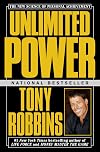
Tony Robbins is a great inspiration, and operates his body/mind/soul with an infectious zeal. He makes no secret that the purpose of his life is to collect, absorb, test, and retail wisdom. The material he presents is valuable and marketable -- he markets it.
In terms of critique, the proof is in the alumni who have taken his "courses". Many have made successes of their lives by finally "hearing" this wisdom because of Tony's ability to communicate it. The only sad part is that he is so show more caught up in the illusion of "individual entrepreneurship" that he misses the Collective power of organized specialization. The Project is filled with negative aspersions about "Government", missing both the point and the hope of good governance in a participatory representative Republic. Politically, Tony veers into a personality cult. To his credit, he really does model the wisdom he preaches. He fails to understand or teach the social economic discovery of Adam Smith and the benefit of a democratic Republic as a form of governance owned by its citizens. He ends up preaching hatred of "our" Government, which is self-hatred.
Ultimately, "free enterprise" is only unleashed if capitalist/monopolist impulses are regulated by just laws enforced fairly with judicial recourse for violations and breaches. Humans have understood this since Aristotle studied Politics. Greed and corruption have always interrupted our implementations. Ultimately all "self-improvement" movements fail and fall in the face of those interruptions. Tony never challenges the Greed kill.
Tony teaches Unlimited Power by grasping the potential of the human brain. He locked on to Neuro-linguistic Programming, psychological triggers, and couples techniques with business acumen and marketing. Steps include building a ready-State for the mind/body/soul, with physiological body-training and emotionally resonant compassion. "Turn your mess into message" by labelling your own Identity, telling and rewriting your Story, and unfolding your Self. Unlocking your emotional drivers and "secrets" to create breakthroughs. All directed to taking action. "Happiness is a habit," and "Success leaves clues".
He teaches the power of Relationships -- "the greatest evolutionary advantage is Love" -- although he restricts his lessons to the short plays, to intimacy and private partnerships, not the Great Game of polity and Governance. One beautiful contribution is his explicit example of the power of apology, paying restitution, forgiveness, and finding honor in making amends. He uses the healing concept of Hoʻoponopono.
The teaching is filled with reinforcement "triggers" --Tony is primarily a teacher, but pretends to be a leader for the hidden and very limited heuristic purpose of modeling the lessons. As a leader he brings a genuine delight and love for people. The project is filled with charism, non-judgmental acceptance of others, and well-thought out marketing designs. The project brings genuine "opportunity" by enabling us to find the answers that are inside every one of us all the time. We need Tony to help us "see" and hear. show less
In terms of critique, the proof is in the alumni who have taken his "courses". Many have made successes of their lives by finally "hearing" this wisdom because of Tony's ability to communicate it. The only sad part is that he is so show more caught up in the illusion of "individual entrepreneurship" that he misses the Collective power of organized specialization. The Project is filled with negative aspersions about "Government", missing both the point and the hope of good governance in a participatory representative Republic. Politically, Tony veers into a personality cult. To his credit, he really does model the wisdom he preaches. He fails to understand or teach the social economic discovery of Adam Smith and the benefit of a democratic Republic as a form of governance owned by its citizens. He ends up preaching hatred of "our" Government, which is self-hatred.
Ultimately, "free enterprise" is only unleashed if capitalist/monopolist impulses are regulated by just laws enforced fairly with judicial recourse for violations and breaches. Humans have understood this since Aristotle studied Politics. Greed and corruption have always interrupted our implementations. Ultimately all "self-improvement" movements fail and fall in the face of those interruptions. Tony never challenges the Greed kill.
Tony teaches Unlimited Power by grasping the potential of the human brain. He locked on to Neuro-linguistic Programming, psychological triggers, and couples techniques with business acumen and marketing. Steps include building a ready-State for the mind/body/soul, with physiological body-training and emotionally resonant compassion. "Turn your mess into message" by labelling your own Identity, telling and rewriting your Story, and unfolding your Self. Unlocking your emotional drivers and "secrets" to create breakthroughs. All directed to taking action. "Happiness is a habit," and "Success leaves clues".
He teaches the power of Relationships -- "the greatest evolutionary advantage is Love" -- although he restricts his lessons to the short plays, to intimacy and private partnerships, not the Great Game of polity and Governance. One beautiful contribution is his explicit example of the power of apology, paying restitution, forgiveness, and finding honor in making amends. He uses the healing concept of Hoʻoponopono.
The teaching is filled with reinforcement "triggers" --Tony is primarily a teacher, but pretends to be a leader for the hidden and very limited heuristic purpose of modeling the lessons. As a leader he brings a genuine delight and love for people. The project is filled with charism, non-judgmental acceptance of others, and well-thought out marketing designs. The project brings genuine "opportunity" by enabling us to find the answers that are inside every one of us all the time. We need Tony to help us "see" and hear. show less
Awaken the Giant Within: How to Take Immediate Control of Your Mental, Emotional, Physical and Financial Destiny! by Anthony Robbins
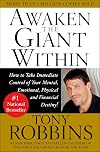
I was recommended this book to me several years ago by a friend. He was the most positive person I had ever met and I asked him how he was that way. He was going through a divorce and things in his life were quite difficult but he was always happy. He told me that this book transformed his attitude about life.
It has taken me a while to actually sit down and read this book but this was definitely the right time. For many years, I was a wife and mother and all my goals and dreams involved my show more husband and kid. Five years ago, that all ended and my youngest graduated from high school a couple of years later. I am finally ready to focus on me and my goals again. I don't think I realized that until I read this book. I have been thinking about goals and dreams now and am making plans. I have broken a lifelong habit of picking my skin. Tomorrow is two weeks since I picked and I actually have not had a hard time in days. I am no longer a picker. I have tried to quit all my life. Quitting smoking was easy compared to this. Suddenly, after reading this book, it has been easy to quit.
I highly recommend this book to anyone that is wanting to make positive changes in their life. I will continue to work on the assignments in the book and continue to grow and follow my new dreams and goals. show less
It has taken me a while to actually sit down and read this book but this was definitely the right time. For many years, I was a wife and mother and all my goals and dreams involved my show more husband and kid. Five years ago, that all ended and my youngest graduated from high school a couple of years later. I am finally ready to focus on me and my goals again. I don't think I realized that until I read this book. I have been thinking about goals and dreams now and am making plans. I have broken a lifelong habit of picking my skin. Tomorrow is two weeks since I picked and I actually have not had a hard time in days. I am no longer a picker. I have tried to quit all my life. Quitting smoking was easy compared to this. Suddenly, after reading this book, it has been easy to quit.
I highly recommend this book to anyone that is wanting to make positive changes in their life. I will continue to work on the assignments in the book and continue to grow and follow my new dreams and goals. show less
Awaken the Giant Within : How to Take Immediate Control of Your Mental, Emotional, Physical and Financial Destiny! by Anthony Robbins
This definitely is not a 'once read' book. There is just too much info in a single book , too many exercises , too much to assimilate. I for one need to read it again. I liked the concept of pain pleasure linking , moving towards and away values.
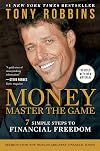
I am not into self-help and motivational gurus so even though I heard Tony Robbins name I didn't read his books or watched him speak. Somebody recommended me this book and I was very surprised. It's a combination of motivational rhetoric and logical concrete steps to try to get your finances in order by the retirement time. It's simplified and often too absolute but I think it will be invaluable for many people. I give discount for annoying repetitions and sales technique, which probably show more come with motivational territory. But it looks like this method of writing works. Tony Robbins is a good writer and is able to explain some complicated financial matters in a very simple language. His advice is sometimes contradicting but I am ready to overlook this for the overall value of his advice. show less
Lists
Awards

You May Also Like


Associated Authors
Statistics
- Works
- 167
- Also by
- 3
- Members
- 7,108
- Popularity
- #3,453
- Rating
- 3.9
- Reviews
- 49
- ISBNs
- 293
- Languages
- 19