
Stephanie Butland
Author of Lost for Words
Series
Works by Stephanie Butland
How I Said Bah! to Cancer: A Guide to Thinking, Laughing, Living and Dancing Your Way Through (2011) 10 copies
A Bookshop Summer: The life-affirming new novel from the author of Found in a Bookshop, perfect for book lovers (2026) 5 copies
J'aime tout ce qui me rappelle que je ne suis pas seule à souffrir sur cette terre (Milady Feel Good Books) (French Edition) (2019) 2 copies
Quietus 1 copy
Tagged
Common Knowledge
- Birthdate
- 1975
- Gender
- female
- Agent
- A. M. Heath & Co.
- Nationality
- British
- Places of residence
- Northumberland, England, UK
- Map Location
- England, UK
Members
Reviews

Veronica (Vee) Moon’s passion for photography started when she was seven years old, a bridesmaid at a cousin’s wedding. Fascinated on the day by what was happening beneath the cloth the photographer was hiding under, when she subsequently heard relatives reminiscing about the day whenever they looked through the album, she realised how important photographs are in enabling people to relive a particular moment in time. From that moment she wanted a camera of her own, finally fulfilling show more this dream when, aged fifteen, she bought one for herself. As she couldn’t afford to have her films developed, she created a makeshift darkroom under the stairs and learnt how to do it for herself, marvelling at the alchemy of the process, and her ability to manipulate it. When she started work as a junior photographer at the “Colchester Echo”, she was delighted. However, although she knew she was capable of producing good work, she realised that she would never be sent on any interesting assignments but instead would be restricted to taking photographs at minor charity events, coffee mornings etc because her male colleagues saw her interest in photography as a hobby.
However, all this changed in June 1968. Fascinated by news coverage of the women machinists whose walkout, in protest at being paid less than their male counterparts, had brought production at the Ford Dagenham factory to a halt, when her editor refused his permission for her to attend in an official capacity, she decided to use her day off to visit the picket line and take photographs. Her fiancé, Barry, thought it was a “funny thing to do” on her day off, but little did he realise that what she discovered that day would lead to her breaking off their engagement and changing the direction of her life. It was there that she met not only the striking workers, but also Leonie Barratt, a passionate, angry activist who was determined to fight for equality and to use every opportunity to challenge the status quo. Leonie took the naïve Vee under her wing and her inclusion of one of Vee’s picket-line photographs, to accompany an article appearing in “This Month” magazine, led to Vee’s work getting its first exposure in the UK press. The friendship which quickly developed between them led to Vee breaking off her engagement, moving to London to live with Leonie, becoming more involved in the ongoing fight to achieve equal rights for women and pursuing a very successful career in photography.
The story starts in 2018: Leonie is dead, and Vee, now seventy, is suffering with a degenerative health problem and living a reclusive life. Although for decades she had been regarded as a pioneer for change, heralded as one of the most accomplished photographers of the twentieth century, a photograph taken more than thirty years earlier provoked such controversy and criticism that it immediately marked the end of her career. It is that image which is to be the centrepiece of an upcoming exhibition. Entitled “Women in their Power: Veronica Moon and Second Wave Feminism”, it is a project close to the heart of Leonie’s niece, Erica. Her discovery of a box of her aunt’s papers and photographs revealed a link between a woman who had been a feminist way ahead of her time, and a photographer who had retreated from the public eye. Erica becomes determined to rescue both these women from obscurity and, in doing so, hopes to kick-start her own career, which had faltered in the face of competing family demands.
Through the relationship which develops between Vee and Erica, as Erica researches the background to Vee’s career and her relationship with Leonie, the story, told in flashbacks to the 1960s, 70s and 80s, gradually reveals Vee’s recollections of this significant time in her life. Split into seven parts (subject, light, focus, distance, movement, exposure, development) each section is introduced not only by a description of a particular image and Vee’s approach to photographing her subjects, but also by a list of significant events which occurred during the year it was taken, with footnotes referring to the contemporary state of progress (or otherwise!) in the Women’s Movement. However, this was not just a look back at history but, through Erica’s life as a young married mother who was trying to juggle the often-conflicting needs of family and career, was an exploration of the changing face of feminism in the twenty first century, and the ongoing struggle for equality.
I thoroughly enjoyed this fascinating, thought-provoking story of the power of female friendship and the history of the growth of feminism in the past fifty years. Each of the characters portrayed felt multi-faceted, convincingly drawn and used to good effect to explore the changing face of feminism over this period. Whilst it is undeniable that progress has been made in the last half century, the story also demonstrates that the battle for equality is far from over, that women still need to make their voices heard; to own their power and not to be afraid of it; not to fear being seen as strident if they demand more; not to play down their achievements, or find it hard to accept compliments for them – how many men are similarly self-effacing about these issues? The story made me reflect on how things have changed from the start of the Women’s Lib movement in the 1960s to the contemporary #MeToo movement and to challenge my own beliefs on how far we have come. It made me think in much more detail about the sexism which continues to exist and which, because of its all too often insidious nature, is perhaps even harder to challenge without being accused of being either strident, hypersensitive – or even too politically correct!
I really enjoyed the occasional “Letters from a Feminist”, written by Leonie for “This Month” magazine. Addressed “Dear John” and described as “our monthly column from the front line of the Battle of the Sexes”, these letters added an extra dimension to Leonie’s reflections on feminism, the fight for equality, the challenge to men to reflect on this and to change their behaviour. Evocatively capturing the contemporary language, attitudes and ongoing struggle of mid-twentieth century feminists, these letters alone would provide rich material for reading groups!
I loved the ways in which, throughout the story, the art and technical skill of photography was a central theme, effectively demonstrating how a photographer’s power to create, and own, an image was so much greater when using film than it is in our digital age. The spectre of the infamous photograph, which brought Vee’s career as a photographer to an abrupt end, hovered throughout the story-telling, until its genesis was firstly revealed, and then analysed by Vee, enabling a different light to be shone on it. One of the things which made this so powerful for me was its challenge to the saying “the camera never lies”. Not only is any image a mere capturing of a moment in time, but the final result takes no account of the fact that, however other people choose to interpret it, only the photographer knows what was really happening at the time of exposure, and what the intent was behind the decision to focus on that particular image. This thought-provoking exploration of the genesis of the controversial photograph made me reflect on the parallels with how, once a book has been published, an author is equally powerless to control how a reader will interpret their lovingly created story!
To paraphrase just one of the author’s reflections on feminism and the ongoing fight for equality in 2018 – Theresa May is the UK’s second female prime minister but when she and her husband were interviewed they referred to “girl jobs” and “boy jobs”! In her author’s note Stephanie Buckland makes a plea for “…. more unapologetic women. We need them in fiction, and we need them in the world.” I think it would be hard for anyone reading her eloquently written, impassioned story to disagree and I believe that her thought-provoking reflections will encourage readers (male as well as female!) to think about how they can continue to strive for true equality.
With thanks to Zaffre and Readers First for a copy of this book in exchange for an honest review. show less
However, all this changed in June 1968. Fascinated by news coverage of the women machinists whose walkout, in protest at being paid less than their male counterparts, had brought production at the Ford Dagenham factory to a halt, when her editor refused his permission for her to attend in an official capacity, she decided to use her day off to visit the picket line and take photographs. Her fiancé, Barry, thought it was a “funny thing to do” on her day off, but little did he realise that what she discovered that day would lead to her breaking off their engagement and changing the direction of her life. It was there that she met not only the striking workers, but also Leonie Barratt, a passionate, angry activist who was determined to fight for equality and to use every opportunity to challenge the status quo. Leonie took the naïve Vee under her wing and her inclusion of one of Vee’s picket-line photographs, to accompany an article appearing in “This Month” magazine, led to Vee’s work getting its first exposure in the UK press. The friendship which quickly developed between them led to Vee breaking off her engagement, moving to London to live with Leonie, becoming more involved in the ongoing fight to achieve equal rights for women and pursuing a very successful career in photography.
The story starts in 2018: Leonie is dead, and Vee, now seventy, is suffering with a degenerative health problem and living a reclusive life. Although for decades she had been regarded as a pioneer for change, heralded as one of the most accomplished photographers of the twentieth century, a photograph taken more than thirty years earlier provoked such controversy and criticism that it immediately marked the end of her career. It is that image which is to be the centrepiece of an upcoming exhibition. Entitled “Women in their Power: Veronica Moon and Second Wave Feminism”, it is a project close to the heart of Leonie’s niece, Erica. Her discovery of a box of her aunt’s papers and photographs revealed a link between a woman who had been a feminist way ahead of her time, and a photographer who had retreated from the public eye. Erica becomes determined to rescue both these women from obscurity and, in doing so, hopes to kick-start her own career, which had faltered in the face of competing family demands.
Through the relationship which develops between Vee and Erica, as Erica researches the background to Vee’s career and her relationship with Leonie, the story, told in flashbacks to the 1960s, 70s and 80s, gradually reveals Vee’s recollections of this significant time in her life. Split into seven parts (subject, light, focus, distance, movement, exposure, development) each section is introduced not only by a description of a particular image and Vee’s approach to photographing her subjects, but also by a list of significant events which occurred during the year it was taken, with footnotes referring to the contemporary state of progress (or otherwise!) in the Women’s Movement. However, this was not just a look back at history but, through Erica’s life as a young married mother who was trying to juggle the often-conflicting needs of family and career, was an exploration of the changing face of feminism in the twenty first century, and the ongoing struggle for equality.
I thoroughly enjoyed this fascinating, thought-provoking story of the power of female friendship and the history of the growth of feminism in the past fifty years. Each of the characters portrayed felt multi-faceted, convincingly drawn and used to good effect to explore the changing face of feminism over this period. Whilst it is undeniable that progress has been made in the last half century, the story also demonstrates that the battle for equality is far from over, that women still need to make their voices heard; to own their power and not to be afraid of it; not to fear being seen as strident if they demand more; not to play down their achievements, or find it hard to accept compliments for them – how many men are similarly self-effacing about these issues? The story made me reflect on how things have changed from the start of the Women’s Lib movement in the 1960s to the contemporary #MeToo movement and to challenge my own beliefs on how far we have come. It made me think in much more detail about the sexism which continues to exist and which, because of its all too often insidious nature, is perhaps even harder to challenge without being accused of being either strident, hypersensitive – or even too politically correct!
I really enjoyed the occasional “Letters from a Feminist”, written by Leonie for “This Month” magazine. Addressed “Dear John” and described as “our monthly column from the front line of the Battle of the Sexes”, these letters added an extra dimension to Leonie’s reflections on feminism, the fight for equality, the challenge to men to reflect on this and to change their behaviour. Evocatively capturing the contemporary language, attitudes and ongoing struggle of mid-twentieth century feminists, these letters alone would provide rich material for reading groups!
I loved the ways in which, throughout the story, the art and technical skill of photography was a central theme, effectively demonstrating how a photographer’s power to create, and own, an image was so much greater when using film than it is in our digital age. The spectre of the infamous photograph, which brought Vee’s career as a photographer to an abrupt end, hovered throughout the story-telling, until its genesis was firstly revealed, and then analysed by Vee, enabling a different light to be shone on it. One of the things which made this so powerful for me was its challenge to the saying “the camera never lies”. Not only is any image a mere capturing of a moment in time, but the final result takes no account of the fact that, however other people choose to interpret it, only the photographer knows what was really happening at the time of exposure, and what the intent was behind the decision to focus on that particular image. This thought-provoking exploration of the genesis of the controversial photograph made me reflect on the parallels with how, once a book has been published, an author is equally powerless to control how a reader will interpret their lovingly created story!
To paraphrase just one of the author’s reflections on feminism and the ongoing fight for equality in 2018 – Theresa May is the UK’s second female prime minister but when she and her husband were interviewed they referred to “girl jobs” and “boy jobs”! In her author’s note Stephanie Buckland makes a plea for “…. more unapologetic women. We need them in fiction, and we need them in the world.” I think it would be hard for anyone reading her eloquently written, impassioned story to disagree and I believe that her thought-provoking reflections will encourage readers (male as well as female!) to think about how they can continue to strive for true equality.
With thanks to Zaffre and Readers First for a copy of this book in exchange for an honest review. show less
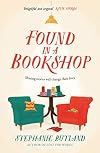
As certain as I have always been that I can be alone without being lonely, opening the covers, turning the pages, I know that I will find comfort in reading a book. It is a certainty for me. The genre will not be the key to my selection; I will drift to choose a novel with a bookshop or library setting.
Now, it is my turn to welcome you to discover this marvelous book. You will travel back a few years and be inserted amid the pandemic. I didn’t know if I could find comfort in thinking about that time. We lived through it. But, within this bookshop are people who love books, people who care, people who are going to work trying to keep a business afloat, missing their customers, thinking about the women who are not safe at home, and while wondering how to help themselves, they are wondering if they can help others through this difficult time.
The solution is exquisite—a book pharmacy.
Each reader will discover life as it was during that time, and the hope that carries us forward. The next steps. The next connections.
This beautifully written novel is a tribute to all independent booksellers who have always been creatively bringing readers and books together to comfort, educate, transform, escape, remember, hope, and dream. Thank you, Stephanie Butland. Thank you for finding the words to capture the feelings of readers about different aspects of a booklover’s life, bookshops, and books interspersed through this story. I will not hesitate to read this book again and again, but first, it becomes my book shopping list.
The author provides the list of recommended books and "Questions for Book-sharers" at the end of the novel. show less
"To a book lover, a bookshop is not a place in the world, but a world in itself."With that need, I selected a book waiting for my attention. I was immediately comforted by the 1st few words, show more "Welcome to the best bookshop there is," Kelly says.
Now, it is my turn to welcome you to discover this marvelous book. You will travel back a few years and be inserted amid the pandemic. I didn’t know if I could find comfort in thinking about that time. We lived through it. But, within this bookshop are people who love books, people who care, people who are going to work trying to keep a business afloat, missing their customers, thinking about the women who are not safe at home, and while wondering how to help themselves, they are wondering if they can help others through this difficult time.
The solution is exquisite—a book pharmacy.
"You know that books are safety and escape and wisdom and peace and the things that get you through."The book recommendations throughout the story have a wide range of offerings, with a sentence or two to describe why it was added as a possibility of interest and intrigue to answer an individual’s request. Some of the titles and authors I recognized, and others I couldn’t wait to add to my tbr.
Each reader will discover life as it was during that time, and the hope that carries us forward. The next steps. The next connections.
"It’s the state of mind and heart of the person reading it that will make the book grow into something greater than the words printed in it."The novel encourages us to remember that sometimes, to move forward, there are goodbyes, and many are goodbyes that we never want to say. But as we say those goodbyes, we carry the legacy of those we loved so dearly with us. Books refresh our spirits; we carry the words we read forward in our thoughts, hearts, and actions.
This beautifully written novel is a tribute to all independent booksellers who have always been creatively bringing readers and books together to comfort, educate, transform, escape, remember, hope, and dream. Thank you, Stephanie Butland. Thank you for finding the words to capture the feelings of readers about different aspects of a booklover’s life, bookshops, and books interspersed through this story. I will not hesitate to read this book again and again, but first, it becomes my book shopping list.
The author provides the list of recommended books and "Questions for Book-sharers" at the end of the novel. show less
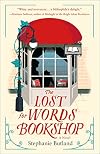
I loved this book. I have to thank Goodreads friend (artist) Laura for letting me know about the book and pushing the book and its narrator at me! She was right that it is a “Lisa book” and I’m glad that I read it. I’m waiting for so many books and it was only because I was in-between books that I decided to try it. I’m so glad that I did. I found it to be a lovely, amusing, sobering, emotional, powerful, heartwarming, and engaging book. I couldn’t give it less than 5 stars.
I show more simultaneously read a Kindle e-book edition (there was a wait for the hardcover edition) and an Overdrive audio book edition, both borrowed from the library. I occasionally love reading this was and this narrator is outstanding. I was irked though because the words did not match in the two editions. I love it when the words in all editions are identical. In this case not only were certain words changed but occasionally a few sentences in a row and even paragraphs were left out of the audio. Also, quite a few individual words were changed. This book had more discrepancies than any other I’ve read. It was shocking really. I don’t know if the changes were between the audio and paper editions or between the Kindle and the paper edition. I think all editions of books should have identical words. Some do but I’ve found out not all. I’m glad I read the book exactly as I did because at least I was able to read both versions and not worry that I had missed something. I loved the audio book narration and I know I enjoyed the book more than if I’d been reading only audio or only paper. The narration for this book was fantastic! She was perfect for Loveday’s voice but excellent for all of the book.
I’ve read only a few Kindle editions and once I figured it out was able to enjoy simple clicking to go from page number of total pages, %age of time left in the chapter, and %age of time left in the book. I generally stayed with page numbers but the other two options were helpful several times.
Once I got into the book I was at loathe to put it down and finished it in 4 days, and spent more time than I should have reading.
I really loved Loveday (Loveday Jenna AKA L.J.), Archie, Nathan, and a few other characters. Even the ones I didn’t love or who were unlikeable all were interesting and people I could somewhat empathize with. I was always eager to keep reading to see what would happen. One thing was obvious but a few weren’t and I was very surprised by one event.
I loved all the many literary references and loved how much Loveday read and how much she thought about books. I am not a fan of tattoos but I really liked hers, for their meaning vs. their artistry.
I thoroughly enjoyed the humor. There was much more than I’d expected and it was brilliant. In a way it was my favorite part of the book, even though I enjoyed the entire story including the serious parts. This author deeply understands children, and how people react to childhood trauma, childhood shock, foster kids, parental loss in childhood, and emotions of children who’ve been damaged by adverse circumstances.
I loved the few English settings though I wish even more about them was there. Given the way the main character lived her life I wouldn’t expect the places to be described the way a tourist might view them so I also kind of liked the subtle flavor of York and also the more detailed description of the areas near the sea. The way every place was described did make sense to me.
This is a highly quotable book and I’ll probably like more quotes from it. Some I’ve noted so far are:
“I reminded myself that a beginning and an ending are two different places, and, in real life, you might be able to make your own ending, whatever had gone before.”
“But you say it “in-TREE-ging”, LJ, not “in-trig-you-ing”.’ I said it back to her, ‘In-TREE-ging.’ (Okay, this is a problem with books. But the only one.)”
“It's good to be reminded that the world is full of stories that are, potentially, at least as painful as yours.”
“there was a big old shocked space in my head where the thoughts ought to be”
I like some others on the list too. It worries me when I see 0 liked when at least I’ve liked them:
https://www.goodreads.com/work/quotes...
Even though painful at times this was a comfort read for me.
I highly recommend this book to readers who enjoy books about books, books about foster kids/orphans, books that are coming of age stories, books with quirky characters, and those who enjoy acerbic, witty, sarcastic humor.
The author did her research too. The Kindle edition has a short interview with the author and some discussion questions and an interesting acknowledgements section. show less
I show more simultaneously read a Kindle e-book edition (there was a wait for the hardcover edition) and an Overdrive audio book edition, both borrowed from the library. I occasionally love reading this was and this narrator is outstanding. I was irked though because the words did not match in the two editions. I love it when the words in all editions are identical. In this case not only were certain words changed but occasionally a few sentences in a row and even paragraphs were left out of the audio. Also, quite a few individual words were changed. This book had more discrepancies than any other I’ve read. It was shocking really. I don’t know if the changes were between the audio and paper editions or between the Kindle and the paper edition. I think all editions of books should have identical words. Some do but I’ve found out not all. I’m glad I read the book exactly as I did because at least I was able to read both versions and not worry that I had missed something. I loved the audio book narration and I know I enjoyed the book more than if I’d been reading only audio or only paper. The narration for this book was fantastic! She was perfect for Loveday’s voice but excellent for all of the book.
I’ve read only a few Kindle editions and once I figured it out was able to enjoy simple clicking to go from page number of total pages, %age of time left in the chapter, and %age of time left in the book. I generally stayed with page numbers but the other two options were helpful several times.
Once I got into the book I was at loathe to put it down and finished it in 4 days, and spent more time than I should have reading.
I really loved Loveday (Loveday Jenna AKA L.J.), Archie, Nathan, and a few other characters. Even the ones I didn’t love or who were unlikeable all were interesting and people I could somewhat empathize with. I was always eager to keep reading to see what would happen. One thing was obvious but a few weren’t and I was very surprised by one event.
I loved all the many literary references and loved how much Loveday read and how much she thought about books. I am not a fan of tattoos but I really liked hers, for their meaning vs. their artistry.
I thoroughly enjoyed the humor. There was much more than I’d expected and it was brilliant. In a way it was my favorite part of the book, even though I enjoyed the entire story including the serious parts. This author deeply understands children, and how people react to childhood trauma, childhood shock, foster kids, parental loss in childhood, and emotions of children who’ve been damaged by adverse circumstances.
I loved the few English settings though I wish even more about them was there. Given the way the main character lived her life I wouldn’t expect the places to be described the way a tourist might view them so I also kind of liked the subtle flavor of York and also the more detailed description of the areas near the sea. The way every place was described did make sense to me.
This is a highly quotable book and I’ll probably like more quotes from it. Some I’ve noted so far are:
“I reminded myself that a beginning and an ending are two different places, and, in real life, you might be able to make your own ending, whatever had gone before.”
“But you say it “in-TREE-ging”, LJ, not “in-trig-you-ing”.’ I said it back to her, ‘In-TREE-ging.’ (Okay, this is a problem with books. But the only one.)”
“It's good to be reminded that the world is full of stories that are, potentially, at least as painful as yours.”
“there was a big old shocked space in my head where the thoughts ought to be”
I like some others on the list too. It worries me when I see 0 liked when at least I’ve liked them:
https://www.goodreads.com/work/quotes...
Even though painful at times this was a comfort read for me.
I highly recommend this book to readers who enjoy books about books, books about foster kids/orphans, books that are coming of age stories, books with quirky characters, and those who enjoy acerbic, witty, sarcastic humor.
The author did her research too. The Kindle edition has a short interview with the author and some discussion questions and an interesting acknowledgements section. show less
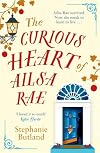
Ailsa Rae's coming of age has been delayed by illness; her heart condition means that she is still living with her fiercely supportive mother at the age of 28. When she gets the heart transplant that saves her life Ailsa discovers that living "normally" requires more courage than coping with a failing heart ever did.
I loved the portrayal of the relationship between Ailsa and her mother, and the difficulties they had in negotiating their changed circumstances. The romantic element felt a show more little less realistic but was enjoyable nevertheless, as were the many touches of humour.
Stephanie Butland deals with some challenging topics, including organ donation and body image, clearly and sensitively, without the tone ever becoming worthy or preachy in this obviously well-researched story. show less
I loved the portrayal of the relationship between Ailsa and her mother, and the difficulties they had in negotiating their changed circumstances. The romantic element felt a show more little less realistic but was enjoyable nevertheless, as were the many touches of humour.
Stephanie Butland deals with some challenging topics, including organ donation and body image, clearly and sensitively, without the tone ever becoming worthy or preachy in this obviously well-researched story. show less
Lists
You May Also Like


Associated Authors
Statistics
- Works
- 19
- Members
- 1,195
- Popularity
- #21,506
- Rating
- 3.9
- Reviews
- 89
- ISBNs
- 79
- Languages
- 7
- Favorited
- 1


