
Ross Petras
Author of Very Bad Poetry
About the Author
Kathryn and Ross Petras are business authors and consultants with experience in both the public and private sectors. Their most recent book is The Only Job Hunting Guide You'll Ever Need.
Image credit: via Workman Publishing
Series
Works by Ross Petras
You're Saying It Wrong: A Pronunciation Guide to the 150 Most Commonly Mispronounced Words--and Their Tangled Histories of Misuse (2016) 165 copies, 6 reviews
Here Speeching American: A Very Strange Guide to English as It Is Garbled Around the World (2004) — Author — 98 copies, 1 review
That Doesn't Mean What You Think It Means: The 150 Most Commonly Misused Words and Their Tangled Histories (2018) 79 copies, 2 reviews
A History of the World Through Body Parts: The Stories Behind the Organs, Appendages, Digits, and the Like Attached to (or Detached from) Famous Bodies (2022) — Author — 54 copies, 2 reviews
The Anthology of Really Important Modern Poetry: Timeless Poems by Snooki, John Boehner, Kanye West, and Other Well-Versed Celebrities (2012) 38 copies
Awkword Moments: A Lively Guide to the 100 Terms Smart People Should Know (2020) 21 copies, 1 review
Tagged
Common Knowledge
- Birthdate
- 1956-02-15
- Gender
- male
- Occupations
- writer
- Relationships
- Petras, Kathryn (sister)
- Nationality
- USA
- Associated Place (for map)
- USA
Members
Reviews
That Doesn't Mean What You Think It Means: The 150 Most Commonly Misused Words and Their Tangled Histories by Ross Petras
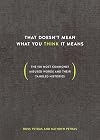
When we try to sound smart, whether in our speech or in our writing, that is when we are most likely to sound stupid.
That is one lesson to be learned from “That Doesn't Mean What You Think It Means” by Ross Petras and Kathryn Petras. This is a small dictionary, only about 150 entries, containing words we easily confuse with similar words that mean something else entirely. This happens to the best of us, and the authors offer examples of "the best of us" making these errors: Washington show more Post, Huffington Post, President Obama, Variety, Fox News, New York Times, Time, Forbes and even F. Scott Fitzgerald.
We may use notoriety rather than fame because those extra syllables seem to add a little class, except that the two words don't mean quite the same thing. Notoriety refers to a negative kind of fame. John Dillinger was notorious. Eliot Ness was famous.
Or we may say penultimate thinking it means something like: "the very best." The Huffington Post once described Abraham Lincoln as "the penultimate American president." Actually the word means "second from the last." I remember learning this word during the Watergate hearings. One of those involved in the crime, G. Gordon Liddy perhaps, used the word in his testimony, then had to explain its meaning for the confused Senate committee.
Many times we confuse words that look alike or sound alike. The Petras explain the difference between complementary and complimentary, flaunt and flout, flounder and founder, ingenious and ingenuous, prescribe and proscribe, stanch and staunch, tact and tack, and many others.
Often the authors admit that the battle has already been lost, some words have been misused so often that even dictionaries have given in and added new definitions. Now decimate means "to destroy or devastate," not just to destroy a tenth of something. Crescendo is a musical term meaning to gradually increase loudness or intensity. So many of us think of it as meaning climax that dictionaries now accept that meaning, to the disgust of some musicians.
Then there are those words that will always be confusing. For example, both flammable and inflammable mean the same thing. Bimonthly means both twice a month and once every two months.
The goal of language, the Petras write, is "to communicate ideas and desires in the clearest way possible." Simple words do this best. Use is almost always a better choice than utilize, method almost always better than methodology. Even if we happen to know the meaning of a more impressive word, those we are trying to communicate with may not.
The authors keep each entry short, witty and, at least for the most part, easy to understand. show less
That is one lesson to be learned from “That Doesn't Mean What You Think It Means” by Ross Petras and Kathryn Petras. This is a small dictionary, only about 150 entries, containing words we easily confuse with similar words that mean something else entirely. This happens to the best of us, and the authors offer examples of "the best of us" making these errors: Washington show more Post, Huffington Post, President Obama, Variety, Fox News, New York Times, Time, Forbes and even F. Scott Fitzgerald.
We may use notoriety rather than fame because those extra syllables seem to add a little class, except that the two words don't mean quite the same thing. Notoriety refers to a negative kind of fame. John Dillinger was notorious. Eliot Ness was famous.
Or we may say penultimate thinking it means something like: "the very best." The Huffington Post once described Abraham Lincoln as "the penultimate American president." Actually the word means "second from the last." I remember learning this word during the Watergate hearings. One of those involved in the crime, G. Gordon Liddy perhaps, used the word in his testimony, then had to explain its meaning for the confused Senate committee.
Many times we confuse words that look alike or sound alike. The Petras explain the difference between complementary and complimentary, flaunt and flout, flounder and founder, ingenious and ingenuous, prescribe and proscribe, stanch and staunch, tact and tack, and many others.
Often the authors admit that the battle has already been lost, some words have been misused so often that even dictionaries have given in and added new definitions. Now decimate means "to destroy or devastate," not just to destroy a tenth of something. Crescendo is a musical term meaning to gradually increase loudness or intensity. So many of us think of it as meaning climax that dictionaries now accept that meaning, to the disgust of some musicians.
Then there are those words that will always be confusing. For example, both flammable and inflammable mean the same thing. Bimonthly means both twice a month and once every two months.
The goal of language, the Petras write, is "to communicate ideas and desires in the clearest way possible." Simple words do this best. Use is almost always a better choice than utilize, method almost always better than methodology. Even if we happen to know the meaning of a more impressive word, those we are trying to communicate with may not.
The authors keep each entry short, witty and, at least for the most part, easy to understand. show less
A History of the World Through Body Parts: The Stories Behind the Organs, Appendages, Digits, and the Like Attached to (or Detached from) Famous Bodies by Kathryn Petras
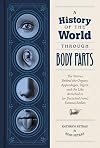
A History of the World Through Body Parts by Kathryn Petras and Ross Petras is a fun and informative romp through history, using famous body parts as a guide.
This is an almost ideal blend of entertaining and informative. Enough is given about each person/body part to understand the historical significance but is told in a conversational voice that keeps even the most history-averse reader engaged. If any of the stories make you want to know more there are references in the back for each show more chapter.
I think they had to make a choice (or a compromise) between being just an annotated list of items or go into the kind of detail that, while interesting, would have made the book unwieldy. They managed to find that happy middle ground where they offer enough information, both historical and scientific background, while still keeping each chapter brief and accessible to those more interested in the larger story than the smallest detail.
Highly recommended for readers who like the "history through stuff" types of books as well as those who simply like the parts of history that don't always make it into history books.
Reviewed from a copy made available by the publisher via NetGalley. show less
This is an almost ideal blend of entertaining and informative. Enough is given about each person/body part to understand the historical significance but is told in a conversational voice that keeps even the most history-averse reader engaged. If any of the stories make you want to know more there are references in the back for each show more chapter.
I think they had to make a choice (or a compromise) between being just an annotated list of items or go into the kind of detail that, while interesting, would have made the book unwieldy. They managed to find that happy middle ground where they offer enough information, both historical and scientific background, while still keeping each chapter brief and accessible to those more interested in the larger story than the smallest detail.
Highly recommended for readers who like the "history through stuff" types of books as well as those who simply like the parts of history that don't always make it into history books.
Reviewed from a copy made available by the publisher via NetGalley. show less
That doesn't mean what you think it means : the 150 most commonly misused words and their tangled histories by Ross Petras
My 'discovery' of this book is a perfect example for the argument of using a continuity of style on book covers. A year or two ago, I bought and read You're Saying it Wrong, a book about commonly mispronounced words, and loved it (I've been saying Turmeric and Van Gogh wrong all. my. life.) I recognised the similar cover on this, the authors' newest, and immediately snatched it up.
I should really rate this 4.5 stars, because in retrospect, I can recall several typographical and at least 1 show more grammatical error in the text, which seems especially egregious in a book about grammar. But I suppose perfection is an unreasonable expectation even for a grammar book. Actually, I don't believe that, but I am too lazy to adjust my rating.
Other than that, it's an excellent reference for word pairs that are often confused with each other, including the obvious affect/effect as well as some I'd never thought about before but were obvious when I saw them, like trooper/trouper, flair/flare and flout/flaunt. Also included are words/terms that are just used wrong, like epicentre and ambivalent.
Scattered throughout the list are a few spreads that cover when to use who/whom, the correct usage of lay/lie (I found their explanation for this the most useful I've ever read), and a general guide for latin and greek plurality: when to use 'i', 'a', 'ae', and 's'. This one sort of cleared up a running debate MT and I have had concerning the plural of 'platypus' - while we both favoured 'platypi' on aesthetic grounds (it sounds better than 'platypuses', which is what the local sanctuary has settled on), it would seem logical to follow the same rule used for 'octopus', which is 'octopodes'. I find this a happy compromise (MT is stubbornly sticking to the incorrect but more melodious platypi).
Each entry includes an example of the incorrect usage, the etymological history of the word/words, and most of the time, examples of correct usage for each word as well as basic definitions of each (nb: the author's state upfront that this is based on the North American dialect of English). It's well written, not dry, and informative. It will be a handy reference in the future when I'm unsure which word to use. show less
I should really rate this 4.5 stars, because in retrospect, I can recall several typographical and at least 1 show more grammatical error in the text, which seems especially egregious in a book about grammar. But I suppose perfection is an unreasonable expectation even for a grammar book. Actually, I don't believe that, but I am too lazy to adjust my rating.
Other than that, it's an excellent reference for word pairs that are often confused with each other, including the obvious affect/effect as well as some I'd never thought about before but were obvious when I saw them, like trooper/trouper, flair/flare and flout/flaunt. Also included are words/terms that are just used wrong, like epicentre and ambivalent.
Scattered throughout the list are a few spreads that cover when to use who/whom, the correct usage of lay/lie (I found their explanation for this the most useful I've ever read), and a general guide for latin and greek plurality: when to use 'i', 'a', 'ae', and 's'. This one sort of cleared up a running debate MT and I have had concerning the plural of 'platypus' - while we both favoured 'platypi' on aesthetic grounds (it sounds better than 'platypuses', which is what the local sanctuary has settled on), it would seem logical to follow the same rule used for 'octopus', which is 'octopodes'. I find this a happy compromise (MT is stubbornly sticking to the incorrect but more melodious platypi).
Each entry includes an example of the incorrect usage, the etymological history of the word/words, and most of the time, examples of correct usage for each word as well as basic definitions of each (nb: the author's state upfront that this is based on the North American dialect of English). It's well written, not dry, and informative. It will be a handy reference in the future when I'm unsure which word to use. show less
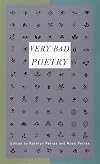
Reading a volume of Roger Ebert's reviews of movies he hated reminded me how much I enjoy this book, no matter how many times I read it. I mean, is it possible not to enjoy a book that brings into my life a masterpiece like "Ode on a Mammoth Cheese"? It never pokes fun at any amateur poets, or even living poets--only people who once got paid (or at least chosen) to publish the truly awe-inspiringly bad poems within.
Awards

You May Also Like


Associated Authors
Statistics
- Works
- 47
- Members
- 2,163
- Popularity
- #11,879
- Rating
- 3.5
- Reviews
- 44
- ISBNs
- 88
- Languages
- 2