
L. J. Adlington
Author of The Dressmakers of Auschwitz: The True Story of the Women Who Sewed to Survive
About the Author
Disambiguation Notice:
Writes as both L.J. Adlington and Lucy Adlington.
Series
Works by L. J. Adlington
The Dressmakers of Auschwitz: The True Story of the Women Who Sewed to Survive (2021) 684 copies, 17 reviews
Tagged
Common Knowledge
- Legal name
- Adlington, Lucy J.
- Other names
- Adlington, Lucy
Adlington, L.J. - Birthdate
- 1970
- Gender
- female
- Education
- University of Cambridge
- Occupations
- young adult writer
historian of fashion - Nationality
- UK
- Birthplace
- London, England, UK
- Places of residence
- Japan
Spain
York, Yorkshire, England, UK - Disambiguation notice
- Writes as both L.J. Adlington and Lucy Adlington.
- Associated Place (for map)
- England, UK
Members
Reviews
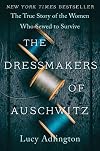
A prodigious amount of research went into Lucy Adlington's remarkable work of non-fiction, "The Dressmakers of Auschwitz." Most of the dressmakers whose stories are recounted in these pages were Jews from Slovakia, Bratislava, Hungary, and Transylvania. Along with their families and friends, they were deported to Auschwitz in cattle cars and, upon arrival, were plunged into a hellhole of freezing cold; putrid food; verbal and physical abuse; and exhausting manual labor. Fortunately, Hedwig show more Höss, the wife of Auschwitz's commandant, Rudolf Höss, loved fine clothing. When she discovered that certain prisoners were talented with a needle and thread, she and other high-ranking SS wives took advantage of the inmates' skills. In a salon knows as the "Upper Tailoring Studio," overseen by the capable and compassionate Marta Fuchs, the seamstresses performed expert alterations and created beautiful coats, dresses, and children's garments.
Irene, Bracha, Katka, Olga, Hunya, and other dressmakers formed "the most incredible bonds of friendship and loyalty." Their mutual support while in captivity helped them persevere in "a grotesque world where lives could be rescued, ruined, or ended on a whim." Furthermore, Lucy Adlington, a fashion historian, brilliantly explores the concept of clothing as a metaphor for human dignity. The Nazis dehumanized the Jews by stripping them of their possessions, shaving their heads, tattooing their arms, and forcing them to wear lice-ridden garments. In contrast, many of Hitler's followers were decked out in military-style uniforms that fostered "group pride and identity."
There is so much to love about this elegantly and sensitively written book, in which the author provides a window into a little-known aspect of Jewish survival during the Holocaust. Adlington emphasizes that small acts of kindness and sharing helped prevent the Jewish captives from sinking into despair. It is amazing that these women, who suffered so much hardship and humiliation, had the ability to work long hours turning out expertly tailored garments. "The Dressmakers of Auschwitz" is a testament to the resilience and courage of a band of brave and resilient women who sewed to stay alive "in the midst of industrialized genocide." show less
Irene, Bracha, Katka, Olga, Hunya, and other dressmakers formed "the most incredible bonds of friendship and loyalty." Their mutual support while in captivity helped them persevere in "a grotesque world where lives could be rescued, ruined, or ended on a whim." Furthermore, Lucy Adlington, a fashion historian, brilliantly explores the concept of clothing as a metaphor for human dignity. The Nazis dehumanized the Jews by stripping them of their possessions, shaving their heads, tattooing their arms, and forcing them to wear lice-ridden garments. In contrast, many of Hitler's followers were decked out in military-style uniforms that fostered "group pride and identity."
There is so much to love about this elegantly and sensitively written book, in which the author provides a window into a little-known aspect of Jewish survival during the Holocaust. Adlington emphasizes that small acts of kindness and sharing helped prevent the Jewish captives from sinking into despair. It is amazing that these women, who suffered so much hardship and humiliation, had the ability to work long hours turning out expertly tailored garments. "The Dressmakers of Auschwitz" is a testament to the resilience and courage of a band of brave and resilient women who sewed to stay alive "in the midst of industrialized genocide." show less
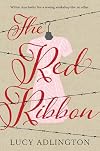
Sometimes I steer away from Holocaust fiction because there is so much of it and sometimes it's too much to take in. It's like reading misery porn and at a certain point you have to take a breather. The Red Ribbon is a young adult novel that focuses on a little known bit of Auschwitz lore, the sewing studio. The commandant's wife is a fashionista and she decides that she may as well put some prisoners to work crafting her stylish new outfits and tailoring her clothes. The officer's wives get show more jealous and soon she opens it up to them and expands the workshop. Fourteen year old, Ella lucks into working in the studio and tries to lose herself in her work so she doesn't have to observe the hellhole around her. At least she's making pretty things even if they are going to monsters. Her only other distraction is a quirky young girl named Rose who spins the most delightful stories and always seems to have her head in the clouds. Although annoyed by her at first, Ella soon realizes how important it is to have hope and keep dreaming and they soon become inseparable. Although not explicitly graphic, this book doesn't shy away from hard truths either, it's a nice middle ground that young adults can read without being "too horrified" while still being informed about atrocities. show less
 This review was written for LibraryThing Early Reviewers.
I thought the premise of The Red Ribbon was fairly novel and interesting for a middle grade or YA book and looked forward to learning a little more about what happened to women in the Nazi concentration camps. While the book does provide that, I'm not sure I particularly like it, but I'm also not sure if my complaints are entirely valid.
Adlington has made a conscious choice, one which she explains in the author notes, to detach any specific nationality or religion or other marginalized show more identity from the people who populate the camp. In fact, she also very carefully removes the German words and comes up with English equivalents - even "Birkenau" is referred to consistently as "Birchwood", with only an occasional "Auschwitz-Birkenau" name to say "yes, this really is about the real place". Other than that occasional reference, no real places or people are named: when Ella is snatched off the street in 1944, and wearing a star marking her as a religious undesirable, where on earth is she to live openly that long? what is her specific religion? how old is she? Paris, "the city of light", is mentioned constantly without being named, but there's no mistaking the metal tower when it's described. I can appreciate that this helps put the focus on how people react to and cope with the traumatic and awful things they experience in the death camps, but I don't know that removing so much of the reality from the story is a good thing. Yes, using English equivalent words helps younger readers, but is it really right to also remove the realities of why the Nazis imprisoned people?
There's a lot of emphasis in the book on storytelling as an escape, and the narrator Ella has a habit of referring to everyone she meets as a type of animal, which further muddies the Holocaust narrative in ways I was uncomfortable with. I almost wish Adlington had gone full allegory/metaphor, or cut out the dreamy story altogether.
For the most part, there is a distinct aura of menace, deprivation, and trauma to living in Birchwood/Birkenau, but it is blunted and some of the horrors are left slightly indistinct, which is appropriate for the target reader. I think this book fits better with Number the Stars or The Upstairs Room than My Name is Verity. The Red Ribbon has several dark plot drops and dread of the future, similar to Wein's books, but it comes back at the end with a fanciful happy ending. I felt like the darkness and hopelessness didn't really fit the softened themes, and the happy ending was far too fairy tale perfect, especially after a fake happy end that Ella tells. (It's that muddled up reality-vs-fairy tale thing again.)
But the stated goal of the book is nicely done. Ella's reactions are very relatable, and I find it interesting the way she digs into and embraces her job as a seamstress for the Camp Commander's wife as a way to maintain normalcy and a sense of self - though that's not explicitly stated. Adlington also uses Ella to explore choices of looking out for oneself and sloughing off empathy/kindness vs. finding companions and sharing the trouble in the face of deprivation and cruelty.
So overall, I think this is an interesting book with a worthy concept/theme, but I just don't know that I'm comfortable with how it was done, and I think the plot and style is a little bit confused. It could be a good book for middle grade readers who have read and enjoyed Number the Stars (I don't know if younger readers would get the same happy ending whiplash), but I'd be careful about which kid I gave it to.
Edited to add:
As I write this review and revise it, I have finally been able to give voice to my misgivings about the setting: it feels as though Adlington just wanted to write about the Upper Tailoring Studio, and that is the only reason she ever explicitly names Auschwitz as the setting for the novel. Considering how Nazi history is still being denied, or hidden things are still being revealed, I'm a little disgusted by that. She really should have just gone fully allegorical or removed the heavy fictionalization. show less
Adlington has made a conscious choice, one which she explains in the author notes, to detach any specific nationality or religion or other marginalized show more identity from the people who populate the camp. In fact, she also very carefully removes the German words and comes up with English equivalents - even "Birkenau" is referred to consistently as "Birchwood", with only an occasional "Auschwitz-Birkenau" name to say "yes, this really is about the real place". Other than that occasional reference, no real places or people are named: when Ella is snatched off the street in 1944, and wearing a star marking her as a religious undesirable, where on earth is she to live openly that long? what is her specific religion? how old is she? Paris, "the city of light", is mentioned constantly without being named, but there's no mistaking the metal tower when it's described. I can appreciate that this helps put the focus on how people react to and cope with the traumatic and awful things they experience in the death camps, but I don't know that removing so much of the reality from the story is a good thing. Yes, using English equivalent words helps younger readers, but is it really right to also remove the realities of why the Nazis imprisoned people?
There's a lot of emphasis in the book on storytelling as an escape, and the narrator Ella has a habit of referring to everyone she meets as a type of animal, which further muddies the Holocaust narrative in ways I was uncomfortable with. I almost wish Adlington had gone full allegory/metaphor, or cut out the dreamy story altogether.
For the most part, there is a distinct aura of menace, deprivation, and trauma to living in Birchwood/Birkenau, but it is blunted and some of the horrors are left slightly indistinct, which is appropriate for the target reader. I think this book fits better with Number the Stars or The Upstairs Room than My Name is Verity. The Red Ribbon has several dark plot drops and dread of the future, similar to Wein's books, but it comes back at the end with a fanciful happy ending. I felt like the darkness and hopelessness didn't really fit the softened themes, and the happy ending was far too fairy tale perfect, especially after a fake happy end that Ella tells. (It's that muddled up reality-vs-fairy tale thing again.)
But the stated goal of the book is nicely done. Ella's reactions are very relatable, and I find it interesting the way she digs into and embraces her job as a seamstress for the Camp Commander's wife as a way to maintain normalcy and a sense of self - though that's not explicitly stated. Adlington also uses Ella to explore choices of looking out for oneself and sloughing off empathy/kindness vs. finding companions and sharing the trouble in the face of deprivation and cruelty.
So overall, I think this is an interesting book with a worthy concept/theme, but I just don't know that I'm comfortable with how it was done, and I think the plot and style is a little bit confused. It could be a good book for middle grade readers who have read and enjoyed Number the Stars (I don't know if younger readers would get the same happy ending whiplash), but I'd be careful about which kid I gave it to.
Edited to add:
As I write this review and revise it, I have finally been able to give voice to my misgivings about the setting: it feels as though Adlington just wanted to write about the Upper Tailoring Studio, and that is the only reason she ever explicitly names Auschwitz as the setting for the novel. Considering how Nazi history is still being denied, or hidden things are still being revealed, I'm a little disgusted by that. She really should have just gone fully allegorical or removed the heavy fictionalization. show less
This review was written for LibraryThing Early Reviewers.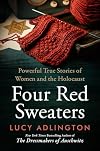
The 4 sweaters represent both family love, as well as dramatic and horrific stories of a sampling of young Jewish women in Europe captured by nazis and sent to concentration camps, Chelmo, Sobibor, Auschwitz, and Bergen-Belsen. Over-worked, starved, barely clothed, they knitted clothing, and/ or played instruments for SS. Some survived mostly by working together, caring for each other, hoping for rescue and by their wits. Many in Sobibor courageously resisted the nazis in small and large show more ways helping some escape and survive.
A number of children, too few, were fortunate to get chosen for the kindertransport to England and were able to continue their lives. But these children and teens were under immense stress when they did not hear from their families in their home countries. They were kept active and made the best of their situations; and found love and friendship in new families and communities. But they always remembered and pined for their mothers, fathers, brothers and sisters. They too knitted to make clothing for their new sponsors.
After the war, the survivors and kindertransport children found work, and some amazingly found relatives living in other countries! Some moved to England, the US, Australia and many to Israel. They marry and start their own families providing the love they experienced briefly but have missed for years. Some started clothing companies which became popular, some worked in the music field, and many bore witness to what they had seen and suffered.
Heart-breaking to read about the unnecessary pain, suffering and mass murder when all people throughout Europe needed to do was say NO to the nazis BEFORE they built their hate-filled infrastructure to kill millions and millions of innocents. Say NO before they round up and deport your friends and neighbors.
Moving stories about those who did help; the foster parents of the kindertransport children, Gentiles who hid and fed Jews who were running from nazis, those prisoners who shared food and clothing with others. These are all about love and humanity, the only response to hate. show less
A number of children, too few, were fortunate to get chosen for the kindertransport to England and were able to continue their lives. But these children and teens were under immense stress when they did not hear from their families in their home countries. They were kept active and made the best of their situations; and found love and friendship in new families and communities. But they always remembered and pined for their mothers, fathers, brothers and sisters. They too knitted to make clothing for their new sponsors.
After the war, the survivors and kindertransport children found work, and some amazingly found relatives living in other countries! Some moved to England, the US, Australia and many to Israel. They marry and start their own families providing the love they experienced briefly but have missed for years. Some started clothing companies which became popular, some worked in the music field, and many bore witness to what they had seen and suffered.
Heart-breaking to read about the unnecessary pain, suffering and mass murder when all people throughout Europe needed to do was say NO to the nazis BEFORE they built their hate-filled infrastructure to kill millions and millions of innocents. Say NO before they round up and deport your friends and neighbors.
Moving stories about those who did help; the foster parents of the kindertransport children, Gentiles who hid and fed Jews who were running from nazis, those prisoners who shared food and clothing with others. These are all about love and humanity, the only response to hate. show less
Lists
Awards


You May Also Like


Associated Authors
Statistics
- Works
- 15
- Members
- 1,429
- Popularity
- #18,005
- Rating
- 3.6
- Reviews
- 72
- ISBNs
- 97
- Languages
- 10


