

Gerald Schlabach
Author of And Who Is My Neighbor?: Poverty, Privilege, and the Gospel of Christ
About the Author
Gerald W. Schlabach is professor of theology and former chair of justice and peace studies at the University of St. Thomas in Minnesota. He holds a PhD in theology and ethics from the University of Notre Dame. During much of the 1980s he worked in Central America on church-related peace and justice show more assignments. Schlabach is co-founder of Bridgefolk, a movement for grassroots dialogue and unity between Mennonites and Roman Catholics. He is active in the Catholic Nonviolence Initiative, which is engaged in a sustained conversation with the Vatican in favor of a "just peace" framework for Catholic teaching and practice. His books include Just Policing, Not War: An Alternative Response to World Violence and Sharing Peace: Mennonites and Catholics in Conversation, both from Liturgical Press. show less
Works by Gerald Schlabach
At Peace And Unafraid: Public Order, Security, And the Wisdom of the Cross (2005) — Editor — 37 copies
Unlearning Protestantism: Sustaining Christian Community in an Unstable Age (2010) 31 copies, 1 review
Called Together to be Peacemakers: Report of the International Dialogue between the Catholic Church and Mennonite World Conference 1998-2003 (2005) — Editor — 3 copies
Learning As We Go (scripts) 1 copy
Associated Works
The Blackwell Companion to Christian Ethics (2004) — Contributor, some editions — 185 copies, 1 review
A Faith Not Worth Fighting For: Addressing Commonly Asked Questions about Christian Nonviolence (Peaceable Kingdom) (2012) — Contributor — 44 copies, 1 review
Tagged
Common Knowledge
There is no Common Knowledge data for this author yet. You can help.
Members
Reviews
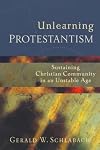
An interesting book by Gerald W. Schlabach, the founder of "Bridgefolk" an organization of Catholics and Mennonites who hope to learn from one another's traditions.
The thrust of the book is that what he sees as the Catholic tradition of stable community, is much needed by those in the Protestant tradition. He holds the so-called "Protestant Principle" of a Church always in need of reform is indeed true, but that Protestant history shows that it is destructive of community (and Church) if show more held as an absolute, unbalanced by the Catholic understanding of community, stability and tradition.
A Benedictine Oblate, Schlabach puts forward the Benedictine tradition's vow of stability as a model of the Catholic approach, and notes the post-Vatican II tendency for vigorous theological debate WITHIN the Church as a model for our Protestant Brothers and Sisters. By contrast he sees the Second Vatican Council as an example of the Church's acceptance of the Protestant principle that the Church is in constant need of reform.
I must say that his models for "loyal dissent" within the Catholic tradition (Joan Chittister anyone?) didn't give this reader a clear sense that Schlabach has fully grasped the Catholic principle of authoritative magisterial teaching. It's one thing to debate theological issues before the Church has spoken authoritatively, it's another after. His contemporary authorities seem limited to the writers of Commonweal and America, certainly an interesting bunch, but hardly representative of the breadth of the tradition he affirms so strongly. Stanley Hauerwas and Alasdair Macintyre are two of his more academic influences.
Originally a Mennonite, the author has entered the Roman Catholic Church while maintaining a connection with his original Mennonite Church, as well as with Bridgefolk. Definitely worth a read, but not the whole story in my view. show less
The thrust of the book is that what he sees as the Catholic tradition of stable community, is much needed by those in the Protestant tradition. He holds the so-called "Protestant Principle" of a Church always in need of reform is indeed true, but that Protestant history shows that it is destructive of community (and Church) if show more held as an absolute, unbalanced by the Catholic understanding of community, stability and tradition.
A Benedictine Oblate, Schlabach puts forward the Benedictine tradition's vow of stability as a model of the Catholic approach, and notes the post-Vatican II tendency for vigorous theological debate WITHIN the Church as a model for our Protestant Brothers and Sisters. By contrast he sees the Second Vatican Council as an example of the Church's acceptance of the Protestant principle that the Church is in constant need of reform.
I must say that his models for "loyal dissent" within the Catholic tradition (Joan Chittister anyone?) didn't give this reader a clear sense that Schlabach has fully grasped the Catholic principle of authoritative magisterial teaching. It's one thing to debate theological issues before the Church has spoken authoritatively, it's another after. His contemporary authorities seem limited to the writers of Commonweal and America, certainly an interesting bunch, but hardly representative of the breadth of the tradition he affirms so strongly. Stanley Hauerwas and Alasdair Macintyre are two of his more academic influences.
Originally a Mennonite, the author has entered the Roman Catholic Church while maintaining a connection with his original Mennonite Church, as well as with Bridgefolk. Definitely worth a read, but not the whole story in my view. show less
To Bless All Peoples: Serving with Abraham and Jesus (Peace and Justice series, #12) by Gerald Schlabach

$7.50
Peace and Justice Series #12
Peace and Justice Series #12
You May Also Like
Associated Authors
Statistics
- Works
- 16
- Also by
- 3
- Members
- 198
- Popularity
- #110,928
- Rating
- 3.3
- Reviews
- 2
- ISBNs
- 17