
Angela Livingstone (1934–2025)
Author of Salome: Her Life and Work
Works by Angela Livingstone
Associated Works
Art in the Light of Conscience: Eight Essays on Poetry (1992) — Translator, some editions — 31 copies
Tagged
Common Knowledge
- Other names
- Hobbs, Angela (birth)
- Birthdate
- 1934
- Date of death
- 2025-03-20
- Gender
- female
- Education
- Greenford County Grammar School
Newnham College, Cambridge (BA|Russian and German)
University of München
University of Cambridge (MA, PhD) - Occupations
- translator
professor
poet - Nationality
- UK
- Birthplace
- Hayes, Middlesex, England, UK
- Associated Place (for map)
- England, UK
Members
Reviews
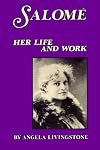
I first came across the name Lou Andreas-Salomé fifty-nine years ago, when I took part in a seminar on four early twentieth-century German-language authors. I quickly found I needed to get up to speed on many things I knew nothing about, such as Nietzsche’s philosophy and Freud’s psychoanalysis. As I boot-strapped my way in, thanks to the generous resources of the Widener and Lamont libraries, Salomé’s name kept popping up.
A biography appeared a year or two later. I started reading show more it, but didn’t get very far. Then, about forty years ago, I saw this book and bought it, but it remained unread on my shelf.
This summer, I decided to reread Rilke. Curious for a little biographical background, I took this book out and read the two chapters on their intense affair and subsequent life-long friendship (Salomé had a crucial impact on Rilke’s development as a writer), then decided to read the entire book.
Now that I’m done, I’m trying to get a clear picture of what the subtitle promises: the life and work of Lou Andreas-Salomé. Livingstone is at pains to stress that Salomé was not a muse, a collector of famous men. Even in her closest relationships, she fiercely guarded her independence. Born into a well-connected German family in Tsarist St. Petersburg, she had a close relationship with her father, who died when she was 18. She had by that time abandoned her strong child’s belief in God, but retained a primal confidence in life. As Livingstone puts it: “This is what she felt all her life: that she was looked after, that something vast and mysterious prompted her actions.”
Dissatisfied with confirmation classes, she took private lessons from a more free-thinking pastor. She worshipped him, but he made the mistake of falling in love with her. Her rejection of him became a pattern that played itself out repeatedly in her life. Only twenty-one when she met Nietzsche, she wanted, as Livingstone writes, “to learn, but not to follow or submit.” When she did marry, to an academic, she insisted that the marriage remain unconsummated. Not that she was against sex, but to include it in married life was, to her, bondage.
Salomé wrote prolifically, but her books are little-read today. In Livingstone’s estimation, “[a]s literature, it has not much to offer us now.” Even in her time, her admirers were more taken by the force of her personality than by what she wrote. Livingstone notes the “peculiar pathos of her style.” In her life and her work, her abiding interests, according to Livingstone, were religion, sex (in both senses of the word), and psychoanalysis (which she practiced for many years after studying with Freud). Livingstone explicates what she means by “sex in both senses of the word”: Physical love and the difference between woman and man. Her positive view of herself as a woman did not translate into feminist activism; her interest in women’s rights seems to center on her personal right to live an independent life of the mind.
Livingstone presents a balanced, clear-eyed portrait of this remarkable woman. The writing is academic, but accessible. Anyone interested in the intellectual life of German-speaking Europe at the beginning of the twentieth century would profit from reading it. show less
A biography appeared a year or two later. I started reading show more it, but didn’t get very far. Then, about forty years ago, I saw this book and bought it, but it remained unread on my shelf.
This summer, I decided to reread Rilke. Curious for a little biographical background, I took this book out and read the two chapters on their intense affair and subsequent life-long friendship (Salomé had a crucial impact on Rilke’s development as a writer), then decided to read the entire book.
Now that I’m done, I’m trying to get a clear picture of what the subtitle promises: the life and work of Lou Andreas-Salomé. Livingstone is at pains to stress that Salomé was not a muse, a collector of famous men. Even in her closest relationships, she fiercely guarded her independence. Born into a well-connected German family in Tsarist St. Petersburg, she had a close relationship with her father, who died when she was 18. She had by that time abandoned her strong child’s belief in God, but retained a primal confidence in life. As Livingstone puts it: “This is what she felt all her life: that she was looked after, that something vast and mysterious prompted her actions.”
Dissatisfied with confirmation classes, she took private lessons from a more free-thinking pastor. She worshipped him, but he made the mistake of falling in love with her. Her rejection of him became a pattern that played itself out repeatedly in her life. Only twenty-one when she met Nietzsche, she wanted, as Livingstone writes, “to learn, but not to follow or submit.” When she did marry, to an academic, she insisted that the marriage remain unconsummated. Not that she was against sex, but to include it in married life was, to her, bondage.
Salomé wrote prolifically, but her books are little-read today. In Livingstone’s estimation, “[a]s literature, it has not much to offer us now.” Even in her time, her admirers were more taken by the force of her personality than by what she wrote. Livingstone notes the “peculiar pathos of her style.” In her life and her work, her abiding interests, according to Livingstone, were religion, sex (in both senses of the word), and psychoanalysis (which she practiced for many years after studying with Freud). Livingstone explicates what she means by “sex in both senses of the word”: Physical love and the difference between woman and man. Her positive view of herself as a woman did not translate into feminist activism; her interest in women’s rights seems to center on her personal right to live an independent life of the mind.
Livingstone presents a balanced, clear-eyed portrait of this remarkable woman. The writing is academic, but accessible. Anyone interested in the intellectual life of German-speaking Europe at the beginning of the twentieth century would profit from reading it. show less
Awards

You May Also Like
Associated Authors
Statistics
- Works
- 5
- Also by
- 5
- Members
- 59
- Popularity
- #280,812
- Rating
- 4.3
- Reviews
- 1
- ISBNs
- 18
- Languages
- 2