
Works by Cary Tennis
Finishing School: The Happy Ending to That Writing Project You Can't Seem to Get Done (2017) 32 copies, 2 reviews
Associated Works
Maybe Baby: 28 Writers Tell the Truth About Skepticism, Infertility, Baby Lust, Childlessness, Ambivalence, and How They Made the Biggest Decision of Their Lives (2006) — Contributor — 132 copies, 4 reviews
Tagged
Common Knowledge
- Birthdate
- 1953-09-11
- Gender
- male
- Occupations
- musician
advice columnist - Nationality
- USA
- Places of residence
- San Francisco, California, USA
- Associated Place (for map)
- California, USA
Members
Reviews
Finishing school : the happy ending to that writing project you can't seem to get done by Cary Tennis
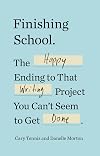
Like many writers, Cary Tennis had a project he just couldn't finish: a sprawling novel he'd started writing while commuting to a detested corporate job. He struggled with it for years before coming up with the Finishing School, a method for constructing a writing group that was about support, not mutual criticism, and gentle accountability. And yes, he finished the novel.
What makes Finishing School the book unique (in my experience of writing-advice books, of which I've read many) is the show more authors' understanding that writing, and especially projects we've been procrastinating on for years, can bring up big emotions, and it's those emotions, not the writing itself, that frequently gets in the way. Finishing School, the method, is about making some space for those emotions, which in turn makes some space in your head for getting the work done.
I think this method could be expanded to help you deal with any project you want to get done but don't have a firm deadline for. (Discussed in the book are several writers who had writing-adjacent projects they needed to finish, like cleaning out the study that had been used as a storage room for too many years.) In addition to sympathy, the book lays out the method for you to use as a two-person buddy system or as a large group like a class. I'm looking forward to recruiting a buddy to help me get started on a couple of projects of my own. show less
What makes Finishing School the book unique (in my experience of writing-advice books, of which I've read many) is the show more authors' understanding that writing, and especially projects we've been procrastinating on for years, can bring up big emotions, and it's those emotions, not the writing itself, that frequently gets in the way. Finishing School, the method, is about making some space for those emotions, which in turn makes some space in your head for getting the work done.
I think this method could be expanded to help you deal with any project you want to get done but don't have a firm deadline for. (Discussed in the book are several writers who had writing-adjacent projects they needed to finish, like cleaning out the study that had been used as a storage room for too many years.) In addition to sympathy, the book lays out the method for you to use as a two-person buddy system or as a large group like a class. I'm looking forward to recruiting a buddy to help me get started on a couple of projects of my own. show less
Finishing School: The Happy Ending to That Writing Project You Can't Seem to Get Done by Cary Tennis
Seems to me I had already read a book with this title and a similar purpose: Finishing School: Overcoming work blocks to get your projects done and into the world. It was also 1/3 of the price. Did I attend the wrong school? Luckily I was able to finish this book in just a few hours. It's easy to read and has a bit of that "magazine article" feel to it. You know what I mean: authoritative tone mixed with personal anecdotes and some listicles. I probably should have given it a third star but show more I was annoyed that so many of the others who reviewed it here got a free copy.
One of the other reviewers said it read like an ad for the authors' classes and I can see that aspect but it didn't bother me that much. I understand that people need to make a living in this cruel world.
This is a book with a method, but first we need to understand the problem. This is what the first half of the book attempts.
Do you ever say to yourself, “I’m a terrible writer”? So begins the chapter titled "Doubt Masquerading as Self-Knowledge," my favorite section heading. However, Mr. Tennis never really explicates this concept. Instead he tries to convince the reader, whom he's never met and whose work he's never read, that he can't be a terrible writer, as if there's no such thing as one. This just flies in the face of common sense. Not only do bad writers exist, but some have them have gotten published. I can't be the only one to have read terrible writers. I'd even been one of them, though I've since improved and can likely improve even more. (If your goal is to become a bad writer, read How Not to Write a Novel: 200 Classic Mistakes and How to Avoid Them—A Misstep-by-Misstep Guide.) It's not all just a matter of taste, and not everyone can become good. (C. S. Lewis, in the last book I reviewed, Some Everyday Thoughts, says this is a confusion of what is meant by "democracy." That we are all equal as human beings doesn't mean we all have the same abilities.) Telling someone their reality is incorrect is as good a therapeutic technique as telling an anorexic that they need a sandwich. Even the cognitive behaviorists know this.
The argument to make is more nuanced (not that arguments are sufficient for achieving personality change). It's that hating oneself is not the first step to self-improvement. It's that the reader probably lacks sufficient skill to determine if he's a good writer. It's that being a bad writer doesn't make one a bad person, or mean one has nothing to say. It doesn't even mean one shouldn't write (though perhaps not for publication, at least right away).
To be fair, the authors do say some of this. They're not stupid (though not everyone is equally smart either). But that should have been their main thrust. One thing you learn in psychoanalytic training is that reassuring the patient doesn't work and is more likely to make him feel misunderstood and alone (e.g. "He doesn't know how bad a writer I am").
So what's the method? (I always feel a bit ripped off when they delay telling you what it is until they have you hooked--a cheap advertising trick.) It is the usual one: Break it down into parts, and make yourself accountable. A "method" finisher schedules the various activities involved, reduced to manageable chunks, with the help of a calendar. Then he has someone hold him accountable for keeping to it.
I've worked at places with that method. I had to schedule my work and give regular progress reports. Most people have, I suppose. Management liked it since it gave them the illusion of control over work they didn't really understand. I had problems because I often didn't know how to organize things that way except in hindsight, but other people found that kind of structure helpful. You may be one of them.
Of the two authors, I found Ms. Morton, a former student of Mr. Tennis, less dogmatic, admitting at one point that their approach is not for everyone. I found Mr. Cary a bit scary (rhyme not intended) at times. Like management, but the kind of management that talks to you like they're your friend. show less
One of the other reviewers said it read like an ad for the authors' classes and I can see that aspect but it didn't bother me that much. I understand that people need to make a living in this cruel world.
This is a book with a method, but first we need to understand the problem. This is what the first half of the book attempts.
Do you ever say to yourself, “I’m a terrible writer”? So begins the chapter titled "Doubt Masquerading as Self-Knowledge," my favorite section heading. However, Mr. Tennis never really explicates this concept. Instead he tries to convince the reader, whom he's never met and whose work he's never read, that he can't be a terrible writer, as if there's no such thing as one. This just flies in the face of common sense. Not only do bad writers exist, but some have them have gotten published. I can't be the only one to have read terrible writers. I'd even been one of them, though I've since improved and can likely improve even more. (If your goal is to become a bad writer, read How Not to Write a Novel: 200 Classic Mistakes and How to Avoid Them—A Misstep-by-Misstep Guide.) It's not all just a matter of taste, and not everyone can become good. (C. S. Lewis, in the last book I reviewed, Some Everyday Thoughts, says this is a confusion of what is meant by "democracy." That we are all equal as human beings doesn't mean we all have the same abilities.) Telling someone their reality is incorrect is as good a therapeutic technique as telling an anorexic that they need a sandwich. Even the cognitive behaviorists know this.
The argument to make is more nuanced (not that arguments are sufficient for achieving personality change). It's that hating oneself is not the first step to self-improvement. It's that the reader probably lacks sufficient skill to determine if he's a good writer. It's that being a bad writer doesn't make one a bad person, or mean one has nothing to say. It doesn't even mean one shouldn't write (though perhaps not for publication, at least right away).
To be fair, the authors do say some of this. They're not stupid (though not everyone is equally smart either). But that should have been their main thrust. One thing you learn in psychoanalytic training is that reassuring the patient doesn't work and is more likely to make him feel misunderstood and alone (e.g. "He doesn't know how bad a writer I am").
So what's the method? (I always feel a bit ripped off when they delay telling you what it is until they have you hooked--a cheap advertising trick.) It is the usual one: Break it down into parts, and make yourself accountable. A "method" finisher schedules the various activities involved, reduced to manageable chunks, with the help of a calendar. Then he has someone hold him accountable for keeping to it.
I've worked at places with that method. I had to schedule my work and give regular progress reports. Most people have, I suppose. Management liked it since it gave them the illusion of control over work they didn't really understand. I had problems because I often didn't know how to organize things that way except in hindsight, but other people found that kind of structure helpful. You may be one of them.
Of the two authors, I found Ms. Morton, a former student of Mr. Tennis, less dogmatic, admitting at one point that their approach is not for everyone. I found Mr. Cary a bit scary (rhyme not intended) at times. Like management, but the kind of management that talks to you like they're your friend. show less
You May Also Like
Associated Authors
Statistics
- Works
- 5
- Also by
- 1
- Members
- 73
- Popularity
- #240,525
- Rating
- 3.7
- Reviews
- 2
- ISBNs
- 7
- Favorited
- 1