
Sanford Allen
Author of Dog Days / Deadly Passage
About the Author
Image credit: Photo by Amy Sisson
Works by Sanford Allen
Kali Yuga 1 copy
Noise [short story] — Author — 1 copy
Associated Works
That Ain't Right: Historical Accounts of the Miskatonic Valley (Mad Scientist Journal Presents) (Volume 1) (2014) — Contributor — 11 copies, 1 review
Tagged
Common Knowledge
There is no Common Knowledge data for this author yet. You can help.
Members
Reviews

Sanford Allen's novella, "Deadly Passage", is paired with Joe McKinney's "Dog Days" in Book III of the Double Down series published by JournalStone of San Francisco. Each pair of novellas present tales of horror on loosely related themes, one by an accomplished author and the other by a relative novice, in this case, Allen. But in Book III it turns out that Allen in his first novel is the superior writer, at least when his "Deadly Passage" is matched against McKinney's "Dog Days.".
The title show more is a reference to the infamous "Middle Passage", that segment of the trans-Atlantic mercantile trade system in colonial times which involved the movement of enslaved Africans to the New World. In this story, it concerns an American ship bound from West Africa to Charleston, South Carolina, apparently sometime in the late 18th century or before the overseas slave trade was banned by U.S. law in 1808.
The chief character is George Bell, a free man of color who has signed on as an officer on a slave ship with the hope of earning enough money with his share of the profit from the sale of the "cargo" in Charleston for him to move to the free states of the North and to start a new life as a truly free man. As a former slave, that he is willing to benefit from selling other human beings into slavery does not escape the notice of his conscience, for he is basically a decent, if flawed, man.
Allen's novella depicts in grim detail the horrors of the Middle Passage, in which the captive Africans were treated like cattle, or worse than cattle- for they were just human enough in the eyes of some of their captors to invite rape and sadistic brutality. And into this horror story, Allen introduces an element of supernatural horror, a demonic creature that emerges from the African coastal jungle and slips aboard the slave ship just before it sets sail for America. This monster is sort of a man-sized chameleon-vampire. It has the ability to camouflage itself against its background and to squeeze through narrow spaces. It is armed with long razor-sharp claws and fangs, but it prefers to creep up on its victims while they sleep and to suck their life force from their mouths, leaving them drained of blood but not otherwise marked.
The creature begins claiming the lives of several of the captives in the slave hold. But since they are chained together in such a confined space, the survivors see the demon despite its stealth and recognize it. They are terrified, and Mr. Bell takes an interest in what it is that has agitated them so. The ship's captain and other officers at first are only concerned by the loss of valuable "livestock". They attribute it to disease, most likely a "bloody flux", a common ailment in the filthy and cramped conditions in which the captives were packed. They decide that they will contain it by tossing any slaves showing signs of sickness overboard.
But then the monster begins attacking members of the crew and the situation rapidly deteriorates. Bell gains the hard-won trust of a captive who speaks English and who tells him what the creature is. But he is unable to convince most of the other crewmen, who dismiss him as an "ignorant nigger" for believing the Africans' superstitious tales. Only one other sailor sides with Bell and the slaves.
The result is that the monster slaughters the captain and all of the crew except for Bell and his friend and about half of the remaining Africans whom Bell has freed from their shackles. Bell, the last white sailor, and the Africans, led by the large man who knows English, wage a desperate battle against the demon.
Allen skillfully builds the suspense in the closing chapters of the tale. He has a fine eye for evocative detail, creating an engaging picture of life and death in all its grisly detail on a slave ship. With George Bell, he utilizes the observations of a man who knows slavery from both sides and which allows the tale of two horrors to unfold without feeling forced or contrived. First, there is the larger and very real horror of slavery and the gruesome slave trade and all its atrocities, and then there is the allegorical horror of the demon set loose on the slave ship, the embodiment of evil that preys on both the innocent and on the evil doers among men. show less
The title show more is a reference to the infamous "Middle Passage", that segment of the trans-Atlantic mercantile trade system in colonial times which involved the movement of enslaved Africans to the New World. In this story, it concerns an American ship bound from West Africa to Charleston, South Carolina, apparently sometime in the late 18th century or before the overseas slave trade was banned by U.S. law in 1808.
The chief character is George Bell, a free man of color who has signed on as an officer on a slave ship with the hope of earning enough money with his share of the profit from the sale of the "cargo" in Charleston for him to move to the free states of the North and to start a new life as a truly free man. As a former slave, that he is willing to benefit from selling other human beings into slavery does not escape the notice of his conscience, for he is basically a decent, if flawed, man.
Allen's novella depicts in grim detail the horrors of the Middle Passage, in which the captive Africans were treated like cattle, or worse than cattle- for they were just human enough in the eyes of some of their captors to invite rape and sadistic brutality. And into this horror story, Allen introduces an element of supernatural horror, a demonic creature that emerges from the African coastal jungle and slips aboard the slave ship just before it sets sail for America. This monster is sort of a man-sized chameleon-vampire. It has the ability to camouflage itself against its background and to squeeze through narrow spaces. It is armed with long razor-sharp claws and fangs, but it prefers to creep up on its victims while they sleep and to suck their life force from their mouths, leaving them drained of blood but not otherwise marked.
The creature begins claiming the lives of several of the captives in the slave hold. But since they are chained together in such a confined space, the survivors see the demon despite its stealth and recognize it. They are terrified, and Mr. Bell takes an interest in what it is that has agitated them so. The ship's captain and other officers at first are only concerned by the loss of valuable "livestock". They attribute it to disease, most likely a "bloody flux", a common ailment in the filthy and cramped conditions in which the captives were packed. They decide that they will contain it by tossing any slaves showing signs of sickness overboard.
But then the monster begins attacking members of the crew and the situation rapidly deteriorates. Bell gains the hard-won trust of a captive who speaks English and who tells him what the creature is. But he is unable to convince most of the other crewmen, who dismiss him as an "ignorant nigger" for believing the Africans' superstitious tales. Only one other sailor sides with Bell and the slaves.
The result is that the monster slaughters the captain and all of the crew except for Bell and his friend and about half of the remaining Africans whom Bell has freed from their shackles. Bell, the last white sailor, and the Africans, led by the large man who knows English, wage a desperate battle against the demon.
Allen skillfully builds the suspense in the closing chapters of the tale. He has a fine eye for evocative detail, creating an engaging picture of life and death in all its grisly detail on a slave ship. With George Bell, he utilizes the observations of a man who knows slavery from both sides and which allows the tale of two horrors to unfold without feeling forced or contrived. First, there is the larger and very real horror of slavery and the gruesome slave trade and all its atrocities, and then there is the allegorical horror of the demon set loose on the slave ship, the embodiment of evil that preys on both the innocent and on the evil doers among men. show less
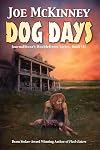
4.5 of 5 Stars Review copy
I'm a big fan of JournalStone's DoubleDown series which is modeled after the old Ace doubles. You read one story, flip the book over and read another. Plus, there's the idea of pairing an established author with a relative newcomer. And although the stories are not of a shared world or even shared themes, they generally have something in common.
This time it's monsters. I chose to start with Joe McKinney's Dog Days which begins with a quote from Sir Arthur Conan show more Doyle's Hound of the Baskervilles. One of my favorite stories as a kid.
It's 1983 and the Gulf Coast is in the wake of Hurricane Alexis and a shrimp boat has wound up in an old Pecan tree at the end of the road. There are people aboard, dead people, eaten dead people.
Mark's dad, Wes, is a police officer with the Houston K-9 division, his dad's canine partner, Max, lives with the family which also includes his mom, who is a pediatrician.
The best way to describe this story and McKinney's writing style is that it's real. Real people in believable situations and from there the tension just builds.
I also enjoyed how the author made his ten-year old hero a reader. Great line, "But as I read about Tarzan's battles with Kerchak, a real battle, and one far more savage, was raging down the street. The real horror of that summer was just beginning."
Great story with some definite "Oh, Wow!" moments.
The other story is the debut novel from Sanford Allen, Deadly Passage, which starts with a strong opening line, "The beast climbed down its gnarled tree by cover of night." I'm hooked.
Most of the action takes place on a slave ship, the Lombard, where something is causing the deaths of "cargo" and crew alike. "The next morning, the crew discovered four more bodies, this time three women and the only child in the hold. Like the others, their flesh had gone pale gray, and once again, Hicks was at a loss to fully explain their demise."
Deadly Passage is disturbing on multiple levels, not only what's causing the deaths, but the circumstance of the slave trade and the treatment of the "cargo." The truth can be painful.
Allen creates some strong prose in this story. "Then the mate shrieked incoherently. His cries continued amid a sickening tearing noise like a butcher separating the parts from a chicken with his hands."
The third entry in JournalStone's DoubleDown series is not perfect, but it's awfully close. Dog Days & Deadly Passage is available as a signed Limited edition, Trade Paperback and ebook from JournalStone.com and Amazon.com.
I can strongly recommend this one. show less
I'm a big fan of JournalStone's DoubleDown series which is modeled after the old Ace doubles. You read one story, flip the book over and read another. Plus, there's the idea of pairing an established author with a relative newcomer. And although the stories are not of a shared world or even shared themes, they generally have something in common.
This time it's monsters. I chose to start with Joe McKinney's Dog Days which begins with a quote from Sir Arthur Conan show more Doyle's Hound of the Baskervilles. One of my favorite stories as a kid.
It's 1983 and the Gulf Coast is in the wake of Hurricane Alexis and a shrimp boat has wound up in an old Pecan tree at the end of the road. There are people aboard, dead people, eaten dead people.
Mark's dad, Wes, is a police officer with the Houston K-9 division, his dad's canine partner, Max, lives with the family which also includes his mom, who is a pediatrician.
The best way to describe this story and McKinney's writing style is that it's real. Real people in believable situations and from there the tension just builds.
I also enjoyed how the author made his ten-year old hero a reader. Great line, "But as I read about Tarzan's battles with Kerchak, a real battle, and one far more savage, was raging down the street. The real horror of that summer was just beginning."
Great story with some definite "Oh, Wow!" moments.
The other story is the debut novel from Sanford Allen, Deadly Passage, which starts with a strong opening line, "The beast climbed down its gnarled tree by cover of night." I'm hooked.
Most of the action takes place on a slave ship, the Lombard, where something is causing the deaths of "cargo" and crew alike. "The next morning, the crew discovered four more bodies, this time three women and the only child in the hold. Like the others, their flesh had gone pale gray, and once again, Hicks was at a loss to fully explain their demise."
Deadly Passage is disturbing on multiple levels, not only what's causing the deaths, but the circumstance of the slave trade and the treatment of the "cargo." The truth can be painful.
Allen creates some strong prose in this story. "Then the mate shrieked incoherently. His cries continued amid a sickening tearing noise like a butcher separating the parts from a chicken with his hands."
The third entry in JournalStone's DoubleDown series is not perfect, but it's awfully close. Dog Days & Deadly Passage is available as a signed Limited edition, Trade Paperback and ebook from JournalStone.com and Amazon.com.
I can strongly recommend this one. show less
 This review was written for LibraryThing Early Reviewers.
With an opening reminiscent of 'Dracula', 'Dog Days' effortlessly blends the coming-of-age story with horror and police procedural. I particularly liked the debunking of supernatural conceits, although hints of the unexplained remain. Well-written and entertaining.
'Deadly Passage' is the less-successful of the two stories here. Parallels between slavery of blacks and human slavery to the monster are never fully explored. It is action-packed, but at times scatalogically graphic. I would have show more liked to learn more of the mythology around the creature, but by making its protagonist Bell rather than Kwame we lose the opportunity to understand the creature. show less
'Deadly Passage' is the less-successful of the two stories here. Parallels between slavery of blacks and human slavery to the monster are never fully explored. It is action-packed, but at times scatalogically graphic. I would have show more liked to learn more of the mythology around the creature, but by making its protagonist Bell rather than Kwame we lose the opportunity to understand the creature. show less
This review was written for LibraryThing Early Reviewers.I don't like horror stories and I don't like "supernatural" nonsense. That said, I actually enjoyed these two short stories which are basically from the horror genre and are bordering on "supernatural".
If only "Dog Days" was to be reviewed, I'd rate it with four stars because it's clearly the much better story. The set up is (mostly) believable and its characters likeable and, at least when it comes to the primary protagonists, well-written. You can relate to the young hero and - in part - show more to his friends and enemies. The rest of the characters are not too far off to accept them. All in all, the story is intrinsically sound and enjoyable. Of course, there are a few issues, e. g. with the timeline - it's end of June and on the 19th of July something is expected to happen and the hero thinks that's in "less than two weeks". Not *quite* right but nothing that really spoils the experience.
There's a ghost that pops up twice for no good reason at all and should just have been cut out of the book - we never really get to know why it comes, what intentions it has or what happens to it - it's just passingly mentioned and immediately forgotten.
There are few typos and other errors as well but nothing greatly aggrieving. So, all in all, a nice short story, worthy of reading even for those who don't like the genre.
Unfortunately, "Deadly Passage" didn't quite live up to my expectations after "Dog Days". If it was only this story to be rated, I'd give it a merciful two-star-rating.
The basic idea - a couple of people hunted down by something on a ship - appealed to me but, alas, the story took some time to get going, the "hunter" (or "beast" as it's called from the very beginning) is portrayed to be more human than animalistic which simply not necessary for the story and instead of taking down one victim by another, the whole thing descends into slaughter rather quickly.
There were quite a few gory scenes which didn't really help in any way either - subtle horror is so much better than describing intestines falling out of a body. This is exactly the kind of story I'm not eager to read more of.
Even though both stories have their weaknesses, both were hard to put down - I really wanted to know how the stories progress. That's a good sign and one of the reasons I'm rating the book with good three stars. show less
If only "Dog Days" was to be reviewed, I'd rate it with four stars because it's clearly the much better story. The set up is (mostly) believable and its characters likeable and, at least when it comes to the primary protagonists, well-written. You can relate to the young hero and - in part - show more to his friends and enemies. The rest of the characters are not too far off to accept them. All in all, the story is intrinsically sound and enjoyable. Of course, there are a few issues, e. g. with the timeline - it's end of June and on the 19th of July something is expected to happen and the hero thinks that's in "less than two weeks". Not *quite* right but nothing that really spoils the experience.
There's a ghost that pops up twice for no good reason at all and should just have been cut out of the book - we never really get to know why it comes, what intentions it has or what happens to it - it's just passingly mentioned and immediately forgotten.
There are few typos and other errors as well but nothing greatly aggrieving. So, all in all, a nice short story, worthy of reading even for those who don't like the genre.
Unfortunately, "Deadly Passage" didn't quite live up to my expectations after "Dog Days". If it was only this story to be rated, I'd give it a merciful two-star-rating.
The basic idea - a couple of people hunted down by something on a ship - appealed to me but, alas, the story took some time to get going, the "hunter" (or "beast" as it's called from the very beginning) is portrayed to be more human than animalistic which simply not necessary for the story and instead of taking down one victim by another, the whole thing descends into slaughter rather quickly.
There were quite a few gory scenes which didn't really help in any way either - subtle horror is so much better than describing intestines falling out of a body. This is exactly the kind of story I'm not eager to read more of.
Even though both stories have their weaknesses, both were hard to put down - I really wanted to know how the stories progress. That's a good sign and one of the reasons I'm rating the book with good three stars. show less
This review was written for LibraryThing Early Reviewers.You May Also Like
Associated Authors
Statistics
- Works
- 4
- Also by
- 3
- Members
- 66
- Popularity
- #259,058
- Rating
- 4.0
- Reviews
- 42
- ISBNs
- 2
