
Nathan Rosenstein
Author of A Companion to the Roman Republic
About the Author
Nathan Rosenstein is Professor of History at The Ohio State University.
Image credit: Nathan Rosenstein [credit: Ohio State University]
Works by Nathan Rosenstein
War and Society in the Ancient and Medieval Worlds: Asia, The Mediterranean, Europe, and Mesoamerica (1999) — Editor — 40 copies
Rome and the Mediterranean 290 to 146 BC: The Imperial Republic (The Edinburgh History of Ancient Rome) (2012) 36 copies
Rome at War: Farms, Families, and Death in the Middle Republic (Studies in the History of Greece and Rome) (2004) 34 copies
Imperatores Victi: Military Defeat and Aristocractic Competition in the Middle and Late Republic (1990) 7 copies, 1 review
Associated Works
Rome and China: Comparative Perspectives on Ancient World Empires (2009) — Contributor — 73 copies, 1 review
War and Peace in the Ancient World (Ancient World: Comparative Histories) (2007) — Contributor — 23 copies
The Impact of the Roman Army (200 B.C. A.D. 476): Economic, Social, Political, Religious and Cultural Aspects (Impact of Empire) (2007) — Contributor — 10 copies
The Oxford Handbook of Pre-Roman Italy (1000--49 BCE) (Oxford Handbooks) (2024) — Contributor — 8 copies
People, Land, and Politics : Demographic Developments and the Transformation of Roman Italy, 300 BC–AD 14 (2008) — Contributor — 6 copies
War, Warlords, and Interstate Relations in the Ancient Mediterranean (Impact of Empire) (2017) — Contributor — 6 copies
Circum Mare: Themes in Ancient Warfare (Brill's Companions in Classical Studies) (2016) — Contributor — 5 copies
Brills Companion to Military Defeat in Ancient Mediterranean Society (Brill's Companions in Classical Studies Warfare in the Ancient MEditerranean World) (2017) — Contributor — 4 copies
Processes of integration and identity formation in the Roman Republic (2012) — Contributor — 3 copies
Tagged
Common Knowledge
- Canonical name
- Rosenstein, Nathan
- Legal name
- Rosenstein, Nathan Stewart
- Gender
- male
- Education
- University of California, Berkeley
- Occupations
- historian
- Organizations
- Ohio State University
- Nationality
- USA
- Associated Place (for map)
- USA
Members
Reviews
Imperatores Victi: Military Defeat and Aristocractic Competition in the Middle and Late Republic by Nathan S. Rosenstein
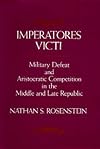
This is an academic work with narrow appeal, i.e., to those with a particular knowledge and interest in the history of the Roman Republic. For those people, which include myself, the book is a worthwhile read. For those who want a more general overview of Ancient Rome, better look elsewhere.
The author argues that social and cultural procedures were established by the Roman aristocracy to ensure its secure place as leaders of the republic. This concept is not new. However, the author's show more particular arguments are interesting. He notes evidence which seems to demonstrate that Roman generals who lost battles nonetheless were elected to further office just as frequently as victorious generals. Given Rome's militaristic ways, this result seems inexplicable.
Imperatores Victi argues that this result was possible because Romans viewed an aristocratic general's responsibilities very different than we do today. It was less important how strategically or tactically gifted the general was. More important was his ability to set an example of bravery even in defeat, the observance of religious procedure prior to battle and the soldiers personal refusal to accept anything less than victory or death fighting in the lines.
An interesting argument whether or not correct. I would have rated this work higher, but for the author's rather stilted writing style. show less
The author argues that social and cultural procedures were established by the Roman aristocracy to ensure its secure place as leaders of the republic. This concept is not new. However, the author's show more particular arguments are interesting. He notes evidence which seems to demonstrate that Roman generals who lost battles nonetheless were elected to further office just as frequently as victorious generals. Given Rome's militaristic ways, this result seems inexplicable.
Imperatores Victi argues that this result was possible because Romans viewed an aristocratic general's responsibilities very different than we do today. It was less important how strategically or tactically gifted the general was. More important was his ability to set an example of bravery even in defeat, the observance of religious procedure prior to battle and the soldiers personal refusal to accept anything less than victory or death fighting in the lines.
An interesting argument whether or not correct. I would have rated this work higher, but for the author's rather stilted writing style. show less
You May Also Like


Associated Authors
Statistics
- Works
- 5
- Also by
- 15
- Members
- 193
- Popularity
- #113,336
- Rating
- 3.5
- Reviews
- 1
- ISBNs
- 21