
Charlotte Hinger
Author of Deadly Descent
Series
Works by Charlotte Hinger
Associated Works
Reader's Digest Condensed Books 1986 v02: An Ark on The Flood / The Seventh Secret / Come Spring / Break In (1986) — Author — 45 copies
Tagged
Common Knowledge
- Gender
- female
- Nationality
- USA
- Places of residence
- Fort Collins, Colorado, USA
- Associated Place (for map)
- Colorado, USA
Members
Reviews
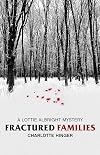
It's been too long since Charlotte Hinger's last Lottie Albright mystery. She is so adept at combining fascinating Kansas history with her mysteries that I never want to miss reading a single one. Only one thing prevented Fractured Families from being one of my best reads of the year: the killer was so obvious and over-the-top to me. Fortunately, there is much more to the book than whodunit-- and I loved the rest.
Carleton County-- dubbed by one character as "the Bermuda Triangle for crime"-- show more can be counted as a character in Hinger's books. The weather usually makes its presence felt, this time as a ground blizzard that will have you reaching for extra blankets and thinking about the thermostat as you turn the pages.
Two characters (besides Kansas) were stand-outs for me: Franklin Slocum, the young boy who wrote the commonplace book, and Aunt Dorothy "That's why I'm on the bestseller list" Mercer. The life that Franklin had to endure broke my heart, and Dorothy's skills and personality made me laugh while I admired her.
If you're like me and enjoy crime fiction with a strong dose of history, you simply cannot go wrong with Charlotte Hinger's Lottie Albright mysteries. I hope to be reading them for a good long time. show less
Carleton County-- dubbed by one character as "the Bermuda Triangle for crime"-- show more can be counted as a character in Hinger's books. The weather usually makes its presence felt, this time as a ground blizzard that will have you reaching for extra blankets and thinking about the thermostat as you turn the pages.
Two characters (besides Kansas) were stand-outs for me: Franklin Slocum, the young boy who wrote the commonplace book, and Aunt Dorothy "That's why I'm on the bestseller list" Mercer. The life that Franklin had to endure broke my heart, and Dorothy's skills and personality made me laugh while I admired her.
If you're like me and enjoy crime fiction with a strong dose of history, you simply cannot go wrong with Charlotte Hinger's Lottie Albright mysteries. I hope to be reading them for a good long time. show less
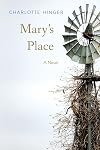
I am well-acquainted with Charlotte Hinger through her Lottie Albright mysteries which are also set in western Kansas. This author has a talent for giving readers a strong sense of place, a compelling story, and fully fleshed characters. When I saw Mary's Place, I knew I had to read it, and I'm certainly glad I did.
Although this book is listed as historical fiction, it reads like a thriller. I immediately found myself in farm country and felt as though I'd known Mary and Iron Barrett my show more whole life. When the bank they'd always done business with is restructured, their lives are turned upside down, and the two soon learn that the government doesn't seem to care what happens to them as long as the bureaucrats get their pound of flesh.
I worried about Mary and Iron when I wasn't reading the book. Members of their own family couldn't be trusted. Some of the bureaucrats were secretly trying to feather their own nests. Every step Mary and Iron took was treacherous, and I needed to know-- I had to know-- if, and how, they were going to survive.
If you like being fully invested in a book to the point where you worry about the fate of its characters, Mary's Place is the book for you. It's a perfect slice of history that reads like a first-class thriller. I loved it.
(Review copy courtesy of the publisher and Net Galley) show less
Although this book is listed as historical fiction, it reads like a thriller. I immediately found myself in farm country and felt as though I'd known Mary and Iron Barrett my show more whole life. When the bank they'd always done business with is restructured, their lives are turned upside down, and the two soon learn that the government doesn't seem to care what happens to them as long as the bureaucrats get their pound of flesh.
I worried about Mary and Iron when I wasn't reading the book. Members of their own family couldn't be trusted. Some of the bureaucrats were secretly trying to feather their own nests. Every step Mary and Iron took was treacherous, and I needed to know-- I had to know-- if, and how, they were going to survive.
If you like being fully invested in a book to the point where you worry about the fate of its characters, Mary's Place is the book for you. It's a perfect slice of history that reads like a first-class thriller. I loved it.
(Review copy courtesy of the publisher and Net Galley) show less
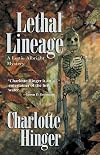
First Line: Happiness happens.
The Episcopalians in Lottie Albright's corner of western Kansas have worked hard to build a small church on a parcel of land that sits on the corners of four counties. The first day they gather together for a sermon, communion, and the confirmation of Lottie's niece.
The bishop gives an inappropriate sermon filled with hellfire and brimstone, and everyone is thunderstruck when beloved Reverend Mary Farnsworth drops the chalice during communion and locks herself show more in the anteroom. Lottie's sister Josie, a psychologist, stays after the service to comfort Mary, but Lottie orders her sister to leave when the locked door is opened and Mary's body is found on the floor. Frightened by the bishop's strange rituals for disposing of the spilled wine, Lottie would like nothing better than to leave, but as undersheriff, she must stay to attend to the death.
An elderly lady who attended the service insists that a man kneeling next to her scared Reverend Mary into a heart attack which gives credence to Lottie's belief that this was not a natural death. Calling in other law enforcement agencies, Lottie discovers many more questions than answers as the investigation moves forward.
The first book in this series, Deadly Descent, relied a great deal on Lottie's skill as an historian digging through old records, documents, and genealogical charts. In Lethal Lineage, Lottie finds herself focusing more on the oral histories of several county residents. She also realizes that she's bitten off more than she can chew in her work for the county historical society and as undersheriff. It is something on which both she and her husband must come to some sort of agreement while Lottie tries to find a killer and deal with a sheriff whose family has ridden roughshod over a neighboring county for decades.
Hinger brings sparsely populated western Kansas to life by seamlessly including details of how poor counties constantly battle budget constraints as well as how feuds, secrets and lies never seem to die out no matter how many decades pass. (Have you ever stopped to wonder how many fewer books would be written if people everywhere would simply tell the truth?)
Her three main characters-- Lottie, her sister Josie, and her husband Keith-- are strong, vivid people who care for one another deeply although they don't always see eye-to-eye. I feel as if I've known them my whole life.
In just two books I've fallen in love with the setting, the characters, and the way Charlotte Hinger can tell a story. Lethal Lineage stands alone quite well, but I think it would be best to start at the beginning so you can fully appreciate the fascinating work Charlotte does at the historical society, as well as the dynamics between the characters. This is a highly recommended book in a highly recommended series. I can't wait for book number three! show less
The Episcopalians in Lottie Albright's corner of western Kansas have worked hard to build a small church on a parcel of land that sits on the corners of four counties. The first day they gather together for a sermon, communion, and the confirmation of Lottie's niece.
The bishop gives an inappropriate sermon filled with hellfire and brimstone, and everyone is thunderstruck when beloved Reverend Mary Farnsworth drops the chalice during communion and locks herself show more in the anteroom. Lottie's sister Josie, a psychologist, stays after the service to comfort Mary, but Lottie orders her sister to leave when the locked door is opened and Mary's body is found on the floor. Frightened by the bishop's strange rituals for disposing of the spilled wine, Lottie would like nothing better than to leave, but as undersheriff, she must stay to attend to the death.
An elderly lady who attended the service insists that a man kneeling next to her scared Reverend Mary into a heart attack which gives credence to Lottie's belief that this was not a natural death. Calling in other law enforcement agencies, Lottie discovers many more questions than answers as the investigation moves forward.
The first book in this series, Deadly Descent, relied a great deal on Lottie's skill as an historian digging through old records, documents, and genealogical charts. In Lethal Lineage, Lottie finds herself focusing more on the oral histories of several county residents. She also realizes that she's bitten off more than she can chew in her work for the county historical society and as undersheriff. It is something on which both she and her husband must come to some sort of agreement while Lottie tries to find a killer and deal with a sheriff whose family has ridden roughshod over a neighboring county for decades.
Hinger brings sparsely populated western Kansas to life by seamlessly including details of how poor counties constantly battle budget constraints as well as how feuds, secrets and lies never seem to die out no matter how many decades pass. (Have you ever stopped to wonder how many fewer books would be written if people everywhere would simply tell the truth?)
Her three main characters-- Lottie, her sister Josie, and her husband Keith-- are strong, vivid people who care for one another deeply although they don't always see eye-to-eye. I feel as if I've known them my whole life.
In just two books I've fallen in love with the setting, the characters, and the way Charlotte Hinger can tell a story. Lethal Lineage stands alone quite well, but I think it would be best to start at the beginning so you can fully appreciate the fascinating work Charlotte does at the historical society, as well as the dynamics between the characters. This is a highly recommended book in a highly recommended series. I can't wait for book number three! show less
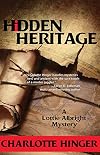
Once again, Kansas history is what brings this book to life. Lottie learns that the murder victim is the great-grandson of Dona Francisca Diaz, the elderly head of one of the first groups to colonize the state. Dona Francisca insists that she knows why Victor was killed, and that the key to the murder can be found in ancient documents. A famed curandera with horribly crippled hands, Dona Francisca invites Lottie to their lush property and insists that she wants to train Lottie as the heir to show more her legendary cures. Although Lottie is extremely reluctant to do so, she sees this as a once-in-a-lifetime chance for incredible knowledge... and for the chance to solve a murder.
Solving crimes through old documents, ephemera, and stories has always fascinated me, and that's why Charlotte Hinger's Lottie Albright books have become one of my favorite series. Sure enough, the history and legends surrounding the Diaz family and their property grabbed hold of my interest and didn't turn it loose, but two other components were a bit lacking in this third book. The mystery was very slow-paced, almost plodding in places, and Lottie's family dynamics which have set off so many sparks in the first two books are a bit lackluster here.
Despite that, I still found the book to be very enjoyable. I have a button here at my desk that proclaims HISTORY MATTERS-- and it does. Seeds that were sown long ago can germinate and take hold down through generations. Families can have prejudices and yet have no clue that those prejudices had their beginnings eight generations in the past. Hinger understands this and shows us how to tease the answers out into the light of day. It's a process of which I never tire. I look forward to the next book in this series and hope that Lottie regains the spark she was lacking in this book. show less
Solving crimes through old documents, ephemera, and stories has always fascinated me, and that's why Charlotte Hinger's Lottie Albright books have become one of my favorite series. Sure enough, the history and legends surrounding the Diaz family and their property grabbed hold of my interest and didn't turn it loose, but two other components were a bit lacking in this third book. The mystery was very slow-paced, almost plodding in places, and Lottie's family dynamics which have set off so many sparks in the first two books are a bit lackluster here.
Despite that, I still found the book to be very enjoyable. I have a button here at my desk that proclaims HISTORY MATTERS-- and it does. Seeds that were sown long ago can germinate and take hold down through generations. Families can have prejudices and yet have no clue that those prejudices had their beginnings eight generations in the past. Hinger understands this and shows us how to tease the answers out into the light of day. It's a process of which I never tire. I look forward to the next book in this series and hope that Lottie regains the spark she was lacking in this book. show less
Lists
Awards


You May Also Like


Associated Authors
Statistics
- Works
- 9
- Also by
- 2
- Members
- 179
- Popularity
- #120,382
- Rating
- 3.8
- Reviews
- 18
- ISBNs
- 53