
Violet Hunt (1862–1942)
Author of Tales of the Uneasy
About the Author
Image credit: https://en.wikipedia.org/wiki/Violet_Hunt
Works by Violet Hunt
The wife of Rossetti: Her life and death 10 copies
The Tiger Skin 2 copies
The Way of Marriage 1 copy
Associated Works
Ghostly Gentlewomen: Two Centuries of Spectral Stories by the Gentle Sex (1977) — Contributor — 26 copies
Tagged
Common Knowledge
- Legal name
- Hunt, Isobel Violet
- Other names
- Hueffer, Violet
- Birthdate
- 1862-09-28
- Date of death
- 1942-01-16
- Gender
- female
- Occupations
- writer
literary critic
feminist
political activist - Organizations
- Women Writers' Suffrage League (founder)
- Relationships
- Ford, Ford Madox (partner)
Wells, H. G. (friend)
Maugham, Somerset (friend)
James, Henry (friend)
Pound, Ezra (friend)
Wilde, Oscar (friend) (show all 9)
Hunt, Margaret (mother)
Hunt, Alfred William (father)
Raine, James (grandfather) - Short biography
- Isobel Violet Hunt, known as Violet, was born in Durham, England, the daughter of William Albert Hunt, a landscape painter, and his wife Margaret Raine Hunt, a writer. The family moved to London when she was a small child. She grew up among the Pre-Raphaelite artists and writers, including the Rossettis, John Ruskin, and William Morris, and studied art. She became a feminist and campaigned for women's suffrage. She was a prolific writer of fiction and nonfiction. Her best-known work was probably The Wife of Rossetti (1932), a biography of Elizabeth Siddal, based on her own memories. Her first published novel was The Maiden's Progress (1894), a work of the "New Woman" genre that represented her ideals as feminist. It was followed by 16 more, including Sooner or Later (1904), The White Rose of Weary Leaf (1908), and The Tiger Skin (1924). She also wrote the supernatural short stories Tales of the Uneasy (1911). She presided over a renowned literary salon at South Lodge, her home in Campden Hill that included D.H. Lawrence, Rebecca West, Ezra Pound, Joseph Conrad, Henry James, and H.G. Wells. She lived with Ford Madox Ford (the pen name of Ford Hermann Hueffer) for about 8 years and collaborated with him in writing Zeppelin Nights (1915), a book of historical sketches. She is said to have been the model for Florence Dowell in Ford's novel The Good Soldier (1915) and Sylvia Tietjens in his 4-volume novel Parade's End (1924-1928). Her autobiography was entitled The Flurried Years (1926), published in the USA as I Have This To Say.
- Nationality
- UK
- Birthplace
- Durham, England, UK
- Places of residence
- London, England, UK
- Place of death
- Campden Hill, London, England, UK
- Burial location
- Brookwood Cemetery, Brookwood, Surrey, England, UK
- Associated Place (for map)
- England, UK
Members
Reviews
The Tiger-Skin and Other Tales of the Uneasy: And Other Tales of the Uneasy by Violet Hunt: 65 (British Library Tales of the Weird) by Violet Hunt

I was surprised to be a little disappointed by this one. It's not a bad collection, but there is a reason Violet Hunt remains an unknown - at least half of her stories here stories are quite unremarkable. There are a couple of worthies which raises the profile of this collection, but the main value lies in the first hand viewing of middle class society and perspectives of the time, shown through the lens of a highly intelligent, feminist writer who is an almost complete unknown in literature show more circles today. They also address moral and psychological issues in a way many of her peers did not. Apart from anything else, I am always in favour of bringing back into print older stories to explore from largely unknown writers.
The individual tales themselves are as I said a very mixed bag. The first story (The Telegram) is the same opening tale as the London Fog anthology in the same series. It's a straightforward, predictable, but evocative enough ghost story for its time. The next two stories (The Operation and The Memoir) are plain dull and barely worthy of any collection of "uneasy" tales. They are tales of love, revenge and societal indiscretion - the latter being the only notable parts of interest
Things pick up with 'The Prayer' which is a great premise of woman who brings back her husband from death through prayer only to be reviled by what he has become, just overly drawn out and told in a mundane way. This is a story which has been done elsewhere and with much greater sense of unease. I can't think of the story offhand, but it is in the Tales of the Weird series somewhere.
'The Coach' is the first strong standout story and is an interesting twist on the Styx/Boatman myth. It's not overly exciting, but it is quite unique, has some strong interactions and again reveals a lot about the era we're reading from, which continues to be the main strength of all these stories. It's also a stylistic change compared to the preceding stories which helps refresh the palette a little.
The Blue Bonnet I initially stopped halfway because it was just tedious and unexciting, although uses the setting of a jilted lover during the rout of Bonnie Prince Charlie from Swarkstone Bridge to strong effect. It’s another love story turned tragedy, but whilst it had gothic undertones to the tale and was fine when it finally got going, there’s no supernatural or weird element to it.
The Witness is the second standout and is the tale of an adulterous couple, separated after a violent crime and reacquianted years later. It's an acute, tense story of madness and guilt, but the weird aspect comes from the question about whether the dog knows too much and will reveal their crime. The lines are blurred and it has a strong ending. It's the perfect blend of psychological weird.
The Barometer is another oddity, but is perhaps another stand out. It's mostly a straightforward story of two children trying to occupy their time during an intense drought. But it contains a shocking and hard hitting twist to the tale and the tension is expertly ramped up to a chilling conclusion.
The Tiger Skin - the title novella - is at the end, so there's a fair amount of mixed quality to get through before even getting to it. Sadly, this was the most tedious to wade through until it's shocking climax of horrific revelations of abuse. Principally a story of eugenics through neglect, it’s filled with a lot of florid character descriptions which pad the story out before it finally reaches a destination which most people will see coming, although is no less harrowing for it. I forced my way through this one with much effort and even putting aside the later intensity, it was a drag to read for the first 70 pages. Even the title is more symbolic than any direct relation to the story. Added note: a content warning is advisory with this one.
These are well written, mostly intelligent stories, but too many lack atmosphere, dread or unease. Sure, this might be a case of "being of its time" or focusing more on psychological drama, but Frances Hodgson Burnett was much better at the supernatural tale and I highly recommend a collection of her works if anyone is looking for a "classic weird" female writer to explore. There's just enough here to interest the more dedicated enthusiast from the stand out stories I've highlighted, but casual readers of The Weird are going to struggle to find enough to consistently hold interest. Much like Medusa by E. H Visiak, this is one that R. S Hadji thought a neglected masterpiece, but again doesn't quite earn that moniker for me.
I normally have a high tolerance for early supernatural stories from the Victorian era and the early 20th C, but much of the collection is a real struggle to stay interested in because it rarely falls into the Weird genre I love. I'm glad I changed my mind and stayed the course for a couple of the later tales, but this isn't an easy recommend. show less
The individual tales themselves are as I said a very mixed bag. The first story (The Telegram) is the same opening tale as the London Fog anthology in the same series. It's a straightforward, predictable, but evocative enough ghost story for its time. The next two stories (The Operation and The Memoir) are plain dull and barely worthy of any collection of "uneasy" tales. They are tales of love, revenge and societal indiscretion - the latter being the only notable parts of interest
Things pick up with 'The Prayer' which is a great premise of woman who brings back her husband from death through prayer only to be reviled by what he has become, just overly drawn out and told in a mundane way. This is a story which has been done elsewhere and with much greater sense of unease. I can't think of the story offhand, but it is in the Tales of the Weird series somewhere.
'The Coach' is the first strong standout story and is an interesting twist on the Styx/Boatman myth. It's not overly exciting, but it is quite unique, has some strong interactions and again reveals a lot about the era we're reading from, which continues to be the main strength of all these stories. It's also a stylistic change compared to the preceding stories which helps refresh the palette a little.
The Blue Bonnet I initially stopped halfway because it was just tedious and unexciting, although uses the setting of a jilted lover during the rout of Bonnie Prince Charlie from Swarkstone Bridge to strong effect. It’s another love story turned tragedy, but whilst it had gothic undertones to the tale and was fine when it finally got going, there’s no supernatural or weird element to it.
The Witness is the second standout and is the tale of an adulterous couple, separated after a violent crime and reacquianted years later. It's an acute, tense story of madness and guilt, but the weird aspect comes from the question about whether the dog knows too much and will reveal their crime. The lines are blurred and it has a strong ending. It's the perfect blend of psychological weird.
The Barometer is another oddity, but is perhaps another stand out. It's mostly a straightforward story of two children trying to occupy their time during an intense drought. But it contains a shocking and hard hitting twist to the tale and the tension is expertly ramped up to a chilling conclusion.
The Tiger Skin - the title novella - is at the end, so there's a fair amount of mixed quality to get through before even getting to it. Sadly, this was the most tedious to wade through until it's shocking climax of horrific revelations of abuse. Principally a story of eugenics through neglect, it’s filled with a lot of florid character descriptions which pad the story out before it finally reaches a destination which most people will see coming, although is no less harrowing for it. I forced my way through this one with much effort and even putting aside the later intensity, it was a drag to read for the first 70 pages. Even the title is more symbolic than any direct relation to the story. Added note: a content warning is advisory with this one.
These are well written, mostly intelligent stories, but too many lack atmosphere, dread or unease. Sure, this might be a case of "being of its time" or focusing more on psychological drama, but Frances Hodgson Burnett was much better at the supernatural tale and I highly recommend a collection of her works if anyone is looking for a "classic weird" female writer to explore. There's just enough here to interest the more dedicated enthusiast from the stand out stories I've highlighted, but casual readers of The Weird are going to struggle to find enough to consistently hold interest. Much like Medusa by E. H Visiak, this is one that R. S Hadji thought a neglected masterpiece, but again doesn't quite earn that moniker for me.
I normally have a high tolerance for early supernatural stories from the Victorian era and the early 20th C, but much of the collection is a real struggle to stay interested in because it rarely falls into the Weird genre I love. I'm glad I changed my mind and stayed the course for a couple of the later tales, but this isn't an easy recommend. show less
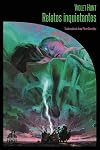
Interesante recopilación de relatos de la británica Violet Hunt, donde predomina la fuerza de los personajes femeninos. Lo sobrenatural está presente, pero también un enfoque realista. Muy buen prólogo, y magnífica traducción.
You May Also Like
Associated Authors
Statistics
- Works
- 26
- Also by
- 14
- Members
- 85
- Popularity
- #214,930
- Rating
- 3.8
- Reviews
- 2
- ISBNs
- 22
- Languages
- 3