
Alexei Remizov (1877–1957)
Author of Sisters of the Cross
About the Author
Works by Alexei Remizov
The Fifth Pestilence, together with The History of the Tinkling Cymbal and Sounding Brass, Ivan Semyonovitch Stratilatov (1977) 8 copies
Legenden und Geschichten 1 copy
Kukkha : Rozanovy pisʹma 1 copy
Избранное 1 copy
Часы 1 copy
Том 1. Пруд 1 copy
Posolon ́ = Der Sonne nach 1 copy
Les Yeux tondus 1 copy
Избранное 1 copy
Ремизов в своих письмах 1 copy
La tragedia de un Juez 1 copy
The Pond 1 copy
Física médica y biológica 1 copy
Tmina 1 copy
U zatočenju 1 copy
Посолонь. Волшебная Россия 1 copy
Associated Works
The Bitter air of exile : Russian writers in the West, 1922-1972 (1977) — Contributor — 10 copies, 1 review
The Masterpiece Library of Short Stories Vol. XIII: Russian Etc. — Contributor — 9 copies
Tagged
Common Knowledge
- Canonical name
- Remizov, Alexei
- Legal name
- Ремизов, Алексей Михайлович
- Other names
- Remizov, Aleksei
Remizov, Aleksey
Remizov, Alexis - Birthdate
- 1877-07-06
- Date of death
- 1957-11-26
- Gender
- male
- Occupations
- novelist
short story writer
translator
illustrator - Nationality
- Russia
- Birthplace
- Moscow, Russian Empire
- Places of residence
- Moscow, Russia
Saint Petersburg, Russia
Berlin, Germany
Paris, France - Place of death
- Paris, France
- Burial location
- Sainte-Geneviève-des-Bois Russian Cemetery
Members
Reviews
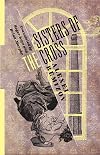
Alexei Remizov’s Sisters of the Cross (1910) is widely regarded as a Symbolist masterpiece and possibly the modernist author’s best work. It may therefore come as a surprise that this is the novel’s first ever translation into English, one which arrives more than a hundred years after the novel was written. Or perhaps it is not surprising at all, considering that even some of Remizov’s early admirers deemed his works “untranslatable”.
Translator Roger Keys, who together with show more Brian Murphy, acts as the intrepid “midwife” to this English-language rendition, provides an introduction to the work which highlights the peculiar characteristics that make Remizov’s work so distinctly, and “untranslatably”, Russian. In a bid to “de-Latinize and de-Frenchify the Russian literary language”, Remizov mixes the colloquialisms of spoken Russian with the style and vocabulary of fairy-tales and that of the sacred texts of the Orthodox Church. In the process, he shows a predilection for archaic words and neologisms. “He uses too many hard words,” an early potential translator complained.
The plot does not simplify matters either. Nominally, it has its roots in the gritty realist fiction of the 19th and early 20th century, as it tells the story of poor St Petersburg clerk Marakulin who is unexpectedly fired from his job, and, consequently, finds modest lodgings in Burkov’s block of apartments. As the story progresses, however, it takes on a surreal tinge. Burkov’s flats become a symbol of the suffering world; a society peopled by women (the “sisters” of the title) to whom life (and men) have dealt terrible blows. The Sisters are a diverse group: some, like the fallen actress “Verochka”, are branded as sinners; others are considered visionaries or holy women. What they have in common is this aura of dignity in suffering; in contrast, for instance, to “the General’s wife” who lives a comfortably “good life” but one which barely recognizes the distress of her fellow human beings. This moral message however is suggested, rather than spelt out, in a series of increasingly fantastical scenes, including a harrowing vision of hell, and a final, shimmering climax.
It is no mean task to convey, in a foreign language, the wildly different registers of this multi-layered work, which certainly does not yield its treasures easily. However, Murphy and Keys somehow manage to combine Remizov’s quirky marriage of realism and folklore, sacred and profane. They have given us English-language (and non-Russian) speakers an opportunity to savour a complex but rewarding novel.
4.5* show less
Translator Roger Keys, who together with show more Brian Murphy, acts as the intrepid “midwife” to this English-language rendition, provides an introduction to the work which highlights the peculiar characteristics that make Remizov’s work so distinctly, and “untranslatably”, Russian. In a bid to “de-Latinize and de-Frenchify the Russian literary language”, Remizov mixes the colloquialisms of spoken Russian with the style and vocabulary of fairy-tales and that of the sacred texts of the Orthodox Church. In the process, he shows a predilection for archaic words and neologisms. “He uses too many hard words,” an early potential translator complained.
The plot does not simplify matters either. Nominally, it has its roots in the gritty realist fiction of the 19th and early 20th century, as it tells the story of poor St Petersburg clerk Marakulin who is unexpectedly fired from his job, and, consequently, finds modest lodgings in Burkov’s block of apartments. As the story progresses, however, it takes on a surreal tinge. Burkov’s flats become a symbol of the suffering world; a society peopled by women (the “sisters” of the title) to whom life (and men) have dealt terrible blows. The Sisters are a diverse group: some, like the fallen actress “Verochka”, are branded as sinners; others are considered visionaries or holy women. What they have in common is this aura of dignity in suffering; in contrast, for instance, to “the General’s wife” who lives a comfortably “good life” but one which barely recognizes the distress of her fellow human beings. This moral message however is suggested, rather than spelt out, in a series of increasingly fantastical scenes, including a harrowing vision of hell, and a final, shimmering climax.
It is no mean task to convey, in a foreign language, the wildly different registers of this multi-layered work, which certainly does not yield its treasures easily. However, Murphy and Keys somehow manage to combine Remizov’s quirky marriage of realism and folklore, sacred and profane. They have given us English-language (and non-Russian) speakers an opportunity to savour a complex but rewarding novel.
4.5* show less
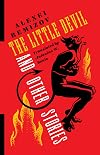
Alexei Remizov (1877 - 1957) was born and raised in the Moscow merchant class and gravitated to Marxist politics while a student at the city’s university. In 1896, he was arrested during a clash between police and student demonstrators and was sentenced to six years’ imprisonment and exile in Vologda. These would turn out his formative years, at least as his literary style was concerned, since it was here that Remizov abandoned Marxism and became, instead, engrossed with philosophy, show more cosmogony and Slavic mythology and folklore. He also married a student of Russian art who moved in the same circles of painter, writer and philosopher Nicholas Roerich. It was under the influence of this milieu that, in 1905, he started to imitate medieval folk tales, including hagiographies of Eastern saints. For the rest of his career, his literary works retained fantastical, folkloric and archaic elements, although as evidenced by his early Symbolist novel Sisters of the Cross, only recently made available in English by Columbia University Press, social issues also remained a concern for this ex-Marxist.
In a bid to “de-Latinize and de-Frenchify the Russian literary language”, Remizov tended to combine the colloquialisms of spoken Russian with the style and vocabulary of fairy-tales and that of the sacred texts of the Orthodox Church. His idiosyncratic style scared off early potential translators – “he uses too many hard words” was one of the accusations levelled in his regard by a would-be translator. Hats off to Columbia University Press, then, for following up its edition of Sisters of the Cross, with The Little Devil and other Stories, a collection of thirteen tales. The work of Roger Keys and Brian Murphy, who rose to the challenge of rendering Remizov’s unique novel in the English language, is here ably matched by Antonina W. Bouis who does an equally great job in translating these stories and retaining the lilting, lyrical language of myth and fairy tale.
Indeed, many of the stories in this collection either verge on the fantastical, or are characterised by what we would nowadays describe as “magical realism”. The earlier items, such as “Bebka”, the opening story, have a stronger grounding in a specific, realistic settings. Towards the end of the volume, we get actual retellings of Russian folk tales. These are the stories I liked best, masterfully combining a modernist aesthetic with a colourful evocation of a magical past which (possibly) never was. Devils, saints, demons, magical creatures, princes and princesses, witches and common mortals, all rub shoulders in wonderfully exotic tableaux.
Full review, with a playlist of magical Russian music at:
https://endsoftheword.blogspot.com/2021/02/The-Little-Devil-and-Other-Stories-Al... show less
In a bid to “de-Latinize and de-Frenchify the Russian literary language”, Remizov tended to combine the colloquialisms of spoken Russian with the style and vocabulary of fairy-tales and that of the sacred texts of the Orthodox Church. His idiosyncratic style scared off early potential translators – “he uses too many hard words” was one of the accusations levelled in his regard by a would-be translator. Hats off to Columbia University Press, then, for following up its edition of Sisters of the Cross, with The Little Devil and other Stories, a collection of thirteen tales. The work of Roger Keys and Brian Murphy, who rose to the challenge of rendering Remizov’s unique novel in the English language, is here ably matched by Antonina W. Bouis who does an equally great job in translating these stories and retaining the lilting, lyrical language of myth and fairy tale.
Indeed, many of the stories in this collection either verge on the fantastical, or are characterised by what we would nowadays describe as “magical realism”. The earlier items, such as “Bebka”, the opening story, have a stronger grounding in a specific, realistic settings. Towards the end of the volume, we get actual retellings of Russian folk tales. These are the stories I liked best, masterfully combining a modernist aesthetic with a colourful evocation of a magical past which (possibly) never was. Devils, saints, demons, magical creatures, princes and princesses, witches and common mortals, all rub shoulders in wonderfully exotic tableaux.
Full review, with a playlist of magical Russian music at:
https://endsoftheword.blogspot.com/2021/02/The-Little-Devil-and-Other-Stories-Al... show less

Racconti abbastanza interessanti (per gli aspetti della vita in russia a inizio '900), ma a mio avviso non eccezionali.
Oct 8, 2012Italian
Lists
Awards

You May Also Like


Associated Authors
Statistics
- Works
- 58
- Also by
- 6
- Members
- 208
- Popularity
- #106,481
- Rating
- 3.7
- Reviews
- 3
- ISBNs
- 56
- Languages
- 9
- Favorited
- 2