
Kenneth N. Taylor (1917–2005)
Author of The Living Bible
About the Author
Kenneth N. Taylor (May 8, 1917 - June 10, 2005) was an American publisher and author, better known as the creator of the The Living Bible and the founder of Tyndale House, a Christian publishing company and Living Bibles International. Taylor completed high school in Oregon, and then enrolled at show more Wheaton College, graduating four years later as a pre-med student. From 1940-43 he attended Dallas Theological Seminary, completing his theological studies at Northern Baptist Theological Seminary in Chicago in 1946. Taylor was editor for His magazine, before became the director of Moody Press, and founding Tyndale House Publishers in 1963. Taylor began paraphrasing the New Testament Epistles on the train while commuting to Moody Press. The project took seven years to complete. Unable to find a publisher to print Living Letters, Taylor took out a loan for $2,000 and had it printed privately. It was not until Billy Graham recommended Living Letters from the pulpit that they became popular. The success of this first publication resulted in the founding of Tyndale House Publishers, the completion of the Living Bible, and the establishment of the Tyndale Foundation. he died on June 10, 2005 from heart failure. (Bowker Author Biography) show less
Series
Works by Kenneth N. Taylor
Living Prophecies: The Minor Prophets Paraphrased with Daniel and the Revelation (1965) 366 copies, 1 review
Living Books of Moses: Genesis, Exodus, Leviticus, Numbers, and Deuteronomy Paraphrased (1925) 125 copies
Living history of Israel;: A paraphrase of Joshua, Judges, I and II Samuel, I and II Kings, I and II Chronicles, Ezra, and Nehemiah (1970) 27 copies, 1 review
Living words for today; a Bible reading for each day of the year, taken from the living New Testament (1967) 18 copies
God Cares for Me Listen and Learn Bible Storybook: Listen and Learn Bible Storybook (Interactive Board Books) (2003) 5 copies
Toutes ces histoires de la Bible que je devrais connaître: 120 récits pour les tout-petits (2022) 3 copies
I See...What God Wants Me To Know: Little Talks and Stories for Boys and Girls in Christian Homes (1958) 3 copies
Heads Up, A Teenage Edition of Ephesians, Philippians, Colossians, I and II Timothy, James and (1967) 2 copies
A GUIDED TOUR 2 copies
Was Kinder von Gott wissen müssen 2 copies
Benih Yang Baik Bencana Mulai Datang Di Mesir s/d Berhala Anak Lembu Emas Di hancurkan jilid 4 1 copy
Benih Yang Baik Yusuf berjumpa dengan saudara-saudaranya s/d Firaun tak mau mendengarkan. Jilid 3 1 copy
Minu esimene Piibel piltides 1 copy
The Good Samaritan 1 copy
I See 1 copy
The Living Story 1 copy
Zgode i nezgode 1 copy
Cerita untuk Anak-Anak 1 copy
NOAH'S ARK 1 copy
Word of Wisdom 1 copy
THE ROAD MAP OF LIFE - CHRIST IN THE WORLD OF TRUCKING - TAKE ME HOME! (Christianity. Bible. Jesus Christ.) (1991) 1 copy
Lewende Briewe 1 copy
Guia do Cristão 1 copy
The Paraphrased Epistles 1 copy
The First Christmas 1 copy
Renungan Untuk Anak 1 copy
Kenneth N. Taylor 2 Book Set - A Living Letter for the Children's Hour - Stories for the Children's Hour (1968) 1 copy
MARI ANAKU KITA BERBAKTI 1 copy
TUMBUH SEMAKIN KUAT 1 copy
Living Psalms: Selections 1 copy
Living Proverbs: Selections 1 copy
Romans 1 copy
God And His World 1 copy
Biblia versificată 1 copy
My firts bible (en rus) 1 copy
Tagged
Common Knowledge
- Legal name
- Taylor, Kenneth Nathaniel
- Birthdate
- 1917-05-08
- Date of death
- 2005-06-10
- Gender
- male
- Organizations
- Tyndale House Publishers (founder)
- Nationality
- USA
- Birthplace
- Portland, Oregon, USA
- Map Location
- Oregon, USA
Members
Reviews

Written by the founder of The Living Bible, Evolution and the High School Student is an attempt to explain the evolution vs. creation debate to high school students in their own language ("Why all the hangup about evolution?) to counter what they will be hearing in their secular public school classrooms.
In answer to his question "Why all the hangup about evolution" in the book's introduction, Taylor highlights two main reasons why evolution is a bad thing:
1. Some evolutionists are show more atheists.
2. Evolution contradicts the bible's telling of the instant creation of Adam, and if we start questioning one part of the bible, that could lead to questioning the bible itself.
With this admission that his position is almost completely reactionary, Taylor spends the rest of the book debunking evolution with various arguments pointing to either there not being enough evidence to support the theory of evolution, therefore if it is not 100% proven, it can't be true. He supports this argument by describing different aspects of evolution - such as natural selection - then claims that they can't be true because they either don't have 100% proof from fossil records, the odds appear to be to great to be believable, or that it simply doesn't make sense to him.
One great example of Taylor's brand of logic is how he dismisses the idea of evolution by comparing it to building houses: "As all buildings use similar construction units, so also the Creator has used the cell and its fantastically complex components as the basic unit of all living material." Then, later: "That life generated spontaneously is like saying that given enough time, a house could build itself[...]" Even when architects aren't involved, Taylor's rationale is that things like DNA and chromosomes are so unfathomably complicated, they couldn't have possibly happened naturally over time, therefore God created it all instantly.
Taylor also brings up and debunks supposed evolution "evidence" that isn't really. He brings up prehistoric cave paintings and asks "Do these prove evolution? No more than the present-day American Indians do." Of course, cave art doesn't have anything to do with evolution, so the fact that some people still live in caves today proves even less. Also look for interesting tidbits of factual data such as "Different breeds of dogs can be developed from common ancestor, but all are still dogs," and "In 60,000,000 years the horse has changed in size, etc., but is still a horse." Of course, of course.
To Taylor's benefit, he eventually gives voice to the idea that if you don't attribute actual 24-hour days to the bible's seven days of creation, it is possible to justify a belief in both God and Darwin - what I like to call the Inherent the Wind defense - even though he warns that: "To me this seems unwise, unnecessary, and wrong[.]" When taking this admission in context with his repeated references to Adam, this book turns out to be less about God vs. Science than it is The Bible versus History/Anthropology, and focused on preventing modern knowledge from contradicting anything literally described in the bible.
Printed in narrow columns with large pictures every other page, this slim book was designed to be an easy read for young students (and a quick source of exasperation for their future biology teachers) to provide them with tools against learning, so perhaps the simplistic rationalizations and occasional odd phrasing (sex organs become "copulatory organs" to avoid introducing the word "Sex" to high school students), but the fact that his list of six "conclusions" at the end all stating that evolution cannot be proven is a moot point when just a few pages before he admits that his biggest argument against evolution is that he isn't comfortable with it. Ironically, that's also the most logical case against evolution he manages to make. show less
In answer to his question "Why all the hangup about evolution" in the book's introduction, Taylor highlights two main reasons why evolution is a bad thing:
1. Some evolutionists are show more atheists.
2. Evolution contradicts the bible's telling of the instant creation of Adam, and if we start questioning one part of the bible, that could lead to questioning the bible itself.
With this admission that his position is almost completely reactionary, Taylor spends the rest of the book debunking evolution with various arguments pointing to either there not being enough evidence to support the theory of evolution, therefore if it is not 100% proven, it can't be true. He supports this argument by describing different aspects of evolution - such as natural selection - then claims that they can't be true because they either don't have 100% proof from fossil records, the odds appear to be to great to be believable, or that it simply doesn't make sense to him.
One great example of Taylor's brand of logic is how he dismisses the idea of evolution by comparing it to building houses: "As all buildings use similar construction units, so also the Creator has used the cell and its fantastically complex components as the basic unit of all living material." Then, later: "That life generated spontaneously is like saying that given enough time, a house could build itself[...]" Even when architects aren't involved, Taylor's rationale is that things like DNA and chromosomes are so unfathomably complicated, they couldn't have possibly happened naturally over time, therefore God created it all instantly.
Taylor also brings up and debunks supposed evolution "evidence" that isn't really. He brings up prehistoric cave paintings and asks "Do these prove evolution? No more than the present-day American Indians do." Of course, cave art doesn't have anything to do with evolution, so the fact that some people still live in caves today proves even less. Also look for interesting tidbits of factual data such as "Different breeds of dogs can be developed from common ancestor, but all are still dogs," and "In 60,000,000 years the horse has changed in size, etc., but is still a horse." Of course, of course.
To Taylor's benefit, he eventually gives voice to the idea that if you don't attribute actual 24-hour days to the bible's seven days of creation, it is possible to justify a belief in both God and Darwin - what I like to call the Inherent the Wind defense - even though he warns that: "To me this seems unwise, unnecessary, and wrong[.]" When taking this admission in context with his repeated references to Adam, this book turns out to be less about God vs. Science than it is The Bible versus History/Anthropology, and focused on preventing modern knowledge from contradicting anything literally described in the bible.
Printed in narrow columns with large pictures every other page, this slim book was designed to be an easy read for young students (and a quick source of exasperation for their future biology teachers) to provide them with tools against learning, so perhaps the simplistic rationalizations and occasional odd phrasing (sex organs become "copulatory organs" to avoid introducing the word "Sex" to high school students), but the fact that his list of six "conclusions" at the end all stating that evolution cannot be proven is a moot point when just a few pages before he admits that his biggest argument against evolution is that he isn't comfortable with it. Ironically, that's also the most logical case against evolution he manages to make. show less

This is one of my favorite Bible story books written for young children. Taylor is a master of explaining Bible stories simply, without distorting the underlying biblical text. Often omitted from similar books, sin and God's wrath are presented in context. The stories are short enough to be understood by young children (ours were about two and a half when they started really grasping much), with simple questions that are helpful especially for parents beginning family devotions. The show more illustrations of the old edition are realistic. These I prefer, rather than the cartoony illustrations in the more recent edition. show less
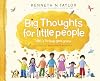
Kenneth Taylor – well known as the author of The Living Bible, and founder of Tyndale House publishers – was a man dedicated to conveying the Christian message to children (he had 10 himself) in simple, understandable truths. Big Thoughts for Little People, a much-loved, best-selling picture book has now received fresh new illustrations while maintaining Taylor’s text from the original edition.
Many readers my age may be familiar with the original version of this classic title, which show more was wildly popular during the ‘80s, and be looking forward with nostalgic fondness to sharing this new release with their own children. I however, missed out on the first edition as a child, so it was with fresh eyes that my daughters and I dug into it together. My first impression was that this vibrantly illustrated hardcover filled with bright, action-filled paintings of children with simple text and discussion questions might appeal to my three-year-old, I was wrong. Every time I open its pages I’m surrounded by a flock of eager faces – 6, 3, and 1, as all of my children adore this newly revised classic.
Arranged around the letters of the alphabet, each letter features a lesson relating to Christian character and moral development. A is for Asking, B is for Behave, C is for Crying and so on. Introduced by a four lines of rhyming verse:
D is for doing
What needs to be done.
So please do it cheerfully.
Then you’ll have fun.
At this points all parents are saying, “Huzzah!” Who can argue with reading this to their children? But, how do the children react? I was afraid that the simple, direct, and pull-no punches moral teachings might be considered boring for my little ones, but if we take it one letter at a time and allow the lessons to sink in, they eat it right up.
A paragraph discussing the concept and relating it to the accompanying illustration follows the rhyme. Three brief, age-appropriate questions are then asked. At times these questions encourage children to examine and interact with the artwork (“What are some good things the children are doing? Tell about each one.”). At other times the questions encourage the child to engage in personal reflection and encourage brainstorming ways to do better (“What kind of thing could you do to help someone?”). Each letter closes with a scripture verse from Taylor’s own The Living Bible.
At times my three-year-old needs some guidance through the more contemplative questions, my six-year-old dives right in (they actually can’t wait for their turn to tackle each question), and my one-year-old slaps at the bright illustrations and tries to turn pages (I have the page tears to prove it). Who would have guessed? My children have been captivated by this seemingly simple formula that repeats throughout the book.
Does it work? If taken a letter at a time and reinforced by the parent, I’m going to say yes! After reading, “C is for Crying”, in which Taylor explains that crying isn’t really necessary unless an injury has been sustained, I started asking my three-year-old if she’d been hurt when she was sniffling to herself. Sometimes she said yes, I kissed her better, and she went on with her day happily. Other times she didn’t say anything, thought about it, and stopped crying. Wow.
Andrea Petrlik Huseinovic new illustrations for the classic text certainly provide much of the appeal found within the pages of Big Thoughts. Her use of thickly layered bright paints, and ‘toothy’ paper lend her bold palette a highly developed sense of texture and motion. Busy paintings filled with a plethora of active children, activities and objects that start with the target letter, and hidden ladybugs to count give equally busy eyes something to keep them busy while little minds absorb the lesson embedded in the text.
Big Thoughts for Little People can easily serve as a comprehensive, back-to-basics course in proper behaviour for preschoolers, and a launching pad into further discussions with any early-primary students who may want to listen in and chime in when it’s time to answer the questions. Ken Taylor went home in 2005, years after the first edition of this enduring title was published. One of his life’s goals was to reach children with the knowledge of God and instruct them in Christian living. It’s clear that his vision is an enduring one which will continue to reach many children for years to come.
Reviewed at quiverfullfamily.com show less
Many readers my age may be familiar with the original version of this classic title, which show more was wildly popular during the ‘80s, and be looking forward with nostalgic fondness to sharing this new release with their own children. I however, missed out on the first edition as a child, so it was with fresh eyes that my daughters and I dug into it together. My first impression was that this vibrantly illustrated hardcover filled with bright, action-filled paintings of children with simple text and discussion questions might appeal to my three-year-old, I was wrong. Every time I open its pages I’m surrounded by a flock of eager faces – 6, 3, and 1, as all of my children adore this newly revised classic.
Arranged around the letters of the alphabet, each letter features a lesson relating to Christian character and moral development. A is for Asking, B is for Behave, C is for Crying and so on. Introduced by a four lines of rhyming verse:
D is for doing
What needs to be done.
So please do it cheerfully.
Then you’ll have fun.
At this points all parents are saying, “Huzzah!” Who can argue with reading this to their children? But, how do the children react? I was afraid that the simple, direct, and pull-no punches moral teachings might be considered boring for my little ones, but if we take it one letter at a time and allow the lessons to sink in, they eat it right up.
A paragraph discussing the concept and relating it to the accompanying illustration follows the rhyme. Three brief, age-appropriate questions are then asked. At times these questions encourage children to examine and interact with the artwork (“What are some good things the children are doing? Tell about each one.”). At other times the questions encourage the child to engage in personal reflection and encourage brainstorming ways to do better (“What kind of thing could you do to help someone?”). Each letter closes with a scripture verse from Taylor’s own The Living Bible.
At times my three-year-old needs some guidance through the more contemplative questions, my six-year-old dives right in (they actually can’t wait for their turn to tackle each question), and my one-year-old slaps at the bright illustrations and tries to turn pages (I have the page tears to prove it). Who would have guessed? My children have been captivated by this seemingly simple formula that repeats throughout the book.
Does it work? If taken a letter at a time and reinforced by the parent, I’m going to say yes! After reading, “C is for Crying”, in which Taylor explains that crying isn’t really necessary unless an injury has been sustained, I started asking my three-year-old if she’d been hurt when she was sniffling to herself. Sometimes she said yes, I kissed her better, and she went on with her day happily. Other times she didn’t say anything, thought about it, and stopped crying. Wow.
Andrea Petrlik Huseinovic new illustrations for the classic text certainly provide much of the appeal found within the pages of Big Thoughts. Her use of thickly layered bright paints, and ‘toothy’ paper lend her bold palette a highly developed sense of texture and motion. Busy paintings filled with a plethora of active children, activities and objects that start with the target letter, and hidden ladybugs to count give equally busy eyes something to keep them busy while little minds absorb the lesson embedded in the text.
Big Thoughts for Little People can easily serve as a comprehensive, back-to-basics course in proper behaviour for preschoolers, and a launching pad into further discussions with any early-primary students who may want to listen in and chime in when it’s time to answer the questions. Ken Taylor went home in 2005, years after the first edition of this enduring title was published. One of his life’s goals was to reach children with the knowledge of God and instruct them in Christian living. It’s clear that his vision is an enduring one which will continue to reach many children for years to come.
Reviewed at quiverfullfamily.com show less
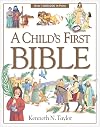
I think this book is a great read for children who want to learn more about the Bible, or who just want to hear a really good religious story. I liked this book because the language is simplistic, easy to follow and engages the children by asking questions in the story. Also, any child could listen to this as a read aloud such as in Sunday School. An example of the language and questioning is on page 147 "God is happy when we pray and worship him." Right after, there is a written question, show more "Do you remember to pray?"
This brings the learning in the story full circle and helps to engage in the reading. Another thing I liked about the book is the illustrations. They are very child friendly and follow the plot to the story well. FOr example When the book tells about Jesus' birth the illustration to accompany it are of the family, in their authentic clothes and detailed. The main message of this story is to tell biblical tales for enjoyment and moral learning. show less
This brings the learning in the story full circle and helps to engage in the reading. Another thing I liked about the book is the illustrations. They are very child friendly and follow the plot to the story well. FOr example When the book tells about Jesus' birth the illustration to accompany it are of the family, in their authentic clothes and detailed. The main message of this story is to tell biblical tales for enjoyment and moral learning. show less
Lists
Sonlight Books (4)
Awards


You May Also Like


Associated Authors
Statistics
- Works
- 171
- Members
- 11,377
- Popularity
- #2,065
- Rating
- 3.7
- Reviews
- 40
- ISBNs
- 314
- Languages
- 15