
Ann Whitehead Nagda
Author of Tiger Math: Learning to Graph from a Baby Tiger
About the Author
Series
Works by Ann Whitehead Nagda
Tagged
Common Knowledge
- Gender
- female
- Places of residence
- Boulder, Colorado, USA
- Associated Place (for map)
- Colorado, USA
Members
Reviews
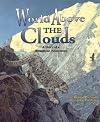
Beautiful illustrations and interesting information presented through storytelling. It was interesting to read about an ecosystem and an area of the world that I have not read much about before.
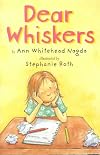
I decided to read this book because the cover and the title seemed interesting enough. I also didn't bother reading the summary because I felt the book would be "good enough" for the assignment. The book immediately begins with the main character, Jenny, expressing how she feels it is hard to write a letter pretending to be a mouse named Whiskers. I immediately felt I was going to love this books because I also tend to have problems with writing. In the book, the 4th grade students were show more required to be an anonymous pen pal to a second grader at their school, but disguised as a mouse. Chapter 2 begins with the 4th grade class getting replies back from their second graders. All of the students letters from their 2nd grade pen pal seemed to be enough to write a decent reply, except for Jenny. After the next round of letters, Jenny doesn't receive a letter back like the rest of her class. She then learns that her pen pal, Sameera, is a new student from Saudi Arabia and doesn't speak English very well. After trying and failing to get another pen pal, Jenny finally meets Sameera and gets her to understand English through telling a story through mice shaped cookies. Instead of writing a letter to Sameera, she translates the body parts of mice and gets Sameera to play along with he story of her mouse Whiskers. Throughout Jenny and Sameeras meetings, Jenny learns that people from Saudi Arabia speak a different language, have different calendars, and have separate schools for boys and girls. At the end of the novel, Sameera finally learns enough English to write a letter for Jenny. This novel touched on topics that children may actually encounter in school. It deals with people making fun of a foreigners name, trying to cross a language barrier, and not giving up on someone. Even as teaching in training, I learned that ill probably have to deal with kids that wont be able to learn the same as the majority of the students in a class. You need to take a step back and try to put yourself in someone else's shoes. show less
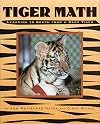
This was a book about an orphaned baby tiger and how the zoo staff tracked his weight gain to see if he was staying healthy after the death of his mother. This would be great for when studying graphing , as a number of graphing systems were discussed. This could be great for kids that are interested in animals but maybe not math. It is also a great way to point out the practical applications of graphing. I would use this during a math unit. I might start out the book and then might start show more asking the kids to graph the data themselves.
Reading Level 1.4 show less
Reading Level 1.4 show less
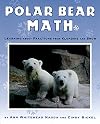
Polar Bear Math: Learning About Fractions from Klondike and Snow is a non-fictional informational text that tells the story of two premature baby polar bears, Klondike and Snow. After their mother abandons them the staff at the San Diego Zoo must quickly figure out how to take care of these two wild animals before it is too late. The book takes you on a true life journey of how humans learn about the proper ways to raise bear cubs while teaching you about fractions through pictographs, show more charts and baby bottles!
I would recommend this book to students in grades first through third. Because it is extremely rare for humans to raise young polar bears this book may appear even more exciting to students. Anyone who is interested in animals and non-fiction would enjoy this inspiring story about the important role math plays in keeping the cubs alive and well. Many pictographs are prevalent throughout the book to demonstrate the concept of numerator and denominator, fractions equivalent to a whole, and milk qualities. Charts are also used to show elapsed time during feedings and in their lives as a whole. These visual representations allow students a simple way to think about the concept of a fraction while also realizing the practical and real world applications these math concepts hold. Without knowledge of fractions the San Diego Zoo staff would have have been able to save and raise Klondike and Snow! One interesting aspect of the book is the large amount of pictures - each with a caption. Not only do the pictures allow students to observe real baby polar bears and their struggle with survival but they also can read quotes that the author writes from the perspective of Klondike and Snow that make the story both funny and interesting for the reader. It also provides students with additional knowledge about polar bears while allowing them to use fractions to figure out this information - such as their large weights! show less
I would recommend this book to students in grades first through third. Because it is extremely rare for humans to raise young polar bears this book may appear even more exciting to students. Anyone who is interested in animals and non-fiction would enjoy this inspiring story about the important role math plays in keeping the cubs alive and well. Many pictographs are prevalent throughout the book to demonstrate the concept of numerator and denominator, fractions equivalent to a whole, and milk qualities. Charts are also used to show elapsed time during feedings and in their lives as a whole. These visual representations allow students a simple way to think about the concept of a fraction while also realizing the practical and real world applications these math concepts hold. Without knowledge of fractions the San Diego Zoo staff would have have been able to save and raise Klondike and Snow! One interesting aspect of the book is the large amount of pictures - each with a caption. Not only do the pictures allow students to observe real baby polar bears and their struggle with survival but they also can read quotes that the author writes from the perspective of Klondike and Snow that make the story both funny and interesting for the reader. It also provides students with additional knowledge about polar bears while allowing them to use fractions to figure out this information - such as their large weights! show less
Lists
Awards


You May Also Like


Associated Authors
Statistics
- Works
- 19
- Members
- 1,698
- Popularity
- #15,114
- Rating
- 3.9
- Reviews
- 45
- ISBNs
- 67
- Languages
- 1