

Allison Yarrow
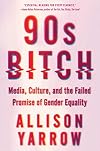
Author of 90s Bitch: Media, Culture, and the Failed Promise of Gender Equality
About the Author
Allison Yarrow is an award-winning journalist and National Magazine Award finalist who has written for the New York Times, Washington Post, Vox, and many other news outlets. She was a TED resident and is a grantee of the International Women's Media Foundation. Yarrow was raised in Macon, Georgia, show more and lives in Brooklyn, New York. show less
Image credit: Allison Yarrow
Works by Allison Yarrow
Tagged
Common Knowledge
Members
Reviews
To be called a bitch is contextual and gendered. If a woman is called a bitch in anger, it is demeaning. If a man is called one in anger, it is not just demeaning, but an attack on their masculinity. And then there are those, like myself, who embrace the term as one of strength. Sometimes women use it as a term of endearment, "You are a strong bitch!" Other times we translate the attack and flip is back to the offender, "You're damn right I'm a bitch!" But how does the word impact our daily show more lives and politics? From Brenda versus Kelly to Tonya versus Nancy, Allison Yarrow's careful examination of who gets called a bitch reveals why the feminist movement failed to make the progress it should have in the 1990s and its ramifications to our lives today.
You may wonder how one word has so much power. That is why "90s Bitch" is a must read, especially for everyone who grew up in the 1990s.
By examining both sides of different scandals such as Hillary Clinton and Monica Lewinsky, Yarrow unpacks how the media and our reactions helped to fuel the unraveling of feminist goals that we still feel today. Hillary began the 1990s as the number one bitch. She was an unconventional First Lady who offended many who believed in the traditional doting wife model. Hillary offended many with her comment about not staying home to bake cookies, but once challenged to a bake-off, worked her ass off to win it. Many felt she wasted any goodwill by the revelations of Bill's infidelity by staying with him. On the other hand, Monica was rarely afforded support due to a massive case of slut-shaming. One thread Yarrow misses in this conversation is the reality that the Republicans had taken over Congress and the defense of Bill was one of political will, especially in light of Newt Gingrich and Henry Hyde's history of infidelity. Yarrow's indictment of feminist leaders is a hard pill to swallow for those of us lived through the moment, even if we have a sneaky suspicion that Bill deserved to be impeached for preying on an intern. But what Yarrow does is not just reveal the flaws of 1990s feminism in relation to the Bill Clinton affair, but how the bitchification of Monica prevented a better analysis of the situation.
Again and again Yarrow reexamines how the trope of bitch derailed feminist progress in the 1990s. You may have lived through the 90s, but that means you likely took a side and Yarrow shows us that the only side of have was the movement's side.
Disclaimer: I received a review copy of the book in exchange for an honest review. show less
You may wonder how one word has so much power. That is why "90s Bitch" is a must read, especially for everyone who grew up in the 1990s.
By examining both sides of different scandals such as Hillary Clinton and Monica Lewinsky, Yarrow unpacks how the media and our reactions helped to fuel the unraveling of feminist goals that we still feel today. Hillary began the 1990s as the number one bitch. She was an unconventional First Lady who offended many who believed in the traditional doting wife model. Hillary offended many with her comment about not staying home to bake cookies, but once challenged to a bake-off, worked her ass off to win it. Many felt she wasted any goodwill by the revelations of Bill's infidelity by staying with him. On the other hand, Monica was rarely afforded support due to a massive case of slut-shaming. One thread Yarrow misses in this conversation is the reality that the Republicans had taken over Congress and the defense of Bill was one of political will, especially in light of Newt Gingrich and Henry Hyde's history of infidelity. Yarrow's indictment of feminist leaders is a hard pill to swallow for those of us lived through the moment, even if we have a sneaky suspicion that Bill deserved to be impeached for preying on an intern. But what Yarrow does is not just reveal the flaws of 1990s feminism in relation to the Bill Clinton affair, but how the bitchification of Monica prevented a better analysis of the situation.
Again and again Yarrow reexamines how the trope of bitch derailed feminist progress in the 1990s. You may have lived through the 90s, but that means you likely took a side and Yarrow shows us that the only side of have was the movement's side.
Disclaimer: I received a review copy of the book in exchange for an honest review. show less
90s Bitch: Media, Culture, and the Failed Promise of Gender Equality―Unraveling the Impact of the 90s on Feminism by Allison Yarrow
In a prologue, the author explains that she will use the words "bitchify" and "bitchification" to characterize "how 90s media and societal narratives reduced women to their sexual function in order to thwart their progress." The women who serve as examples include prosecutor Marcia Clark, First Lady (and presidential candidate) Hillary Clinton, White House intern Monica Lewinsky, pop stars Lisa Loeb, Paula Cole, Gwen Stefani, and Britney Spears, domestic violence victim Lorena Bobbitt, show more champion figure skaters Nancy Kerrigan and Tonya Harding, and Princess Diana. All were caught, to some extent, in an impossible double bind, and girls growing up in the 1990s were bombarded with empty commercial messages about "Girl Power" from magazines, TV, and the Spice Girls, sexism and chauvinism from SNL and the news, and eating-disorder- and self-harm-inspiring images of unachievable physical perfection. Well-researched, well-written, grim.
See also: Girl On Girl by Sophie Gilbert
Quotes/notes
As it turns out, abstinence-only sex education is ineffective, not just in America, but all across the globe...And so, sex education in the 1990s wasn't about sex. It was about control. Abstinence education forced girls to go on the defensive, guarding against sexual overtures from boys, while absorbing blame for any consequences. (32-33)
Reports of date rape and coercive sex, body shame, and blame for disease complicated sex for girls and women in the 90s and forced them to play defense and internalize consequence. This conflicted with what boys and men absorbed. Sex for them was theirs for the taking....The binary of entitlement and fear also filtered into media portrayals of each gender. (49-50)
"Women who are considered feminine will be judged incompetent, and women who are competent, unfeminine." (from The Double Bind, Kathleen Hall Jamieson, quoted p. 92)
"Only Hillary Clinton has gone through more repackaging for a public that still hasn't decided if it wants women to work, let alone be good at their jobs." (Baltimore Sun article re: Marcia Clark, p. 108)
A 2015 study of gender and anger published in the journal Law and Human Behavior found that when men and women made the same arguments, men gained influence while angry, while women's influence diminished. Jessica Salerno, a study author, said anger made men seem "credible," while it made women seem "emotional." (193)
Another effect of [women-in-jeopardy movies] was that they normalized crimes against women. (226)
...the culture's appropriation of girls' sexuality did not track with the reality of girls' sexual lives....They lacked healthy models of sexual desire and agency to inform their choices. (231)
...the issue of violence against women was ignored in favor of empty fears about men becoming prey....It was more gripping to imagine how women could be villains than to see how they were victims. (after Lorena Bobbitt, 233)
...the catfight is born of the paradox that society conditions women to compete against one another to achieve peak normative femininity, while warning that competition itself is unfeminine. (Citing Leora Tenenbaum, Catfight, p. 259)
Young women...opted to rebel by embracing girlhood but rejecting feminism. (Girl Power supplanting Riot Grrrl, 279)
Riot Grrrl was never afraid to show its claws, but Girl Power...lacked teeth; it embraced the "girl" part but did away with everything else. (279)
Reviewers both celebrated the reemergence of the girly girl and skewered her for being retrograde. (re: Gwen Stefani, 294)
Since the 90s, some positive trends have actually come to a halt, or reversed themselves....Sexism's impact on women is only beginning to be discussed and understood. (308-309) show less
See also: Girl On Girl by Sophie Gilbert
Quotes/notes
As it turns out, abstinence-only sex education is ineffective, not just in America, but all across the globe...And so, sex education in the 1990s wasn't about sex. It was about control. Abstinence education forced girls to go on the defensive, guarding against sexual overtures from boys, while absorbing blame for any consequences. (32-33)
Reports of date rape and coercive sex, body shame, and blame for disease complicated sex for girls and women in the 90s and forced them to play defense and internalize consequence. This conflicted with what boys and men absorbed. Sex for them was theirs for the taking....The binary of entitlement and fear also filtered into media portrayals of each gender. (49-50)
"Women who are considered feminine will be judged incompetent, and women who are competent, unfeminine." (from The Double Bind, Kathleen Hall Jamieson, quoted p. 92)
"Only Hillary Clinton has gone through more repackaging for a public that still hasn't decided if it wants women to work, let alone be good at their jobs." (Baltimore Sun article re: Marcia Clark, p. 108)
A 2015 study of gender and anger published in the journal Law and Human Behavior found that when men and women made the same arguments, men gained influence while angry, while women's influence diminished. Jessica Salerno, a study author, said anger made men seem "credible," while it made women seem "emotional." (193)
Another effect of [women-in-jeopardy movies] was that they normalized crimes against women. (226)
...the culture's appropriation of girls' sexuality did not track with the reality of girls' sexual lives....They lacked healthy models of sexual desire and agency to inform their choices. (231)
...the issue of violence against women was ignored in favor of empty fears about men becoming prey....It was more gripping to imagine how women could be villains than to see how they were victims. (after Lorena Bobbitt, 233)
...the catfight is born of the paradox that society conditions women to compete against one another to achieve peak normative femininity, while warning that competition itself is unfeminine. (Citing Leora Tenenbaum, Catfight, p. 259)
Young women...opted to rebel by embracing girlhood but rejecting feminism. (Girl Power supplanting Riot Grrrl, 279)
Riot Grrrl was never afraid to show its claws, but Girl Power...lacked teeth; it embraced the "girl" part but did away with everything else. (279)
Reviewers both celebrated the reemergence of the girly girl and skewered her for being retrograde. (re: Gwen Stefani, 294)
Since the 90s, some positive trends have actually come to a halt, or reversed themselves....Sexism's impact on women is only beginning to be discussed and understood. (308-309) show less
I really only started to become politically/pop culturally aware during the latter part of the 90s, and I'm not American, so the U.S.-centric 90s Bitch for me was an odd mix of revisiting figures with whom I was very familiar (Brittney Spears), largely unfamiliar (Fiona Apple, Beverley Hills 90210), or only had a vague understanding of at the time (tween me was aware of but bemused by the news coverage of Monica Lewinsky's dress, because why was a stain important?). Alison Yarrow examines show more the 90s through a feminist lens, arguing that the decade increasingly tended to depict powerful, famous, or attractive women as "bitches" while punishing women who didn't overtly perform traditional gender roles—a process which she terms "bitchification."
Some of the most powerful parts of 90s Bitch are when Yarrow simply provides wince-inducing quotations from various public figures and publications, and then draws a line from past to present. There's little scope here for back-patting at how far we've come, and Yarrow's writing is crisply bleak.
Yet while I think some of Yarrow's analysis was convincing on a micro level, I'm not sure how well it holds up on the macro level. Her adherence to her "bitchification" framework for explaining how women were treated means that Yarrow largely elides race, sexuality, and class as having explanatory power. I don't think she discusses a single queer or trans woman. She does talk about some Black women (Anita Hill, the cast of sitcom Living Single, the group TLC) in terms of both race and gender, but there's nothing about how race may have affected the media treatment of Lorena Bobbitt (Hispanic), and I don't think any other mention of Latina, Asian, or Native women. More damning, though, is the fact that there's basically no understanding expressed that race affects how white women are treated, both by the media and by policy. There's a quiet but troublesome tendency here to reduce "white woman" to a synonym for "woman."
There's also very little historical awareness/contextualisation at play, and a tendency to presume that how these women were discussed in the media was an uncomplicated proxy for how they were perceived by society as a whole. show less
Some of the most powerful parts of 90s Bitch are when Yarrow simply provides wince-inducing quotations from various public figures and publications, and then draws a line from past to present. There's little scope here for back-patting at how far we've come, and Yarrow's writing is crisply bleak.
Yet while I think some of Yarrow's analysis was convincing on a micro level, I'm not sure how well it holds up on the macro level. Her adherence to her "bitchification" framework for explaining how women were treated means that Yarrow largely elides race, sexuality, and class as having explanatory power. I don't think she discusses a single queer or trans woman. She does talk about some Black women (Anita Hill, the cast of sitcom Living Single, the group TLC) in terms of both race and gender, but there's nothing about how race may have affected the media treatment of Lorena Bobbitt (Hispanic), and I don't think any other mention of Latina, Asian, or Native women. More damning, though, is the fact that there's basically no understanding expressed that race affects how white women are treated, both by the media and by policy. There's a quiet but troublesome tendency here to reduce "white woman" to a synonym for "woman."
There's also very little historical awareness/contextualisation at play, and a tendency to presume that how these women were discussed in the media was an uncomplicated proxy for how they were perceived by society as a whole. show less
This book was an absolutely fascinating read! Ranging from the trials of Anita Hill and Monica Lewinsky to the creation of the Spice Girls and the Tonya Harding/Nancy Kerrigan feud, Yarrow's book explored the many ways women of the 90's tried to break out of traditional roles and empower themselves but were shot down by the media, social expectations, and, often, by other women. Yarrow delves into the ways media portrayed these women, considers why they were received the ways they were, and show more critically analyzes why the 90's were not the era of Gender Equality they promised to be. show less
Lists
You May Also Like
Associated Authors
Statistics
- Works
- 3
- Members
- 198
- Popularity
- #110,928
- Rating
- 3.5
- Reviews
- 6
- ISBNs
- 7
