
Bodhidharma
Author of The Zen Teaching of Bodhidharma
About the Author
Works by Bodhidharma
The Bodhidharma Anthology: The Earliest Records of Zen (Philip E. Lilienthal Book) (1999) — Author — 76 copies, 4 reviews
The Essence of Mahayana Practice 2 copies
Kazania 1 copy
Tagged
Common Knowledge
- Gender
- male
- Occupations
- Buddhist monk
- Awards and honors
- Zen master
- Places of residence
- China
- Map Location
- China
Members
Reviews
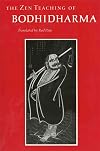
As a Christian maybe I shouldn’t be recommending this book, but it’s probably the best Buddhist book I’ve read (and there was a time when I read a lot of them), and one of the better books I’ve read in general. Talk about the diamond that cuts through illusion – the Diamond Sutra doesn’t really cut the way this book does. It’s pretty powerful, straight-ahead stuff. Incidentally, I once read that part of this book was a source for a section of TS Eliot’s The Waste Land, but show more that’s a fuzzy old memory. show less
Not an easy text as introduction to Zen teachings but definitely recommended. Like other old text, additional readings clarify concepts, inspire more and improve your understanding. You always find something to learn from them.
The teachings are essential and there are not useless words. Insights bring the reader to deeply understand sacred text and Sutra, in my humble opinion.
Often you must read carefully and you must pay attention and put lots of effort in order to get the idea.
Bodhidharma show more explains in the last few chapters the real meaning behind sages teachings. In order to reach enlightenment you do not focus on external practices. Sages use metaphors to facilitate beginners mind to understand the Way. Bodhidharma says that you must focus on your perceptions and your inner grow.
As others before me said, disciple must not be a repeater. He must renew the teachings and find new formulations that are right at the moment and in such new conditions. He must accomplish much more. Bodhidharma succeed on it and the reader must do the same. show less
A fifth-century Indian Buddhist monk, Bodhidharma is credited with bringing Zen to China. Although the tradition that traces its ancestry back to him did not flourish until nearly two hundred years after his death, today millions of Zen Buddhists and students of kung fu claim him as their spiritual father.
While others viewed Zen practice as a purification of the mind or a stage on the way to perfect enlightenment, Bodhidharma equated Zen with buddhahood and believed that it had a place in show more everyday life. Instead of telling his disciples to purify their minds, he pointed them to rock walls, to the movements of tigers and cranes, to a hollow reed floating across the Yangtze.
This bilingual edition, the only volume of the great teacher's work currently available in English, presents four teachings in their entirety. "Outline of Practice" describes the four all-inclusive habits that lead to enlightenment, the "Bloodstream Sermon" exhorts students to seek the Buddha by seeing their own nature, the "Wake-up Sermon" defends his premise that the most essential method for reaching enlightenment is beholding the mind. The original Chinese text, presented on facing pages, is taken from a Ch'ing dynasty woodblock edition. show less
While others viewed Zen practice as a purification of the mind or a stage on the way to perfect enlightenment, Bodhidharma equated Zen with buddhahood and believed that it had a place in show more everyday life. Instead of telling his disciples to purify their minds, he pointed them to rock walls, to the movements of tigers and cranes, to a hollow reed floating across the Yangtze.
This bilingual edition, the only volume of the great teacher's work currently available in English, presents four teachings in their entirety. "Outline of Practice" describes the four all-inclusive habits that lead to enlightenment, the "Bloodstream Sermon" exhorts students to seek the Buddha by seeing their own nature, the "Wake-up Sermon" defends his premise that the most essential method for reaching enlightenment is beholding the mind. The original Chinese text, presented on facing pages, is taken from a Ch'ing dynasty woodblock edition. show less
Review from LibraryThing:
A fifth-century Indian Buddhist monk, Bodhidharma is credited with bringing Zen to China. Although the tradition that traces its ancestry back to him did not flourish until nearly two hundred years after his death, today millions of Zen Buddhists and students of kung fu claim him as their spiritual father.
While others viewed Zen practice as a purification of the mind or a stage on the way to perfect enlightenment, Bodhidharma equated Zen with buddhahood and believed show more that it had a place in everyday life. Instead of telling his disciples to purify their minds, he pointed them to rock walls, to the movements of tigers and cranes, to a hollow reed floating across the Yangtze show less
A fifth-century Indian Buddhist monk, Bodhidharma is credited with bringing Zen to China. Although the tradition that traces its ancestry back to him did not flourish until nearly two hundred years after his death, today millions of Zen Buddhists and students of kung fu claim him as their spiritual father.
While others viewed Zen practice as a purification of the mind or a stage on the way to perfect enlightenment, Bodhidharma equated Zen with buddhahood and believed show more that it had a place in everyday life. Instead of telling his disciples to purify their minds, he pointed them to rock walls, to the movements of tigers and cranes, to a hollow reed floating across the Yangtze show less
You May Also Like


Associated Authors
Statistics
- Works
- 12
- Members
- 530
- Popularity
- #46,960
- Rating
- 3.8
- Reviews
- 12
- ISBNs
- 21
- Languages
- 8
- Favorited
- 2