
Pip Adam
Author of Audition
About the Author
Pip Adam is a New Zealand author of the book, The New Animals, which won the Acorn Foundation Literary Prize in 2018. Her work has appeared in literary journals and anthologies in New Zealand and overseas. In 2012 she received an Arts Foundation of New Zealand New Generation Award and her first show more book Everything We Hoped For won the New Zealand Post Best First Book award in 2011. (Bowker Author Biography) show less
Works by Pip Adam
The Kiss 1 copy
The woman, the girl 1 copy
Associated Works
Out here : an anthology of Takatāpui and LGBTQIA writers from Aotearoa (2021) — Contributor — 13 copies
Monsters in the Garden: An Anthology of Aotearoa New Zealand Science Fiction and Fantasy (2021) — Contributor — 12 copies
Tagged
Common Knowledge
- Gender
- female
- Nationality
- New Zealand
- Associated Place (for map)
- New Zealand
Members
Reviews
Real Rating: 4.8* of five
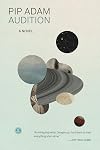
The Publisher Says: A genre-defying novel—part science fiction, part social realism—from one of the most powerful voices in New Zealand literature today.
A spaceship called Audition is hurtling through the cosmos. Squashed immobile into its largest room are three giants: Alba, Stanley and Drew. If they talk, the spaceship keeps moving; if they are silent, they resume growing.
Talk they must, and as they do, Alba, Stanley and Drew recover their shared memory of what show more has been done to their former selves—experiences of imprisonment, violence and misrecognition, of disempowerment and underprivilege.
Pip Adam’s uncategorisable new novel, part science fiction, part social realism, asks what happens when systems of power decide someone takes up too much room—about how we imagine new forms of justice, and how we transcend the bodies and selves we are given.
I RECEIVED A DRC FROM THE PUBLISHER VIA EDELWEISS+. THANK YOU.
My Review: Like Stand on Zanzibar a half-century ago, this story is making a point along multiple fronts of effort. Stylisically it's resolutely avant-garde, modernist, and uses that tradition of liberation from centuries old linear narrative convention to oppose itself as completely as possible. Oppose from what? That verb needs a subject!
It takes the opportunity to set oppositional positions to, well, modernity; the way the modern world steadily relentlessly inexorably shrinks the essential liberty, autonomy, self-determination of Humanity. This is a powerful theme to pursue. It leads into some dark meditations on confinement.
It is most evidently a story in support of the anticarceral abolitionism gaining ground among progressives. More quietly it enables, encourages, examination of the ways individuals accept labels and thus limitations, even when the labels aren't very good fits. It's not foregrounded the way opposition to the carceral state is. It's there for you to consider.
I enjoy novels that expect me to bring my own ideas and knowledge to bear on reading them. I enjoy being asked to hold a thought more than a page or two before the thought pays off, hooks into another thought to make a distinctive picture. It is a pleasure to be exercised and entertained and experience elucidation of a viewpoint while immersing oneself in lovely phrasemaking.
I think that, in its compactness and its rhythm, carries more than surface meaning. Alba's is a point of view I think many could and should attend to. Her sense of...wrongness...is it all external? Is it self-recognition without self-acceptance? Is Alba...are Drew and Stanley as well...forced to keep talking as the means of propelling their starbound prison moving away from Earth in order to get their pasts out of their heads? What does the taking up of physical space have to do with the implied relationship to psychic...emotional...space? All the way into eternal exile and utter Othering in order to get permission to be ecstatically oneself. A price paid without any kind or sort of reward is rare, if one becomes an other self in response to it. A different self, an intentional self, a truthful self.
The ending of this story offers that future of selfness to the giants. It's not found the way a lot of readers will be comfortable with. But if you can read about people told they are too much for this world being thrust out of that world by being squashed into sealed containers and hurled into lethal vacuum, you really should look at why this particular ending bothers you (if it does..I found it the most liberating part of the story).
Pip Adam is a writer who reckons with ideas in her fiction. It's not always clear to me that I'm on the same train of thought as she is. That is, for me as a reader, very interesting and gives a dynamism to the words I'm reading. I experience the need to consider, "did I read that sentence and change my view of the story I thought I was reading by Pip Adam's design or my own?" very involving.
It's a story I felt repaid my attention with well-honed ideas I'd had in duller forms before that. I'd wished, during the read, for...ornamentation...flourishes...a bit of zhuzhery. I can't say the directness of prose was unpleasant or uninvolving, so I can't call it a flaw. I can say that me, reader me, the id that devours Story, wanted it; so I can't offer a perfect five but I can't take much away from that height. It's a cruel place to land:
Pip Adam made it. show less
The Publisher Says: A genre-defying novel—part science fiction, part social realism—from one of the most powerful voices in New Zealand literature today.
A spaceship called Audition is hurtling through the cosmos. Squashed immobile into its largest room are three giants: Alba, Stanley and Drew. If they talk, the spaceship keeps moving; if they are silent, they resume growing.
Talk they must, and as they do, Alba, Stanley and Drew recover their shared memory of what show more has been done to their former selves—experiences of imprisonment, violence and misrecognition, of disempowerment and underprivilege.
Pip Adam’s uncategorisable new novel, part science fiction, part social realism, asks what happens when systems of power decide someone takes up too much room—about how we imagine new forms of justice, and how we transcend the bodies and selves we are given.
I RECEIVED A DRC FROM THE PUBLISHER VIA EDELWEISS+. THANK YOU.
My Review: Like Stand on Zanzibar a half-century ago, this story is making a point along multiple fronts of effort. Stylisically it's resolutely avant-garde, modernist, and uses that tradition of liberation from centuries old linear narrative convention to oppose itself as completely as possible. Oppose from what? That verb needs a subject!
It takes the opportunity to set oppositional positions to, well, modernity; the way the modern world steadily relentlessly inexorably shrinks the essential liberty, autonomy, self-determination of Humanity. This is a powerful theme to pursue. It leads into some dark meditations on confinement.
It is most evidently a story in support of the anticarceral abolitionism gaining ground among progressives. More quietly it enables, encourages, examination of the ways individuals accept labels and thus limitations, even when the labels aren't very good fits. It's not foregrounded the way opposition to the carceral state is. It's there for you to consider.
I enjoy novels that expect me to bring my own ideas and knowledge to bear on reading them. I enjoy being asked to hold a thought more than a page or two before the thought pays off, hooks into another thought to make a distinctive picture. It is a pleasure to be exercised and entertained and experience elucidation of a viewpoint while immersing oneself in lovely phrasemaking.
Alba searches around her body and there is not an ounce of homesickness. She misses nothing. She was born into the world and it was not happy to see her. This isn’t her home. She doesn’t want to take advantage or be any more of a burden than she already is here. They hadn’t asked her to come, she hadn’t asked to be there. It isn’t a welcome—it’s an extremely advanced form of attack and defence.
I think that, in its compactness and its rhythm, carries more than surface meaning. Alba's is a point of view I think many could and should attend to. Her sense of...wrongness...is it all external? Is it self-recognition without self-acceptance? Is Alba...are Drew and Stanley as well...forced to keep talking as the means of propelling their starbound prison moving away from Earth in order to get their pasts out of their heads? What does the taking up of physical space have to do with the implied relationship to psychic...emotional...space? All the way into eternal exile and utter Othering in order to get permission to be ecstatically oneself. A price paid without any kind or sort of reward is rare, if one becomes an other self in response to it. A different self, an intentional self, a truthful self.
The ending of this story offers that future of selfness to the giants. It's not found the way a lot of readers will be comfortable with. But if you can read about people told they are too much for this world being thrust out of that world by being squashed into sealed containers and hurled into lethal vacuum, you really should look at why this particular ending bothers you (if it does..I found it the most liberating part of the story).
Pip Adam is a writer who reckons with ideas in her fiction. It's not always clear to me that I'm on the same train of thought as she is. That is, for me as a reader, very interesting and gives a dynamism to the words I'm reading. I experience the need to consider, "did I read that sentence and change my view of the story I thought I was reading by Pip Adam's design or my own?" very involving.
It's a story I felt repaid my attention with well-honed ideas I'd had in duller forms before that. I'd wished, during the read, for...ornamentation...flourishes...a bit of zhuzhery. I can't say the directness of prose was unpleasant or uninvolving, so I can't call it a flaw. I can say that me, reader me, the id that devours Story, wanted it; so I can't offer a perfect five but I can't take much away from that height. It's a cruel place to land:
It’s a strange feeling to know that they will never have to explain this to any of their kind. They will never return. They had been sent to die. That’s clear now. Maybe they had been sent to take over this world, as some kind of front guard or maybe no one that sent them could imagine this. But they are lost to their own world now. They don’t belong where they have have come from and they don’t belong here. They are the only ones of their kind who will make it.
Pip Adam made it. show less
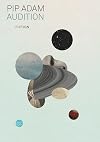
Pip Adam is a New Zealand author who is now published in Australia by Giramondo Publishing — an excellent arrangement which allows Australians easy access to her ambitious and thought-provoking books.
She is also one of the most exciting contemporary authors there is.
I've just been re-reading my review of the first of her books that I've read. It's called The New Animals (2017), and in the light of her preoccupations in Audition, this paragraph about Doug, a pit-bull terrier used for a show more photo-shoot, is prescient:
Audition is about how the justice system fails both the people who are incarcerated and the people outside who want to feel safe. In the press release from Giramondo, the author note says that it's an argument for the abolition of prisons and our present punishment-based justice system. Pip Adam explains more about it in this article at Stuff.
It is years since I did HSC Legal Studies and learned about the four purposes of the justice system: protection for society; deterrence; rehabilitation; and reparation, and how only the first of these purposes is effective — and that's only for as long as the perpetrator is locked up. Times have changed since then, and now there are said to be more 'purposes', with retribution given high priority. (The Australian Law Reform Commission has a useful summary here,) But still, we know from research that criminals come out of gaol cleverer at crime than they were; that 'deterrence' has no effect on crimes of passion or loss of impulse control; that what passes for rehabilitation programs doesn't prevent recidivism; and that no conceivable reparation can make up for the most heinous of crimes. We know that 'getting tough on crime' doesn't reduce crime. None of these realities affect the Law-and-Order auctions that are a feature of state elections.
But you know, when you've been a victim of violent crime, it can be a struggle to remember the research and be reasonable. Sometimes it's a moral struggle and sometimes, you simply feel a visceral response.
Plus, we know that there are some people who really are an ongoing danger to society...
So Audition made me feel ambivalent about its preoccupations even before I started reading it.
***
In the Stuff interview, Pip Adam gave this response to a question about how she pitched the book:
Yes, Audition begins with three giants who are squeezed into a spacecraft. They have to keep talking to keep the spacecraft moving, and silence makes them increase in size, a danger to themselves and each other. The effect was so powerful I had to conquer my claustrophobia to read it. Seriously. Confined spaces, even fictional ones, give me vivid nightmares.
Truth be told, though I do understand why Audition was written as a space opera, I did not really get on with the spacecraft elements. But Audition is a brilliant book all the same. It's what the giants talk about that makes it a brilliant book.
To read the rest of my review please visit https://anzlitlovers.com/2023/07/16/audition-2023-by-pip-adam/ show less
She is also one of the most exciting contemporary authors there is.
I've just been re-reading my review of the first of her books that I've read. It's called The New Animals (2017), and in the light of her preoccupations in Audition, this paragraph about Doug, a pit-bull terrier used for a show more photo-shoot, is prescient:
Doug represents all the people who are used, and tossed away afterwards, and who fight back with violence because life makes them indifferent to human affection and careless about the property of others. It’s a very confronting image which will stay with me for a long time.
Audition is about how the justice system fails both the people who are incarcerated and the people outside who want to feel safe. In the press release from Giramondo, the author note says that it's an argument for the abolition of prisons and our present punishment-based justice system. Pip Adam explains more about it in this article at Stuff.
It is years since I did HSC Legal Studies and learned about the four purposes of the justice system: protection for society; deterrence; rehabilitation; and reparation, and how only the first of these purposes is effective — and that's only for as long as the perpetrator is locked up. Times have changed since then, and now there are said to be more 'purposes', with retribution given high priority. (The Australian Law Reform Commission has a useful summary here,) But still, we know from research that criminals come out of gaol cleverer at crime than they were; that 'deterrence' has no effect on crimes of passion or loss of impulse control; that what passes for rehabilitation programs doesn't prevent recidivism; and that no conceivable reparation can make up for the most heinous of crimes. We know that 'getting tough on crime' doesn't reduce crime. None of these realities affect the Law-and-Order auctions that are a feature of state elections.
But you know, when you've been a victim of violent crime, it can be a struggle to remember the research and be reasonable. Sometimes it's a moral struggle and sometimes, you simply feel a visceral response.
Plus, we know that there are some people who really are an ongoing danger to society...
So Audition made me feel ambivalent about its preoccupations even before I started reading it.
***
In the Stuff interview, Pip Adam gave this response to a question about how she pitched the book:
When I’m asked to talk about this book, I often find it easier to talk about the ideas behind it rather than the machinery of the book itself. The book is largely an essay or a thought experiment that explores alternative forms of justice. In order to do this, I believe I needed to create a new or alternate world. If I tried to imagine alternatives in a world that resembles this one too much I would have found it too hard to escape the entrenched power structures. I also think I probably mentioned it was about giants and a spacecraft.
Yes, Audition begins with three giants who are squeezed into a spacecraft. They have to keep talking to keep the spacecraft moving, and silence makes them increase in size, a danger to themselves and each other. The effect was so powerful I had to conquer my claustrophobia to read it. Seriously. Confined spaces, even fictional ones, give me vivid nightmares.
Truth be told, though I do understand why Audition was written as a space opera, I did not really get on with the spacecraft elements. But Audition is a brilliant book all the same. It's what the giants talk about that makes it a brilliant book.
To read the rest of my review please visit https://anzlitlovers.com/2023/07/16/audition-2023-by-pip-adam/ show less
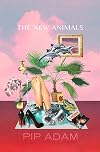
The New Animals by Pip Adam has been on my radar since it won the Ockham New Zealand award last year, but it was a provocative review by Carl Shuker at the Spinoff that triggered my impulse to read it. The review was titled 'On the blind, mulish idiocy of reviewers and the genius of Pip Adam' so you get the general idea without needing to read it, but of course I read it anyway. I found it entertaining, but not entirely convincing because I follow a couple of NZ blog reviewers and find them show more wholly undeserving of Shuker's spray. But his article did convince me to get Pip Adam's book out of the library to see what I think of it.
Books like The New Animals are sometimes called Marmite books, because readers either love them or they hate them. You can see that at Goodreads where The New Animals is rated either 5 stars or one, with effusive praise or derision. I'm rating it 4 stars because I reserve 5 stars for James Joyce's Ulysses, David Mitchell's Cloud Atlas, Kim Scott's That Deadman Dance and Shell by Kristina Olsson. So no, I don't think The New Animals is a work of genius. But it is very good and well worth reading.
The book is written in two parts. The second part, reminiscent of William Golding's Pincher Martin and yet written from a different angle altogether, is a chilling depiction of despair morphing into tragedy. The first part is, as the author says, a love story to the profession of hairdressing (which is the work she did to enable her to write).
As the novel explores the world these characters live in, a reader like me becomes torn between finding them bizarre, shallow and incredibly narcissistic, and recognising that they're part of an industry that looks glamorous but is actually insecure, badly paid and unfulfilling. The constant introspection of the characters worrying about what others are thinking makes them shapeless sort of people. They are afraid of conflict because their work is insecure and changeable: they are easily replaceable so their communication is fragile and inconclusive. Their anxiety about how they are perceived is palpable. They worry about short-term problems and trivial things because it is too frightening to look into the future when they can't change anything anyway.
To read the rest of my review please visit https://anzlitlovers.com/2019/05/03/the-new-animals-by-pip-adam/ show less
Books like The New Animals are sometimes called Marmite books, because readers either love them or they hate them. You can see that at Goodreads where The New Animals is rated either 5 stars or one, with effusive praise or derision. I'm rating it 4 stars because I reserve 5 stars for James Joyce's Ulysses, David Mitchell's Cloud Atlas, Kim Scott's That Deadman Dance and Shell by Kristina Olsson. So no, I don't think The New Animals is a work of genius. But it is very good and well worth reading.
The book is written in two parts. The second part, reminiscent of William Golding's Pincher Martin and yet written from a different angle altogether, is a chilling depiction of despair morphing into tragedy. The first part is, as the author says, a love story to the profession of hairdressing (which is the work she did to enable her to write).
As the novel explores the world these characters live in, a reader like me becomes torn between finding them bizarre, shallow and incredibly narcissistic, and recognising that they're part of an industry that looks glamorous but is actually insecure, badly paid and unfulfilling. The constant introspection of the characters worrying about what others are thinking makes them shapeless sort of people. They are afraid of conflict because their work is insecure and changeable: they are easily replaceable so their communication is fragile and inconclusive. Their anxiety about how they are perceived is palpable. They worry about short-term problems and trivial things because it is too frightening to look into the future when they can't change anything anyway.
To read the rest of my review please visit https://anzlitlovers.com/2019/05/03/the-new-animals-by-pip-adam/ show less

The trouble with reading an exceptional book like Philip Salom's new novel The Fifth Season is that one can't help but expect whatever comes next to be a disappointment. But not so... Pip Adam's new novel Nothing to See is exceptional too...
In a pleasing way, it takes a while to work out what's going on. There are three parts to the novel: 1994 when Peggy and Greta aged 24 are learning to be sober; 2006 when they have jobs; and 2018 when Margaret is working in a specialised field and show more struggling with both obsession and depression. It sounds banal, but here's the thing: Peggy and Greta used to be one person. Before coming out of rehab and attending sobriety meetings three times a day for something to do so that they don't drink, they came round from a catastrophic blackout to find themselves duplicated. Not cloned, more like twins with separate identities, but so perfectly identical in appearance and mannerisms that people recognise them for what they are, and despise them. Because they are not alone, the same phenomenon has occurred to other young women who've drunk to sordid excess, including their flatmates Heidi and Dell.
Such terrible things happened to them when they were drunk, stealing from their friends, sleeping with men for money and getting gang raped — they don't ever want to go back to that so they do everything together to support one another. Unlike Heidi and Dell who are always at odds, Peggy and Greta are in harmony. But that is their only advantage: everything is so hard for them, it's enough to make you weep. They have some kind of sickness benefit, but it's not enough because the bureaucracy doesn't recognise them as two people. They have only one birth certificate. They can't get a driver's licence, or a passport, or get tertiary entrance or qualifications. That kind of future is slammed shut, but for now the immediate priority is to survive.
It's not hard to see that this is the plight afflicting all kinds of undocumented people in modern society. (When I was moving my father from aged care in Qld to be near me in Melbourne, I had to do it through Centrelink even though he was a self-funded retiree. He could not meet Centrelink's identity requirements because he didn't have a current document with a photo on it. He hadn't had a driver's licence or a passport for decades. This meant that all his paperwork got jammed in the system and went nowhere, and they couldn't answer questions about it because he didn't have a Centrelink number to locate him in the system. To say it was a nightmare is an understatement of how distressing this was. How people with limited English, limited money for phone calls and limited access to a bricks-and-mortar Centrelink office get on, I can't imagine.)
Peggy and Greta have to think very carefully about buying food — and they are so ignorant about cooking, they don't even know the most basic things like how to store potatoes or that food can overcook if you delay taking it out of the oven for some reason. They have a cookbook, Alison Holst's Meals without Meat, and they use it to make a quiche for a picnic organised by their sobriety support group. They are baffled by the crust, they don't know what a flan tin is, and they don't know if they have enough money to buy the ingredients. They decide to take the cookbook to the supermarket with them so that they don't buy more than they need:
Clothes are another problem. They have incinerated their thermals. They only had one pair so they needed them to dry quickly and had put them too close to the heater. (They're clueless about how often clothes should be washed as well.)
To read the rest of my review please visit https://anzlitlovers.com/2020/10/01/nothing-to-see-by-pip-adam/ show less
In a pleasing way, it takes a while to work out what's going on. There are three parts to the novel: 1994 when Peggy and Greta aged 24 are learning to be sober; 2006 when they have jobs; and 2018 when Margaret is working in a specialised field and show more struggling with both obsession and depression. It sounds banal, but here's the thing: Peggy and Greta used to be one person. Before coming out of rehab and attending sobriety meetings three times a day for something to do so that they don't drink, they came round from a catastrophic blackout to find themselves duplicated. Not cloned, more like twins with separate identities, but so perfectly identical in appearance and mannerisms that people recognise them for what they are, and despise them. Because they are not alone, the same phenomenon has occurred to other young women who've drunk to sordid excess, including their flatmates Heidi and Dell.
Such terrible things happened to them when they were drunk, stealing from their friends, sleeping with men for money and getting gang raped — they don't ever want to go back to that so they do everything together to support one another. Unlike Heidi and Dell who are always at odds, Peggy and Greta are in harmony. But that is their only advantage: everything is so hard for them, it's enough to make you weep. They have some kind of sickness benefit, but it's not enough because the bureaucracy doesn't recognise them as two people. They have only one birth certificate. They can't get a driver's licence, or a passport, or get tertiary entrance or qualifications. That kind of future is slammed shut, but for now the immediate priority is to survive.
It's not hard to see that this is the plight afflicting all kinds of undocumented people in modern society. (When I was moving my father from aged care in Qld to be near me in Melbourne, I had to do it through Centrelink even though he was a self-funded retiree. He could not meet Centrelink's identity requirements because he didn't have a current document with a photo on it. He hadn't had a driver's licence or a passport for decades. This meant that all his paperwork got jammed in the system and went nowhere, and they couldn't answer questions about it because he didn't have a Centrelink number to locate him in the system. To say it was a nightmare is an understatement of how distressing this was. How people with limited English, limited money for phone calls and limited access to a bricks-and-mortar Centrelink office get on, I can't imagine.)
Peggy and Greta have to think very carefully about buying food — and they are so ignorant about cooking, they don't even know the most basic things like how to store potatoes or that food can overcook if you delay taking it out of the oven for some reason. They have a cookbook, Alison Holst's Meals without Meat, and they use it to make a quiche for a picnic organised by their sobriety support group. They are baffled by the crust, they don't know what a flan tin is, and they don't know if they have enough money to buy the ingredients. They decide to take the cookbook to the supermarket with them so that they don't buy more than they need:
They all turned out their pockets and wallets. Between them they had about eight dollars and there was seven in the jar for flat expenses, like toilet paper. They convinced themselves it would be enough, but they had no idea.
'If we get there and it's not enough we'll just get what we can — the things that'll keep — and then get more tomorrow. ' No one wanted to ask how they would have more money tomorrow, because the quiche was the most exciting thing that had happened in ages. (p.79)
Clothes are another problem. They have incinerated their thermals. They only had one pair so they needed them to dry quickly and had put them too close to the heater. (They're clueless about how often clothes should be washed as well.)
To read the rest of my review please visit https://anzlitlovers.com/2020/10/01/nothing-to-see-by-pip-adam/ show less
Lists
Awards


You May Also Like
Associated Authors
Statistics
- Works
- 8
- Also by
- 2
- Members
- 167
- Popularity
- #127,263
- Rating
- 3.9
- Reviews
- 8
- ISBNs
- 22