
Jericho Vincent
Author of Cut Me Loose: Sin and Salvation After My Ultra-Orthodox Girlhood
About the Author
Works by Jericho Vincent
Tagged
Common Knowledge
- Canonical name
- Vincent, Jericho
- Gender
- non-binary
Members
Reviews
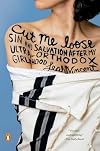
Within the Yeshivish (Ultra-Orthodox Jewish) community Leah's parents demand total obedience and conformity from their children. Because Leah criticized her father's racism, (despite his father supporting the Civil Rights Movement), she is sent away from home to relatives and yeshivas in England and later Israel. When they learn that Leah had written letters to a boy she knew and liked, she is virtually ostracized and provided with little support. Her beloved father completely stops speaking show more with her!
Leah tries her best at school and at work, now having to support herself. She is angry, hurt confused and tired. She acts out but then regrets it, trying to improve herself to get back into her family's good graces, and find a good Shidduch and start a family. But the ongoing neglect from the family whom she misses desperately, and her mother’s rare calls critically lacking in love, filled with spite and malice push a naïve teen into depression and risky behavior.
Cut Me Loose describes the details of Leah’s coping; struggling, rebelling, working, learning and changing her way of life, identity and priorities. Mostly sad, often shocking, but always a compelling read. show less
Leah tries her best at school and at work, now having to support herself. She is angry, hurt confused and tired. She acts out but then regrets it, trying to improve herself to get back into her family's good graces, and find a good Shidduch and start a family. But the ongoing neglect from the family whom she misses desperately, and her mother’s rare calls critically lacking in love, filled with spite and malice push a naïve teen into depression and risky behavior.
Cut Me Loose describes the details of Leah’s coping; struggling, rebelling, working, learning and changing her way of life, identity and priorities. Mostly sad, often shocking, but always a compelling read. show less
Of the massive and burgeoning recent trove of "OTD" (a troublesome term; what is this standardized "D" they're all "O" from? Who sets the standards of normalcy? A debate for a different time) books, this one is not necessarily the highest art (some of the other represented wordsmithery are electric-fantastic), but in my opinion, the most important, because it contains within it the greatest lesson of all:
Don't ever push your kids away or throw them out of the house or excommunicate them, for show more any reason whatsoever, because you are responsible for what happens to them, you stupid buffoon.
The casual way in which her family shoves the author out of the way is so troubling, it moved me. It is well known that discipline for teenagers, ideally, is to push away with one hand (fostering independence) and draw them closer with the other (for the reassurance of love, duh). Yet, her parents hold her away with the four arms they have available. What did they think was going to happen?
And to think, she was shoved away despite her curiosities, questions, desires, musings, and reflections being absolutely, totally and completely NORMAL in every which way. Yet, her regular D is considered deviant, while her families odd-yet-accepted shifted-off-humanly structured D is considered the correct one.
The book is written with an air of longing and true-to-the-core sweetness, because Vincent remains an innocent child, longing for parental approval, no matter what life brings her.
I feel so much empathy for her, partly because her story has a concrete trust and realness to it. She employs a method used by Solomon Northup in hish book 12 Years a Slave: that is, to record minor details, so that an inquiring sort could confirm truths claimed and confer upon the tale utter credibility. This is in contradistinction to Deborah Feldman, who is a truth-omitter at best, and prevaricator at worst. The book is written in a way that I believe everything contained therein - which makes the reading painful, but necessary.
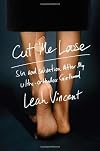
I should say the packaging of the book is marvelous as well. The cover image is stark, and draws the eye, while "Cut Me Loose" is also a quadruple-entendre and therefore quite clever.
One niggling point to make, though: these female-written "OTD" memoirs all seem to portray men as set on autoscrew. Is this the reality? Was I neutered along the way that I'm not familiar with this behavior? Or is this a reality I just haven't been privy to, while these women are, in spades? show less
Don't ever push your kids away or throw them out of the house or excommunicate them, for show more any reason whatsoever, because you are responsible for what happens to them, you stupid buffoon.
The casual way in which her family shoves the author out of the way is so troubling, it moved me. It is well known that discipline for teenagers, ideally, is to push away with one hand (fostering independence) and draw them closer with the other (for the reassurance of love, duh). Yet, her parents hold her away with the four arms they have available. What did they think was going to happen?
And to think, she was shoved away despite her curiosities, questions, desires, musings, and reflections being absolutely, totally and completely NORMAL in every which way. Yet, her regular D is considered deviant, while her families odd-yet-accepted shifted-off-humanly structured D is considered the correct one.
The book is written with an air of longing and true-to-the-core sweetness, because Vincent remains an innocent child, longing for parental approval, no matter what life brings her.
I feel so much empathy for her, partly because her story has a concrete trust and realness to it. She employs a method used by Solomon Northup in hish book 12 Years a Slave: that is, to record minor details, so that an inquiring sort could confirm truths claimed and confer upon the tale utter credibility. This is in contradistinction to Deborah Feldman, who is a truth-omitter at best, and prevaricator at worst. The book is written in a way that I believe everything contained therein - which makes the reading painful, but necessary.
I should say the packaging of the book is marvelous as well. The cover image is stark, and draws the eye, while "Cut Me Loose" is also a quadruple-entendre and therefore quite clever.
One niggling point to make, though: these female-written "OTD" memoirs all seem to portray men as set on autoscrew. Is this the reality? Was I neutered along the way that I'm not familiar with this behavior? Or is this a reality I just haven't been privy to, while these women are, in spades? show less
Being Jewish is a fundamental part of my identity, but being raised in a small midwestern city with no Orthodox community outside of a single Lubavitch family, I had very little insight into the yawning divide between me, what Leah Vincent refers to as a "Lox-and-bagels, my son the doctor, Woody Allen Jew" (except I hate Woody Allen) and Charedi (Ultra-orthodox) Jews. I kind of always assumed that Charedim were like me, just more. Yes, more synagogue, more Kosher, more Shabbat observing, but show more also more of the cultural tropes of American Jewry: highly educated, wealthy, liberal.
So, if you've ever actually met a Charedi Jew, you'll know that I was in for a surprise when I moved to Philadelphia for medical training and joined the pediatric hospital that provides care for the children of Lakewood, NJ. I realized that the gulf between me and the Orthodoxy wasn't a matter of degree, but was a true cultural divide. I was fascinated by the commitment to making Judaism the sole, core identity, avoiding secular books, TV and education in many cases. And I was stunned by families that avoided ever visiting their children with genetic diseases, in case the rumor got out in their community that they had a genetic disease in the family. My bosses had to explain first the entire concept of Shidduch (Jewish matchmaking) and then that the presence of a genetic disease in the family would affect Shidduch for all of the siblings, even though we knew that they weren't carriers.
What I'm saying is that I had the context to understand why Leah's family cut her off when she started to slide off the derech. Nonetheless, her tale is heart-wrenching. I would find myself getting frustrated with her decisions and then she'd slip in a note about her age. Most of the book takes place over the course of her teen years: she leaves her family home around 15 to go to England, gets sent to live independently in Israel at 16 and then is expected to be completely independent, including financially independent in NYC at 17. To the secular world that summary alone is startling.
I wish Vincent had spent more time on the relationship between her and her parents, her and Judaism, and her life prior to leaving the Charedi community. The bulk of the book is a very awkward series of, at best, semi-consensual sexual encounters written full of uncomfortable details. These depictions are sad, but ultimately (and sadly) redundant. I think most people reading this book are like me: deeply curious about Charedi life and looking for reflections from the inside. I appreciate that Vincent has instead crafted a book that is more of a memoir for her, but it feels a little like a waste to me. She has written numerous articles that are much more reflective pieces and discuss her relationship with the Charedi community now, and her relationship with Judaism. I think more of that incorporated into Cut Me Loose would have made for a more complete book. show less
So, if you've ever actually met a Charedi Jew, you'll know that I was in for a surprise when I moved to Philadelphia for medical training and joined the pediatric hospital that provides care for the children of Lakewood, NJ. I realized that the gulf between me and the Orthodoxy wasn't a matter of degree, but was a true cultural divide. I was fascinated by the commitment to making Judaism the sole, core identity, avoiding secular books, TV and education in many cases. And I was stunned by families that avoided ever visiting their children with genetic diseases, in case the rumor got out in their community that they had a genetic disease in the family. My bosses had to explain first the entire concept of Shidduch (Jewish matchmaking) and then that the presence of a genetic disease in the family would affect Shidduch for all of the siblings, even though we knew that they weren't carriers.
What I'm saying is that I had the context to understand why Leah's family cut her off when she started to slide off the derech. Nonetheless, her tale is heart-wrenching. I would find myself getting frustrated with her decisions and then she'd slip in a note about her age. Most of the book takes place over the course of her teen years: she leaves her family home around 15 to go to England, gets sent to live independently in Israel at 16 and then is expected to be completely independent, including financially independent in NYC at 17. To the secular world that summary alone is startling.
I wish Vincent had spent more time on the relationship between her and her parents, her and Judaism, and her life prior to leaving the Charedi community. The bulk of the book is a very awkward series of, at best, semi-consensual sexual encounters written full of uncomfortable details. These depictions are sad, but ultimately (and sadly) redundant. I think most people reading this book are like me: deeply curious about Charedi life and looking for reflections from the inside. I appreciate that Vincent has instead crafted a book that is more of a memoir for her, but it feels a little like a waste to me. She has written numerous articles that are much more reflective pieces and discuss her relationship with the Charedi community now, and her relationship with Judaism. I think more of that incorporated into Cut Me Loose would have made for a more complete book. show less
This was so disappointing! I love stories about people who emerge from the yoke of fundamentalism, and I love a good memoir, and this has been on my TBR since it came out. I had a number of problems with the book, but the primary problem is that it was boring. Really boring. There were many things Vincent could have explored in her complicated life story that would have been edifying and interesting. Instead she gives us an uncontextualized litany of events that make no sense.
Great memoirs show more tell us about the key characters. Some well-regarded examples, "The Tender Bar", The Glass Castle, and Angela’s Ashes illustrate this. We have a clear POV from the author, but we learn as much or more about the people around them, so we can understand and empathize with the ways in which everyone's actions impact everyone else. Bad memoirs focus entirely on the memoirist, making us read along as they climb so far up their own asses that we and they both pass out from lack of oxygen. As you read this ask yourself if you know anything about Vincent's parents. They may have been bad reasons, but these people had reasons for the decisions they made. The decisions are simply incomprehensible without any character development. Do we learn anything about the modern orthodox boys who begin to lead Vincent astray? About her sister who revels in the opportunity to ruin her life. About her aunt who cast her out as quickly as her parents? Are they just all psychotic? According to Vincent she did nothing but pass some non-romantic notes with a boy and buy a sweater, but we are to believe that her mother, father, sister and aunt cast her out and treat her with spite. I am not justifying their actions. There is no defensible reason to withdraw love and support from a 14 year old family member. But I am saying unless we know something about these people, there is nothing to ponder or engage with. We are left with what amounts to a series of sad diary entries.
There are a couple other things which affected my opinion of this book. Several reviewers call this pornography. I suspect they've not read pornography. For better or worse, there is nothing titillating here. There are several ill-advised and fairly clinical sexual encounters. If that makes you hot, be warned. For the rest of us, it’s just some mostly unsatisfying penetration. A second note, I have known some Hasidic women in my life, a few have been my friends, and all of them, every one, has spoken comfortably, and even hung out casually with non-Jewish men on a regular basis. They would not touch these men, that much is true. But they don't hold themselves apart. In law school, one of our (coed) study group members was an unmarried Satmar woman. We all had serious discussion, and joked around on break, and I never saw her be even slightly uncomfortable with the men. Also, she was in law school, as were a number of other Hassidic men and women (I went to Brooklyn Law.) My favorite professor, Aaron Twerski, is Hassidic. One woman, Naomi, was in labor with her 5th or 6th child during the NY bar exam, she left the exam, took the subway from the Javits Center to a hospital in Brooklyn, and 2 hours later had the baby and she PASSED (total bad ass!) My point here is that Vincent's family was Yeshivish, a less restrictive form of orthodoxy than that practiced by the Hassids (she says this herself in the book) but the behaviors she describes as getting her kicked out of the fold would have been acceptable for a Hassidic woman. The story doesn't ring true, and at very least is missing a lot of valuable information.
I don't question that Vincent was traumatized by her upbringing, and I am happy for her that she found what sounds like a very good life, but I think maybe her sense of betrayal rendered her unable to maintain any sense of objectivity, which is necessary to tell a story, even a memoir. show less
Great memoirs show more tell us about the key characters. Some well-regarded examples, "The Tender Bar", The Glass Castle, and Angela’s Ashes illustrate this. We have a clear POV from the author, but we learn as much or more about the people around them, so we can understand and empathize with the ways in which everyone's actions impact everyone else. Bad memoirs focus entirely on the memoirist, making us read along as they climb so far up their own asses that we and they both pass out from lack of oxygen. As you read this ask yourself if you know anything about Vincent's parents. They may have been bad reasons, but these people had reasons for the decisions they made. The decisions are simply incomprehensible without any character development. Do we learn anything about the modern orthodox boys who begin to lead Vincent astray? About her sister who revels in the opportunity to ruin her life. About her aunt who cast her out as quickly as her parents? Are they just all psychotic? According to Vincent she did nothing but pass some non-romantic notes with a boy and buy a sweater, but we are to believe that her mother, father, sister and aunt cast her out and treat her with spite. I am not justifying their actions. There is no defensible reason to withdraw love and support from a 14 year old family member. But I am saying unless we know something about these people, there is nothing to ponder or engage with. We are left with what amounts to a series of sad diary entries.
There are a couple other things which affected my opinion of this book. Several reviewers call this pornography. I suspect they've not read pornography. For better or worse, there is nothing titillating here. There are several ill-advised and fairly clinical sexual encounters. If that makes you hot, be warned. For the rest of us, it’s just some mostly unsatisfying penetration. A second note, I have known some Hasidic women in my life, a few have been my friends, and all of them, every one, has spoken comfortably, and even hung out casually with non-Jewish men on a regular basis. They would not touch these men, that much is true. But they don't hold themselves apart. In law school, one of our (coed) study group members was an unmarried Satmar woman. We all had serious discussion, and joked around on break, and I never saw her be even slightly uncomfortable with the men. Also, she was in law school, as were a number of other Hassidic men and women (I went to Brooklyn Law.) My favorite professor, Aaron Twerski, is Hassidic. One woman, Naomi, was in labor with her 5th or 6th child during the NY bar exam, she left the exam, took the subway from the Javits Center to a hospital in Brooklyn, and 2 hours later had the baby and she PASSED (total bad ass!) My point here is that Vincent's family was Yeshivish, a less restrictive form of orthodoxy than that practiced by the Hassids (she says this herself in the book) but the behaviors she describes as getting her kicked out of the fold would have been acceptable for a Hassidic woman. The story doesn't ring true, and at very least is missing a lot of valuable information.
I don't question that Vincent was traumatized by her upbringing, and I am happy for her that she found what sounds like a very good life, but I think maybe her sense of betrayal rendered her unable to maintain any sense of objectivity, which is necessary to tell a story, even a memoir. show less
Statistics
- Works
- 3
- Members
- 167
- Popularity
- #127,263
- Rating
- 3.5
- Reviews
- 10
- ISBNs
- 9