
Lorna J. Sass
Author of To the King's Taste: Richard II's Book of Feasts and Recipes Adapted for Modern Cooking
About the Author
Lorna Sass Ph.D is a culinary historian and a James Beard Award-winning author of many highly acclaimed, cookbooks, including Presure Perfect, The Pressured Cook, and Great Vegetarian Cooking Under Pressure. She has written for the New York Times, Washington Post, Bon Apptit , Prevention, show more Metropolitan Home, and Woman's Day, among others. She lives in New York City. show less
Image credit: Lorna J. Sass
Works by Lorna J. Sass
To the King's Taste: Richard II's Book of Feasts and Recipes Adapted for Modern Cooking (1975) 265 copies, 4 reviews
Pressure Perfect: Two Hour Taste in Twenty Minutes Using Your Pressure Cooker (2004) 194 copies, 2 reviews
To the Queen's Taste (Elizabethan Feasts and Recipes Adapted for Modern Cooking) (1976) 124 copies, 2 reviews
Lorna Sass' Complete Vegetarian Kitchen: Where Good Flavors and Good Health Meet (1995) 95 copies, 1 review
The New Vegan Cookbook: Innovative Vegetarian Recipes Free of Dairy, Eggs, and Cholesterol (2001) 93 copies, 2 reviews
The Pressured Cook: Over 75 One-Pot Meals In Minutes, Made In Today's 100% Safe Pressure Cookers (1999) 90 copies
New Soy Cookbook : Tempting Recipes for Soybeans, Soy Milk, Tofu, Tempeh, Miso and Soy Sauce (1998) 61 copies, 1 review
Dinner With Tom Jones: Eighteenth-Century Cookery Adapted for the Modern Kitchen (1977) 41 copies, 2 reviews
Associated Works
Tagged
Common Knowledge
- Birthdate
- 20th Century
- Gender
- female
- Education
- Columbia University (PhD|Mediaeval Literature)
- Nationality
- USA
- Places of residence
- New York, New York, USA
- Associated Place (for map)
- New York, USA
Members
Reviews

OK, I have not yet cooked anything from this book. But come next Christmas season, I WILL, and base a dinner party on one of the menus.
This book has 5 historically-based Christmas menus, ranging from a Roman Saturnalia through a Victorian, and including a medieval. I would love to cook any one of these! The recipes look tasty, well-thought-out, and are unsual enough for something really special, at least if one's guests are curious and/or adventurous.
I'm giving it 4 stars now since i haven't show more yet cooked from it. Once i do- or maybe make a Saturnaia feast next Yule season- I can be more rigorous.
Still- I LOVE the concept! What fun!!!! especially since the recipes look very achievable. show less
This book has 5 historically-based Christmas menus, ranging from a Roman Saturnalia through a Victorian, and including a medieval. I would love to cook any one of these! The recipes look tasty, well-thought-out, and are unsual enough for something really special, at least if one's guests are curious and/or adventurous.
I'm giving it 4 stars now since i haven't show more yet cooked from it. Once i do- or maybe make a Saturnaia feast next Yule season- I can be more rigorous.
Still- I LOVE the concept! What fun!!!! especially since the recipes look very achievable. show less
The New Vegan Cookbook: Innovative Vegetarian Recipes Free of Dairy, Eggs, and Cholesterol by Lorna Sass
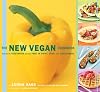
Lorna Sass's The New Vegan is, without a doubt, my favorite cookbook. I've made about 75% of its recipes, and I have yet to be disappointed with any of them. With most cookbooks, I end up altering the recipes, sometimes heavily, but with Sass's book, I follow recipes exactly because I can't imagine them (that I've tried, at least) tasting much better.
The recipes, which cover the usual areas--appetizers, side dishes, main dishes, and sweets--are rather eclectic, with influences from all over show more the globe. Sass also includes helpful tips for new cooks or people who are unfamiliar with vegan cooking. I appreciate that she pays attention to wastefulness--that is, if she doesn't find a place for unused portions of ingredients in a recipe, she often encourages the cook to save leftover ingredients for stocks or other recipes.
Most of the recipes are easy enough to prepare, although several require some time and patience. That said, the fancier dishes are great for entertaining. Whenever I cook for guests, I almost always turn to Sass. This is a great cookbook for someone who wants to show friends that vegan cuisine can be flavorful and interesting, or for a novice cook who wants to branch out a bit and try some more creative and adventurous cooking. show less
The recipes, which cover the usual areas--appetizers, side dishes, main dishes, and sweets--are rather eclectic, with influences from all over show more the globe. Sass also includes helpful tips for new cooks or people who are unfamiliar with vegan cooking. I appreciate that she pays attention to wastefulness--that is, if she doesn't find a place for unused portions of ingredients in a recipe, she often encourages the cook to save leftover ingredients for stocks or other recipes.
Most of the recipes are easy enough to prepare, although several require some time and patience. That said, the fancier dishes are great for entertaining. Whenever I cook for guests, I almost always turn to Sass. This is a great cookbook for someone who wants to show friends that vegan cuisine can be flavorful and interesting, or for a novice cook who wants to branch out a bit and try some more creative and adventurous cooking. show less
I'm a fan of historical cookery, and I stayed up way too late last night reading all these recipes. I want to make them all!
I think, though, that one Christmas feast per year is about all I can manage (OK,in addition to the usually Christmas day stuff that's traditional in our family).
So! This year I am hoping to do "Saturnalia" between Christmas and New Year's, assuming people can come- it's a busy time of year, of course, but a belated Saturnalia would be better than none at all!
And in the show more next 4 years, the next 4 feasts.
The recipes all look do-able for a modern cook, though sometimes there are multiple things that need the oven at the same time but at different temps. Also, some new insight into cooking can help with that scheduling problem.
Please do note that if we had a Roman or a Victorian or whatever come- after cooking the whole feast- they'd probably wonder if we were poor! Standards have changed; we no longer have a kitchen staff, plus we tend to curate meals. I think this cookbook gives fascinating ways of providing a Christmas feast that is evocative of the period, but actually possible for us moderns.
I can hardly wait for Saturnalia!
While i think this would work best for a fairly experienced cook- especially if one is trying to do the whole feast- the individual recipes are very manageable and look enticing. show less
I think, though, that one Christmas feast per year is about all I can manage (OK,in addition to the usually Christmas day stuff that's traditional in our family).
So! This year I am hoping to do "Saturnalia" between Christmas and New Year's, assuming people can come- it's a busy time of year, of course, but a belated Saturnalia would be better than none at all!
And in the show more next 4 years, the next 4 feasts.
The recipes all look do-able for a modern cook, though sometimes there are multiple things that need the oven at the same time but at different temps. Also, some new insight into cooking can help with that scheduling problem.
Please do note that if we had a Roman or a Victorian or whatever come- after cooking the whole feast- they'd probably wonder if we were poor! Standards have changed; we no longer have a kitchen staff, plus we tend to curate meals. I think this cookbook gives fascinating ways of providing a Christmas feast that is evocative of the period, but actually possible for us moderns.
I can hardly wait for Saturnalia!
While i think this would work best for a fairly experienced cook- especially if one is trying to do the whole feast- the individual recipes are very manageable and look enticing. show less

Considering how meat-centric this book is, I think the target audience would do well to get some extra fiber in their diets by way of the whole grains featured in this book! (Seriously, even some of the pancake recipes call for bacon. Gross.)
I was hoping that this cookbook would give me (a vegan) some ideas for incorporating some more whole grains into my white pasta and white rice centered diet. Although I was turned off by a lot of the flesh-centric dishes, I did get a few good ideas from show more this book. I'm looking forward to trying out some new grains and giving my diet a bit of variety! show less
I was hoping that this cookbook would give me (a vegan) some ideas for incorporating some more whole grains into my white pasta and white rice centered diet. Although I was turned off by a lot of the flesh-centric dishes, I did get a few good ideas from show more this book. I'm looking forward to trying out some new grains and giving my diet a bit of variety! show less
Lists
Awards

You May Also Like


Associated Authors
Statistics
- Works
- 16
- Also by
- 2
- Members
- 1,793
- Popularity
- #14,345
- Rating
- 3.8
- Reviews
- 20
- ISBNs
- 32
- Languages
- 2
- Favorited
- 2