

Kevin Alan Milne
Author of The Paper Bag Christmas
About the Author
Works by Kevin Alan Milne
The Final Note [abridged] 1 copy
Associated Works
Reader's Digest Select Editions 2011 v02 #314: Crossfire / Sweet Misfortune / Outwitting Trolls / Letters from Home (2011) 10 copies
Reader's Digest Select Editions 2009 v06 #306: Love in Bloom / Pursuit / Serendipity / The Nine Lessons (2009) 7 copies
Livros Condensados: O Filho do Caçador Furtivo | Cavalos Mal Domados | Onde Estás Agora? | Nove Lições (2010) — Author — 3 copies
Tagged
Common Knowledge
- Canonical name
- Milne, Kevin Alan
- Birthdate
- 1973
- Gender
- male
- Nationality
- USA
- Places of residence
- Oregon, USA
- Associated Place (for map)
- Oregon, USA
Members
Reviews
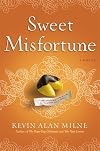
Sweet Misfortunes is the story of Sophie Jones, the ultimate pessimist. Orphaned at nine in a terrible car accident and at twenty-nine abruptly abandoned by her fiancee, Sophie is convinced that there are no happy endings in life. The huge success of her Misfortune Cookies, fortune cookies filled with gloom and doom, just affirms her belief. When her ex-fiancee reappears determined to change her mind all it takes is an ad in the newspaper looking for happiness to turn her life upside show more down.
This book is light, funny, and entertaining with a bite of sarcasm to cut the sweetness. Without the gloom and doom (and hilarious!) misfortunes this book would be just plain sappy, but Sophie's dogged pessimism adds just the right note. The plot is original and the characters unusual and quirky enough to be charming. I really enjoyed this book! show less
This book is light, funny, and entertaining with a bite of sarcasm to cut the sweetness. Without the gloom and doom (and hilarious!) misfortunes this book would be just plain sappy, but Sophie's dogged pessimism adds just the right note. The plot is original and the characters unusual and quirky enough to be charming. I really enjoyed this book! show less
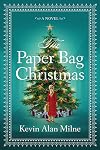
Admittedly, I don't reach for a ton of fiction involving this particular subject for Christmas. I remember when YA "Sick Lit" was a pretty big thing among young people back in my adolescence, when reading novels about teens with deadly diseases—especially cancer—was a trendy, morbidly romantic kind of thing.
Because featuring sick children in holiday tales is another trend, I have to be in the right mindset to read a book like this, as I'm not looking to view childhood disease like show more popular fodder for easy holiday inspiration.
I hope that makes sense. Because I do believe that sick children deserve to have happy Christmases just as much as children in good health.
With that in mind, something I appreciate about this Christmas story is that it illustrates how simply being, say, a sick child, or being a healthcare professional, or being a professing Christian, or being a celebrator of Christmas doesn't automatically make a person wise, kind, or compassionate. No matter a person's position or circumstances, good character has to be developed.
Something else I appreciate about this story? The moments of comedy. And, hey, I don't care if young Mo got it "wrong" in referring to "the three wise guys!" bringing gifts to Jesus. I imagine that now I'll take to calling them The Wise Guys myself from time to time.
Now, unsurprisingly, certain aspects of this story are predictable and/or likely stereotypical, while some of the children's dialogue (including some of nine-year-old Mo's) sounds unrealistic for their ages, like someone put adult wording in their mouths. I also think the ending could have used maybe one less piece of amazingly good fortune (in order to steer clear of outright schmaltz). And on a technical note, the writing is a bit lax in the area of proper punctuation, particularly where there should be commas when the characters address each other by name or noun.
Nevertheless, this story brought me some laughter and a few tears as it portrayed the enduring worth of friendship and family. And for many people reading a tale like this, may kindness and compassion be/become more than a (seasonal) trend but a way of life. Stemming from character. show less
Because featuring sick children in holiday tales is another trend, I have to be in the right mindset to read a book like this, as I'm not looking to view childhood disease like show more popular fodder for easy holiday inspiration.
I hope that makes sense. Because I do believe that sick children deserve to have happy Christmases just as much as children in good health.
With that in mind, something I appreciate about this Christmas story is that it illustrates how simply being, say, a sick child, or being a healthcare professional, or being a professing Christian, or being a celebrator of Christmas doesn't automatically make a person wise, kind, or compassionate. No matter a person's position or circumstances, good character has to be developed.
Something else I appreciate about this story? The moments of comedy. And, hey, I don't care if young Mo got it "wrong" in referring to "the three wise guys!" bringing gifts to Jesus. I imagine that now I'll take to calling them The Wise Guys myself from time to time.
Now, unsurprisingly, certain aspects of this story are predictable and/or likely stereotypical, while some of the children's dialogue (including some of nine-year-old Mo's) sounds unrealistic for their ages, like someone put adult wording in their mouths. I also think the ending could have used maybe one less piece of amazingly good fortune (in order to steer clear of outright schmaltz). And on a technical note, the writing is a bit lax in the area of proper punctuation, particularly where there should be commas when the characters address each other by name or noun.
Nevertheless, this story brought me some laughter and a few tears as it portrayed the enduring worth of friendship and family. And for many people reading a tale like this, may kindness and compassion be/become more than a (seasonal) trend but a way of life. Stemming from character. show less
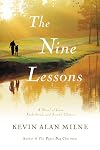
August Witte doesn’t want to be a father; after all, his own father wasn’t a very good one. When his wife delivers the news that she is unexpectedly pregnant, August storms off and drives to his father London’s house in the middle of the night to confront him about their shared past. London Witte’s life is all about golf, but August was never a very good golfer despite London’s frustrating attempts to teach him as a boy. When London finally cuts August from the golf team in his show more freshman year of high school, it drives a wedge between the men that never heals. When August also accuses London of refusing to share his memories of August’s deceased mother, London proposes a deal. He has a chest containing dozens of golf scorecards on which he kept a journal of his experiences during his marriage. He will give the cards to August in installments, and in return August will agree to play nine games of golf with his father. London believes that golf is life and life is golf, and that golf can teach August to be a better father.
Over the course of the next nine months, August learns a series of lessons from his father that are accessible even to non-golfers. When his wife is touchy and temperamental due to morning sickness, he learns that you play golf faithfully even in the rain. When she humiliates him at their baby shower, he learns to give her a “mulligan”, i.e., to forgive her. And when he begins to consider how to teach his children how to behave properly, he learns about golf etiquette. Through reading about London’s experiences first as a young father and later as a widowed father, August comes to see himself reflected in his father after all. Through the lessons of golf and his new, admittedly often rocky relationship with his father, August begins to address the fears and insecurities about fatherhood that are common to all new fathers.
Milne has made an interesting choice with this book. He could easily have used his ideas about life and golf to write a short and pithy – and probably forgettable – nonfiction book with a title like “Everything I Needed To Know About Being a Father I Learned from Golf.” Instead, he has deftly woven these insights into an engaging novel where even the minor characters, like Fertile the Turtle and The Teenage Drama Queen, become an integral part of the story. It’s also a story that illustrates how easily fathers and sons can come to misunderstand each other, and holds out hope that a rapprochement is possible in even the most hopeless cases if only we can bring ourselves to tell each other the truth. Review by Book Dads show less
Over the course of the next nine months, August learns a series of lessons from his father that are accessible even to non-golfers. When his wife is touchy and temperamental due to morning sickness, he learns that you play golf faithfully even in the rain. When she humiliates him at their baby shower, he learns to give her a “mulligan”, i.e., to forgive her. And when he begins to consider how to teach his children how to behave properly, he learns about golf etiquette. Through reading about London’s experiences first as a young father and later as a widowed father, August comes to see himself reflected in his father after all. Through the lessons of golf and his new, admittedly often rocky relationship with his father, August begins to address the fears and insecurities about fatherhood that are common to all new fathers.
Milne has made an interesting choice with this book. He could easily have used his ideas about life and golf to write a short and pithy – and probably forgettable – nonfiction book with a title like “Everything I Needed To Know About Being a Father I Learned from Golf.” Instead, he has deftly woven these insights into an engaging novel where even the minor characters, like Fertile the Turtle and The Teenage Drama Queen, become an integral part of the story. It’s also a story that illustrates how easily fathers and sons can come to misunderstand each other, and holds out hope that a rapprochement is possible in even the most hopeless cases if only we can bring ourselves to tell each other the truth. Review by Book Dads show less
This is definitely the best of the Christmas books I have read.
The day after Thanksgiving, two young boys, 9-year-old Molar (his father is a dentist) and 11-year-old Aaron are taken by their parents – reluctantly – to see Santa Claus at the mall. Santa Claus turns out to be Dr. Christopher K. Ringle, a pediatric oncologist and friend of their parents. He promises to give the boys the best gift they “never” wanted for Christmas. He then assigns the boys a job as elves in the show more children’s oncology unit at his hospital. They are to come three nights a week until Christmas to help bring holiday cheer to the children.
Additionally, each boy has a special assignment to befriend particular patients. Aaron is assigned to a young boy from India named Madhu who is waiting for a liver donation, and Molar is asked to look in every night on Katrina, a girl with brain cancer who hides her disfigured head under a paper bag. They also help with a Christmas pageant directed by one of the nurses and in which the oncology kids will star.
By Christmas day, the boys have learned a great deal about the true meaning of Christmas, and you, the reader, will have done more sobbing than you thought was possible.
Evaluation: This is definitely a holiday book, but it’s a wonderful one. The author uses Molar to tell the story from his own 9-year-old perspective, which I thought added a great deal of appeal. Molar's reactions seem just right. And I really like combining the traditional theme of Christmas books with awareness about pediatric cancer. The illness is treated respectfully, and even the sad parts have happy aspects to them. show less
The day after Thanksgiving, two young boys, 9-year-old Molar (his father is a dentist) and 11-year-old Aaron are taken by their parents – reluctantly – to see Santa Claus at the mall. Santa Claus turns out to be Dr. Christopher K. Ringle, a pediatric oncologist and friend of their parents. He promises to give the boys the best gift they “never” wanted for Christmas. He then assigns the boys a job as elves in the show more children’s oncology unit at his hospital. They are to come three nights a week until Christmas to help bring holiday cheer to the children.
Additionally, each boy has a special assignment to befriend particular patients. Aaron is assigned to a young boy from India named Madhu who is waiting for a liver donation, and Molar is asked to look in every night on Katrina, a girl with brain cancer who hides her disfigured head under a paper bag. They also help with a Christmas pageant directed by one of the nurses and in which the oncology kids will star.
By Christmas day, the boys have learned a great deal about the true meaning of Christmas, and you, the reader, will have done more sobbing than you thought was possible.
Evaluation: This is definitely a holiday book, but it’s a wonderful one. The author uses Molar to tell the story from his own 9-year-old perspective, which I thought added a great deal of appeal. Molar's reactions seem just right. And I really like combining the traditional theme of Christmas books with awareness about pediatric cancer. The illness is treated respectfully, and even the sad parts have happy aspects to them. show less
You May Also Like


Associated Authors
Statistics
- Works
- 9
- Also by
- 12
- Members
- 588
- Popularity
- #42,663
- Rating
- 3.8
- Reviews
- 38
- ISBNs
- 35
- Languages
- 3