
Jennifer Dance
Author of Red Wolf
Works by Jennifer Dance
Tagged
Common Knowledge
- Gender
- female
- Short biography
- Jennifer was born in England, but spent her formative teenage years in Trinidad. After graduating from the University of the West Indies in 1970, she returned to England and married a Trinidadian. A racist attack by Skinheads motivated her and her husband to emigrate to Canada in 1979 where they hoped for a better life for their mixed-race children. RED WOLF is her first published novel.
- Nationality
- Canada
- Birthplace
- England, United Kingdom
Members
Reviews
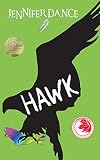
This is a middle-grade contemporary fiction novel told from the point of view of a First Nation's boy who has been diagnosed with leukemia. The story parallels his cancer with the negative environmental impacts of the tar sands mining in Canada. This is a quick read that tells an incredibly important story. Adam, or Hawk, learns about the impacts of the mining and ties it into with his own leukemia. Dance shows that communities are caught in a Catch-22, where the only jobs are provided by show more the mining industry and the industry also invests money into those communities, yet it is that very industry that is causing people to become ill and environmental devastation that is destroying traditional ways of life.
I especially liked how Adam/Hawk's story was interspersed with those of two osprey's quest to reproduce successfully, symbolically connecting Hawk's desire to survive with White Crest and Three Talon's desire for healthy offspring.
There are many books out there about kids with cancer. I think this is the first I've come across, though, which directly ties that cancer to environmental causes, and I hope that many more may follow. While this is an important story, at the same time, I am unsure if children would find it a compelling one. Dance, through Adam/Hawk, often takes on a lecturing or teaching tone which might turn off some readers.
Review copy courtesy of the publisher via Netgalley show less
I especially liked how Adam/Hawk's story was interspersed with those of two osprey's quest to reproduce successfully, symbolically connecting Hawk's desire to survive with White Crest and Three Talon's desire for healthy offspring.
There are many books out there about kids with cancer. I think this is the first I've come across, though, which directly ties that cancer to environmental causes, and I hope that many more may follow. While this is an important story, at the same time, I am unsure if children would find it a compelling one. Dance, through Adam/Hawk, often takes on a lecturing or teaching tone which might turn off some readers.
Review copy courtesy of the publisher via Netgalley show less
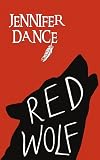
Set in the 1880s in the province of Ontario, the novel explores the impact of the Indian Act of 1876 on the indigenous peoples of Canada. It opens as a wolf cub, left on his own when his parents are killed by ‘uprights’, is driven into an Anishnaabe camp by hunger. Happily, it is the camp of the Wolf Clan and the cub becomes the companion of a young boy, five-year-old Mishqua Ma’een’gun or Red Wolf.
The 1880s in Ontario Canada is a time of expansion. As loggers move into the northern show more parts of the province, the Anishnaabe (the People) are left with the choice of moving further north away from the whites or stay and fight. A government agent offers them a third choice: move to the Reserve where they will, according to him, receive free housing and money for food. What he does not tell them is that, once they move to the Reserve, the government has complete control of their lives including the need for approval to leave the reserve for any reason. It also means that the children can be removed and put into Residential schools in an effort to ‘kill the Indian to save the man’. Taken away from their parents often over long distances, the native pupils are denied their names, their language, their spiritual life, and their cultures and are told that they are ‘dirty savages’ who must learn to assimilate into the ‘superior’ white culture.
The cub, Crooked Ear’s story parallels Red Wolf’s. When Red Wolf is forced to go to the school, he must find a new pack to join. But food is becoming scarce with loss of habitat to logging and farming. As well, wolves are hunted relentlessly for their pelts and because they are seen as pests. But even when Crooked Ear finds a new pack, he misses the boy – they may be seen only as pests and savages to others but they were equals within their own pack.
Eventually, when Red Wolf (or George as he has been renamed) leaves the school, he discovers quickly that, having lost his own culture, he will not be accepted into white society. To the white population, he will always be a ‘dirty savage’. There are a couple of exceptions to this, whites who don’t share this bigotry, but they are few and can do little to help.
Red Wolf ends up back on the reserve, all hope and ambition driven out of him as it has been from the rest of his clan, spending his days doing nothing and his nights drinking. But there are rumours of another way, of his grandmother who has chosen to move away from the cruel reality the bands have been left with, to maintain the old ways. In the end, Red Wolf must decide which path he will follow. With one of Crooked Ear’s offspring, he heads out to find his grandmother and learn if the rumours are true.
The YA novel, Red Wolf, by author Jennifer Dance gives a very realistic, very powerful and very disturbing portrait of life for First Nations both on Reserves and especially at the Residential Schools. Because of this, I would suggest it might not be suitable for children under twelve. However, for anyone else, I can’t recommend it highly enough. show less
The 1880s in Ontario Canada is a time of expansion. As loggers move into the northern show more parts of the province, the Anishnaabe (the People) are left with the choice of moving further north away from the whites or stay and fight. A government agent offers them a third choice: move to the Reserve where they will, according to him, receive free housing and money for food. What he does not tell them is that, once they move to the Reserve, the government has complete control of their lives including the need for approval to leave the reserve for any reason. It also means that the children can be removed and put into Residential schools in an effort to ‘kill the Indian to save the man’. Taken away from their parents often over long distances, the native pupils are denied their names, their language, their spiritual life, and their cultures and are told that they are ‘dirty savages’ who must learn to assimilate into the ‘superior’ white culture.
The cub, Crooked Ear’s story parallels Red Wolf’s. When Red Wolf is forced to go to the school, he must find a new pack to join. But food is becoming scarce with loss of habitat to logging and farming. As well, wolves are hunted relentlessly for their pelts and because they are seen as pests. But even when Crooked Ear finds a new pack, he misses the boy – they may be seen only as pests and savages to others but they were equals within their own pack.
Eventually, when Red Wolf (or George as he has been renamed) leaves the school, he discovers quickly that, having lost his own culture, he will not be accepted into white society. To the white population, he will always be a ‘dirty savage’. There are a couple of exceptions to this, whites who don’t share this bigotry, but they are few and can do little to help.
Red Wolf ends up back on the reserve, all hope and ambition driven out of him as it has been from the rest of his clan, spending his days doing nothing and his nights drinking. But there are rumours of another way, of his grandmother who has chosen to move away from the cruel reality the bands have been left with, to maintain the old ways. In the end, Red Wolf must decide which path he will follow. With one of Crooked Ear’s offspring, he heads out to find his grandmother and learn if the rumours are true.
The YA novel, Red Wolf, by author Jennifer Dance gives a very realistic, very powerful and very disturbing portrait of life for First Nations both on Reserves and especially at the Residential Schools. Because of this, I would suggest it might not be suitable for children under twelve. However, for anyone else, I can’t recommend it highly enough. show less
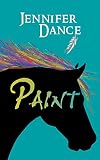
Paint by Jennifer Dance is a touching story of a horse that lived in the 1800's. Paint was orphaned and found by a Lakota boy and their connection is deep. They are separated when the U.S. Cavalry raids the Lakota camp and Paint begin her journey with various owners, including settlers of the Canadian plains. Ultimately this book is about the destruction of the Aboringinal People's in Canada. From the start I loved Paint; a gentle, social and smart horse. Ms Dance descriptions of Paint and show more Noise Horse, her first owner was lyrical and the horrors of their brutal separation vividly described. The descriptions of the land, the harshness of the settler life were engrossing and real. An excellent, descriptive and gratifying read. I read this book in one sitting and thought about Paint for days after. Thank you Netgalley for giving me this opportunity to review this book. show less
This book is about a 5 year old boy and a red wolf. The boy is taken from his home and family and taken to a residential school to be raised.
The author captures the emotional toll on the family and the child at being ripped apart. The writing is not graphic and is appropriate for young readers, but the heartbreaking reality of residential schools and forced "assimilation" comes through. The book hints at abuse and describes some of the punishments the children had to endure.
As adults we show more know of many more types of abuse that occurred at these schools, but the book keeps it appropriate for young readers.
I thought this was an excellent book and very well written. I read it with sadness, but feel it should be mandatory reading in schools, so that this chapter of Canadian history is not forgotten. show less
The author captures the emotional toll on the family and the child at being ripped apart. The writing is not graphic and is appropriate for young readers, but the heartbreaking reality of residential schools and forced "assimilation" comes through. The book hints at abuse and describes some of the punishments the children had to endure.
As adults we show more know of many more types of abuse that occurred at these schools, but the book keeps it appropriate for young readers.
I thought this was an excellent book and very well written. I read it with sadness, but feel it should be mandatory reading in schools, so that this chapter of Canadian history is not forgotten. show less
Awards


Statistics
- Works
- 5
- Members
- 122
- Popularity
- #163,288
- Rating
- 4.4
- Reviews
- 14
- ISBNs
- 17