
Laura J. Gurak
Author of A Concise Guide to Technical Communication
About the Author
Laura J. Gurak is associate professor at the University of Minnesota, faculty fellow at the University of Minnestoa Law School, and director of the Internet Studies Center. (Bowker Author Biography)
Works by Laura J. Gurak
Persuasion and Privacy in Cyberspace: The Online Protests over Lotus MarketPlace and the Clipper Chip (1997) 19 copies, 1 review
Strategies for Technical Communication in the Workplace, Books a la Carte Edition, MLA Update Edition (3rd Edition) (2016) 1 copy
Strategies for Technical Communication in the Workplace, MLA Update Edition (3rd Edition) (2016) 1 copy
Tagged
Common Knowledge
- Gender
- female
Members
Reviews
Persuasion and Privacy in Cyberspace: The Online Protests over Lotus MarketPlace and the Clipper Chip by Laura J. Gurak

In Persuasion and Privacy in Cyberspace (1997), Laura Gurak analyzes two online protests over privacy concerns about Lotus Marketplace and the Clipper Chip in the 1990s, taking the key terms of ethos and delivery as critical to her rhetorical analysis (5). These protests were made possible by the development of community ethos (57) and the flattening of hierarchies using email to "speak to thousands of others across distance and time" (67). Gurak shows how text, rather than a person, show more attracted attention and developed ethos (72). Additionally, text could develop trust, even when the author was anonymous (83). Gurak also points to problems with these social actions, including misogyny online and the spread of misinformation (chapters 6 and 7). Gurak closes by proposing that community may be one of the most important concepts regarding communication online (130). show less
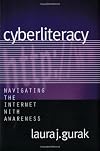
In Cyberliteracy (2001), Laura Gurak discusses cyberliteracy, by which she means "a set of concepts and critical views with which to understand today's Internet" (3), which involves not just use, but participation in and control of technology (11). She proposes that we understand Internet communication through the function terms of "speed, reach, anonymity, interactivity" (29). She later argues that the speech and reach of the Internet allows for "us to become wired and edgy in everyday show more life," a kind of "Road Rage Everywhere" (49). Gurak explores how frequent hate speech is online, and how it doesn't seem to fit into legal parameters because it doesn't advocate violence (60); how online spaces are not exempt from the sexism of society, and how some men still use these spaces to try to get women into sexual experiences (80-81); how complicated privacy is online because of a "wide array of U.S. privacy policies" (121); and how ecommerce is shrinking public spaces (135) and customers become data (138). show less
Statistics
- Works
- 12
- Members
- 145
- Popularity
- #142,478
- Rating
- 3.3
- Reviews
- 2
- ISBNs
- 26