
Jamaal May
Author of Hum (ALA Notable Books for Adults)
Works by Jamaal May
Associated Works
The Best American Poetry 2014 (The Best American Poetry series) (2014) — Contributor — 89 copies, 1 review
Bullets Into Bells: Poets and Citizens Respond to Gun Violence (2017) — Contributor — 68 copies, 3 reviews
Tagged
Common Knowledge
There is no Common Knowledge data for this author yet. You can help.
Members
Reviews
Hum by Jamaal May
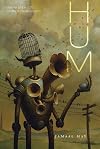
Description: "In May’s debut collection, poems buzz and purr like a well-oiled chassis. Grit, trial, and song thrum through tight syntax and deft prosody. From the resilient pulse of an abandoned machine to the sinuous lament of origami animals, here is the ever-changing hum that vibrates through us all, connecting one mind to the next."
I admit to being drawn to this collection because of the gorgeous cover and its steampunk robot with a birdcage head, which immediately sparked my show more imagination. The physical book itself is also beautiful, with a lovely typeset. A smattering of dark pages, each for a "phobia" poem (such as Athazagoraphobia: Fear of Being Ignored"), appear throughout the book, starting out black at first then lightening toward softer grays. It's an interesting way to highlight a set of associated poems and there's a subtle effect to reading words with white text on a dark page that suits the "phobia" poems. For example, reading "Athazagoraphobia: Fear of Being Ignored" on one of the rare black pages in the books creates an interesting contrast between text and the physical page.
Hum is dedicated to "to the inner lives of Detroiters." When I think of Detroit these days, I picture photo essays that show the city in seemingly apocalyptic states of decay. May's poems reflect this state of everyday apocalypse. "Still Life" presents a "Boy with roof shingles / duct taped to shins and forearms / threading barbed wire through pant loops" as well as other trash can armor in the face of what seems to be a wasteland. While in "The Girl Who Builds Rockets from Bricks," a girl wanders in "the caverns of deserted houses," performing "her excavation for spare parts: // shards of whiskey bottle, matches, / anthills erupting from concrete // seams, the discarded husk / of a beetle."
These poems thrum with rhythm, and sound plays a vital role, natural sounds mix with manufactured sounds mix with inner soul sounds. They are full of texture, bringing Detroit imagined and real into vibrant life.
"Neat" is a disorderly pantoum, in which the repeated lines are almost but not quite repeated. there is enough variation that the new lines slip by almost unnoticed as repetitions. It describes a bar scene and a man sitting alone, drinking. "No one is above being invisible / not even me, with my shirt tidily pressed, // another man who's seen the bottom of a tumbler." The feeling is despondent and mundane. The pantoum form works perfectly here, the almost-repetition of lines reflecting the slipshod redundancy of everyday life and looping thoughts and questions that never seem to lead anywhere.
In "Macrophobia: Fear of Waiting," he writes, "I was fascinated / that every time I tried to type love, / I missed the o and hit the i instead. / I live you is a mistake I make so often. / I wonder if it's not / what I've really been meaning to say." I make the same mistake quite often, and I have found myself thinking the same thing (I am only a little jealous that he put it into a poem first). There are so many passages, phrases, poems I love in this book that I find it hard to know which ones to focus on.
This book is amazing (another I need to own) and is one of the best collections of poetry collections I've read this year.
For a more expanded look at this collect, there's a great interview with Jamaal May up at The Normal School.
You can also watch a video of May reading "I Do Have a Seam" from this collection. show less
I admit to being drawn to this collection because of the gorgeous cover and its steampunk robot with a birdcage head, which immediately sparked my show more imagination. The physical book itself is also beautiful, with a lovely typeset. A smattering of dark pages, each for a "phobia" poem (such as Athazagoraphobia: Fear of Being Ignored"), appear throughout the book, starting out black at first then lightening toward softer grays. It's an interesting way to highlight a set of associated poems and there's a subtle effect to reading words with white text on a dark page that suits the "phobia" poems. For example, reading "Athazagoraphobia: Fear of Being Ignored" on one of the rare black pages in the books creates an interesting contrast between text and the physical page.
Hum is dedicated to "to the inner lives of Detroiters." When I think of Detroit these days, I picture photo essays that show the city in seemingly apocalyptic states of decay. May's poems reflect this state of everyday apocalypse. "Still Life" presents a "Boy with roof shingles / duct taped to shins and forearms / threading barbed wire through pant loops" as well as other trash can armor in the face of what seems to be a wasteland. While in "The Girl Who Builds Rockets from Bricks," a girl wanders in "the caverns of deserted houses," performing "her excavation for spare parts: // shards of whiskey bottle, matches, / anthills erupting from concrete // seams, the discarded husk / of a beetle."
These poems thrum with rhythm, and sound plays a vital role, natural sounds mix with manufactured sounds mix with inner soul sounds. They are full of texture, bringing Detroit imagined and real into vibrant life.
"A humming bird draws
nectar in my thoughts, wings beating
80-something times per second
but there aren't many flowers here; it's been many
summers since I stopped even listening for bees."
— from "A Detroit Hum Ending with Bones"
"Neat" is a disorderly pantoum, in which the repeated lines are almost but not quite repeated. there is enough variation that the new lines slip by almost unnoticed as repetitions. It describes a bar scene and a man sitting alone, drinking. "No one is above being invisible / not even me, with my shirt tidily pressed, // another man who's seen the bottom of a tumbler." The feeling is despondent and mundane. The pantoum form works perfectly here, the almost-repetition of lines reflecting the slipshod redundancy of everyday life and looping thoughts and questions that never seem to lead anywhere.
"You are a quarter ghost on your mother's side.
Your heart is a flayed peach in a bone box."
— from "How to Disapper Completely"
In "Macrophobia: Fear of Waiting," he writes, "I was fascinated / that every time I tried to type love, / I missed the o and hit the i instead. / I live you is a mistake I make so often. / I wonder if it's not / what I've really been meaning to say." I make the same mistake quite often, and I have found myself thinking the same thing (I am only a little jealous that he put it into a poem first). There are so many passages, phrases, poems I love in this book that I find it hard to know which ones to focus on.
"Is the sun a flash grenade? This heat
is so heavy the fruit stands buckle and ripple
like mirages, but your brother shivers"
— from "Chionophpbia: Fear of Snow"
This book is amazing (another I need to own) and is one of the best collections of poetry collections I've read this year.
For a more expanded look at this collect, there's a great interview with Jamaal May up at The Normal School.
You can also watch a video of May reading "I Do Have a Seam" from this collection. show less
A poetry collection with themes of bodies, machinery, nature and race.
I enjoyed this, there is a really delicate balance between mechanistic language — nails and rust and circuits and wires and metal plates — juxtaposed with earthy, bodily imagery. Much is made of death, and war and family and violence, which all tie in further to those pre-established notions.
Great stuff!
I enjoyed this, there is a really delicate balance between mechanistic language — nails and rust and circuits and wires and metal plates — juxtaposed with earthy, bodily imagery. Much is made of death, and war and family and violence, which all tie in further to those pre-established notions.
Great stuff!
Hum by Jamaal May
Lovely. Really interesting interrogation of sensory environment. I read part of this at the same time as Life Ceremony by Sayaka Murata (I read poetry slowly), and they were really striking in conversation. On ending I wanted to begin again and read it in conversation with itself.
Lists
Awards


You May Also Like
Associated Authors
Statistics
- Works
- 2
- Also by
- 7
- Members
- 148
- Popularity
- #140,179
- Rating
- 4.0
- Reviews
- 3
- ISBNs
- 5