
G. Peter Winnington
Author of Vast Alchemies: The Life and Work of Mervyn Peake
About the Author
Introduction by Professor William Gray, Director of the Sussex Centre for Folklore, Fairy Tales and Fantasy, University of Chichester; author of Death and Fantasy (Cambridge Scholars Publishing, 2008), Fantasy, Myth and the Measure of Truth (Palgrave Macmillan, 2010), and Fantasy, Art and Life show more (Cambridge Scholars Publishing, 2011). The papers are edited by G. Peter Winnington, the leading Peake scholar who has penned both a biography - Mervyn Peake's Vast Alchemies (Peter Owen, 2009) - and a critical study - The Voice of the Heart: The Working of Mervyn Peak's Imagination (Liverpool University Press, 2006). He is the editor of Peak Smites and further books on Peake. show less
Works by G. Peter Winnington
Associated Works
Tagged
Common Knowledge
- Gender
- male
Members
Reviews
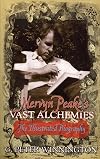
Mervyn Peake is one of my favourite writers and artists and has been for more than half my life. [b:The Gormenghast Trilogy|258433|The Gormenghast Trilogy (Gormenghast #1-3)|Mervyn Peake|https://images.gr-assets.com/books/1406379182s/258433.jpg|38776] was formative for me; it quite literally changed my mind. Yet I’d never read, or even looked for, a biography of Peake until I was given this one for Christmas. It occurs to me that in some ways I prefer authors of beloved books to remain show more relatively mysterious. (Perhaps this is why my obsessive love of reading didn’t evolve into an affinity for studying literature.) After reading this sympathetic and thoughtful biography, however, I was pleased to discover new perspectives on Peake’s work and to find some of my intuitions about it confirmed. Better still, the account of his life is plentifully bedecked with his brilliant sketches and paintings. I’d seen virtually none of them before, not having realised that he’d been such a prolific illustrator. His portraits are the highlight. He had an astonishing affinity with faces, exaggerating features just enough to bring out the complexities of personality.
Winnington is a straightforward writer and collects an impressive range of sources to inform his narrative of Peake’s life. I especially liked the quotes from Peake himself, illuminating his view of the world:
This is especially fascinating as Gertrude Groan is undoubtedly one of the most stable and sensible characters in Gormenghast. Not that she has a great deal of competition on that front; Prunesquallor, perhaps? I rather like the idea that stable, sensible people can be so because they indulge their eccentricities. Certainly, we all find coping mechanisms to exist in the world without being ground down. Fifty cats sound like a good one.
Given my intense love for Gormenghast, I was inevitably most compelled by the account of how it came to be written. Winnington echoes my view of it, which is very pleasing:
Two thought occur in response to this. Firstly, this organic progression of place creates character creates narrative feels deeply familiar from dreaming. I’ve no idea how typical this is, but my dreams tend to have very detailed and memorable settings, in which people then manifest as required. Often I can recollect no narrative at all, and when I can it comes under suspicion of being retrofitted during a period of lucid dreaming. Reading the Gormenghast trilogy is one of the closest experiences to my dreams I’ve had while awake. As I adore dreaming, this is worth treasuring. Secondly, I noticed an interesting difference between the title that Peake used, ‘the Titus books,’ and that used by the publishers, ‘the Gormenghast trilogy’. Peake intended to write further books about Titus’ life, covering many decades after he left Gormenghast. Yet the publishers were undoubtedly onto something. Titus Groan is not the main character in his own story, and even when he leaves the castle it haunts the narrative. And it certainly haunts me, while Titus as a character does not.
Winnington captures other facets of Peake’s appeal as a writer that I hadn’t really thought about before, such as his humour:
I was also struck by this discussion of why Peake’s writing is so incredibly evocative, which articulates something I felt but couldn’t put into words.
That’s a trick few writers can master. I would also add that Peake had an incredible talent for extended metaphors. I read this biography mostly for insights into his writing and found it very rewarding. Peake’s early death was a tragedy and his body of work remains idiosyncratic, varied, and quite matchless. show less
Winnington is a straightforward writer and collects an impressive range of sources to inform his narrative of Peake’s life. I especially liked the quotes from Peake himself, illuminating his view of the world:
He observed that in the past people used to talk of ‘a strong personality’, whereas now they spoke of a ‘psychological kink’. For him, a character like Gertrude, the Countess of Groan, would have become neurotic ‘if she hadn’t allowed herself to have all those cats’. People are neurotic, he opined, precisely because ‘they’re frightened of walking down the street with fifty cats following behind them’.
This is especially fascinating as Gertrude Groan is undoubtedly one of the most stable and sensible characters in Gormenghast. Not that she has a great deal of competition on that front; Prunesquallor, perhaps? I rather like the idea that stable, sensible people can be so because they indulge their eccentricities. Certainly, we all find coping mechanisms to exist in the world without being ground down. Fifty cats sound like a good one.
Given my intense love for Gormenghast, I was inevitably most compelled by the account of how it came to be written. Winnington echoes my view of it, which is very pleasing:
The main source of inspiration for the nascent novel was clearly the setting, the castle of Gormenghast itself, rather than the characters. In fact, it might be said that once Mervyn had imagined Gormenghast the place itself generated characters to inhabit it, and the story-line came only after that, developing organically rather than according to any preconceived plan. Consequently a plot summary of the Titus books misses the whole point, for is obliged to omit the purely descriptive passages and neglects the interpenetration of person and place.
Two thought occur in response to this. Firstly, this organic progression of place creates character creates narrative feels deeply familiar from dreaming. I’ve no idea how typical this is, but my dreams tend to have very detailed and memorable settings, in which people then manifest as required. Often I can recollect no narrative at all, and when I can it comes under suspicion of being retrofitted during a period of lucid dreaming. Reading the Gormenghast trilogy is one of the closest experiences to my dreams I’ve had while awake. As I adore dreaming, this is worth treasuring. Secondly, I noticed an interesting difference between the title that Peake used, ‘the Titus books,’ and that used by the publishers, ‘the Gormenghast trilogy’. Peake intended to write further books about Titus’ life, covering many decades after he left Gormenghast. Yet the publishers were undoubtedly onto something. Titus Groan is not the main character in his own story, and even when he leaves the castle it haunts the narrative. And it certainly haunts me, while Titus as a character does not.
Winnington captures other facets of Peake’s appeal as a writer that I hadn’t really thought about before, such as his humour:
Appreciation of the Gothic in Mervyn’s writing thus depends upon the reader’s ability to share in his sombre humour; for the sympathetic reader his novels are darkly comic, mocking our fears just as Steerpike mocks the Twins’ with Sourdust’s head on a broomstick (and other fears, too, as Barquentine buries the remains of Sourdust with a calf’s skull substituting for the missing cranium). On the other hand, if the humour fails, then you have unalleviated gloom and horror.
I was also struck by this discussion of why Peake’s writing is so incredibly evocative, which articulates something I felt but couldn’t put into words.
Since Titus Groan is often called an intensely visual work, let me underline how much the mode of representation is physical rather than visual. Take the justly famous opening sentences… There’s not a colour, not a line, nothing to instruct the eye. It’s all in the feeling, the physical sensation of the ‘massing’ of the stone, the ‘ponderous quality’ of the architecture, the sprawling humble dwellings that ‘swarm’ around the foot of the castle walls and cling ‘like limpets to a rock’. [...]
Most readers will quite unconsciously translate these physical and auditory terms into their favoured mode of internal representation, the visual, with the result that they believe the books to be highly visual. In this way, reading the Titus books affords them an intense multi-sensory experience.
That’s a trick few writers can master. I would also add that Peake had an incredible talent for extended metaphors. I read this biography mostly for insights into his writing and found it very rewarding. Peake’s early death was a tragedy and his body of work remains idiosyncratic, varied, and quite matchless. show less
Comparing Biographies of Peake
This is a fascinating, passionate, exhaustively researched, illustrated - but eminently readable - biography of Peake, focusing on how his life affected his works (both written and drawn/painted). He is best known for the Titus Groan/Gormenghast books, but his works are far more diverse than that.
Of the four other biographies I've read, this is the one that is best for understanding his oeuvre. It has two forewords, acknowledgements, a preface, a bibliography show more and detailed notes; all are worth reading. It also has an index. This edition is well illustrated with photos and copies of Peake's art. For those who know him as an author, the latter may be particularly welcome. It certainly made me more aware of how many books he illustrated.
For understanding the man himself, from a more personal angle, I recommend the biographies by Maeve Gilmore, his widow (A World Away, my review HERE) and daughter Clare (Under a Canvas Sky, my review HERE). In particular, this book says very little about Peake's long years of illness, which fits the purpose of this, but is painfully portrayed in the other two.
Title
The glorious title is taken from one of Peake's poems, "Coloured Money", an excerpt of which is quoted at the start of the book:
"Vast alchemy" also relates to glassblowing (Peake's famous pictures and poems about "The Glassblowers", who made cathode ray tubes for radio detection and ranging) and, by analogy, the creation of mankind.
What Sort of Review is This?
Rather than a traditional review, I will use this space to summarise key aspects and events of Peake's life and how they are (or might be) reflected in his works. A few points are from other biographies I’ve read, listed on my Peake shelf HERE.
This does mean it includes minor spoilers.
China
Peake was born in China to Methodist (Malcolm Yorke says Congregationist) missionary parents, where his father was a doctor. Peake lived there until he was 11 and it is easy to see many links with Gormenghast. The danger is perhaps of reading too many parallels, but anyway, examples include:
• Dr Peake was cooped up in a walled city during the Boxer uprising - and contemplated escape by rope.
• Items in the Hall of Bright Carvings are described as "in narrowing perspective like the highway for an Emperor" and Dr Peake had photos of such routes.
• Confucius was the 77th of his line, inherited the title Duke, lived in a mansion (later destroyed by fire), was devoted to ritual, and went into exile. (He also had a wet-nurse, though I think this less significant than Winnington does, as it was common in such families at the time.)
• Peake spent his formative years in a walled European hospital compound in Tientsin, where local life was almost medieval.
• The Peakes had summer trips by palanquin to a cooler hill station at Kuling.
• Peake visited Peking, aged seven.
• Peake learned some Mandarin, and retained it in adulthood.
• At home, the attic (Fuchsia) and space under the stairs (Titus) were special places.
• He witnessed climatic extremes and an epic flood (2 metres deep).
• The geography of the hospital compound has close parallels with Gormenghast, including wastelands in the north and salt marshes in the south.
• The subsequent family home in England was filled with Chinese artefacts.
• He held a pencil more like a Chinese calligraphy brush (vertically, between his second and third fingers) than a Western writing/drawing tool.
Gormenghast
China was not the only influence:
• The headmaster of his English school, Eltham College, is apparently recognisable as Bellgrove.
• Jacob Epstein's first wife was probably an inspiration for Countess Groan.
• His daughter says in her memoirs (referenced above) that Fuchsia was inspired by Maeve as a girl - though the fact she watches her father's descent into apparent madness more closely echoes Clare's own experience.
• "The House of Darkstones" was a precursor, and the first three chapters are included in "Peake's Progress" (my review HERE).
• I've always thought the first two Titus books are primarily about place and Winnington says "Once Mervyn had imagined Gormenghast, the place itself generated characters to inhabit it, and the story-line came only after that".
• Winnington makes a brave attempt to summarise the plot on page 149 (worth comparing with Peake's preliminary notes, on page 161).
• "Titus Groan" was written in army barracks, during WW2, where his duties included "roofspotting" (looking out for bombs) and time in the cookhouse. It was continued after a nervous breakdown aged only 31.
• Peake signed a letter "Alias Steerpike".
• Peake's favourite Dickens was "Bleak House", in which an irate character says, "I should like to throw a cat at you". He later did illustrations for it (see my review HERE).
• He originally planned about 60 illustrations for each Titus book.
• In early versions of "Titus Groan", there were whole chapters in the present tense for no apparent reason. In the published version, the present is (mostly) reserved for reveries.
• Sark, the small island where Peake lived for two key periods of his life, was another enclosed world, with archaic and idiosyncratic laws and rituals.
• Graeme Greene (a friend) criticised "Titus Groan" for its wordiness and lots of other things, but Peake acted on many of his suggestions.
• Peake said of "Titus Groan", "It is, and it is not, a dream". So that clears that up. ;)
• Initial reviews of "Titus Groan" were not enthusiastic, with the exception of novelist Elizabeth Bowen who perceptively said "I predict for Titus a smallish but fervent public... Such a public will probably renew itself, and probably enlarge, with each generation."
• The Bright Carvers' "fate it was to age prematurely and decline rapidly" seems horribly prophetic of their author.
• "Gormenghast" was written during three years on the island of Sark. It had better reviews than its predecessor.
• "Boy in Darkness" and "Titus Alone" were written over seven years living in Wallington (his parents' former home).
• "Titus Alone" was edited by others (Peake being too ill by then), meaning the initial version was almost incoherent. A better version was published in the UK in the 1960s, but didn't reach the US until the 1990s.
Gothic or Not?
The US publisher of "Titus Groan" added the subtitle "A gothic novel", an issue that Winnington discusses at some length (page 217). He points out that it does produce horror in the reader and sympathy for a hero who is seeking freedom, but on the other hand, there is also plenty of humour and other distancing devices.
An Outsider - and Islands
Coming to school in England at 11, Peake encountered a strange mix of the familiar (he had visited a couple of times before) and the strange. He was both an outsider and an insider - much like many of the characters he wrote about.
Islands, both literal and metaphorical are a related and recurring theme in Peake's work. He lived on the island of Sark in two periods of his adult life, and was very happy there. Cheeta's room is much like the exhibition hall he helped set up there.
Escape, especially from incarceration of some kind, is a common thread, too.
Other Recurring Themes
Here's a strange one I hadn't noticed: in several of his writings, a globe or vase is smashed at a crucial turning point of the narrative. It is also something he drew (page 120).
Conversely, another thing I hadn't consciously noticed, "Explicit adult sexuality is almost entirely absent from his oeuvre". I guess Winnington is overlooking the memorably awful line from "Titus Alone", "his cock trembled like a harp string".
Archetypal quests are common - in "Captain Slaughterboard", all the Titus books, and other works.
An almost empty house/palace, cut-off from the outside world (back to outsiders and islands), with lots of old men and and rookie rebel.
Peake's Character and Habits
Peake was a compulsive drawer from a young age, and wrote too, having his first piece published in a periodical for the children of missionaries when he was aged about 11.
At school, Peake was apparently noted for "the general air of piratical gusto". Several instances are cited where he identified more with the role of pirate than cowboy - and of course, he wrote "Captain Slaughterboard" (my review HERE).
Peake's older brother, Lonnie, is quoted as saying "Mervyn was not the impractical genius his wife would now have him be" and the book gives examples of his active involvement in his career and finances - and the lengths he went to to try to become an official war artist.
As an Artist
"Mervyn always thought of himself, first and foremost, as a painter", so he went to art school. At that time, The Royal Academy School focused on close observation and careful copying of great works. Possibly tedious, but good training for an illustrator. Maeve later pointed out the sad irony that it was “perhaps the medium in which he was least sure”.
"From the start it was the human form that interested him most... Animal studies came next." It is also noted that he always had an eye for the grotesque (in his writing as well) - except for portraits of his wife, children and best friend. Critics were puzzled by the mixture of grace and the grotesque.
For much of his adult life, he was a part-time art teacher (his wife, Maeve, was his student), as well as an illustrator. However, he never made enough money to support his family that way: they relied on Maeve's inherited investments (and even those were not always sufficient).
Process of Creating
In "Captain Slaughterboard", the Captain and his mate, Smear, discuss the joy of reading and the probable pain of writing great books. They conclude that writing is what keeps writers out of the asylum - sadly not true in Peake's case.
Importance of Names
Peake expended much thought on naming his characters, and often changed them many times; for instance, Steerpike was once Smuggerby. The humourous allusions of some of them are clearly reminiscent of Dickens.
Nervous Breakdown, Belsen, Parkinson's, Senility
Slaughterboard and Sepulcrave are both death-related names and with hindsight, there are many inadvertent references to his future long, slow physical and mental decline in earlier works.
Peake was invalided out of the army, with a nervous breakdown, shortly after Fabian was born, though the cause was more to do with the pressure of forced conformity (his roles included cookhouse, driving instructor, and making posters). He then tried to become a war artist, and eventually succeeded.
Peake was amongst the first allies to enter Belsen, where they found over 30,000 survivors (in the loose sense of the word) and over 10,000 unburied bodies, was a traumatic event. Peake was changed forever. He had survivor guilt and questioned the ethics of publishing his drawings and poems of the dead and dying. He was never able to talk directly of his experience, even to Maeve.
Years later, he was diagnosed with "premature senility", more likely Parkinson's disease and depression. He was treated with ECT and surgery, which didn't help. This long period of his life is only briefly mentioned here. His death certificate (aged 57) gave “encephalitis lethargica” as the cause of death.
His tombstone is inscribed with one of his own lines:
“To live at all is miracle enough."
Why Peake is Wonderful - Explained
Winnington has a real passion for his subject, and I loved this analysis:
"One of the virtues of Mervyn's writing... lies in the range of senses that he evokes... It is a form of synaesthesia that Mervyn practises widely in his writing... From the language of his verse, Mervyn might almost be taken for a sculptor rather than a painter." See page 114 for examples.
Regarding synaesthesia, Maeve notes in her biography (referenced above) that Mervyn tended to think of each number as either male or female, which raises the possibility of more literal synaesthesia. And Peake himself explained his varied style in book illustration as reflecting the unique smell of each book. The illustrator, he said, “must have the chameleon’s power to take on the colour of the leaf he dwells on”.
On a similar theme, he disputes the common view that Peake is a very visual writer, instead arguing that it's very physical (page 217). He quotes the opening lines of "Titus Groan" and observes, "There's not a colour, not a line, nothing to instruct the eye. It's all in the feeling, the physical sensation of the 'massing' of the stone, the 'ponderous quality' of the architecture, the sprawling humble dwellings that 'swarm'... and cling 'like limpets to a rock'... When other senses enter, it is sound rather than sight that predominates... Most readers will quite unconsciously translate these physical and auditory terms into... the visual... Reading the Titus books affords them an intense multi-sensory experience. Therein lies one of the gifts of Mervyn Peake."
I agree with Winnington to an extent, but without wanting to overlook all the times where Peake IS a visual writer, such as “His face was very lined, as though it had been made of brown paper that had been crunched by some savage hand before being hastily smoothed out and spread over the tissues.” (from TG). Many more examples in the numerous quotes I selected in my review of Illustrated Gormenghast Trilogy, HERE.
Celebrity Fans
In 1941, poet Walter de la Mare wrote an amusing fan letter about the illustrations to a book of Nursery Rhymes, concluding:
"How many nurseries you may have appalled is another matter. How many scandalised parents may have written to you, possibly enclosing doctors' and neurologists' bills, you will probably not disclose. Anyhow, most other illustrated books for children look silly by comparison."
CS Lewis described "Titus Groan" and "Gormenghast" thus:
"It has the hallmark of a true myth: i.e. you have seen nothing like it before you read the book, but after that you see things like it everywhere… Fools have (I bet) tried to ‘interpret’ it as an allegory… If they tell you it’s deuced leisurely and the story takes a long time to develop don’t listen to them. It ought to be, and must be, slow… I love the length, I like things long – drinks, love-passages, walks, conversations, silences, and above all, books."
Elizabeth Bowen was an insightful and prescient fan, writing of Titus Groan for Tatler
“It is certainly not a novel; it would be found strong meat as a fairy tale… one of those works of pure, violent, self-sufficient imagination… poetry flows through his volcanic writing; the lyrical and the monstrous are inter-knotted… in the arabesque of his prose… I predict for Titus Goran a smallish but prevent public… [that] will probably renew itself, and probably enlarge, with each generation.”
Joanne Harris accepts that the Gormenghast books have a fantastic element, but points out that there is no trace of the supernatural and that they are "imbued with a profound sense of realism. Some of this comes from the hallucinatory attention that Peake gives the smallest details." She also explains how the Gormenghast books appeal across a wide range of ages: teens loving the detail and rebellion, while older readers see parallels with Jung and Kafka, and parents have another angle again.
Anthony Burgess described the Titus books as “a rich wine of fancy chilled by the intellect to just the right temperature. There is no really close relative to it in all our prose literature. It is uniquely brilliant, and we are right to call it a modern classic." He also said it “has the kind of three dimensional solidity which we often find in pictorial artists who take to words… illustrations would have been supererogatory”.
China Mieville wrote a laudatory introduction to The Illustrated Gormenghast Trilogy, which I quoted from in my review HERE .
In relation to the 1999 TV adaptation of the first two Titus books, John Sessions described them as “Dickens on crack”.
However, Graeme Greene was gently scathing in a personal letter to Peake about Titus Groan: too wordy, especially adjectives and dialogue.
Minor Flaws in this Biography
My only (minor) criticisms are that Winnington sometimes goes into too much detail about pictures that are not included in the book, and that the index could be improved. In the latter case, for example, there is no entry for China, though Peking, Tientsin and Kuling are listed; this means you have to know which cities to look up, and also that you don't find more general mentions of the country and its culture.
See Also
The official Mervyn Peake site (quiet since Sebastian died):
http://www.mervynpeake.org
Timeline on Peake Studies site:
http://www.peakestudies.com/timeline.htm
A one-hour video of a talk Sebastian gave about his father at Gresham College:
https://vimeo.com/30842053
A richly-illustrated article about Peake from the Paris Review:
https://www.theparisreview.org/blog/2011/09/08/wonderland/
All My Peake Reviews
All my Peake/Gormenghast reviews (including biographies/memoirs and books about his art) are on a shelf,
HERE. show less
This is a fascinating, passionate, exhaustively researched, illustrated - but eminently readable - biography of Peake, focusing on how his life affected his works (both written and drawn/painted). He is best known for the Titus Groan/Gormenghast books, but his works are far more diverse than that.
Of the four other biographies I've read, this is the one that is best for understanding his oeuvre. It has two forewords, acknowledgements, a preface, a bibliography show more and detailed notes; all are worth reading. It also has an index. This edition is well illustrated with photos and copies of Peake's art. For those who know him as an author, the latter may be particularly welcome. It certainly made me more aware of how many books he illustrated.
For understanding the man himself, from a more personal angle, I recommend the biographies by Maeve Gilmore, his widow (A World Away, my review HERE) and daughter Clare (Under a Canvas Sky, my review HERE). In particular, this book says very little about Peake's long years of illness, which fits the purpose of this, but is painfully portrayed in the other two.
Title
The glorious title is taken from one of Peake's poems, "Coloured Money", an excerpt of which is quoted at the start of the book:
"O then I long to spring
Through the charged air, a wastrel, with not one
Farthing to weigh me down,
But hollow! foot to crown
To prance immune amongst vast alchemies,
To prance! and laugh! my heart and throat and eyes
Emptied of all
Their golden gall."
"Vast alchemy" also relates to glassblowing (Peake's famous pictures and poems about "The Glassblowers", who made cathode ray tubes for radio detection and ranging) and, by analogy, the creation of mankind.
What Sort of Review is This?
Rather than a traditional review, I will use this space to summarise key aspects and events of Peake's life and how they are (or might be) reflected in his works. A few points are from other biographies I’ve read, listed on my Peake shelf HERE.
This does mean it includes minor spoilers.
China
Peake was born in China to Methodist (Malcolm Yorke says Congregationist) missionary parents, where his father was a doctor. Peake lived there until he was 11 and it is easy to see many links with Gormenghast. The danger is perhaps of reading too many parallels, but anyway, examples include:
• Dr Peake was cooped up in a walled city during the Boxer uprising - and contemplated escape by rope.
• Items in the Hall of Bright Carvings are described as "in narrowing perspective like the highway for an Emperor" and Dr Peake had photos of such routes.
• Confucius was the 77th of his line, inherited the title Duke, lived in a mansion (later destroyed by fire), was devoted to ritual, and went into exile. (He also had a wet-nurse, though I think this less significant than Winnington does, as it was common in such families at the time.)
• Peake spent his formative years in a walled European hospital compound in Tientsin, where local life was almost medieval.
• The Peakes had summer trips by palanquin to a cooler hill station at Kuling.
• Peake visited Peking, aged seven.
• Peake learned some Mandarin, and retained it in adulthood.
• At home, the attic (Fuchsia) and space under the stairs (Titus) were special places.
• He witnessed climatic extremes and an epic flood (2 metres deep).
• The geography of the hospital compound has close parallels with Gormenghast, including wastelands in the north and salt marshes in the south.
• The subsequent family home in England was filled with Chinese artefacts.
• He held a pencil more like a Chinese calligraphy brush (vertically, between his second and third fingers) than a Western writing/drawing tool.
Gormenghast
China was not the only influence:
• The headmaster of his English school, Eltham College, is apparently recognisable as Bellgrove.
• Jacob Epstein's first wife was probably an inspiration for Countess Groan.
• His daughter says in her memoirs (referenced above) that Fuchsia was inspired by Maeve as a girl - though the fact she watches her father's descent into apparent madness more closely echoes Clare's own experience.
• "The House of Darkstones" was a precursor, and the first three chapters are included in "Peake's Progress" (my review HERE).
• I've always thought the first two Titus books are primarily about place and Winnington says "Once Mervyn had imagined Gormenghast, the place itself generated characters to inhabit it, and the story-line came only after that".
• Winnington makes a brave attempt to summarise the plot on page 149 (worth comparing with Peake's preliminary notes, on page 161).
• "Titus Groan" was written in army barracks, during WW2, where his duties included "roofspotting" (looking out for bombs) and time in the cookhouse. It was continued after a nervous breakdown aged only 31.
• Peake signed a letter "Alias Steerpike".
• Peake's favourite Dickens was "Bleak House", in which an irate character says, "I should like to throw a cat at you". He later did illustrations for it (see my review HERE).
• He originally planned about 60 illustrations for each Titus book.
• In early versions of "Titus Groan", there were whole chapters in the present tense for no apparent reason. In the published version, the present is (mostly) reserved for reveries.
• Sark, the small island where Peake lived for two key periods of his life, was another enclosed world, with archaic and idiosyncratic laws and rituals.
• Graeme Greene (a friend) criticised "Titus Groan" for its wordiness and lots of other things, but Peake acted on many of his suggestions.
• Peake said of "Titus Groan", "It is, and it is not, a dream". So that clears that up. ;)
• Initial reviews of "Titus Groan" were not enthusiastic, with the exception of novelist Elizabeth Bowen who perceptively said "I predict for Titus a smallish but fervent public... Such a public will probably renew itself, and probably enlarge, with each generation."
• The Bright Carvers' "fate it was to age prematurely and decline rapidly" seems horribly prophetic of their author.
• "Gormenghast" was written during three years on the island of Sark. It had better reviews than its predecessor.
• "Boy in Darkness" and "Titus Alone" were written over seven years living in Wallington (his parents' former home).
• "Titus Alone" was edited by others (Peake being too ill by then), meaning the initial version was almost incoherent. A better version was published in the UK in the 1960s, but didn't reach the US until the 1990s.
Gothic or Not?
The US publisher of "Titus Groan" added the subtitle "A gothic novel", an issue that Winnington discusses at some length (page 217). He points out that it does produce horror in the reader and sympathy for a hero who is seeking freedom, but on the other hand, there is also plenty of humour and other distancing devices.
An Outsider - and Islands
Coming to school in England at 11, Peake encountered a strange mix of the familiar (he had visited a couple of times before) and the strange. He was both an outsider and an insider - much like many of the characters he wrote about.
Islands, both literal and metaphorical are a related and recurring theme in Peake's work. He lived on the island of Sark in two periods of his adult life, and was very happy there. Cheeta's room is much like the exhibition hall he helped set up there.
Escape, especially from incarceration of some kind, is a common thread, too.
Other Recurring Themes
Here's a strange one I hadn't noticed: in several of his writings, a globe or vase is smashed at a crucial turning point of the narrative. It is also something he drew (page 120).
Conversely, another thing I hadn't consciously noticed, "Explicit adult sexuality is almost entirely absent from his oeuvre". I guess Winnington is overlooking the memorably awful line from "Titus Alone", "his cock trembled like a harp string".
Archetypal quests are common - in "Captain Slaughterboard", all the Titus books, and other works.
An almost empty house/palace, cut-off from the outside world (back to outsiders and islands), with lots of old men and and rookie rebel.
Peake's Character and Habits
Peake was a compulsive drawer from a young age, and wrote too, having his first piece published in a periodical for the children of missionaries when he was aged about 11.
At school, Peake was apparently noted for "the general air of piratical gusto". Several instances are cited where he identified more with the role of pirate than cowboy - and of course, he wrote "Captain Slaughterboard" (my review HERE).
Peake's older brother, Lonnie, is quoted as saying "Mervyn was not the impractical genius his wife would now have him be" and the book gives examples of his active involvement in his career and finances - and the lengths he went to to try to become an official war artist.
As an Artist
"Mervyn always thought of himself, first and foremost, as a painter", so he went to art school. At that time, The Royal Academy School focused on close observation and careful copying of great works. Possibly tedious, but good training for an illustrator. Maeve later pointed out the sad irony that it was “perhaps the medium in which he was least sure”.
"From the start it was the human form that interested him most... Animal studies came next." It is also noted that he always had an eye for the grotesque (in his writing as well) - except for portraits of his wife, children and best friend. Critics were puzzled by the mixture of grace and the grotesque.
For much of his adult life, he was a part-time art teacher (his wife, Maeve, was his student), as well as an illustrator. However, he never made enough money to support his family that way: they relied on Maeve's inherited investments (and even those were not always sufficient).
Process of Creating
In "Captain Slaughterboard", the Captain and his mate, Smear, discuss the joy of reading and the probable pain of writing great books. They conclude that writing is what keeps writers out of the asylum - sadly not true in Peake's case.
Importance of Names
Peake expended much thought on naming his characters, and often changed them many times; for instance, Steerpike was once Smuggerby. The humourous allusions of some of them are clearly reminiscent of Dickens.
Nervous Breakdown, Belsen, Parkinson's, Senility
Slaughterboard and Sepulcrave are both death-related names and with hindsight, there are many inadvertent references to his future long, slow physical and mental decline in earlier works.
Peake was invalided out of the army, with a nervous breakdown, shortly after Fabian was born, though the cause was more to do with the pressure of forced conformity (his roles included cookhouse, driving instructor, and making posters). He then tried to become a war artist, and eventually succeeded.
Peake was amongst the first allies to enter Belsen, where they found over 30,000 survivors (in the loose sense of the word) and over 10,000 unburied bodies, was a traumatic event. Peake was changed forever. He had survivor guilt and questioned the ethics of publishing his drawings and poems of the dead and dying. He was never able to talk directly of his experience, even to Maeve.
Years later, he was diagnosed with "premature senility", more likely Parkinson's disease and depression. He was treated with ECT and surgery, which didn't help. This long period of his life is only briefly mentioned here. His death certificate (aged 57) gave “encephalitis lethargica” as the cause of death.
His tombstone is inscribed with one of his own lines:
“To live at all is miracle enough."
Why Peake is Wonderful - Explained
Winnington has a real passion for his subject, and I loved this analysis:
"One of the virtues of Mervyn's writing... lies in the range of senses that he evokes... It is a form of synaesthesia that Mervyn practises widely in his writing... From the language of his verse, Mervyn might almost be taken for a sculptor rather than a painter." See page 114 for examples.
Regarding synaesthesia, Maeve notes in her biography (referenced above) that Mervyn tended to think of each number as either male or female, which raises the possibility of more literal synaesthesia. And Peake himself explained his varied style in book illustration as reflecting the unique smell of each book. The illustrator, he said, “must have the chameleon’s power to take on the colour of the leaf he dwells on”.
On a similar theme, he disputes the common view that Peake is a very visual writer, instead arguing that it's very physical (page 217). He quotes the opening lines of "Titus Groan" and observes, "There's not a colour, not a line, nothing to instruct the eye. It's all in the feeling, the physical sensation of the 'massing' of the stone, the 'ponderous quality' of the architecture, the sprawling humble dwellings that 'swarm'... and cling 'like limpets to a rock'... When other senses enter, it is sound rather than sight that predominates... Most readers will quite unconsciously translate these physical and auditory terms into... the visual... Reading the Titus books affords them an intense multi-sensory experience. Therein lies one of the gifts of Mervyn Peake."
I agree with Winnington to an extent, but without wanting to overlook all the times where Peake IS a visual writer, such as “His face was very lined, as though it had been made of brown paper that had been crunched by some savage hand before being hastily smoothed out and spread over the tissues.” (from TG). Many more examples in the numerous quotes I selected in my review of Illustrated Gormenghast Trilogy, HERE.
Celebrity Fans
In 1941, poet Walter de la Mare wrote an amusing fan letter about the illustrations to a book of Nursery Rhymes, concluding:
"How many nurseries you may have appalled is another matter. How many scandalised parents may have written to you, possibly enclosing doctors' and neurologists' bills, you will probably not disclose. Anyhow, most other illustrated books for children look silly by comparison."
CS Lewis described "Titus Groan" and "Gormenghast" thus:
"It has the hallmark of a true myth: i.e. you have seen nothing like it before you read the book, but after that you see things like it everywhere… Fools have (I bet) tried to ‘interpret’ it as an allegory… If they tell you it’s deuced leisurely and the story takes a long time to develop don’t listen to them. It ought to be, and must be, slow… I love the length, I like things long – drinks, love-passages, walks, conversations, silences, and above all, books."
Elizabeth Bowen was an insightful and prescient fan, writing of Titus Groan for Tatler
“It is certainly not a novel; it would be found strong meat as a fairy tale… one of those works of pure, violent, self-sufficient imagination… poetry flows through his volcanic writing; the lyrical and the monstrous are inter-knotted… in the arabesque of his prose… I predict for Titus Goran a smallish but prevent public… [that] will probably renew itself, and probably enlarge, with each generation.”
Joanne Harris accepts that the Gormenghast books have a fantastic element, but points out that there is no trace of the supernatural and that they are "imbued with a profound sense of realism. Some of this comes from the hallucinatory attention that Peake gives the smallest details." She also explains how the Gormenghast books appeal across a wide range of ages: teens loving the detail and rebellion, while older readers see parallels with Jung and Kafka, and parents have another angle again.
Anthony Burgess described the Titus books as “a rich wine of fancy chilled by the intellect to just the right temperature. There is no really close relative to it in all our prose literature. It is uniquely brilliant, and we are right to call it a modern classic." He also said it “has the kind of three dimensional solidity which we often find in pictorial artists who take to words… illustrations would have been supererogatory”.
China Mieville wrote a laudatory introduction to The Illustrated Gormenghast Trilogy, which I quoted from in my review HERE .
In relation to the 1999 TV adaptation of the first two Titus books, John Sessions described them as “Dickens on crack”.
However, Graeme Greene was gently scathing in a personal letter to Peake about Titus Groan: too wordy, especially adjectives and dialogue.
Minor Flaws in this Biography
My only (minor) criticisms are that Winnington sometimes goes into too much detail about pictures that are not included in the book, and that the index could be improved. In the latter case, for example, there is no entry for China, though Peking, Tientsin and Kuling are listed; this means you have to know which cities to look up, and also that you don't find more general mentions of the country and its culture.
See Also
The official Mervyn Peake site (quiet since Sebastian died):
http://www.mervynpeake.org
Timeline on Peake Studies site:
http://www.peakestudies.com/timeline.htm
A one-hour video of a talk Sebastian gave about his father at Gresham College:
https://vimeo.com/30842053
A richly-illustrated article about Peake from the Paris Review:
https://www.theparisreview.org/blog/2011/09/08/wonderland/
All My Peake Reviews
All my Peake/Gormenghast reviews (including biographies/memoirs and books about his art) are on a shelf,
HERE. show less
Awards

You May Also Like
Associated Authors
Statistics
- Works
- 4
- Also by
- 1
- Members
- 65
- Popularity
- #261,993
- Rating
- 4.8
- Reviews
- 2
- ISBNs
- 11